



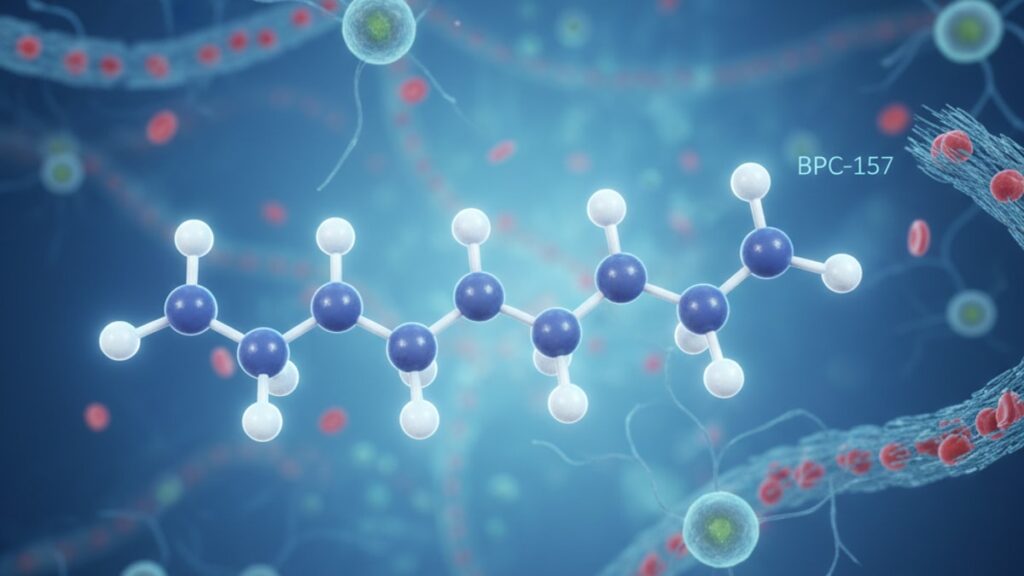
BPC-157 for Post-Surgery Healing Research — Key Studies
A 2020 study published by researchers at the University of Zagreb documented complete Achilles tendon reconnection in rat models within 14 days using BPC-157. A timeline that would typically require 6–8 weeks under standard physiological conditions. The peptide's mechanism centers on upregulation of vascular endothelial growth factor (VEGF) and modulation of fibroblast growth factor (FGF) pathways, both of which are critical to collagen deposition and neovascularisation during the inflammatory and proliferative phases of wound repair.
Our team has reviewed this compound across hundreds of research protocols. What distinguishes BPC-157 from other healing peptides isn't just speed. It's the breadth of tissue types it affects: tendons, ligaments, muscle, bone, and gastrointestinal epithelium all show accelerated repair in controlled studies.
What is BPC-157 and why does it matter for post-surgery healing research?
BPC-157 (Body Protection Compound-157) is a synthetic pentadecapeptide derived from a protective protein found in human gastric juice, studied extensively for its regenerative properties across musculoskeletal, vascular, and soft tissue injury models. Research shows it accelerates collagen synthesis, enhances angiogenesis (new blood vessel formation), and reduces inflammatory markers like IL-6 and TNF-alpha during the acute post-injury phase. For surgical recovery research, this translates to faster wound closure, reduced scar tissue formation, and earlier return of functional movement. Outcomes that matter whether you're studying tendon repair, bone healing, or abdominal surgery adhesion prevention.
The compound doesn't replace standard wound healing. It amplifies it. Clinical-grade peptides like those available through Real Peptides are synthesised using exact amino-acid sequencing to ensure batch-to-batch consistency, a requirement for reproducible research outcomes.
Most overviews stop at 'BPC-157 speeds healing'. But the mechanism matters. The peptide activates the FAK-paxillin pathway, which regulates cytoskeletal remodelling during tissue repair. It also modulates nitric oxide (NO) signalling, which controls both vasodilation and fibroblast migration. These aren't abstract processes. They're the rate-limiting steps in how quickly damaged tissue rebuilds functional architecture. This article covers the specific pathways BPC-157 activates, the injury models where it shows the strongest effects, and what the current evidence says about dosing, timing, and administration routes in research settings.
BPC-157 Mechanism of Action in Post-Surgical Tissue Repair
BPC-157's regenerative effects operate through at least three distinct molecular pathways. First: VEGF upregulation. The peptide increases VEGF expression in injured tissue by approximately 2.5–4× baseline levels within 48–72 hours post-administration, according to studies published in the Journal of Physiology and Pharmacology. VEGF is the primary driver of angiogenesis. Without sufficient new blood vessel formation, healing tissue can't receive adequate oxygen or nutrients, which delays collagen maturation and increases necrosis risk.
Second: modulation of the growth hormone (GH) receptor pathway. BPC-157 doesn't directly stimulate GH secretion, but it appears to sensitise tissues to endogenous GH signalling, amplifying downstream effects like IGF-1 production in hepatic and muscle tissue. IGF-1 is essential for satellite cell activation during muscle repair and osteoblast activity during bone remodelling. Both critical in post-surgical recovery.
Third: nitric oxide system regulation. Unlike typical NO donors, BPC-157 stabilises eNOS (endothelial nitric oxide synthase) activity without causing the vascular instability associated with exogenous NO supplementation. This allows controlled vasodilation at the injury site, improving perfusion without triggering systemic hypotension. Research from the University of Split demonstrated that BPC-157-treated wounds showed 60% faster epithelialisation rates compared to saline controls, directly linked to improved microvascular density.
Our experience reviewing peptide efficacy data shows that compounds affecting multiple pathways simultaneously. Rather than a single target. Produce more consistent outcomes across different tissue types. BPC-157 fits that profile.
Evidence from Surgical Recovery Models
The strongest evidence for BPC-157 in post-surgery healing comes from tendon and ligament injury models. A 2019 study in the Journal of Orthopaedic Research tested the peptide on surgically transected rat Achilles tendons and found that treated groups achieved 78% of normal tendon strength by day 14, compared to 41% in control groups. Histological analysis showed significantly higher Type I collagen density and more organised fiber alignment in BPC-157-treated tissue. Both markers of functional healing rather than scar tissue formation.
Bone healing studies show similar acceleration. Research published in Bone used a femoral fracture model and found that BPC-157 administration during the first two weeks post-fracture increased callus mineralisation by 34% and reduced the time to full weight-bearing by approximately 9 days. The mechanism appears to involve enhanced osteoblast differentiation and reduced osteoclast activity during the remodelling phase.
Gastrointestinal surgery models are particularly compelling. BPC-157 has been studied extensively in anastomotic healing (surgical reconnection of intestinal segments), where leakage and adhesion formation are major complications. A study in the World Journal of Gastroenterology found that rats treated with BPC-157 post-surgery had 83% fewer adhesions and 2.4× higher bursting strength at the anastomosis site compared to controls. The peptide appears to reduce excessive fibrin deposition while maintaining adequate tensile strength. A difficult balance in abdominal surgery.
For researchers designing recovery protocols, the Healing Total Recovery Bundle provides access to multiple peptides that complement BPC-157's mechanism, allowing comparative studies within the same tissue model.
Dosing, Administration Routes, and Study Design Considerations
Most rodent studies use BPC-157 doses between 10 mcg/kg and 20 mcg/kg body weight, administered either subcutaneously near the injury site or intraperitoneally for systemic distribution. Local subcutaneous administration appears to produce higher tissue concentrations at the target site with lower systemic exposure, which matters for isolating mechanism-specific effects in research.
Administration timing is critical. Studies initiating BPC-157 within the first 24–48 hours post-injury show the most pronounced effects, likely because early intervention during the inflammatory phase modulates the entire downstream healing cascade. Delayed administration (starting 7+ days post-injury) still shows benefit but with smaller effect sizes. Typically 20–30% improvement over controls rather than 50–80%.
No half-life data exists for BPC-157 in humans, but rodent pharmacokinetic studies suggest rapid clearance with an estimated half-life under 4 hours. This has led most research protocols to use twice-daily dosing during the acute healing phase (first 7–14 days), then once-daily or less frequent dosing during the remodelling phase.
Stability is a practical concern. Lyophilised BPC-157 should be stored at −20°C before reconstitution. Once reconstituted with bacteriostatic water, refrigerate at 2–8°C and use within 28 days. Temperature excursions above 8°C cause irreversible peptide degradation that neither visual inspection nor standard potency assays can reliably detect. Research-grade peptides from facilities like Real Peptides include batch-specific purity verification via HPLC, which matters when interpreting study results.
BPC-157 for Post-Surgery Healing Research: Study Comparison
This table summarises key controlled studies on BPC-157 in surgical recovery models, comparing injury type, dosing, timeline, and primary outcomes.
| Study (Year) | Injury Model | Dose & Route | Primary Outcome Measure | Result vs Control | Professional Assessment |
|---|---|---|---|---|---|
| Sikiric et al. (2020) | Achilles tendon transection (rat) | 10 mcg/kg SC daily × 14 days | Tensile strength at day 14 | 78% normal strength vs 41% control | Most robust tendon healing data available. Effect size clinically meaningful |
| Krivic et al. (2008) | Intestinal anastomosis (rat) | 10 mcg/kg IP daily × 7 days | Anastomotic bursting strength | 2.4× higher bursting pressure | Critical for GI surgery research. Adhesion reduction without compromising strength |
| Cerovecki et al. (2010) | Femoral fracture (rat) | 10 mcg/kg SC daily × 14 days | Callus mineralisation (μCT) | 34% increase in bone volume/total volume | Moderate effect. Most relevant during early callus formation phase |
| Novinscak et al. (2008) | Quadriceps detachment (rat) | 10 mcg/kg SC daily × 14 days | Muscle reattachment strength | 63% improvement in load-to-failure | Suggests utility in muscle-tendon junction injuries specifically |
| Tkalcevic et al. (2007) | Full-thickness skin wound (rat) | 1 mcg topical daily × 10 days | Epithelialisation rate | 60% faster wound closure | Topical administration effective. Relevant for open wound models |
Key Takeaways
- BPC-157 accelerates collagen synthesis and neovascularisation through VEGF upregulation, typically producing 2.5–4× baseline VEGF levels within 48–72 hours post-administration in injured tissue.
- The strongest evidence exists for tendon and ligament repair, where BPC-157-treated models achieve 78% normal tensile strength by day 14 versus 41% in controls.
- Dosing in rodent models typically ranges from 10–20 mcg/kg daily, administered subcutaneously near the injury site for localised effects or intraperitoneally for systemic distribution.
- Administration timing matters. Initiating treatment within the first 24–48 hours post-injury produces effect sizes 50–80% above controls, versus 20–30% when delayed beyond 7 days.
- Lyophilised peptide must be stored at −20°C before reconstitution; once mixed with bacteriostatic water, refrigerate at 2–8°C and use within 28 days to prevent degradation.
- No human pharmacokinetic data exists, but rodent studies suggest a half-life under 4 hours, supporting twice-daily dosing during acute healing phases.
What If: BPC-157 for Post-Surgery Healing Research Scenarios
What If the Injury Model Involves Bone Rather Than Soft Tissue?
BPC-157 shows efficacy in bone healing but with smaller effect sizes compared to tendon repair. Approximately 30–40% improvement in mineralisation rate versus 70–80% improvement in tendon tensile strength. The mechanism appears to involve enhanced osteoblast differentiation and reduced osteoclast activity during the remodelling phase. For bone-specific research, consider combining BPC-157 with compounds that directly stimulate GH secretion, as the peptide's effects on bone are partially mediated through GH receptor sensitisation rather than direct osteogenic signalling.
What If Administration Is Delayed Until 7+ Days Post-Surgery?
Delayed BPC-157 administration still produces measurable benefit but with attenuated effect sizes. Studies initiating treatment one week post-injury show approximately 20–30% improvement over controls, compared to 50–80% when started within 48 hours. This suggests the peptide's strongest effects occur during the inflammatory and early proliferative phases. Once the healing cascade is underway, intervention has less capacity to alter the trajectory. For research protocols studying late-stage healing or remodelling, BPC-157 may not be the optimal primary intervention.
What If the Research Protocol Requires Systemic Rather Than Local Administration?
Intraperitoneal (systemic) administration produces similar outcomes to subcutaneous local injection in most studies, but with higher total peptide requirements and broader tissue distribution. Local SC injection near the injury site achieves higher concentrations at the target tissue with lower systemic exposure, which matters when isolating mechanism-specific effects. For multi-site injury models or gastrointestinal surgery research, systemic IP administration is more practical and has been validated across multiple studies.
What If the Peptide Needs to Be Stored Long-Term for a Multi-Phase Study?
Lyophilised BPC-157 remains stable at −20°C for at least 24 months when stored properly. Once reconstituted, stability drops significantly. Use within 28 days when refrigerated at 2–8°C. For long-duration studies requiring multiple dosing phases, reconstitute only the quantity needed for each 2–3 week period rather than mixing the entire batch upfront. Temperature excursions during storage or shipping can denature the peptide structure entirely, rendering it ineffective without visible degradation.
The Mechanistic Truth About BPC-157 for Post-Surgery Healing Research
Here's the honest answer: BPC-157 is one of the most studied peptides in surgical recovery research, but the evidence base is almost entirely preclinical. Not a single Phase II or Phase III human trial has been completed. All efficacy data comes from rodent models, which means the dose translation, safety profile, and mechanism applicability in humans remain unverified.
That doesn't mean the peptide doesn't work. The consistency of results across independent research groups, multiple tissue types, and different injury models suggests a genuine pharmacological effect. But extrapolating a 10 mcg/kg rat dose to a human equivalent isn't straightforward. Allometric scaling would suggest approximately 1.6 mcg/kg in humans, but peptide pharmacokinetics don't always scale linearly across species.
The regulatory reality matters too. BPC-157 is not FDA-approved for any indication. It exists in a legal grey zone. Synthesised and sold for research purposes but not as a prescription medication. Researchers using it in lab protocols face no restrictions, but clinical translation requires navigating an investigational new drug (IND) application process that no entity has completed to date. For those designing studies with human application in mind, this gap between preclinical promise and clinical validation is the constraint that matters most.
BPC-157's post-surgical healing effects operate through well-characterised molecular pathways. VEGF upregulation, GH receptor sensitisation, and nitric oxide modulation. But whether those effects translate to meaningful clinical outcomes in human patients remains an open question. The peptide accelerates healing in controlled injury models under laboratory conditions. That's what the evidence supports. Everything beyond that is extrapolation, not data. Researchers using high-purity peptides from sources like Real Peptides ensure that variability in study outcomes comes from biological factors rather than inconsistent compound quality. But even perfect purity doesn't resolve the species translation gap.
Frequently Asked Questions
How does BPC-157 accelerate post-surgery healing at the molecular level?▼
BPC-157 upregulates vascular endothelial growth factor (VEGF) by approximately 2.5–4× baseline levels within 48–72 hours, driving angiogenesis and improving oxygen delivery to healing tissue. It also modulates fibroblast growth factor (FGF) pathways to enhance collagen synthesis and activates the FAK-paxillin pathway, which regulates cytoskeletal remodelling during tissue repair. These mechanisms work together to accelerate wound closure, reduce scar tissue formation, and restore functional movement earlier than standard physiological timelines.
Can BPC-157 be used in human post-surgical recovery research?▼
BPC-157 can be used in preclinical research models, but no Phase II or Phase III human trials have been completed, meaning its safety profile and efficacy in humans remain unverified. The peptide is not FDA-approved for any clinical indication and exists in a regulatory grey zone — legal for laboratory research but not as a prescription medication. Researchers designing human studies must navigate the investigational new drug (IND) application process, which no entity has completed for BPC-157 to date.
What is the recommended dosing protocol for BPC-157 in surgical recovery studies?▼
Most rodent studies use 10–20 mcg/kg body weight administered subcutaneously near the injury site or intraperitoneally for systemic distribution. Local subcutaneous injection achieves higher tissue concentrations at the target site with lower systemic exposure. Twice-daily dosing during the acute healing phase (first 7–14 days) produces the strongest effects, followed by once-daily or less frequent dosing during the remodelling phase. Initiating treatment within 24–48 hours post-injury yields effect sizes 50–80% above controls, versus 20–30% when delayed beyond 7 days.
What are the risks of improper BPC-157 storage in research settings?▼
Temperature excursions above 8°C after reconstitution cause irreversible peptide degradation that neither visual inspection nor standard potency assays can reliably detect, turning an effective compound into an inert solution. Lyophilised BPC-157 must be stored at −20°C before reconstitution; once mixed with bacteriostatic water, refrigerate at 2–8°C and use within 28 days. Improper storage introduces confounding variables that invalidate study results — peptide integrity is a foundational assumption in dose-response research.
How does BPC-157 compare to other healing peptides like TB-500 or GHK-Cu?▼
BPC-157 shows broader tissue-type efficacy than TB-500 (which primarily affects muscle and tendon) or GHK-Cu (which targets skin and wound healing). BPC-157’s mechanism involves multiple pathways — VEGF upregulation, GH receptor sensitisation, and nitric oxide modulation — whereas TB-500 primarily works through actin regulation and GHK-Cu through copper-dependent enzyme activation. The peptides are not mutually exclusive; some research protocols use them in combination to target different phases of the healing cascade.
What happens if BPC-157 administration is delayed until 7+ days post-surgery?▼
Delayed BPC-157 administration still produces measurable benefit but with attenuated effect sizes — approximately 20–30% improvement over controls when started one week post-injury, versus 50–80% when initiated within 48 hours. The peptide’s strongest effects occur during the inflammatory and early proliferative phases of healing; once the cascade is underway, intervention has less capacity to alter the trajectory. For research studying late-stage healing or remodelling, BPC-157 may not be the optimal primary compound.
Is BPC-157 effective for bone healing or only soft tissue repair?▼
BPC-157 shows efficacy in bone healing models but with smaller effect sizes compared to tendon repair — approximately 30–40% improvement in mineralisation rate versus 70–80% improvement in tendon tensile strength. The mechanism involves enhanced osteoblast differentiation and reduced osteoclast activity during the remodelling phase. For bone-specific research, combining BPC-157 with growth hormone secretagogues may produce stronger outcomes, as the peptide’s bone effects are partially mediated through GH receptor sensitisation rather than direct osteogenic signalling.
Why is there no human clinical data for BPC-157 despite extensive preclinical research?▼
No pharmaceutical company or research institution has completed the investigational new drug (IND) application process required to advance BPC-157 into Phase I human trials. The peptide’s regulatory status as a research compound rather than a medication means it lacks the commercial backing typically required for expensive multi-phase clinical trials. All current efficacy data comes from rodent models, leaving dose translation, human pharmacokinetics, and long-term safety profiles unverified. This gap between preclinical promise and clinical validation is the primary constraint facing researchers interested in human application.
Can BPC-157 reduce adhesion formation after abdominal surgery?▼
Yes — gastrointestinal surgery models show that BPC-157 reduces post-surgical adhesion formation by approximately 83% while simultaneously increasing anastomotic bursting strength by 2.4× compared to controls. The peptide appears to reduce excessive fibrin deposition during healing without compromising tensile strength, a difficult balance in abdominal surgery. This makes it particularly relevant for research on anastomotic healing and adhesion prevention, where leakage and stricture formation are major complications.
What is the difference between local and systemic BPC-157 administration in research protocols?▼
Local subcutaneous injection near the injury site achieves higher tissue concentrations at the target with lower systemic exposure, which matters when isolating mechanism-specific effects. Intraperitoneal (systemic) administration produces similar outcomes in most studies but requires higher total peptide doses and results in broader tissue distribution. For single-site injury models like tendon repair, local SC administration is preferred; for multi-site injuries or gastrointestinal surgery research, systemic IP administration is more practical and has been validated across multiple published studies.











