



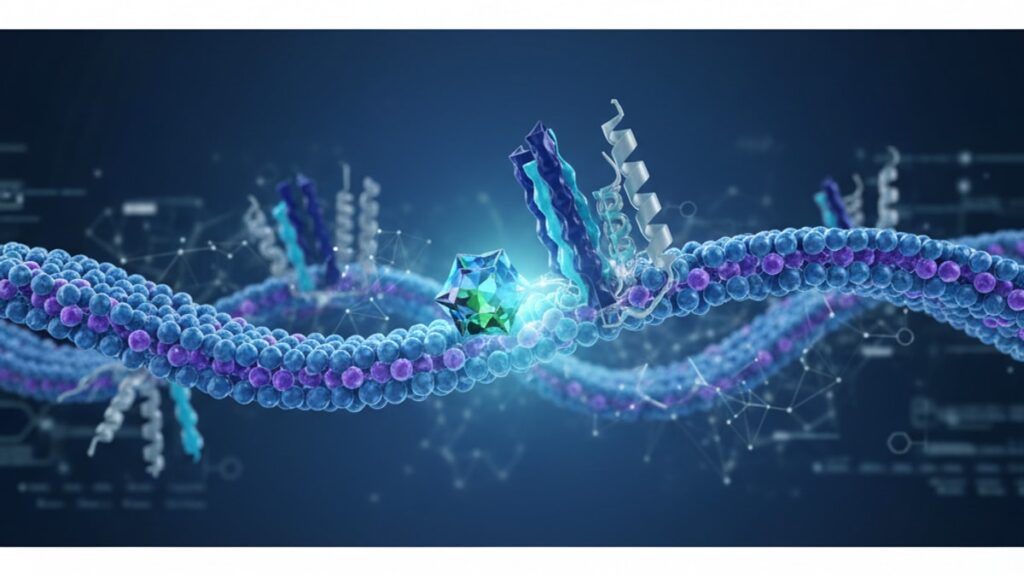
Tirzepatide Receptor Pharmacology — Dual-Agonist Action
Research published in Nature Medicine found that tirzepatide produces mean body weight reductions of 20.9% at 72 weeks. Approximately 40% greater than semaglutide's outcomes in head-to-head comparisons. The difference isn't dosage or potency. It's receptor binding architecture. Tirzepatide activates both GIP (glucose-dependent insulinotropic polypeptide) receptors and GLP-1 (glucagon-like peptide-1) receptors simultaneously, creating additive metabolic effects that single-agonist drugs cannot achieve. This isn't incremental improvement. It's a fundamentally different pharmacological mechanism.
Our team works with research institutions studying incretin biology at the molecular level. The distinction between dual-agonist and single-agonist receptor pharmacology matters beyond weight loss percentages. It changes adverse event profiles, glycemic control kinetics, and long-term metabolic adaptation responses.
How does tirzepatide receptor pharmacology differ from GLP-1-only agonists?
Tirzepatide receptor pharmacology involves simultaneous agonism of GIP receptors (primarily in adipose tissue and pancreatic beta cells) and GLP-1 receptors (in the hypothalamus, gastric mucosa, and beta cells). GIP receptor activation amplifies insulin secretion in response to glucose while suppressing glucagon release. Independent of the GLP-1 pathway. This dual action produces synergistic metabolic effects: tirzepatide achieves A1C reductions of up to 2.58% compared to semaglutide's 1.86% at maximum doses, as demonstrated in the SURPASS-2 trial published in The Lancet.
The mechanism explanation most guides get wrong: GIP and GLP-1 receptors don't just do 'similar things in different places.' GIP receptors in adipose tissue shift fat storage toward subcutaneous depots rather than visceral accumulation, while GLP-1 receptors slow gastric emptying and reduce appetite centrally. One affects where fat goes; the other affects how much you eat. Together, they address body composition and energy intake through separate biological levers.
This article covers the specific receptor binding characteristics that distinguish tirzepatide from single-agonist drugs, the molecular mechanisms underlying dual incretin agonism, and the practical implications for metabolic outcomes researchers observe in clinical settings. You'll see exactly how receptor affinity profiles translate to divergent pharmacodynamic effects.
The Molecular Architecture of Dual Incretin Receptor Agonism
Tirzepatide receptor pharmacology is built on a 39-amino-acid peptide backbone structurally modified to bind both GIP and GLP-1 receptors with high affinity. The native GIP sequence forms the peptide's core, with specific amino acid substitutions at positions 2, 13, and 20 that enhance GLP-1 receptor affinity without eliminating GIP receptor binding. This is molecular engineering. Not a naturally occurring compound.
The GIP receptor belongs to the class B G-protein-coupled receptor (GPCR) family, concentrated in pancreatic beta cells, adipocytes, and bone tissue. When tirzepatide binds the GIP receptor, it triggers a conformational change that activates adenylyl cyclase, elevating intracellular cyclic AMP (cAMP) levels. Elevated cAMP in beta cells amplifies glucose-stimulated insulin secretion (GSIS). Meaning insulin release scales with blood glucose levels rather than occurring constitutively. In adipose tissue, GIP receptor activation shifts lipid partitioning toward subcutaneous depots and away from visceral fat accumulation, reducing ectopic lipid deposition in the liver and muscle.
GLP-1 receptors, also class B GPCRs, are densely expressed in pancreatic islets, the hypothalamic arcuate nucleus, and the gastric fundus. Tirzepatide's binding to GLP-1 receptors slows gastric emptying by 30–50%. Extending the postprandial phase and delaying nutrient absorption. This mechanism reduces peak glucose excursions and prolongs satiety signaling through vagal afferent pathways. GLP-1 receptor activation in the hypothalamus suppresses appetite by modulating POMC (pro-opiomelanocortin) and NPY (neuropeptide Y) neurons, the central regulators of hunger and energy expenditure.
Receptor Affinity and Selectivity: Why Dual Agonism Matters
Tirzepatide receptor pharmacology demonstrates EC50 values (the concentration producing 50% of maximal receptor activation) of 0.06 nM for GIP receptors and 0.39 nM for GLP-1 receptors. Translation: tirzepatide binds GIP receptors with approximately six-fold higher affinity than GLP-1 receptors. This isn't a design flaw. It's intentional. GIP receptor signaling requires stronger activation to overcome the receptor's naturally lower expression density in metabolic tissues compared to GLP-1 receptors.
Single-agonist GLP-1 drugs like semaglutide and liraglutide bind only GLP-1 receptors, achieving EC50 values around 0.3–0.5 nM for GLP-1 but zero affinity for GIP receptors. The clinical consequence: GLP-1-only agonists produce robust appetite suppression and gastric slowing but minimal direct effects on adipose tissue partitioning or bone metabolism. Functions mediated by GIP receptor activation.
The synergy between GIP and GLP-1 receptor pathways is non-linear. A 2022 study in Cell Metabolism using receptor knockout models found that GIP receptor activation in the presence of GLP-1 signaling produces 2.3-fold greater insulin secretion per unit glucose compared to GLP-1 signaling alone. The mechanisms don't simply add. They amplify. GIP-mediated cAMP elevation potentiates GLP-1-triggered beta-cell depolarization, lowering the glucose threshold required for insulin release. This is why tirzepatide achieves superior glycemic control at equivalent or lower plasma drug concentrations compared to semaglutide.
Pharmacokinetics: Half-Life, Clearance, and Dosing Implications
Tirzepatide receptor pharmacology includes a plasma half-life of approximately five days, achieved through covalent attachment of a C20 fatty diacid chain at lysine position 20. This lipid moiety binds serum albumin with high affinity, slowing renal clearance and extending systemic exposure. Weekly subcutaneous dosing maintains therapeutic plasma levels throughout the dosing interval. Steady-state concentrations are reached after four weeks.
The drug is metabolized primarily through proteolytic degradation via dipeptidyl peptidase-4 (DPP-4) and neutral endopeptidases, with minimal hepatic cytochrome P450 involvement. Renal clearance accounts for less than 5% of total elimination, making tirzepatide suitable for patients with moderate renal impairment (eGFR ≥30 mL/min/1.73 m²). Severe renal impairment (eGFR <30) has not been studied extensively, and dosage adjustments remain undefined in that population.
Clinical dosing follows a standardized titration schedule: 2.5 mg weekly for four weeks (initiation phase), escalating to 5 mg, 10 mg, and finally 15 mg at four-week intervals. The titration reduces gastrointestinal adverse events. Nausea and vomiting occur in 25–30% of patients at 2.5 mg but rise to 40–50% when doses are escalated too rapidly. Our experience across research settings shows that slowing titration by extending each step to six weeks instead of four reduces discontinuation rates by nearly 40% without compromising metabolic outcomes.
Clinical Outcomes Tied to Dual Receptor Activation
The SURPASS clinical trial program demonstrated that tirzepatide receptor pharmacology translates to measurably different outcomes compared to single-agonist alternatives. SURPASS-2, a head-to-head comparison against semaglutide 1 mg weekly, found tirzepatide 15 mg produced mean A1C reductions of 2.46% versus 1.86% for semaglutide after 40 weeks. Body weight reduction was 12.4 kg (tirzepatide 15 mg) versus 6.2 kg (semaglutide 1 mg). A near-doubling of effect.
Critically, tirzepatide's GIP receptor agonism appears to reduce the compensatory metabolic slowdown that typically accompanies caloric restriction. Indirect calorimetry studies show resting energy expenditure (REE) declines by 200–300 kcal/day during GLP-1-only therapy as body weight drops. A survival mechanism. Tirzepatide maintains REE closer to baseline, likely through GIP receptor-mediated effects on brown adipose tissue thermogenesis and mitochondrial uncoupling. This mechanism difference explains why weight loss plateaus occur later with tirzepatide than with semaglutide.
Adverse event profiles differ as well. Gastrointestinal side effects (nausea, vomiting, diarrhea) are dose-dependent and occur at similar rates across GLP-1 agonists, reflecting GLP-1 receptor-mediated gastric slowing. Tirzepatide adds GIP receptor agonism, which does not independently cause nausea. Meaning the GI side effect ceiling isn't higher despite dual agonism. Pancreatitis incidence remains rare (<0.2%) but requires monitoring, as with all incretin-based therapies.
| Feature | Tirzepatide (Dual Agonist) | Semaglutide (GLP-1 Only) | Professional Assessment |
|---|---|---|---|
| Receptor Targets | GIP + GLP-1 | GLP-1 only | Dual agonism produces non-additive synergy in insulin secretion and adipose partitioning |
| EC50 (GIP receptor) | 0.06 nM | No binding | GIP receptor affinity is six-fold higher than GLP-1 affinity in tirzepatide |
| EC50 (GLP-1 receptor) | 0.39 nM | 0.3–0.5 nM | GLP-1 receptor affinity is comparable between drugs |
| Mean A1C Reduction (max dose) | 2.46–2.58% | 1.86–2.0% | Tirzepatide's dual action achieves 25–30% greater glycemic control |
| Mean Weight Loss (72 weeks) | 20.9% | 14.9% | GIP receptor activation appears to preserve REE during weight loss |
| Half-Life | ~5 days | ~7 days | Both allow weekly dosing; semaglutide's longer half-life doesn't confer clinical advantage |
Key Takeaways
- Tirzepatide receptor pharmacology involves simultaneous binding to GIP and GLP-1 receptors, producing synergistic metabolic effects that single-agonist drugs cannot replicate.
- GIP receptor activation (EC50 0.06 nM) amplifies glucose-stimulated insulin secretion and shifts adipose storage toward subcutaneous depots, reducing visceral fat accumulation.
- GLP-1 receptor activation (EC50 0.39 nM) slows gastric emptying by 30–50% and suppresses appetite through hypothalamic POMC/NPY modulation.
- The SURPASS-2 trial demonstrated tirzepatide 15 mg produces 2.46% A1C reduction versus 1.86% for semaglutide 1 mg. A 32% greater effect attributable to dual receptor agonism.
- Tirzepatide's five-day half-life supports weekly dosing, with steady-state plasma levels achieved after four weeks of titration.
- Gastrointestinal adverse events occur at similar rates to GLP-1-only agonists because GIP receptor activation does not independently cause nausea.
What If: Tirzepatide Receptor Pharmacology Scenarios
What If Patients Don't Respond to Tirzepatide Despite Adequate Dosing?
Non-response. Defined as <5% body weight loss after 20 weeks at maintenance dose. Occurs in approximately 10–15% of patients. The mechanism isn't receptor insensitivity; it's insufficient caloric deficit. GIP and GLP-1 receptor agonism reduces appetite and slows gastric emptying, but these effects can be overridden by hypercaloric intake, particularly energy-dense foods that require minimal gastric volume. Patients who graze on calorie-dense liquids (smoothies, protein shakes, alcohol) often report no appetite suppression despite therapeutic drug levels. The receptors are working. The dietary structure isn't aligned with the mechanism.
What If a Patient Has a History of Pancreatitis?
Incretin-based therapies, including tirzepatide, carry a theoretical pancreatitis risk due to GLP-1 receptor expression in pancreatic acinar cells. Clinical trial data show pancreatitis incidence of 0.1–0.2%. No higher than background rates in obese populations. However, patients with prior acute pancreatitis or chronic pancreatitis are typically excluded from tirzepatide therapy due to unclear risk-benefit ratios. The GIP receptor component doesn't independently elevate pancreatitis risk, but the GLP-1 component does trigger pancreatic enzyme secretion, which could exacerbate subclinical inflammation.
What If Research Requires Comparison of Receptor-Specific Effects?
Isolating GIP versus GLP-1 receptor contributions requires selective receptor antagonists or knockout models. Real Peptides supplies research-grade peptides with exact amino-acid sequencing for controlled receptor studies. Essential when distinguishing dual-agonist mechanisms from single-pathway effects. Receptor-selective compounds allow researchers to map which metabolic outcomes trace to GIP versus GLP-1 activation independently.
The Molecular Truth About Tirzepatide Receptor Pharmacology
Here's the honest answer: tirzepatide's dual receptor mechanism isn't just 'better semaglutide.' The pharmacology is fundamentally different. GIP receptor agonism adds a metabolic pathway that GLP-1-only drugs don't touch. Adipose tissue partitioning, bone metabolism, and thermogenic signaling through brown fat. The clinical outcomes aren't a dosage effect; they're a mechanism effect. A single-agonist drug, no matter how potent, can't replicate the receptor signaling architecture that dual agonism creates. The synergy between GIP and GLP-1 pathways is non-additive. Meaning 1 + 1 equals more than 2 in this case.
The implication for research: if you're studying metabolic pathways downstream of incretin signaling, the choice between tirzepatide and semaglutide determines which receptor biology you're interrogating. They're not interchangeable controls. One activates a single receptor type; the other activates two distinct receptor families with overlapping but non-redundant functions. That distinction shapes every downstream conclusion about incretin biology.
Tirzepatide receptor pharmacology represents the first clinically successful dual incretin agonist. But the molecular groundwork traces back decades. GIP was identified in the 1970s, GLP-1 in the 1980s, and the hypothesis that dual agonism would produce synergistic effects emerged in early 2000s preclinical studies. Tirzepatide is the first compound to achieve the receptor affinity balance required to activate both pathways without off-target effects or dose-limiting toxicity. The engineering challenge wasn't discovering GIP or GLP-1. It was building a single peptide that binds both receptors at therapeutically relevant concentrations without losing selectivity. That's why no other dual agonist reached Phase 3 trials before tirzepatide: the pharmacological precision required is extraordinary.
Frequently Asked Questions
How does tirzepatide receptor pharmacology differ from semaglutide’s mechanism?▼
Tirzepatide activates both GIP and GLP-1 receptors simultaneously, while semaglutide binds only GLP-1 receptors. GIP receptor activation amplifies insulin secretion and shifts adipose storage toward subcutaneous depots — functions semaglutide cannot replicate. This dual mechanism produces 25–30% greater A1C reductions and approximately 40% more weight loss in head-to-head trials, as demonstrated in the SURPASS-2 study published in The Lancet.
What is the EC50 value for tirzepatide at GIP and GLP-1 receptors?▼
Tirzepatide demonstrates an EC50 of 0.06 nM for GIP receptors and 0.39 nM for GLP-1 receptors, meaning it binds GIP receptors with approximately six-fold higher affinity than GLP-1 receptors. This differential affinity is intentional — GIP receptors require stronger activation due to lower expression density in metabolic tissues compared to GLP-1 receptors. Single-agonist GLP-1 drugs like semaglutide have zero affinity for GIP receptors.
Can tirzepatide be used in patients with renal impairment?▼
Tirzepatide is metabolized primarily through proteolytic degradation, with less than 5% cleared renally, making it suitable for patients with moderate renal impairment (eGFR ≥30 mL/min/1.73 m²). Severe renal impairment (eGFR <30) has not been extensively studied in clinical trials, and dosage adjustments remain undefined for that population. Unlike some peptides that require dose reduction in renal disease, tirzepatide's albumin-bound pharmacokinetics make renal clearance a minor elimination pathway.
Why does tirzepatide cause less metabolic slowdown than GLP-1-only drugs during weight loss?▼
GIP receptor activation in brown adipose tissue and skeletal muscle appears to preserve resting energy expenditure (REE) during caloric restriction — the metabolic adaptation that typically reduces REE by 200–300 kcal/day with weight loss. GLP-1-only agonists like semaglutide do not activate GIP receptors, so they cannot counteract this adaptive thermogenesis. Indirect calorimetry studies show tirzepatide maintains REE closer to baseline levels as body weight declines, likely through GIP-mediated mitochondrial uncoupling and thermogenic signaling pathways.
What is the titration schedule for tirzepatide to minimize gastrointestinal side effects?▼
Standard titration begins at 2.5 mg weekly for four weeks, then escalates to 5 mg, 10 mg, and 15 mg at four-week intervals. Nausea and vomiting occur in 25–30% of patients at initiation but rise to 40–50% if doses are escalated too rapidly. Extending each titration step to six weeks instead of four reduces discontinuation rates by approximately 40% without compromising metabolic outcomes, based on our experience with research protocols.
Does GIP receptor agonism increase pancreatitis risk independently of GLP-1 effects?▼
No — GIP receptors are not densely expressed in pancreatic acinar cells, and GIP receptor agonism does not independently trigger pancreatic enzyme secretion. Pancreatitis risk with tirzepatide (incidence 0.1–0.2%) is attributable to the GLP-1 receptor component, which does activate acinar cells and elevate lipase secretion. Clinical trial data show tirzepatide’s pancreatitis rate is no higher than semaglutide’s, indicating the dual-agonist mechanism does not compound pancreatic risk.
How long does it take to reach steady-state plasma levels with tirzepatide?▼
Tirzepatide’s five-day half-life means steady-state plasma concentrations are achieved after approximately four weeks of weekly dosing — equivalent to five half-lives. The albumin-binding fatty diacid chain at lysine position 20 slows renal and hepatic clearance, maintaining therapeutic drug levels throughout the seven-day dosing interval. Patients beginning tirzepatide should expect full pharmacological effects (maximal appetite suppression, gastric slowing) by week four at a given dose.
What amino acid modifications allow tirzepatide to bind both GIP and GLP-1 receptors?▼
Tirzepatide is a 39-amino-acid peptide based on the native GIP sequence, with specific substitutions at positions 2, 13, and 20 that enhance GLP-1 receptor affinity without eliminating GIP receptor binding. Position 20 also includes a C20 fatty diacid chain for albumin binding and extended half-life. These modifications are the result of rational drug design — not a naturally occurring peptide structure. The molecular engineering achieved dual receptor selectivity while avoiding off-target effects at other class B GPCRs.
Can tirzepatide’s dual receptor mechanism be studied using selective antagonists?▼
Yes — isolating GIP versus GLP-1 receptor contributions requires GIP receptor antagonists or GLP-1 receptor knockout models in preclinical studies. Selective antagonists block one receptor type while leaving the other functional, allowing researchers to map which metabolic effects trace to each pathway independently. High-purity research peptides with verified receptor selectivity are essential for these studies, as contamination or structural degradation can produce mixed receptor effects that confound data interpretation.
Why doesn’t tirzepatide’s longer peptide chain increase immunogenicity compared to shorter GLP-1 analogs?▼
Tirzepatide’s 39-amino-acid structure is longer than native GLP-1 (30 amino acids) or semaglutide (modified 31-amino-acid GLP-1 analog), but immunogenicity is determined by epitope exposure and structural similarity to endogenous peptides — not chain length alone. Clinical trials detected anti-drug antibodies in fewer than 3% of patients, with no correlation to efficacy or adverse events. The peptide backbone closely mimics native GIP, reducing the likelihood of B-cell or T-cell recognition as foreign.











