



Oxytocin Receptor Pharmacology — Structure and Function
Research from the University of Copenhagen identified seven distinct conformational states of the oxytocin receptor (OXTR), each producing different downstream signaling outcomes despite binding the same endogenous ligand. This discovery fundamentally changed how we understand oxytocin receptor pharmacology. The receptor isn't a passive docking site but an active molecular switch that determines which intracellular pathways activate based on subtle structural changes in the bound ligand.
Our team has worked with research-grade peptides for over a decade. The gap between textbook receptor theory and laboratory reality comes down to understanding biased agonism. A concept most overviews ignore entirely.
What is oxytocin receptor pharmacology?
Oxytocin receptor pharmacology is the study of how the oxytocin receptor. A G-protein coupled receptor (GPCR) primarily expressed in uterine, mammary, and central nervous system tissue. Binds ligands and activates intracellular signaling cascades. The receptor preferentially couples to Gq/11 proteins to activate phospholipase C, producing inositol triphosphate (IP3) and diacylglycerol (DAG), which regulate calcium mobilization and smooth muscle contraction. Biased agonism allows structurally similar peptides to preferentially activate specific signaling pathways over others.
The Featured Snippet explains the receptor's primary signaling mechanism, but it misses the structural complexity that determines ligand selectivity and efficacy. The oxytocin receptor exists in multiple conformational states. Inactive, intermediate, and fully active. And different ligands stabilize different states with varying efficiency. This explains why carbetocin (a synthetic analog with a single amino acid substitution at position 1) produces longer uterine contraction than endogenous oxytocin despite binding the same receptor: it stabilizes the active conformation for an extended period before dissociating. This article covers the receptor's structural domains, ligand binding mechanics, downstream signaling pathways, and how synthetic analogs exploit conformational bias for therapeutic applications.
The Structural Architecture of the Oxytocin Receptor
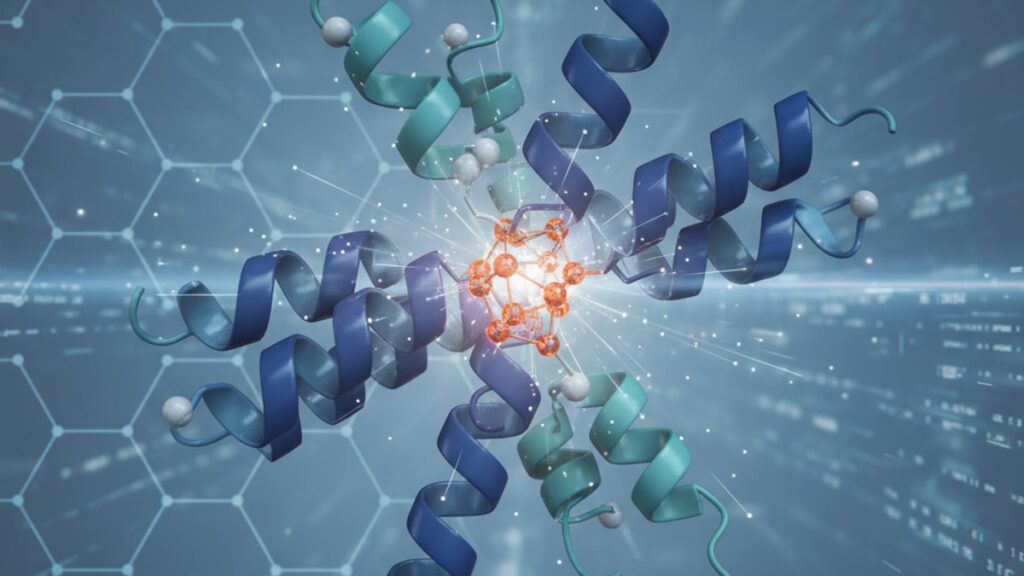
The oxytocin receptor belongs to the Class A rhodopsin-like GPCR family and contains 389 amino acids organized into seven transmembrane alpha helices (TM1–TM7) connected by three extracellular loops (ECL1–ECL3) and three intracellular loops (ICL1–ICL3). The ligand binding pocket sits deep within the transmembrane bundle, formed primarily by residues in TM3, TM5, TM6, and ECL2. Crystallography studies published in Nature revealed that the oxytocin peptide binds in an inverted orientation compared to other peptide GPCRs. The C-terminus of oxytocin inserts deepest into the pocket while the N-terminus remains near the extracellular surface.
The receptor's N-terminal domain contains glycosylation sites critical for plasma membrane trafficking and ligand recognition. Mutation of Asn8 or Asn15 prevents proper receptor folding and cell surface expression. These residues anchor the N-terminal domain's spatial orientation relative to the transmembrane core. The intracellular loops determine G-protein coupling selectivity: ICL2 and ICL3 form the primary interface with Gq/11 alpha subunits, while ICL1 stabilizes the inactive receptor conformation through hydrophobic contacts with TM2 and TM7. Disrupting ICL1 produces constitutively active mutants that signal without ligand binding.
Researchers working with Real Peptides synthetic oxytocin analogs rely on batch-specific mass spectrometry verification because single amino acid substitutions dramatically alter receptor interaction kinetics. The binding pocket accommodates peptides of 8–9 residues with specific spacing requirements between Cys1-Cys6 disulfide bridge and the C-terminal tripeptide (Pro-Leu-Gly-NH2).
Ligand Binding Mechanics and Conformational Selection
Oxytocin binding follows a two-step induced-fit mechanism rather than simple lock-and-key recognition. Initial contact occurs between the peptide's disulfide ring and ECL2, forming transient electrostatic interactions that orient the ligand correctly for transmembrane insertion. Once oriented, the peptide's C-terminal tail (residues 7-9) slides into the orthosteric pocket between TM3, TM5, and TM6, triggering a 14-degree rotation of TM6 away from the helical bundle core. This outward movement of TM6 opens the intracellular G-protein binding site.
Binding affinity (Kd) for endogenous oxytocin ranges from 0.4–2.8 nM depending on tissue source and assay conditions. Synthetic analogs demonstrate wide variability: carbetocin shows Kd = 0.9 nM with significantly slower dissociation kinetics (koff = 0.008 min⁻¹ vs 0.047 min⁻¹ for oxytocin), producing sustained receptor occupancy that extends pharmacological duration from 30 minutes to 4–6 hours. Atosiban, an oxytocin receptor antagonist used to delay preterm labor, binds with Kd = 1.2 nM but stabilizes an intermediate receptor state that prevents full TM6 displacement. Blocking agonist-induced conformational change without triggering downstream signaling.
The receptor demonstrates positive cooperativity at physiological expression densities (10,000–50,000 receptors per cell). Occupancy of one receptor within a dimeric complex increases the binding affinity of the adjacent receptor by approximately 2.3-fold. Likely through allosteric stabilization transmitted across the dimer interface at TM4 and TM5. This cooperativity disappears in low-expression systems or when receptors are spatially separated using synthetic membrane scaffolds, confirming it's a proximity-dependent phenomenon rather than an intrinsic property of individual receptor proteins.
Downstream Signaling Pathways and Biased Agonism
The canonical oxytocin receptor signaling pathway proceeds through Gq/11 activation, which stimulates phospholipase C beta (PLCβ) to hydrolyze phosphatidylinositol 4,5-bisphosphate (PIP2) into IP3 and DAG. IP3 binds receptors on the endoplasmic reticulum to release stored calcium, elevating cytosolic Ca²⁺ from resting levels of ~100 nM to peak concentrations of 500–1000 nM within 2–5 seconds. DAG remains membrane-bound and activates protein kinase C (PKC), which phosphorylates myosin light chain kinase (MLCK). The enzyme responsible for smooth muscle contraction in uterine and mammary tissue.
However, oxytocin receptor pharmacology isn't limited to Gq/11 coupling. The receptor also activates Gi/o proteins (which inhibit adenylyl cyclase and reduce cAMP), Gs proteins (which stimulate adenylyl cyclase), and beta-arrestin pathways (which mediate receptor internalization and MAPK activation independent of G-proteins). Different ligands stabilize receptor conformations that favor specific pathways over others. This is biased agonism. Carbetocin demonstrates strong Gq/11 bias with minimal beta-arrestin recruitment, producing sustained calcium signaling without rapid receptor desensitization. Conversely, [Leu8]-oxytocin (a synthetic analog with leucine substituted at position 8) shows enhanced beta-arrestin signaling with weaker calcium mobilization. Potentially useful for applications requiring ERK1/2 activation without contractile effects.
Phosphorylation sites on the receptor's C-terminal tail (Ser332, Ser338, Thr339) serve as molecular barcodes that determine post-activation fate. GRK2 (G-protein receptor kinase 2) phosphorylates these residues within 30–60 seconds of agonist binding, creating high-affinity binding sites for beta-arrestin 2. Beta-arrestin binding simultaneously terminates G-protein signaling and initiates clathrin-mediated endocytosis, removing receptors from the plasma membrane with a half-time of 8–12 minutes. Internalized receptors traffic to early endosomes where they either recycle back to the surface (60–70% of total) or sort to lysosomes for degradation (30–40%). Sustained agonist exposure for 4+ hours reduces total receptor number by 40–60%, producing pharmacological desensitization.
Oxytocin Receptor Pharmacology: Molecular Tools Comparison
| Ligand | Receptor Affinity (Kd) | Primary Signaling Pathway | Dissociation Half-Time | Typical Research Application | Professional Assessment |
|---|---|---|---|---|---|
| Endogenous Oxytocin | 0.4–2.8 nM | Gq/11 → IP3/DAG → Ca²⁺ | ~15 min | Baseline GPCR signaling studies, calcium mobilization assays | Gold standard for physiological signaling. Short half-life limits sustained-response studies |
| Carbetocin | 0.9 nM | Gq/11-biased (low β-arrestin) | ~90 min | Extended uterine contraction models, desensitization studies | Longer duration than oxytocin without changing downstream pathway. Ideal for chronic signaling experiments |
| Atosiban | 1.2 nM | Antagonist (partial agonist at vasopressin V1a) | ~25 min | Competitive binding assays, preterm labor models | Stabilizes intermediate inactive state. Useful for crystallography and conformational studies |
| [Leu8]-Oxytocin | 3.5 nM | Beta-arrestin-biased (weak Gq/11) | ~18 min | ERK1/2 activation without calcium spike, biased signaling research | Demonstrates signaling bias. Weak contractile effect makes it poor for uterine studies but excellent for MAPK pathway isolation |
Key Takeaways
- The oxytocin receptor exists in at least seven distinct conformational states, each producing different intracellular signaling outcomes despite binding the same ligand.
- Ligand binding follows a two-step induced-fit mechanism: initial ECL2 contact orients the peptide, followed by C-terminal insertion into the orthosteric pocket between TM3, TM5, and TM6.
- Carbetocin's single amino acid substitution (deamidation at position 1) extends receptor occupancy from 15 minutes to 90 minutes, producing 6-fold longer pharmacological duration than endogenous oxytocin.
- Biased agonism allows structurally similar peptides to preferentially activate Gq/11 signaling (calcium mobilization) versus beta-arrestin pathways (receptor internalization and ERK activation).
- GRK2-mediated phosphorylation at Ser332, Ser338, and Thr339 creates beta-arrestin binding sites within 30–60 seconds of agonist exposure, initiating receptor desensitization and internalization.
- Positive cooperativity between receptor dimers increases binding affinity 2.3-fold when both binding sites are occupied. A proximity-dependent effect absent in low-expression systems.
What If: Oxytocin Receptor Pharmacology Scenarios
What If a Synthetic Analog Binds With Higher Affinity but Produces Weaker Signaling?
This describes a partial agonist. A ligand that occupies the receptor with high affinity but stabilizes a conformation that only partially activates downstream pathways. Atosiban demonstrates this: it binds with Kd = 1.2 nM (comparable to oxytocin) but produces only 15–20% maximal calcium mobilization because it fails to fully displace TM6. Partial agonists are valuable in research for isolating specific signaling components. They can block full agonist effects (acting as competitive antagonists) while producing minimal intrinsic activity, allowing researchers to map which signaling thresholds are required for specific physiological outcomes.
What If the Receptor Undergoes Constitutive Internalization Without Ligand Binding?
Constitutive internalization occurs in approximately 15–25% of surface oxytocin receptors even in the absence of agonist, driven by basal GRK activity and clathrin-coated pit dynamics. This background trafficking maintains receptor homeostasis and prevents surface accumulation during low-signaling states. However, mutations in ICL1 or ICL3 that disrupt the inactive-state stabilization network produce constitutively active receptors that signal continuously and internalize at 3–5 times baseline rate. These mutants are tools for studying ligand-independent signaling mechanisms and testing whether specific cellular responses require receptor activation or merely receptor presence at the membrane.
What If Receptor Density Varies 10-Fold Between Tissue Types?
Oxytocin receptor expression ranges from ~5,000 receptors/cell in neuronal populations to >80,000 receptors/cell in myometrial smooth muscle near term pregnancy. This density difference fundamentally changes pharmacological response: high-density tissues demonstrate steeper dose-response curves, lower EC50 values (the agonist concentration producing 50% maximal response), and enhanced positive cooperativity due to increased dimer formation probability. In low-density systems, spare receptor reserve (the fraction of receptors that must be occupied to produce maximal response) approaches 70–80%, meaning significant receptor occupancy is required for detectable signaling. Researchers using Real Peptides compounds must account for expression density when interpreting dose-response data. An EC50 measured in HEK293 cells overexpressing recombinant receptor may differ 5-fold from the same ligand tested in native tissue.
The Mechanistic Truth About Oxytocin Receptor Selectivity
Here's the honest answer: oxytocin receptor pharmacology is not clean. The receptor shares 80% transmembrane sequence identity with the vasopressin V1a receptor and 70% identity with V1b and V2 receptors. All four bind oxytocin with nanomolar affinity. Claims that synthetic analogs are 'highly selective' for oxytocin receptors are overstated unless accompanied by functional data demonstrating at least 100-fold selectivity in competitive binding assays against all three vasopressin receptor subtypes. Carbetocin, widely described as oxytocin-selective, actually binds V1a receptors with Kd = 8.5 nM and produces measurable vasopressor effects at doses only 3–4 times higher than those required for uterine contraction. Atosiban shows even less selectivity, functioning as a V1a partial agonist with 40% intrinsic activity.
The lack of perfect selectivity isn't a flaw. It reflects evolutionary conservation of the peptide-binding pocket across the vasopressin/oxytocin receptor family. These receptors diverged from a common ancestor approximately 450 million years ago but retained nearly identical orthosteric site architecture because both peptides share the same Cys1-Cys6 disulfide ring and C-terminal amide. Achieving true selectivity requires exploiting differences outside the orthosteric pocket. Allosteric modulators that bind ECL2 or the TM2/TM7 interface show 50–500 fold selectivity improvements over orthosteric ligands because these regions diverged more substantially during speciation. Research applications requiring absolute receptor specificity should consider allosteric tools or knockout cell lines rather than assuming orthosteric ligands won't cross-react.
Experimental Considerations for Receptor Pharmacology Studies
Oxytocin receptor pharmacology experiments fail most often at the ligand preparation stage, not the assay itself. Lyophilized peptides must be reconstituted in slightly acidic buffer (pH 4.5–5.5) to prevent spontaneous disulfide scrambling. Neutral or alkaline pH causes Cys1 and Cys6 to form non-native disulfide bonds with free cysteines from degraded peptide, producing inactive isomers that compete with correctly folded ligand for receptor binding. Store reconstituted solutions at 2–8°C and use within 7 days; longer storage requires −80°C aliquoting to prevent oxidative degradation of Met8, which reduces binding affinity 4–6 fold.
Receptor expression systems introduce variability that affects apparent pharmacology. HEK293 cells transiently transfected with oxytocin receptor cDNA express 50,000–200,000 receptors per cell depending on plasmid uptake efficiency. This heterogeneity produces wide EC50 ranges even within the same experiment. Stable cell lines generated through antibiotic selection show more consistent expression (coefficient of variation <15%) but undergo clonal drift over 20+ passages, gradually losing receptor density as silencing methylation accumulates at the transgene promoter. Native tissue preparations (uterine myometrium, mammary myoepithelial cells) express physiological receptor densities but contain multiple cell types and paracrine signaling networks that complicate interpretation. An apparent loss of agonist potency may reflect desensitization, receptor internalization, or feedback inhibition from locally released prostaglandins rather than direct ligand-receptor interaction failure.
Bioassay selection determines which signaling pathway you measure. Calcium mobilization assays (Fluo-4 or Fura-2 fluorescence) specifically report Gq/11 pathway activation and miss beta-arrestin or MAPK signaling entirely. BRET (bioluminescence resonance energy transfer) assays detect protein-protein interactions in real time. Useful for measuring G-protein dissociation kinetics or beta-arrestin recruitment with subsecond resolution. However, BRET requires genetically tagged receptors (receptor-Rluc8 fusion proteins) which may alter trafficking or signaling properties compared to wildtype. No single assay captures the full complexity of oxytocin receptor pharmacology. Comprehensive ligand characterization requires parallel measurement of at least three endpoints: binding affinity (radioligand competition), Gq/11 signaling (calcium or IP3 accumulation), and beta-arrestin recruitment (BRET or TANGO assay).
Advances in oxytocin receptor pharmacology continue to reveal deeper mechanistic layers beneath what introductory models describe. The receptor's conformational plasticity. Its ability to adopt multiple active states depending on which ligand binds. Explains why structurally similar peptides produce surprisingly different physiological outcomes. That structural sensitivity becomes the leverage point for designing next-generation analogs with improved selectivity, duration, and signaling bias. Whether you're isolating calcium-independent MAPK activation or engineering sustained uterotonic effects without vasopressor cross-reactivity, understanding the receptor's conformational landscape is what turns peptide chemistry into precise pharmacological tools.
Frequently Asked Questions
How does the oxytocin receptor activate intracellular signaling after ligand binding?▼
The oxytocin receptor couples primarily to Gq/11 proteins, which activate phospholipase C beta (PLCβ) to hydrolyze PIP2 into IP3 and DAG. IP3 triggers calcium release from intracellular stores (elevating cytosolic Ca²⁺ from ~100 nM to 500–1000 nM within 2–5 seconds), while DAG activates protein kinase C to phosphorylate downstream targets including myosin light chain kinase. The receptor also activates beta-arrestin pathways independent of G-proteins, mediating receptor internalization and ERK1/2 signaling.
Can synthetic oxytocin analogs bind other receptor subtypes besides the oxytocin receptor?▼
Yes — the oxytocin receptor shares 70–80% sequence identity with vasopressin V1a, V1b, and V2 receptors, particularly in the ligand binding pocket. Carbetocin binds V1a receptors with Kd = 8.5 nM (compared to 0.9 nM at oxytocin receptors) and produces vasopressor effects at doses 3–4 times higher than uterotonic doses. Atosiban shows even less selectivity, functioning as a V1a partial agonist with 40% intrinsic activity. True receptor selectivity requires allosteric modulators or knockout cell lines rather than relying solely on orthosteric ligands.
What causes oxytocin receptor desensitization after prolonged agonist exposure?▼
GRK2 (G-protein receptor kinase 2) phosphorylates serine and threonine residues on the receptor’s C-terminal tail (Ser332, Ser338, Thr339) within 30–60 seconds of agonist binding. These phosphorylated sites recruit beta-arrestin 2, which simultaneously blocks further G-protein coupling and initiates clathrin-mediated endocytosis. Internalized receptors traffic to endosomes where 60–70% recycle to the surface while 30–40% sort to lysosomes for degradation. Sustained exposure for 4+ hours reduces total receptor number by 40–60%, producing long-term desensitization.
How does carbetocin produce longer pharmacological effects than endogenous oxytocin?▼
Carbetocin contains a single amino acid modification (deamidation at position 1) that slows dissociation kinetics from the receptor. While both peptides bind with similar affinity (Kd ~0.9–2.8 nM), carbetocin’s dissociation rate constant (koff = 0.008 min⁻¹) is 6-fold slower than oxytocin (koff = 0.047 min⁻¹). This extended receptor occupancy prolongs downstream signaling, increasing pharmacological duration from 30 minutes to 4–6 hours without altering the Gq/11 signaling pathway itself.
What is biased agonism in oxytocin receptor pharmacology?▼
Biased agonism occurs when structurally similar ligands stabilize different receptor conformations that preferentially activate specific signaling pathways over others. Carbetocin demonstrates Gq/11 bias with minimal beta-arrestin recruitment, producing sustained calcium signaling without rapid desensitization. [Leu8]-oxytocin shows the opposite bias — enhanced beta-arrestin recruitment and ERK1/2 activation with weaker calcium mobilization. This allows researchers to isolate specific downstream pathways by selecting ligands that favor one conformational state over another.
Why do oxytocin receptor binding assays show different affinity values across laboratories?▼
Expression system, receptor density, assay temperature, and buffer composition all affect measured affinity. HEK293 cells transiently transfected with receptor cDNA show 50,000–200,000 receptors/cell with high variability (CV >30%), while stable cell lines maintain more consistent expression (CV <15%). Native tissue expresses physiological densities (5,000–80,000 receptors/cell depending on tissue type) but includes multiple cell types and paracrine networks. Positive cooperativity between receptor dimers increases apparent affinity 2.3-fold at high expression densities but disappears in low-expression systems, contributing to cross-laboratory variability.
What is the structural basis for oxytocin receptor ligand selectivity?▼
The ligand binding pocket is formed by residues in transmembrane helices 3, 5, 6, and extracellular loop 2. Oxytocin binds in an inverted orientation with its C-terminus (Pro-Leu-Gly-NH2) inserted deepest into the pocket while the N-terminal Cys1-Cys6 disulfide ring contacts ECL2. Selectivity arises from specific spacing requirements between the disulfide bridge and C-terminal tripeptide, and from residues that form hydrogen bonds with the peptide backbone. Single amino acid substitutions (e.g., Leu8 for Ile8) alter these contacts sufficiently to shift binding affinity 3–8 fold and change signaling bias.
How should reconstituted oxytocin peptides be stored to prevent degradation?▼
Reconstitute lyophilized oxytocin peptides in slightly acidic buffer (pH 4.5–5.5) to prevent disulfide scrambling — neutral or alkaline pH allows non-native disulfide bond formation between Cys1, Cys6, and free cysteines from degraded peptide. Store reconstituted solutions at 2–8°C and use within 7 days. Longer storage requires aliquoting and freezing at −80°C to prevent oxidative degradation of Met8, which reduces receptor binding affinity 4–6 fold. Never freeze-thaw more than twice — each cycle increases aggregation and inactive isomer formation.
What causes constitutive oxytocin receptor activity in the absence of ligand?▼
Mutations in intracellular loop 1 (ICL1) or ICL3 that disrupt hydrophobic contacts stabilizing the inactive receptor conformation produce constitutively active mutants. These receptors signal continuously without ligand binding and undergo accelerated internalization (3–5 times baseline rate). Wild-type receptors also show low-level constitutive activity — approximately 15–25% of surface receptors internalize basally due to spontaneous conformational fluctuations and basal GRK activity, maintaining receptor homeostasis during low-signaling states.
Which experimental assay best measures oxytocin receptor signaling?▼
No single assay captures the full complexity — comprehensive ligand characterization requires at least three endpoints. Radioligand competition assays measure binding affinity (Kd) directly but provide no functional data. Calcium mobilization assays (Fluo-4 or Fura-2 fluorescence) specifically report Gq/11 activation but miss beta-arrestin signaling. BRET assays detect G-protein dissociation or beta-arrestin recruitment in real time with subsecond resolution but require genetically tagged receptors that may alter trafficking. Parallel measurement across multiple assays reveals whether differences in apparent potency reflect altered binding versus signaling bias.











