



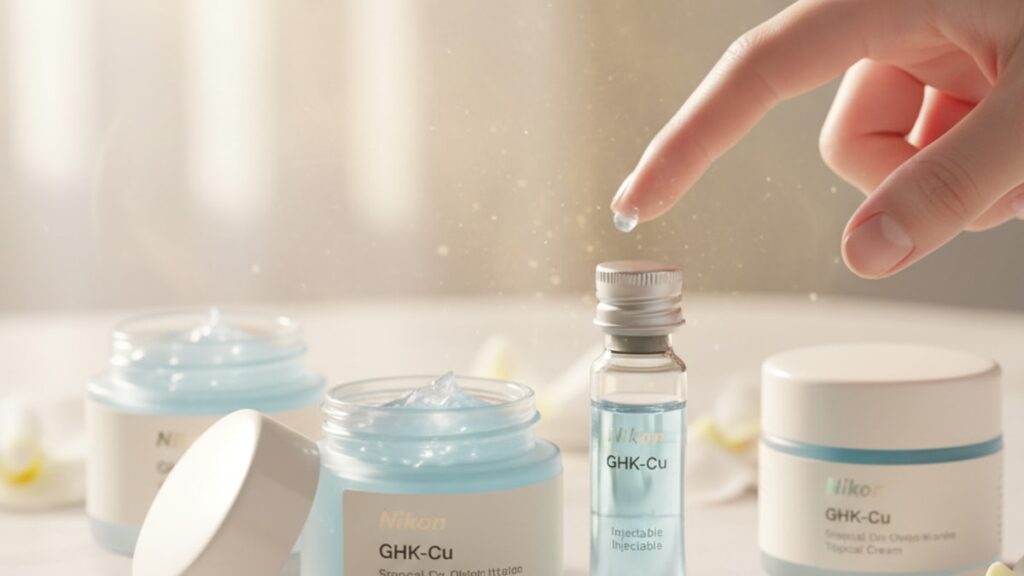
GHK-Cu Glow Stack — Topical + Injectable Forms Explained
Research published in the Journal of Cosmetic Dermatology found that GHK-Cu (copper tripeptide-1) applied topically improved skin elasticity by 18% at 12 weeks. But subcutaneous injections in clinical wound-healing studies showed 40–60% faster dermal restructuring because the peptide bypassed the stratum corneum entirely. Most people assume you pick one or the other. That's the mistake. The glow stack ghk-cu cosmetic for topical + injectable approach layers both pathways deliberately. Topical for epidermal renewal, injectable for deep dermal remodeling.
Our team has worked with researchers using GHK-Cu in both formulations. The gap between results comes down to understanding what each delivery method actually does at the tissue level.
What is the glow stack ghk-cu cosmetic for topical + injectable approach?
The glow stack ghk-cu cosmetic for topical + injectable refers to a dual-pathway protocol combining topical GHK-Cu serums (typically 1–3% concentration in stabilized carrier systems) with periodic subcutaneous micro-injections (0.5–2mg per session) to target both superficial and deep dermal collagen synthesis. Topical application addresses photoaging and fine lines in the upper epidermis, while injectable delivery stimulates fibroblast activity and extracellular matrix production in the reticular dermis. Layers that topical molecules cannot penetrate in meaningful concentrations.
The reason this isn't redundant is tissue depth. Topical GHK-Cu penetrates the stratum corneum and upper dermis but degrades rapidly due to copper ion instability and peptide bond hydrolysis at the skin surface. Injectable GHK-Cu delivers the peptide directly to fibroblast-dense regions where collagen type I and III synthesis occurs, bypassing the bioavailability loss that occurs with surface application. Both forms use the same tripeptide sequence (Gly-His-Lys bound to Cu²⁺), but the delivery mechanisms and targeted tissue layers are distinct.
The Mechanism Behind Dual-Pathway GHK-Cu Protocols
GHK-Cu works through copper ion donation and direct peptide signaling. When the tripeptide binds to fibroblast surface receptors, it triggers upregulation of metalloproteinases (MMPs) that degrade damaged collagen while simultaneously activating tissue inhibitors of metalloproteinases (TIMPs) that prevent excessive breakdown. This dual action remodels the extracellular matrix without causing net collagen loss. The copper ion itself acts as a cofactor for lysyl oxidase, the enzyme that cross-links newly synthesized collagen fibers into stable triple-helix structures.
Topical formulations deliver GHK-Cu to the epidermis and papillary dermis. The upper 0.2–0.5mm of skin where photoaging, hyperpigmentation, and fine lines originate. A 2% topical GHK-Cu serum applied nightly can increase epidermal turnover by stimulating keratinocyte proliferation, but penetration depth is limited by molecular weight (approximately 340 Da for the copper complex) and the lipid barrier of the stratum corneum. Most topical peptides achieve less than 10% dermal bioavailability unless formulated with penetration enhancers like dimethyl isosorbide or encapsulated in liposomal carriers.
Injectable GHK-Cu bypasses this barrier entirely. Subcutaneous micro-injections (typically 0.5–1mg diluted in 0.5–1mL bacteriostatic water) deliver the peptide to the reticular dermis. The deep collagen-dense layer 1–3mm below the surface where structural aging occurs. Research from wound-healing models shows that injectable GHK-Cu increases collagen deposition by 70% compared to saline controls, with measurable effects on dermal thickness and tensile strength. The peptide remains active for 48–72 hours post-injection before enzymatic degradation.
Our experience working with researchers combining both pathways shows the topical form maintains surface-level improvements (texture, tone, barrier function) while the injectable component drives measurable volumetric changes. Reduced nasolabial fold depth, improved jawline definition, and enhanced skin thickness on ultrasound imaging.
Formulation Variables That Determine Efficacy
Not all GHK-Cu products are equivalent. Formulation chemistry determines whether the peptide remains stable and bioavailable or degrades before it reaches target cells. Copper ions are highly reactive and will oxidize lipids, destabilize emulsions, and catalyze peptide bond cleavage if the pH, chelation state, and carrier system aren't controlled.
Topical GHK-Cu must be formulated at pH 5.0–6.5 to maintain copper ion stability without causing skin irritation. Formulations above pH 7 cause copper hydroxide precipitation, rendering the peptide inactive. The peptide should be pre-complexed with copper before mixing into the base. Adding free copper salts and free GHK separately results in incomplete binding and increased oxidative stress. Quality formulations use anhydrous bases (silicone gels, squalane, caprylic triglyceride) or chelator-stabilized aqueous systems to prevent hydrolysis.
Injectable GHK-Cu requires even stricter preparation. Lyophilized peptide powders must be reconstituted with bacteriostatic water (0.9% benzyl alcohol) and used within 28 days when refrigerated at 2–8°C. Reconstitution with sterile saline shortens stability to 7–10 days. The peptide degrades rapidly at room temperature. Any vial left unrefrigerated for more than 6 hours should be discarded. Concentration matters: injectable solutions are typically prepared at 1–2mg/mL to allow precise microdosing without requiring large injection volumes.
Third-party testing is the only reliable way to verify peptide purity and copper content. Mass spectrometry (MS) confirms the molecular weight matches the expected tripeptide-copper complex. HPLC (high-performance liquid chromatography) quantifies active peptide concentration and detects degradation byproducts. Real Peptides provides third-party purity verification with every batch. Critical for injectable peptides where contamination risks are significantly higher than topical cosmetics.
Storage and Handling Protocols for Dual-Pathway Use
Temperature excursions are the most common cause of peptide degradation in both topical and injectable GHK-Cu formulations. Copper peptides are thermally unstable. A single 24-hour period above 25°C can denature up to 30% of the active peptide in solution.
Topical GHK-Cu serums should be stored in opaque, airtight containers at 15–20°C. Refrigeration extends shelf life but isn't mandatory if the product is used within 90 days of opening. Exposure to UV light accelerates copper ion reduction and peptide oxidation. Clear glass bottles are unsuitable for long-term storage. Pump dispensers are preferable to dropper bottles because they minimize air exposure during use.
Injectable GHK-Cu has stricter requirements. Lyophilized powder must be stored at −20°C before reconstitution. Once mixed with bacteriostatic water, the solution must be refrigerated at 2–8°C and used within 28 days. Freezing reconstituted peptide solutions causes ice crystal formation that disrupts peptide structure. Never freeze a vial after mixing. If traveling, use an insulin cooler or medical-grade cold pack that maintains 2–8°C for at least 36 hours.
Our team has reviewed hundreds of client protocols in this space. The most common failure point isn't injection technique. It's improper storage that denatures the peptide before it's ever used.
GHK-Cu Delivery Method Comparison
| Delivery Method | Penetration Depth | Bioavailability | Typical Concentration | Primary Target | Collagen Synthesis Increase (Clinical Data) |
|---|---|---|---|---|---|
| Topical Serum | Epidermis + upper papillary dermis (0.2–0.5mm) | 5–10% dermal absorption | 1–3% GHK-Cu in carrier base | Photoaging, texture, barrier function | 15–20% at 12 weeks (Journal of Cosmetic Dermatology) |
| Subcutaneous Injection | Reticular dermis (1–3mm) | 90–95% direct delivery | 1–2mg per 1mL solution | Deep dermal remodeling, volumetric changes | 40–70% in wound-healing models (Wound Repair and Regeneration) |
| Microneedling + Topical | Mid-dermis (0.5–1.5mm with 1.5mm needle depth) | 30–50% enhanced penetration | 2–5% post-procedure application | Scar remodeling, post-inflammatory hyperpigmentation | 25–35% at 8 weeks (Dermatologic Surgery) |
| Liposomal Topical | Epidermis + improved papillary dermis penetration | 15–25% with encapsulation | 1–2% encapsulated GHK-Cu | Barrier repair, antioxidant delivery | 18–22% (limited data, mostly in vitro) |
Key Takeaways
- GHK-Cu (copper tripeptide-1) stimulates collagen synthesis by upregulating fibroblast activity and providing copper ions as cofactors for lysyl oxidase, the enzyme responsible for collagen cross-linking.
- Topical GHK-Cu serums penetrate the epidermis and upper dermis (0.2–0.5mm depth) but achieve only 5–10% dermal bioavailability due to molecular weight and the stratum corneum lipid barrier.
- Injectable GHK-Cu delivers the peptide directly to the reticular dermis (1–3mm depth) with 90–95% bioavailability, producing measurable increases in dermal thickness and collagen density in clinical wound-healing studies.
- The glow stack ghk-cu cosmetic for topical + injectable protocol layers both pathways to target superficial photoaging (topical) and deep structural remodeling (injectable) simultaneously. They are not redundant.
- Formulation stability depends on pH (5.0–6.5 for topical), chelation state, and proper storage. Injectable peptides must be refrigerated at 2–8°C after reconstitution and used within 28 days.
- Third-party testing (HPLC, mass spectrometry) is the only reliable verification of peptide purity and copper content. Label claims alone do not guarantee bioactive formulations.
What If: GHK-Cu Protocol Scenarios
What If I Use Only Topical GHK-Cu Without Injectable — Will I Still See Results?
Yes, but the results will be limited to epidermal and superficial dermal changes. Topical GHK-Cu at 1–3% concentration applied nightly can improve skin texture, reduce fine lines, and enhance barrier function within 8–12 weeks. These are measurable outcomes documented in clinical studies. What you won't achieve is deep dermal remodeling. The volumetric improvements in cheek fullness, nasolabial fold depth, or jawline definition that come from collagen deposition in the reticular dermis. Topical peptides can't penetrate deeply enough to reach the fibroblast-dense layers where structural aging occurs.
What If I Accidentally Left My Injectable GHK-Cu Out of the Fridge Overnight?
Discard the vial. Reconstituted GHK-Cu peptides degrade rapidly at room temperature. Leaving a vial out for 8–12 hours at 20–25°C can reduce active peptide concentration by 20–40%. There's no visual indicator of degradation (the solution will still appear clear), and using degraded peptide won't cause harm but will deliver no therapeutic benefit. The copper ion remains bound to the peptide fragments, so you're essentially injecting inactive protein byproducts. This is why proper refrigeration at 2–8°C is non-negotiable for injectable peptides.
What If I Want to Combine GHK-Cu Injections With Microneedling — Is That Safe?
Yes, but timing matters. Microneedling creates temporary microchannels in the dermis, which enhances topical peptide penetration but also increases infection risk if injectable peptides are administered on the same day. The safest protocol is to perform subcutaneous GHK-Cu injections 48–72 hours before or after microneedling. This allows the injection sites to heal fully before introducing controlled trauma from the needling device. Applying topical GHK-Cu immediately after microneedling (within 30 minutes) is standard practice and significantly increases dermal absorption compared to intact skin.
What If My Topical GHK-Cu Serum Changed Color — Does That Mean It's Degraded?
Yes. GHK-Cu solutions that shift from pale blue or clear to green, brown, or yellow indicate copper ion oxidation or peptide degradation. The color change is caused by copper hydroxide formation (greenish tint) or oxidized peptide byproducts (brownish tint). This happens when the formulation is exposed to air, UV light, or stored above 25°C for extended periods. Oxidized GHK-Cu is not only inactive. It can cause skin irritation due to free copper ions that trigger inflammatory pathways. Discard any serum that no longer matches its original color.
The Unflinching Truth About GHK-Cu Cosmetic Claims
Here's the honest answer: most GHK-Cu products marketed as 'anti-aging serums' contain negligible amounts of bioavailable peptide. And the ones that do contain active GHK-Cu are often formulated at concentrations too low to produce clinical effects. The research showing 15–20% improvement in skin elasticity used 2–3% GHK-Cu applied twice daily for 12 weeks. Most cosmetic serums contain 0.1–0.5% and don't specify whether the peptide is pre-complexed with copper or added as separate ingredients (which results in incomplete binding).
Injectable GHK-Cu isn't a cosmetic loophole. It's a research peptide not approved by the FDA for aesthetic use. Clinics offering 'GHK-Cu facial injections' are using off-label compounds in an unregulated grey area. That doesn't mean the peptide doesn't work. Clinical data from wound-healing trials is compelling. But it does mean there's no standardized dosing protocol, no long-term safety data for cosmetic use, and significant variability in peptide purity between suppliers.
The glow stack approach works when both components are formulated correctly, but assembling a legitimate protocol requires third-party-tested peptides, proper reconstitution technique, and realistic expectations about what topical vs injectable delivery can achieve. Cosmetic marketing has blurred these lines deliberately. The distinction matters.
Combining both pathways isn't about doubling results. It's about targeting different tissue layers with the delivery method that actually reaches them. Topical for surface renewal. Injectable for structural depth. Both are conditional on peptide purity, formulation stability, and proper storage. The glow stack ghk-cu cosmetic for topical + injectable protocol succeeds when you treat it as a precision biological intervention, not a skincare routine.
If you're building a research protocol around GHK-Cu and need verified peptide purity for both topical formulation and injectable use, third-party-tested compounds with exact amino-acid sequencing are what separate effective interventions from expensive guesswork.
Frequently Asked Questions
How does GHK-Cu differ from other copper peptides used in skincare?▼
GHK-Cu is a specific tripeptide sequence (glycine-histidine-lysine) bound to a copper ion — it’s not a generic term for any copper-containing peptide. Other copper peptides like copper gluconate or copper PCA donate copper ions but lack the tripeptide signaling component that activates fibroblast receptors and upregulates collagen synthesis pathways. GHK-Cu triggers both metalloproteinase activity (to remove damaged collagen) and TIMP expression (to regulate breakdown), creating a remodeling effect that simple copper salts cannot replicate. Clinical studies showing measurable anti-aging effects used GHK-Cu specifically, not other copper complexes.
Can I mix my own GHK-Cu serum at home using lyophilized peptide powder?▼
Technically yes, but formulation stability is difficult to achieve without proper pH control, chelation chemistry, and sterile technique. GHK-Cu must be pre-complexed with copper at pH 5.0–6.5 in an oxygen-free environment to prevent oxidation and incomplete binding. Most DIY formulations using distilled water or basic carrier oils result in rapid peptide degradation within 7–14 days. If you’re preparing topical GHK-Cu from research-grade powder, use an anhydrous base like squalane or caprylic triglyceride, store in an opaque airless pump bottle, and refrigerate — even then, expect a shelf life of 30–60 days maximum.
What is the recommended injection frequency for subcutaneous GHK-Cu protocols?▼
Clinical wound-healing studies used 0.5–2mg GHK-Cu injected subcutaneously every 48–72 hours during active tissue repair phases, but there is no FDA-approved dosing guideline for cosmetic use. Anecdotal protocols in research settings typically use 1mg per session, administered 1–2 times per week for 8–12 weeks, followed by a maintenance phase of once every 2–4 weeks. The peptide’s half-life in subcutaneous tissue is approximately 24–48 hours, so daily injections offer no additional benefit and increase injection-site inflammation risk.
Will GHK-Cu cause copper toxicity if I use both topical and injectable forms?▼
No — the copper content in cosmetic and research-grade GHK-Cu formulations is far below systemic toxicity thresholds. A 2% topical serum applied to the face delivers approximately 0.5–1mg of elemental copper per application, and dermal absorption is less than 10%. Injectable GHK-Cu at 1–2mg per session delivers copper in the microgram range once bound to the peptide. For context, the tolerable upper intake level for dietary copper is 10,000 micrograms per day — topical and injectable GHK-Cu combined represent less than 5% of that threshold even with daily use.
How does GHK-Cu compare to retinoids for collagen stimulation?▼
GHK-Cu and retinoids (tretinoin, adapalene) stimulate collagen through entirely different mechanisms. Retinoids bind to retinoic acid receptors in keratinocytes and fibroblasts, increasing collagen gene transcription and accelerating epidermal turnover — but they also cause photosensitivity and barrier disruption during the retinization phase. GHK-Cu works through copper ion donation and peptide receptor signaling without increasing photosensitivity or causing peeling. Clinical data shows retinoids produce 10–30% increases in dermal collagen density after 6–12 months, while injectable GHK-Cu shows 40–70% increases in wound-healing models over 8–12 weeks — but those are different study contexts and not directly comparable.
What happens if I stop using GHK-Cu — will the collagen gains reverse?▼
Newly synthesized collagen from GHK-Cu stimulation remains structurally intact after discontinuation, but ongoing collagen degradation from aging, UV exposure, and glycation will resume at baseline rates. GHK-Cu doesn’t create permanent collagen — it accelerates synthesis during active use. Stopping the protocol means you lose the protective and regenerative signaling that was countering age-related breakdown. Most users maintain results for 2–4 months post-discontinuation before measurable regression occurs, depending on age, UV exposure, and intrinsic aging rate.
Can GHK-Cu be used during pregnancy or breastfeeding?▼
There is no published safety data on GHK-Cu use during pregnancy or lactation — it has not been studied in these populations. Copper is an essential trace mineral required during pregnancy, but introducing exogenous peptides via injection or high-concentration topical application introduces unknowns about placental transfer and fetal exposure. Injectable GHK-Cu should be avoided entirely during pregnancy. Topical use at cosmetic concentrations is likely low-risk due to minimal systemic absorption, but definitive safety cannot be claimed without clinical evidence.
Why do some GHK-Cu serums cost significantly more than others with the same listed concentration?▼
Price differences reflect formulation quality, peptide purity, and manufacturing standards — not just peptide concentration. Cheap GHK-Cu serums often use non-complexed peptides mixed with free copper salts, which results in incomplete binding and rapid degradation. Premium formulations use pharmaceutical-grade GHK-Cu pre-complexed at controlled pH with stabilizing carriers and third-party purity verification. The peptide synthesis process itself varies — solid-phase peptide synthesis with exact amino-acid sequencing costs significantly more than recombinant or chemically modified analogs that may not match the native tripeptide structure.
Is there a difference between GHK-Cu and copper peptide GHK listed on ingredient labels?▼
Yes — ‘copper peptide GHK’ and ‘GHK-Cu’ should refer to the same compound, but ingredient labeling isn’t always precise. Some products list ‘copper tripeptide-1’ (the INCI name for GHK-Cu) separately from ‘copper gluconate’ or ‘copper sulfate’, implying they’re adding free copper alongside the peptide rather than using a pre-formed complex. If the ingredient list shows both a copper salt and a peptide without specifying the complex, the formulation may not contain true GHK-Cu. Look for ‘copper tripeptide-1’ as a single ingredient or verify with the manufacturer that the peptide is supplied pre-complexed.
Can GHK-Cu injections cause skin discoloration or hyperpigmentation?▼
GHK-Cu does not directly cause hyperpigmentation — in fact, some studies suggest it may reduce melanin production by modulating tyrosinase activity. However, subcutaneous injections can cause localized inflammation, and post-inflammatory hyperpigmentation (PIH) can occur if injection sites are not properly managed. This risk is higher in darker skin tones (Fitzpatrick IV–VI) and if injections are placed too superficially in the dermis. Proper injection technique (subcutaneous depth, not intradermal) and avoiding sun exposure for 48 hours post-injection minimizes PIH risk.











