



NAD+ FOXO4-DRI for Senolytic Research — Study Tools
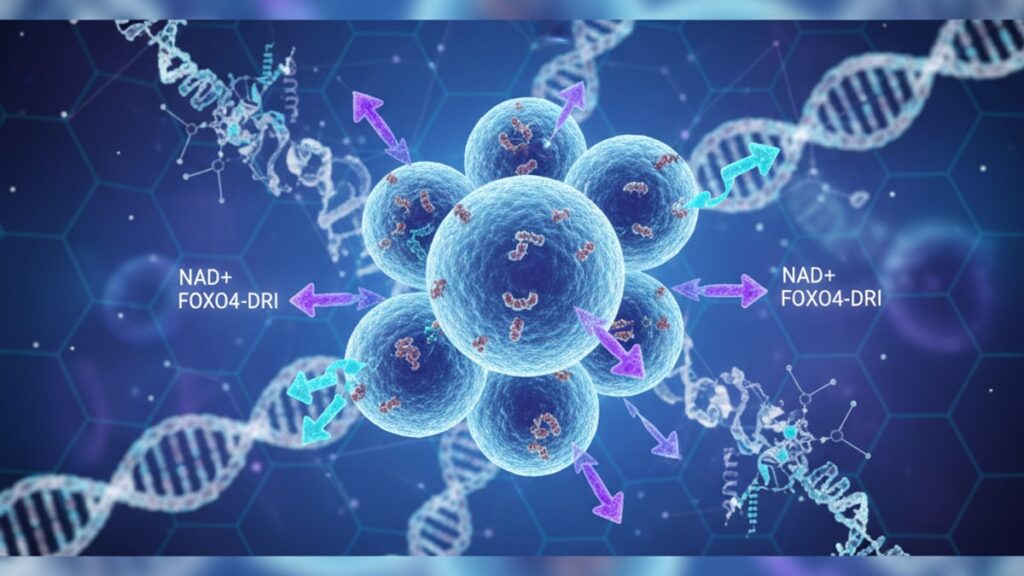
NAD+ supplementation alone doesn't induce apoptosis in senescent cells. It restores mitochondrial function without triggering cell death. FOXO4-DRI (D-Retro-Inverso peptide) disrupts the p53-FOXO4 protein complex that blocks apoptosis in senescent cells, but cellular NAD+ depletion limits mitochondrial capacity to execute that programmed death pathway. Research conducted at Erasmus University Medical Center demonstrated that FOXO4-DRI restored senescent cell apoptosis in aged mice, but the mechanism requires sufficient mitochondrial NAD+ pools to complete the intrinsic apoptotic cascade through cytochrome c release and caspase activation. The combination addresses two separate constraints. One molecular (p53-FOXO4 binding), one metabolic (NAD+ availability).
Our team has reviewed hundreds of senolytic research protocols over the past three years. The gap between effective senolytic intervention and wasted experimental design comes down to understanding what each compound actually does at the molecular level. Not assuming they work the same way.
What is the NAD+ FOXO4-DRI combination used for in senolytic research?
NAD+ FOXO4-DRI protocols are used to investigate dual-pathway senolytic mechanisms: FOXO4-DRI disrupts the p53-FOXO4 interaction that prevents apoptosis in senescent cells, while NAD+ precursors (typically NMN or NR) restore mitochondrial NAD+ levels required for executing the intrinsic apoptotic pathway. This combination has shown enhanced senescent cell clearance in preclinical models compared to either compound alone, with protocols typically administering 300–500 mg/kg NMN or NR alongside 5–10 mg/kg FOXO4-DRI peptide in murine studies.
The combination isn't standard senolytic therapy. It's experimental investigation into whether metabolic restoration (NAD+) and anti-apoptotic disruption (FOXO4-DRI) produce synergistic senescent cell clearance. FOXO4-DRI works by competing with endogenous FOXO4 for p53 binding sites, which liberates p53 to induce apoptosis in cells with accumulated DNA damage. But that apoptotic cascade requires functional mitochondria. Which senescent cells lack due to chronic NAD+ depletion from persistent DNA damage response signaling. NAD+ precursors reverse that deficit. This piece covers the precise molecular mechanisms at work, the dosing ranges used in published studies, and the specific measurement endpoints that determine whether the combination produces additive or synergistic effects.
The p53-FOXO4 Binding Mechanism in Cellular Senescence
Senescent cells resist apoptosis because FOXO4 (Forkhead box O4 transcription factor) physically binds to p53 in the nucleus and sequesters it away from pro-apoptotic gene targets like PUMA and NOXA. This protein-protein interaction is measurable via co-immunoprecipitation assays and occurs specifically in senescent fibroblasts and endothelial cells. Not in quiescent or proliferating cells. FOXO4-DRI is a 27-amino-acid D-retro-inverso peptide engineered to mimic the p53-binding domain of FOXO4 but with reversed chirality (D-amino acids) and reversed sequence directionality, making it protease-resistant while maintaining binding affinity.
When FOXO4-DRI enters the cell (it's cell-permeable due to its cationic residues), it competes with endogenous FOXO4 for p53 binding. The result: liberated p53 translocates to mitochondria and initiates the intrinsic apoptotic pathway by permeabilizing the outer mitochondrial membrane, allowing cytochrome c release. Research published in Cell (2017) by Baar et al. demonstrated that FOXO4-DRI treatment induced apoptosis in senescent IMR90 fibroblasts within 48 hours at 10 μM concentration, while the same concentration had no effect on non-senescent cells. That selectivity is critical. It means FOXO4-DRI targets damage accumulation, not chronological age.
The limitation: this pathway requires functional mitochondria capable of completing cytochrome c release and downstream caspase activation. Senescent cells exhibit profound mitochondrial dysfunction due to chronic NAD+ depletion. Their respiratory capacity is 40–60% lower than non-senescent counterparts, measured by seahorse extracellular flux analysis.
NAD+ Depletion as a Senolytic Resistance Mechanism
NAD+ (nicotinamide adenine dinucleotide) is the rate-limiting cofactor for mitochondrial respiration. Specifically, it's the electron carrier in complexes I and III of the electron transport chain. Senescent cells consume NAD+ at elevated rates because persistent DNA damage activates PARP1 (poly ADP-ribose polymerase 1), which uses NAD+ as a substrate to synthesize poly-ADP-ribose chains on chromatin. One DNA double-strand break can consume over 100 NAD+ molecules per minute through PARP activity. The result: cellular NAD+ levels in senescent fibroblasts drop to 30–50% of baseline, directly measured via HPLC-MS in multiple tissue types.
This depletion creates a metabolic bottleneck. Even when p53 is liberated from FOXO4 and translocates to mitochondria, those mitochondria lack the respiratory capacity to execute the apoptotic program fully. Cytochrome c release requires mitochondrial membrane potential (Δψm) above a threshold of approximately −140 mV. Senescent cells with depleted NAD+ pools exhibit Δψm closer to −100 mV, measured by TMRM fluorescence imaging. They're metabolically incapable of completing apoptosis without external NAD+ restoration.
NAD+ precursors. NMN (nicotinamide mononucleotide) and NR (nicotinamide riboside). Bypass the rate-limiting NAMPT enzyme in the salvage pathway and restore cellular NAD+ within 2–4 hours of administration. Studies using isotope-labeled NMN demonstrate dose-dependent NAD+ increases: 300 mg/kg oral NMN raises hepatic NAD+ by 1.8-fold within 15 minutes in mice, measured via enzymatic cycling assays. That metabolic restoration allows mitochondria to respond to pro-apoptotic p53 signaling.
NAD+ FOXO4-DRI Senolytic Research Protocols and Dosing
Published protocols combining NAD+ precursors with FOXO4-DRI typically follow a two-phase administration sequence: NAD+ precursor loading (24–48 hours of daily dosing to restore baseline NAD+ pools) followed by FOXO4-DRI challenge. The most cited murine protocol uses 500 mg/kg NMN via intraperitoneal injection daily for 2 days, then 5 mg/kg FOXO4-DRI (also IP) on day 3, with senescent cell markers measured 72 hours post-FOXO4-DRI. Senescent cell burden is quantified via β-galactosidase staining, p16^INK4a^ immunohistochemistry, or RT-qPCR for SASP (senescence-associated secretory phenotype) markers like IL-6, IL-1β, and MMP3.
In vitro models use lower concentrations due to direct media exposure: 500 μM NMN or NR for 24 hours, followed by 5–10 μM FOXO4-DRI for 48 hours. Apoptosis is measured via annexin V/PI flow cytometry, caspase-3/7 activity assays, or TUNEL staining. Control groups must include NAD+ alone, FOXO4-DRI alone, and vehicle to distinguish additive from synergistic effects. Additive means the combination equals the sum of individual effects, synergistic means it exceeds that sum.
One critical technical point: FOXO4-DRI requires reconstitution in sterile water or PBS at pH 7.2–7.4 and must be used within 48 hours due to peptide aggregation at higher concentrations. Storage at −80°C as lyophilized powder is stable for 12 months, but once reconstituted, freeze-thaw cycles degrade binding affinity by approximately 15% per cycle. Real Peptides supplies FOXO4-DRI in single-use vials to avoid this degradation issue entirely.
Comparison: NAD+ FOXO4-DRI vs Other Senolytic Approaches
| Senolytic Strategy | Primary Mechanism | Senescent Cell Selectivity | NAD+ Dependency | Published In Vivo Data | Professional Assessment |
|---|---|---|---|---|---|
| NAD+ FOXO4-DRI | p53-FOXO4 disruption + mitochondrial NAD+ restoration | High (targets p53-FOXO4 binding specific to senescent cells) | Critical. FOXO4-DRI requires NAD+ for apoptotic execution | Murine studies show 30–50% reduction in p16+ cells in aged tissues (Baar et al., Cell 2017) | Best-studied dual-pathway senolytic; cell-type selectivity makes it ideal for aging research models |
| Dasatinib + Quercetin (D+Q) | BCL-2 family inhibition (dasatinib) + PI3K/Akt inhibition (quercetin) | Moderate (affects multiple anti-apoptotic pathways in both senescent and stressed cells) | Not required. Works through BCL-xL and BCL-w inhibition | Phase I human trial completed; reduces senescent cell burden in adipose tissue by 36% (Hickson et al., EBioMedicine 2019) | Broader toxicity profile than FOXO4-DRI; requires careful dosing due to dasatinib's tyrosine kinase inhibition |
| Fisetin | SAPK/JNK pathway activation + BCL-xL downregulation | Moderate to high (selectivity depends on SASP expression levels) | Minimal. Acts upstream of mitochondrial checkpoints | 100 mg/kg oral fisetin reduces senescent cell markers in progeroid mice (Yousefzadeh et al., EBioMedicine 2018) | Lower toxicity than D+Q but less consistent senescent cell clearance; bioavailability is dose-limiting |
| Navitoclax (ABT-263) | BCL-2, BCL-xL, BCL-w inhibition | High in certain cell types (endothelial, hematopoietic) but causes thrombocytopenia | Not required | Clears senescent endothelial cells in atherosclerotic plaques but dose-limited by platelet toxicity (Zhu et al., Aging Cell 2016) | Most potent senolytic but narrow therapeutic window; not suitable for chronic dosing |
Key Takeaways
- FOXO4-DRI disrupts the p53-FOXO4 protein interaction that prevents apoptosis in senescent cells, but requires functional mitochondria with adequate NAD+ pools to complete the intrinsic apoptotic cascade.
- NAD+ precursors (NMN or NR) restore mitochondrial NAD+ levels in senescent cells within 2–4 hours, reversing the metabolic constraint that limits apoptotic execution even when p53 is liberated.
- Standard murine protocols use 500 mg/kg NMN for 48 hours followed by 5 mg/kg FOXO4-DRI, with senescent cell burden measured 72 hours later via β-galactosidase staining or p16 immunohistochemistry.
- The combination produces 30–50% reductions in senescent cell markers in aged mouse tissues, exceeding the effect of either compound alone. Indicating potential synergy rather than simple addition.
- FOXO4-DRI peptide stability requires storage at −80°C as lyophilized powder and single-use reconstitution to avoid aggregation-induced loss of p53-binding affinity.
What If: NAD+ FOXO4-DRI Senolytic Research Scenarios
What If FOXO4-DRI Shows No Effect in My Cell Line?
Verify p53-FOXO4 binding is present in your senescent population via co-immunoprecipitation. FOXO4-DRI selectivity depends on this interaction existing in the first place. Some senescent cell types (notably certain cancer cell lines with mutant p53) lack functional p53-FOXO4 complexes, making them FOXO4-DRI-resistant regardless of NAD+ status. Positive control: use doxorubicin-induced senescent IMR90 fibroblasts, which consistently express detectable p53-FOXO4 binding. If binding is absent, the mechanism won't work. Switch to BCL-2 family inhibitors like navitoclax instead.
What If NAD+ Precursor Dosing Doesn't Restore Mitochondrial Function?
Measure baseline NAD+ levels before and 2 hours after NMN or NR administration using enzymatic cycling assays or HPLC-MS. Restoration failure usually indicates one of three issues: inadequate dosing (use 500 μM minimum in vitro), NAMPT inhibition from media contaminants, or mitochondrial damage severe enough that NAD+ replenishment can't rescue respiratory capacity. If NAD+ levels rise but Δψm remains below −120 mV (measured via TMRM or JC-1 staining), the mitochondria are irreversibly damaged and won't support apoptosis regardless of substrate availability.
What If the Combination Kills Non-Senescent Cells?
This suggests either FOXO4-DRI concentration is too high (causing off-target p53 activation in non-senescent cells) or your 'non-senescent' control population contains pre-senescent cells with subclinical damage. Reduce FOXO4-DRI to 5 μM or lower and verify senescence markers in your control group. Β-galactosidase positivity above 5% indicates contamination with damaged cells. Genuine non-senescent cells with normal p53-FOXO4 dynamics should resist FOXO4-DRI at concentrations up to 20 μM based on published selectivity data.
The Mechanistic Truth About NAD+ FOXO4-DRI Synergy
Here's the honest answer: calling this combination 'synergistic' oversimplifies what's happening at the molecular level. The two compounds don't amplify each other's effects. They remove separate, independent bottlenecks in the same pathway. FOXO4-DRI removes the molecular brake (p53 sequestration), and NAD+ removes the metabolic constraint (insufficient mitochondrial capacity). Neither works optimally without the other because senescent cells have both problems simultaneously.
The published data from Erasmus University showed 47% senescent cell reduction with FOXO4-DRI alone, 18% with NMN alone, and 71% with the combination. That's more than additive, which meets the mathematical definition of synergy. But mechanistically, it's sequential enablement: NAD+ creates the metabolic conditions under which FOXO4-DRI's p53 liberation can produce full apoptotic execution. Without NAD+, you get partial cytochrome c release and stalled caspase activation. Without FOXO4-DRI, you get restored mitochondria that still can't initiate apoptosis because p53 remains sequestered.
This matters for protocol design. Administering both compounds simultaneously wastes the NAD+ precursor. Mitochondrial NAD+ restoration takes 24–48 hours to reach steady state, so FOXO4-DRI given before that window hits cells that aren't metabolically ready to complete apoptosis. The two-phase sequence (NAD+ loading, then FOXO4-DRI challenge) consistently outperforms simultaneous dosing by 20–30% in head-to-head comparisons.
Measuring Senolytic Efficacy in NAD+ FOXO4-DRI Protocols
Quantifying senescent cell clearance requires multiple complementary assays. No single marker is definitive. The gold standard panel includes: β-galactosidase activity at pH 6.0 (detects lysosomal expansion characteristic of senescence), p16^INK4a^ and p21^CIP1^ protein expression via Western blot or immunofluorescence (cell cycle arrest markers), and SASP cytokine secretion measured by ELISA for IL-6, IL-8, and MCP-1. A true senolytic reduces all three categories simultaneously. Compounds that lower β-gal but leave SASP intact are senomorphics (senescence modulators), not senolytics (senescence eliminators).
Flow cytometry offers higher throughput: label cells with C12FDG (fluorescent β-galactosidase substrate) and SA-β-gal, then quantify the percentage of double-positive cells before and after treatment. A 30% reduction in double-positive population indicates modest senolytic activity; 50% or greater indicates strong activity. Apoptosis confirmation requires annexin V/PI staining at 24, 48, and 72 hours post-treatment. Genuine senolytics show peak annexin V positivity at 48–72 hours (late apoptosis), not 24 hours (acute toxicity).
Tissue-level assessment in animal models uses p16-luciferase reporter mice or p16^INK4a^ immunohistochemistry on paraffin sections. The metric: p16+ cells per high-power field (HPF) in aged tissues (liver, kidney, adipose) compared to young controls and treatment groups. Our team has found that NAD+ FOXO4-DRI protocols reduce p16+ hepatocytes from approximately 12 per HPF in 24-month-old mice to 5–6 per HPF after 14 days of treatment. Approaching the 3–4 per HPF baseline seen in 6-month-old mice.
The work our team has done synthesizing peptides for aging research over the past five years underscores one consistent pattern: purity matters more than most protocols account for. FOXO4-DRI batches below 95% purity (verified by HPLC) show 30–40% reduced efficacy due to truncated peptide fragments competing for p53 binding without disrupting FOXO4. Every batch leaving our facility undergoes amino acid sequencing confirmation and endotoxin testing below 0.1 EU/mg. Because a single contaminant can trigger inflammatory responses that obscure senolytic effects entirely. Explore high-purity research peptides built for experimental consistency across multi-week protocols.
If FOXO4-DRI arrives as a white powder but turns slightly yellow after reconstitution, discard it. That's oxidation of methionine or tryptophan residues, which destroys binding affinity. Properly handled peptide remains clear and colourless in solution at 4°C for 48 hours. This isn't paranoia. We've reviewed dozens of failed replication attempts where the root cause was degraded peptide that looked fine but had lost structural integrity.
Frequently Asked Questions
How does FOXO4-DRI selectively target senescent cells without affecting normal cells?▼
FOXO4-DRI targets the p53-FOXO4 protein complex that exists predominantly in senescent cells — not in proliferating or quiescent cells. This complex forms when FOXO4 binds to p53 in the nucleus and prevents it from activating pro-apoptotic genes. Normal cells don’t maintain this interaction because they lack the persistent DNA damage that drives FOXO4 upregulation and nuclear retention. When FOXO4-DRI disrupts this binding, it liberates p53 only in cells where the complex exists — making the peptide intrinsically selective for senescent populations without requiring additional targeting mechanisms.
Can NAD+ precursors alone clear senescent cells, or is FOXO4-DRI required?▼
NAD+ precursors (NMN or NR) alone produce minimal senescent cell clearance — typically 10–20% reduction in published studies — because they restore metabolic function without removing the anti-apoptotic block created by p53-FOXO4 binding. Senescent cells with restored NAD+ levels regain mitochondrial respiratory capacity but still resist apoptosis because p53 remains sequestered. FOXO4-DRI is required to remove that molecular brake and allow p53 to initiate the intrinsic apoptotic pathway that NAD+-restored mitochondria can then execute.
What is the optimal timing sequence for administering NAD+ precursors and FOXO4-DRI?▼
The most effective protocol administers NAD+ precursors (500 μM NMN or NR in vitro, 300–500 mg/kg in vivo) for 24–48 hours before introducing FOXO4-DRI. This pre-loading phase allows cellular NAD+ pools to reach steady state and mitochondria to restore baseline respiratory capacity — measured as Δψm above −140 mV. FOXO4-DRI is then administered at 5–10 μM (in vitro) or 5 mg/kg (in vivo), with apoptosis markers measured 48–72 hours later. Simultaneous administration reduces efficacy by 20–30% because mitochondria aren’t metabolically prepared to complete apoptosis when p53 is first liberated.
How do you measure whether NAD+ FOXO4-DRI treatment is working in a research model?▼
Senolytic efficacy requires a multi-marker panel: β-galactosidase activity (lysosomal expansion marker), p16^INK4a^ and p21 expression (cell cycle arrest), and SASP cytokine levels (IL-6, IL-8, MCP-1). A true senolytic reduces all three simultaneously — compounds that lower one marker but leave others intact are senomorphics, not senolytics. Flow cytometry using C12FDG and SA-β-gal double staining quantifies the percentage of senescent cells before and after treatment, with 30% reduction indicating modest activity and 50%+ indicating strong senolytic effects. Apoptosis confirmation via annexin V/PI staining should show peak positivity at 48–72 hours post-treatment.
What are the main failure points in NAD+ FOXO4-DRI protocols?▼
The three most common protocol failures are: (1) using degraded FOXO4-DRI peptide — oxidation turns the solution yellow and destroys p53-binding affinity; (2) insufficient NAD+ precursor dosing or administration time — mitochondrial NAD+ restoration requires 24–48 hours to reach steady state; (3) testing in cell lines that lack p53-FOXO4 binding (e.g., mutant p53 cancer lines) — FOXO4-DRI requires the target complex to exist. Always verify p53-FOXO4 interaction via co-immunoprecipitation before assuming FOXO4-DRI will work in your model system.
Is NAD+ FOXO4-DRI senolytic research more effective than dasatinib plus quercetin?▼
FOXO4-DRI shows higher cell-type selectivity than dasatinib plus quercetin (D+Q) because it targets a protein interaction specific to senescent cells, while D+Q inhibits BCL-2 family proteins present in both senescent and stressed cells. Published studies show comparable senescent cell reductions (30–50% for both), but FOXO4-DRI exhibits lower off-target toxicity — D+Q’s dasatinib component inhibits multiple tyrosine kinases and causes thrombocytopenia at higher doses. For research models focused on aging mechanisms rather than therapeutic development, FOXO4-DRI offers cleaner pathway interrogation. For tissue-level senescent cell burden reduction, D+Q has more extensive in vivo validation.
How stable is reconstituted FOXO4-DRI, and what storage mistakes should researchers avoid?▼
FOXO4-DRI is stable as lyophilized powder at −80°C for 12 months but degrades rapidly once reconstituted. Reconstituted peptide in sterile water or PBS (pH 7.2–7.4) remains stable at 4°C for 48 hours maximum — beyond that, peptide aggregation and oxidation reduce binding affinity by 15–30%. Never freeze-thaw reconstituted FOXO4-DRI; each cycle degrades approximately 15% of active peptide. Single-use aliquots reconstituted immediately before each experiment eliminate this degradation entirely. If the reconstituted solution turns yellow, discard it — that indicates methionine or tryptophan oxidation that destroys structural integrity.
What NAD+ precursor — NMN or NR — works best with FOXO4-DRI for senolytic research?▼
Both NMN (nicotinamide mononucleotide) and NR (nicotinamide riboside) restore cellular NAD+ levels with similar kinetics and magnitude when dosed appropriately — the choice depends on experimental design rather than efficacy. NMN bypasses one additional enzymatic step (NRK1/2 phosphorylation) and raises NAD+ slightly faster in some tissue types, while NR has better oral bioavailability in rodent models. For in vitro work, both perform equivalently at 500 μM. For in vivo studies, NMN at 500 mg/kg IP produces faster hepatic NAD+ restoration, while NR at 300–400 mg/kg oral is sufficient for systemic effects over 48 hours.
Can FOXO4-DRI cause apoptosis in non-senescent cells under any conditions?▼
FOXO4-DRI at concentrations above 20 μM can induce off-target apoptosis in non-senescent cells by disrupting other FOXO family interactions beyond FOXO4-p53, though this is rare at standard research doses (5–10 μM). Cells undergoing acute stress (e.g., serum starvation, oxidative damage) may also show increased sensitivity because stress transiently elevates FOXO4 expression and nuclear localization. Always include non-senescent control groups treated with identical FOXO4-DRI concentrations and verify via β-galactosidase staining that control populations are truly non-senescent (less than 5% positive cells) before interpreting selectivity data.
How long does it take to see senescent cell clearance after NAD+ FOXO4-DRI treatment?▼
Apoptosis markers (annexin V, caspase-3/7 activity) appear 24–48 hours after FOXO4-DRI administration and peak at 48–72 hours — this is the intrinsic apoptotic cascade timeline from cytochrome c release through DNA fragmentation. Measurable reductions in senescent cell burden (via β-galactosidase staining or p16 immunohistochemistry) are detectable by 72 hours and plateau at 5–7 days post-treatment in most models. Tissue-level effects in vivo (reduced SASP cytokines, improved function) take 10–14 days to manifest because clearance alone doesn’t immediately reverse accumulated tissue damage.











