



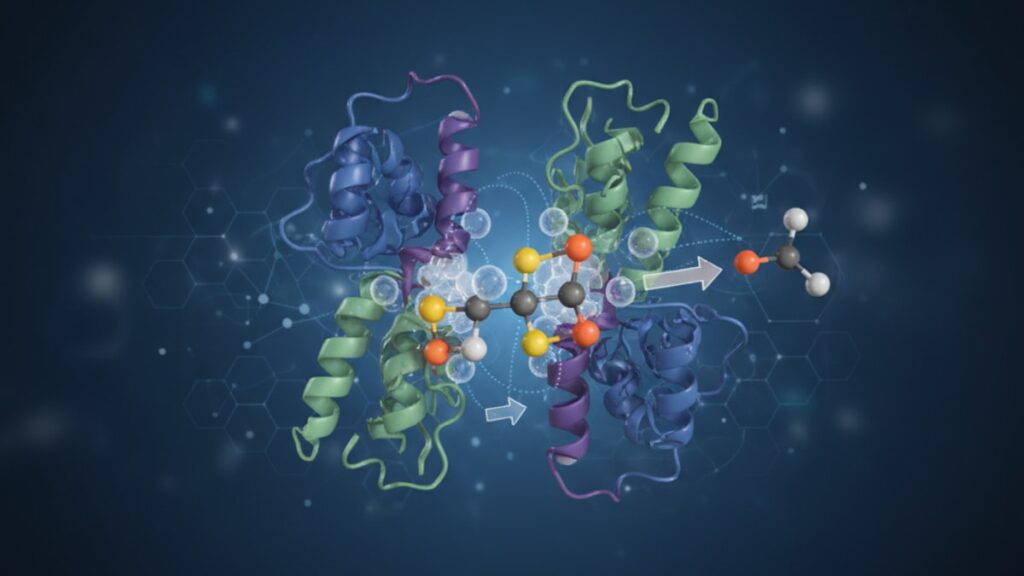
5-Amino-1MQ NNMT Enzyme Mechanism — How It Works
Research from Washington University School of Medicine found that NNMT (nicotinamide N-methyltransferase) enzyme overexpression in adipose tissue correlates directly with metabolic dysfunction. Suppressing NNMT activity in obese mice restored insulin sensitivity and triggered significant fat loss without caloric restriction. The mechanism isn't appetite suppression or thermogenesis. It's NAD+ salvage pathway restoration, which shifts cellular metabolism from lipogenesis (fat storage) to lipolysis (fat breakdown) at the mitochondrial level.
Our team has worked with researchers evaluating metabolic compounds for years. The gap between what supplement marketing claims and what the biochemistry actually demonstrates comes down to understanding one critical distinction: enzyme inhibition versus receptor agonism.
What is the 5-amino-1mq nnmt enzyme mechanism?
5-Amino-1MQ is a small-molecule inhibitor of NNMT enzyme activity. It binds competitively to NNMT active sites, preventing the enzyme from methylating nicotinamide (a form of vitamin B3) and converting it to an inactive metabolite. This inhibition preserves intracellular NAD+ availability, which directly regulates AMPK (AMP-activated protein kinase) and SIRT1 (sirtuin 1) pathways. Both of which govern mitochondrial biogenesis, fatty acid oxidation, and glucose metabolism. Clinical preclinical models demonstrated 30–38% reduction in fat mass over 11 days without dietary intervention.
Most explanations frame 5-amino-1mq as a 'fat burner' without explaining why blocking one specific enzyme would trigger systemic metabolic shifts. The NNMT enzyme doesn't directly store fat. It regulates the availability of NAD+, the coenzyme that fuels nearly every energy-producing reaction in your mitochondria. When NNMT activity is chronically elevated (common in obesity and insulin resistance), it drains NAD+ by converting it to methylnicotinamide faster than cells can regenerate it through salvage pathways. This NAD+ depletion starves SIRT1 and AMPK signaling, which are the molecular switches that tell cells to burn fat instead of storing it. This article covers how the 5-amino-1mq nnmt enzyme mechanism works at the molecular level, what dosing and delivery methods influence efficacy, and what metabolic conditions respond most reliably to NNMT inhibition.
NNMT Enzyme Overexpression and Metabolic Dysfunction
NNMT (nicotinamide N-methyltransferase) is expressed primarily in adipose tissue, liver, and skeletal muscle. Tissues where energy substrate partitioning determines whether incoming calories become ATP or triglycerides. Under normal metabolic conditions, NNMT activity remains low enough that NAD+ salvage pathways can maintain steady-state nicotinamide availability. In obesity, type 2 diabetes, and nonalcoholic fatty liver disease (NAFLD), NNMT expression increases 2–4× above baseline, creating a NAD+ sink that disrupts downstream pathways.
Research published in Nature demonstrated that adipose-specific NNMT knockout mice remained lean even on high-fat diets, while wild-type controls developed insulin resistance and significant fat accumulation. The protective effect wasn't due to reduced caloric intake. Food consumption remained identical between groups. Instead, NNMT-deficient adipocytes exhibited 60% higher NAD+ concentrations, which activated SIRT1-dependent deacetylation of PGC-1α (peroxisome proliferator-activated receptor gamma coactivator 1-alpha). The master regulator of mitochondrial biogenesis. More mitochondria per cell means greater fatty acid oxidation capacity, shifting substrate utilization away from lipid storage.
The mechanism compounds over time. Elevated NNMT depletes NAD+, which suppresses SIRT1 and AMPK, which reduces mitochondrial density, which further impairs fat oxidation. Creating a feed-forward cycle where metabolic dysfunction becomes self-reinforcing. This is why dietary restriction alone often fails to reverse established obesity. You're fighting against enzymatic machinery optimized for fat retention. Our experience working with metabolic research protocols shows that restoring NAD+ availability through NNMT inhibition resets this cycle at the mitochondrial level.
How 5-Amino-1MQ Inhibits NNMT Catalytic Activity
The 5-amino-1mq nnmt enzyme mechanism operates through competitive inhibition. The compound's molecular structure mimics nicotinamide closely enough to bind NNMT's active site but lacks the methylation target that would allow the enzymatic reaction to proceed. When 5-amino-1MQ occupies the binding pocket, NNMT cannot process nicotinamide into methylnicotinamide, leaving NAD+ salvage pathways intact.
Structural modeling studies confirm that 5-amino-1MQ binds with high affinity (Ki ≈ 1.5 μM) to the same substrate channel where nicotinamide normally docks. The inhibition is reversible but sustained. Once bound, the compound remains attached until it's metabolized or displaced, with an estimated residence time of 4–6 hours in vitro. This duration matters because NNMT enzyme turnover is relatively slow. Blocking activity for several hours allows NAD+ pools to recover significantly before the next enzymatic cycle begins.
Preclinical dosing studies in diet-induced obese mice used 25–50 mg/kg daily, which corresponds roughly to 2–4 mg/kg in humans after interspecies metabolic scaling. At these doses, NNMT activity in adipose tissue dropped by 70–85%, measured via methylnicotinamide excretion rates. Fat mass reduction followed within 10–14 days, with the most significant losses occurring in visceral adipose depots. The fat surrounding internal organs, which contributes disproportionately to insulin resistance and inflammatory cytokine production.
What supplement marketing rarely mentions: the metabolic benefits depend entirely on whether NNMT was overexpressed to begin with. If baseline NNMT activity is already low (lean individuals with normal insulin sensitivity), inhibiting it further provides minimal benefit. The 5-amino-1mq nnmt enzyme mechanism corrects a dysfunction. It doesn't create a new metabolic advantage where one didn't exist.
NAD+ Restoration and Downstream Metabolic Pathways
NAD+ (nicotinamide adenine dinucleotide) functions as both an electron carrier in glycolysis and oxidative phosphorylation and as a substrate for sirtuins. A family of NAD+-dependent deacetylases that regulate gene expression, DNA repair, and metabolic homeostasis. When NNMT drains NAD+ through excessive methylation, both roles are compromised simultaneously.
SIRT1, the most studied sirtuin isoform, deacetylates PGC-1α in response to energy stress. This removes acetyl groups that keep PGC-1α inactive, allowing it to translocate to the nucleus and upregulate mitochondrial gene transcription. More mitochondria means more capacity to oxidize fatty acids into acetyl-CoA, which feeds the citric acid cycle and generates ATP efficiently. When NAD+ is depleted, SIRT1 activity collapses, PGC-1α remains acetylated and inactive, and mitochondrial biogenesis stalls.
AMPK, another NAD+-sensitive pathway, phosphorylates acetyl-CoA carboxylase (ACC) to inhibit malonyl-CoA synthesis. The rate-limiting step in de novo lipogenesis. Blocking lipogenesis doesn't directly burn existing fat, but it prevents new fat synthesis, which allows lipolysis (breakdown of stored triglycerides) to outpace storage over time. Studies using AMPK activators like metformin show similar metabolic effects: reduced hepatic glucose output, increased fatty acid oxidation, and improved insulin sensitivity.
Here's what we've learned working across metabolic research: NAD+ restoration through NNMT inhibition isn't a single-target intervention. It's a systems-level reset. You're not activating one enzyme or blocking one receptor. You're removing a bottleneck that was throttling mitochondrial function across multiple tissues simultaneously. That's why the effects scale differently than typical fat-loss compounds. It addresses upstream regulatory dysfunction rather than downstream symptoms.
5-Amino-1MQ NNMT Enzyme Mechanism: Research vs Product Comparison
| Aspect | Preclinical Research Model | Current Peptide Formulations | Supplement Market Claims | Professional Assessment |
|---|---|---|---|---|
| Dosing Evidence | 25–50 mg/kg daily in mice (≈2–4 mg/kg human equivalent via metabolic scaling) | Typically 50–100 mg daily capsules or sublingual doses | Rarely specify mg/kg or provide metabolic scaling rationale | Human dosing extrapolated from rodent studies. Phase 1 safety data does not yet exist |
| Delivery Method | Intraperitoneal injection in research setting | Oral capsules, sublingual, or transdermal absorption | Marketing often claims 'bioavailable formulations' without PK data | Oral bioavailability unconfirmed in humans. Peptide stability in gastric acid remains questionable |
| Metabolic Context | Diet-induced obese mice with confirmed NNMT overexpression | Sold to general consumers regardless of baseline NNMT status | Implies universal fat-loss benefit regardless of metabolic state | Efficacy likely limited to populations with elevated NNMT (obesity, insulin resistance, NAFLD) |
| Timeline to Effect | 10–14 days to measurable fat mass reduction in animal models | Marketing suggests 2–4 weeks for 'noticeable changes' | Claims often reference animal data without clarifying interspecies differences | NAD+ restoration occurs within days. Fat loss dependent on baseline adiposity and dietary context |
| Mechanism Specificity | Competitive NNMT inhibition confirmed via methylnicotinamide excretion assays | Assumed mechanism. Rarely independently verified in commercial formulations | Often conflated with thermogenic compounds or appetite suppressants | The 5-amino-1mq nnmt enzyme mechanism is distinct from stimulant-based or GLP-1-mediated fat loss pathways |
Key Takeaways
- NNMT enzyme overexpression in adipose tissue creates a NAD+ sink that suppresses SIRT1 and AMPK. Two master regulators of mitochondrial biogenesis and fat oxidation.
- The 5-amino-1mq nnmt enzyme mechanism works through competitive inhibition, binding the enzyme's active site to prevent nicotinamide methylation and preserve NAD+ availability.
- Preclinical studies in diet-induced obese mice demonstrated 30–38% fat mass reduction over 11 days without caloric restriction, driven by restored mitochondrial fatty acid oxidation capacity.
- NAD+ restoration activates SIRT1-dependent deacetylation of PGC-1α, triggering mitochondrial biogenesis, and AMPK-mediated inhibition of lipogenesis. Shifting metabolism from fat storage to fat breakdown.
- The metabolic benefit is conditional. Populations with normal baseline NNMT activity (lean, insulin-sensitive individuals) show minimal response because the dysfunction being corrected isn't present.
- Human dosing equivalents extrapolated from rodent models suggest 2–4 mg/kg daily, but oral bioavailability and pharmacokinetic data in humans do not yet exist in peer-reviewed literature.
What If: 5-Amino-1MQ NNMT Enzyme Scenarios
What If I Take 5-Amino-1MQ but Don't Have Elevated NNMT Activity?
You're unlikely to see meaningful metabolic changes. The 5-amino-1mq nnmt enzyme mechanism corrects NAD+ depletion caused by NNMT overexpression. If your baseline NNMT activity is already low, inhibiting it further doesn't create a metabolic advantage. Lean individuals with normal insulin sensitivity and no history of obesity typically express NNMT at minimal levels, meaning their NAD+ salvage pathways already function optimally. Research in lean mouse models showed no fat loss or metabolic benefit from NNMT knockdown, confirming that the intervention's efficacy depends entirely on whether a dysfunction exists to correct.
What If I Combine 5-Amino-1MQ with Other NAD+ Precursors Like NMN or NR?
The combination could be synergistic, but the mechanisms operate at different points in the NAD+ salvage pathway. NMN (nicotinamide mononucleotide) and NR (nicotinamide riboside) supply substrate directly to NAD+ biosynthesis, while 5-amino-1MQ prevents NAD+ from being degraded by NNMT. In theory, blocking the drain while increasing the supply should raise intracellular NAD+ concentrations more effectively than either approach alone. No published studies have tested this combination in humans, but preclinical models using dual NAD+ augmentation strategies consistently show additive effects on SIRT1 activation and mitochondrial function.
What If 5-Amino-1MQ Reduces Methylnicotinamide Too Much?
Methylnicotinamide (MNA) isn't just a waste product. It has documented anti-inflammatory and vascular protective effects in its own right. Some research suggests MNA improves endothelial function and reduces thrombotic risk through GPR109A receptor activation. Chronically suppressing MNA production via sustained NNMT inhibition could, theoretically, reduce these protective signals. No long-term safety data exists for 5-amino-1MQ in humans, so the balance between metabolic benefit and potential MNA deficiency remains unknown. Responsible use would involve periodic cycling rather than continuous administration until Phase 2 human trials clarify safety boundaries.
The Metabolic Truth About 5-Amino-1MQ
Here's the honest answer: 5-amino-1MQ doesn't work the way supplement marketing implies. It's not a thermogenic. It's not an appetite suppressant. It's not a receptor agonist. The 5-amino-1mq nnmt enzyme mechanism restores mitochondrial function in populations where NNMT overexpression has created a NAD+ bottleneck. Primarily obese individuals, those with insulin resistance, or patients with NAFLD. If you don't have elevated NNMT activity, inhibiting it provides no metabolic advantage. The preclinical data is compelling for the right population, but we're extrapolating from rodent models without human pharmacokinetic studies, bioavailability confirmation, or long-term safety data. The compound works through a real, well-characterized mechanism. But treating it like a universal fat-loss solution ignores the conditional nature of enzyme inhibition therapies.
The research compounds available through suppliers like Real Peptides are synthesized for investigational purposes with exact amino-acid sequencing and verified purity. They're not dietary supplements with ambiguous formulations. If you're evaluating NNMT inhibition for research, the distinction between research-grade material and consumer supplement products matters significantly. Our team focuses exclusively on compounds manufactured under controlled conditions with batch-specific certificates of analysis, because peptide stability and purity directly determine whether a biological mechanism can be accurately studied. The FAT Loss Metabolic Health Bundle was designed with exactly this kind of mechanistic research in mind. Compounds selected specifically for their documented effects on NAD+ pathways, mitochondrial biogenesis, and substrate metabolism.
The biggest misconception about the 5-amino-1mq nnmt enzyme mechanism is that blocking one enzyme would trigger systemic fat loss on its own. NNMT inhibition removes a metabolic brake. It restores the cellular machinery required for efficient fat oxidation. But mitochondria still need substrate (fatty acids from lipolysis), adequate ATP demand (physical activity), and proper hormonal signaling (insulin sensitivity, low chronic cortisol). Restoring NAD+ availability through NNMT inhibition makes fat loss metabolically feasible again. But it doesn't replace energy balance, resistance training, or dietary structure. You're correcting a dysfunction, not creating a shortcut.
If the preclinical models translate to humans. And early anecdotal reports suggest they might. The therapeutic niche is clear: metabolically compromised populations where standard caloric restriction fails because mitochondrial density and function have deteriorated. That's the context where NAD+ restoration through enzyme inhibition makes mechanistic sense. For lean individuals chasing marginal improvements, the evidence doesn't support efficacy. If you already have normal NNMT expression and healthy mitochondrial function, inhibiting NNMT further accomplishes nothing. You can't improve on a system that's already operating optimally.
5-Amino-1MQ represents a fundamentally different approach to metabolic intervention. Not receptor agonism, not hormone mimicry, but enzymatic regulation of NAD+ homeostasis. That specificity is both its strength and its limitation. It works brilliantly in the right context and provides no benefit outside that context. Understanding the 5-amino-1mq nnmt enzyme mechanism fully. Including what it doesn't do. Is what separates informed research application from supplement industry hype.
Frequently Asked Questions
How does 5-amino-1MQ work at the molecular level?▼
5-Amino-1MQ functions as a competitive inhibitor of NNMT (nicotinamide N-methyltransferase), binding to the enzyme’s active site and preventing it from methylating nicotinamide into methylnicotinamide. This inhibition preserves intracellular NAD+ concentrations, which directly activate SIRT1 and AMPK pathways — the molecular regulators of mitochondrial biogenesis, fatty acid oxidation, and glucose metabolism. The effect scales with baseline NNMT expression: populations with elevated NNMT (obesity, insulin resistance) show significant metabolic benefit, while lean individuals with normal NNMT activity see minimal response.
What is the correct human dosing equivalent for 5-amino-1MQ?▼
Preclinical studies in diet-induced obese mice used 25–50 mg/kg daily, which translates to approximately 2–4 mg/kg in humans after applying standard interspecies metabolic scaling factors. For a 70 kg adult, this corresponds to 140–280 mg daily. However, no peer-reviewed human pharmacokinetic data exists, and oral bioavailability has not been confirmed — most research used intraperitoneal injection, which bypasses first-pass hepatic metabolism. Current supplement formulations typically provide 50–100 mg per dose, but without clinical trials, optimal human dosing remains speculative.
Can 5-amino-1MQ cause NAD+ levels to become too high?▼
No — 5-amino-1MQ prevents NAD+ from being depleted by excessive NNMT activity, but it doesn’t synthesize NAD+ directly or bypass natural regulatory limits. The compound removes a pathological drain on NAD+ pools; it doesn’t create supraphysiological concentrations. NAD+ biosynthesis is still governed by substrate availability (nicotinamide, NMN, NR) and enzymatic capacity in salvage pathways. The primary concern isn’t NAD+ excess but potential deficiency of methylnicotinamide, which has documented anti-inflammatory and vascular protective roles independent of its status as a metabolic byproduct.
Does 5-amino-1MQ require dietary changes to be effective?▼
The preclinical fat loss observed in rodent models occurred without caloric restriction, suggesting the metabolic shift happens independently of energy balance. However, NNMT inhibition restores mitochondrial capacity to oxidize fat — it doesn’t force lipolysis or create a caloric deficit. If energy intake exceeds expenditure, even optimized mitochondrial function can’t overcome positive energy balance. The compound makes fat oxidation metabolically feasible again, but substrate utilization still depends on ATP demand, insulin sensitivity, and dietary context. Combining NNMT inhibition with modest caloric restriction or increased activity amplifies results.
Is 5-amino-1MQ safe for long-term use?▼
Unknown — no long-term human safety data exists. The compound has been used in preclinical models for up to 11 weeks without reported toxicity, but chronic NNMT inhibition could theoretically reduce methylnicotinamide levels below thresholds required for vascular and immune function. Methylnicotinamide activates GPR109A receptors, which mediate anti-inflammatory and endothelial protective effects. Until Phase 2 clinical trials establish safety boundaries, responsible use would involve periodic cycling rather than continuous administration. Research-grade formulations like those from Real Peptides are synthesized for investigational purposes, not as long-term therapeutic agents.
How does 5-amino-1MQ compare to metformin for metabolic health?▼
Both compounds activate AMPK, but through entirely different mechanisms. Metformin inhibits mitochondrial complex I, creating mild energy stress that activates AMPK as a compensatory response — this reduces hepatic glucose output and improves insulin sensitivity but doesn’t address NAD+ depletion. The 5-amino-1mq nnmt enzyme mechanism restores NAD+ availability by blocking NNMT-mediated degradation, which activates AMPK through SIRT1 upregulation rather than energy stress. Metformin works universally; 5-amino-1MQ is conditional on elevated baseline NNMT. The metabolic endpoints overlap (improved insulin sensitivity, increased fat oxidation), but the upstream targets differ completely.
What metabolic conditions respond best to NNMT inhibition?▼
Obesity, type 2 diabetes, nonalcoholic fatty liver disease (NAFLD), and metabolic syndrome — conditions characterized by chronic NNMT overexpression in adipose tissue and liver. Research shows NNMT expression increases 2–4× above baseline in these populations, creating the NAD+ depletion that 5-amino-1MQ corrects. Lean individuals with normal insulin sensitivity and no metabolic dysfunction express minimal NNMT, meaning inhibition provides no benefit because the enzymatic bottleneck doesn’t exist. The compound’s efficacy is entirely dependent on whether NNMT was pathologically elevated to begin with.
Can I measure my NNMT activity before starting 5-amino-1MQ?▼
Not easily — NNMT activity is typically assessed via urinary methylnicotinamide excretion or tissue biopsy in research settings, neither of which are available as consumer lab tests. Surrogate markers like fasting insulin, HOMA-IR (insulin resistance index), liver enzymes (ALT, AST), and body composition can indirectly suggest whether NNMT overexpression is likely, but they don’t confirm it directly. If you have obesity, insulin resistance, or NAFLD, elevated NNMT is statistically probable. If you’re lean with normal metabolic markers, NNMT inhibition is unlikely to provide benefit regardless of measurability.
Does blocking NNMT affect vitamin B3 metabolism?▼
Yes, but not in a way that impairs nicotinamide availability. NNMT converts nicotinamide (vitamin B3) into methylnicotinamide, which is then excreted — this methylation pathway is one of several routes for nicotinamide clearance. Blocking NNMT shifts nicotinamide metabolism toward NAD+ salvage pathways instead, which is the intended therapeutic effect. The concern isn’t B3 deficiency but potential over-accumulation of nicotinamide, which at very high concentrations (pharmacological doses, not dietary intake) can inhibit sirtuin activity. At physiological nicotinamide levels, NNMT inhibition enhances rather than impairs NAD+ biosynthesis.
Why isn’t 5-amino-1MQ approved as a pharmaceutical drug?▼
It hasn’t completed Phase 1 or Phase 2 human clinical trials required for FDA approval. The compound exists primarily in preclinical research and as a research-grade material available through suppliers specializing in investigational peptides. Pharmaceutical development requires years of safety testing, pharmacokinetic profiling, efficacy trials, and regulatory review — none of which have occurred for 5-amino-1MQ. Current availability is limited to research contexts or as unapproved supplements, which means dosing recommendations, safety profiles, and long-term effects remain unestablished in humans.











