



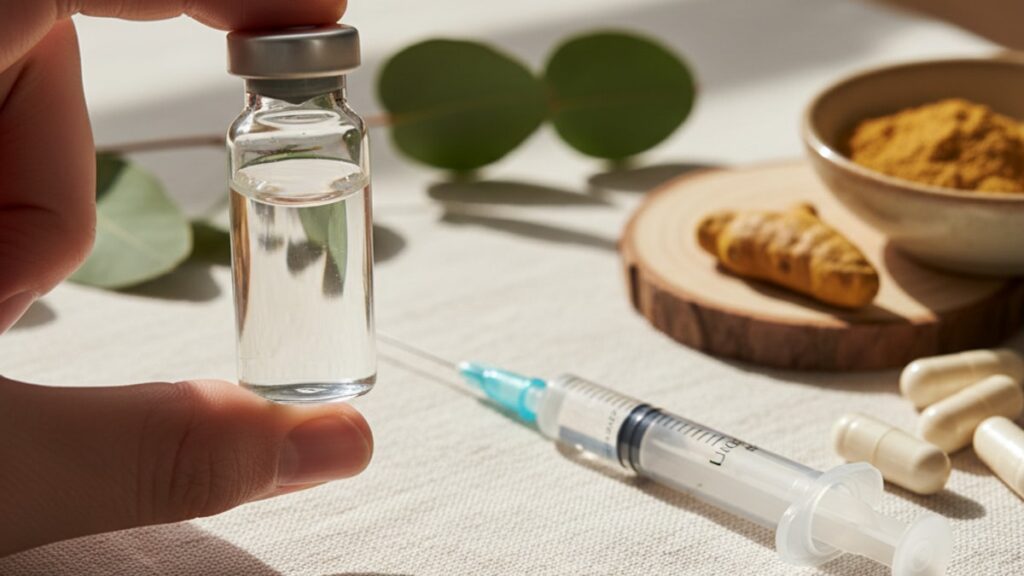
What Does BPC-157 Look Like in Solution? (Visual Guide)
Most people preparing BPC-157 at home for the first time don't know what they're looking at when they draw that first dose. The lyophilized peptide arrives as a white or off-white powder. Fine, that part makes sense. But once you add bacteriostatic water and the powder dissolves, what should you actually see in the vial? A golden liquid? Crystal-clear like saline? Cloudy? The answer determines whether you inject it or discard it, and most guides skip this entirely.
Our team has worked with hundreds of researchers handling peptide reconstitution protocols. The gap between doing it right and throwing away a contaminated batch comes down to three things: knowing what properly reconstituted BPC-157 looks like, recognizing the visual markers of degradation, and understanding why appearance changes matter more than most realize.
What does BPC-157 look like in solution once reconstituted with bacteriostatic water?
Properly reconstituted BPC-157 appears clear to slightly translucent, colorless or with a faint straw-yellow tint under bright light. The solution should contain no visible particles, cloudiness, or discoloration beyond pale amber. Any deviation. Pronounced cloudiness, dark amber coloring, floating debris, or crystalline precipitation. Indicates degradation, bacterial contamination, or improper storage temperature. Visual inspection is the primary quality control step before administration.
Here's what most peptide handling guides don't mention: BPC-157 in solution doesn't stay static. The appearance you see immediately after reconstitution can shift within 48–72 hours if storage temperature fluctuates or if the bacteriostatic water contained particulates. The visual baseline matters because it's your only real-time contamination signal without sending samples to a lab. This article covers what correctly reconstituted BPC-157 should look like, what visual changes indicate degradation, and the exact storage protocols that maintain solution clarity across a 28-day use window.
Properly Reconstituted BPC-157: The Visual Baseline
When you inject bacteriostatic water into a vial of lyophilized BPC-157 and gently swirl (never shake) to dissolve the powder, the resulting solution should appear clear to faintly opalescent under direct light. "Clear" means you can read text through the vial when held against a printed page. "Faintly opalescent" means a barely perceptible light scattering effect. The liquid catches light slightly but remains transparent. Colorless is standard, though a pale straw-yellow tint (lighter than urine, closer to diluted white wine) is acceptable and often appears in batches synthesized via Fmoc solid-phase peptide synthesis.
The color variance traces back to residual coupling reagents or trace impurities in the final lyophilization step. High-purity BPC-157 (≥98% by HPLC) will always trend toward colorless. If your vial shows a pronounced yellow or amber hue darker than pale straw, suspect oxidation. Either the peptide was exposed to air during lyophilization or the reconstituted solution was stored above 8°C for more than 24 hours. BPC-157 contains multiple cysteine residues prone to oxidation when dissolved, which accelerates at room temperature.
Texture is equally diagnostic. The solution should feel like water when drawn into a syringe. No viscosity, no resistance, no foaming when depressed slowly. Foaming during injection or withdrawal indicates protein aggregation, which means the peptide chains are clumping rather than remaining in solution. Aggregated peptides lose bioavailability and can trigger immune responses at the injection site. If foam persists for more than 2–3 seconds after agitation, discard the vial.
What Visual Changes Signal Degradation or Contamination
Cloudiness is the single clearest failure marker. A properly stored BPC-157 solution remains optically clear across its entire 28-day refrigerated lifespan. Cloudiness. Defined as opacity that obscures text when the vial is held against a printed page. Indicates one of three failures: bacterial contamination (bacteriostatic water was compromised), peptide aggregation (temperature exceeded 8°C for more than 6 hours), or particulate contamination (glass shards from the vial stopper, rubber fragments from repeated needle punctures, or airborne dust during reconstitution).
Bacterial contamination produces a diffuse, uniform cloudiness that appears within 48–96 hours of reconstitution if the bacteriostatic water's benzyl alcohol preservative failed or if the vial was opened in a non-sterile environment. This type of cloudiness won't settle. It's microbial growth suspended in solution. Peptide aggregation cloudiness appears faster (within 12–24 hours of a temperature excursion) and may settle slightly at the bottom of the vial as a faint white precipitate. Both are grounds for immediate disposal.
Color shifts beyond pale straw-yellow indicate oxidation. BPC-157 turns progressively amber, then brown, as cysteine residues oxidize and form disulfide crosslinks. This process accelerates in the presence of dissolved oxygen, which is why vials should never be opened and resealed multiple times. Each needle puncture introduces air. A vial that starts colorless on day one and turns amber by day seven was either stored at room temperature intermittently or punctured more than 10 times. The oxidized peptide won't harm you, but its therapeutic efficacy drops precipitously. One study on peptide oxidation found bioavailability reductions exceeding 60% once discoloration was visible.
Visible particles. Anything that looks like a speck, fiber, or crystalline fragment floating in solution. Require immediate discard. Particulates can be glass shards (from scoring the vial neck during opening), rubber crumbs (from the stopper), peptide precipitate (from freeze-thaw cycles), or foreign contaminants (airborne dust, fingerprint oils transferred during handling). Injecting particulates risks abscess formation at the injection site and can trigger granuloma formation if the particles lodge in tissue.
BPC-157 Look Like in Solution: Comparison Table
| Visual Characteristic | Acceptable (Safe to Use) | Reject Immediately | Mechanism Behind the Change | Professional Assessment |
|---|---|---|---|---|
| Color | Colorless to faint straw-yellow (lighter than diluted white wine) | Dark amber, brown, or any strong yellow tone | Oxidation of cysteine residues in the peptide chain. Accelerates at temps above 8°C | Pale straw is normal synthesis residue; anything darker signals oxidation loss |
| Clarity | Clear (can read text through vial) or faintly opalescent (slight light scatter) | Cloudy, opaque, or murky (cannot read text through vial) | Bacterial growth, peptide aggregation, or particulate contamination | Cloudiness within 48 hours of reconstitution = storage or sterility failure |
| Particles | None visible under bright light | Any visible specks, fibers, crystals, or floating debris | Glass shards, rubber fragments, precipitated peptide, or airborne contaminants | Particulates = injection site abscess risk. Discard without exception |
| Texture/Viscosity | Water-like consistency (no resistance when drawing into syringe) | Thick, syrupy, or foams excessively when depressed | Protein aggregation from temperature cycling or repeated freeze-thaw | Viscosity change = aggregated peptide with reduced bioavailability |
| Odor | Odorless or faint alcohol scent (from bacteriostatic water) | Sour, rancid, or chemical smell | Bacterial contamination or peptide breakdown byproducts | Any non-alcohol odor = contamination. Do not use |
Key Takeaways
- Properly reconstituted BPC-157 appears clear to slightly translucent, colorless or with a faint straw-yellow tint. Anything darker than pale straw signals oxidation and reduced potency.
- Cloudiness that appears within 48–96 hours of reconstitution indicates bacterial contamination or peptide aggregation from improper storage temperatures above 8°C.
- Visible particles (specks, fibers, crystals) floating in solution are grounds for immediate disposal. Injecting particulates risks abscess formation and tissue damage.
- A properly stored vial maintains optical clarity and water-like consistency for 28 days when refrigerated at 2–8°C and punctured fewer than 10 times.
- Oxidation-induced color shifts (amber to brown) reduce BPC-157 bioavailability by more than 60% even when the solution remains clear and particle-free.
- Foaming that persists for more than 2–3 seconds when drawing into a syringe indicates protein aggregation. Discard the vial rather than inject aggregated peptide.
What If: BPC-157 Solution Appearance Scenarios
What If My BPC-157 Solution Turns Cloudy After Three Days in the Fridge?
Discard it immediately. Do not attempt to use it. Cloudiness that develops 48–96 hours post-reconstitution almost always signals bacterial contamination or peptide aggregation from a temperature excursion you didn't notice. Bacteriostatic water contains 0.9% benzyl alcohol specifically to prevent microbial growth, so cloudiness means either the preservative failed, the vial was opened in a non-sterile environment, or the water itself was contaminated before use. Even if you're uncertain whether the cloudiness is bacterial or aggregated peptide, the risk of injecting either outweighs the cost of replacing the vial. Bacterial contamination can cause localized infection; aggregated peptide triggers immune responses and delivers zero therapeutic benefit.
What If I See Tiny Floating Specks in the Solution — Are They Dangerous?
Yes. Discard the vial without injecting it. Visible particulates, no matter how small, indicate contamination with glass shards (from vial damage), rubber fragments (from the stopper degrading after repeated needle punctures), or airborne contaminants introduced during reconstitution. Injecting particulates directly into subcutaneous tissue can cause sterile abscesses (localized inflammatory nodules that persist for weeks) or, in rare cases, granuloma formation if the particles lodge in tissue and trigger chronic immune responses. The "are they just air bubbles?" test: tap the vial gently against a countertop. Air bubbles rise to the surface and disappear within seconds, while solid particulates sink or remain suspended mid-solution.
What If My Vial Started Clear but Now Has a Faint Yellow Tint After Ten Days?
A subtle shift from colorless to pale straw-yellow over 10–14 days is within normal oxidation parameters for BPC-157 stored at proper refrigeration temperatures (2–8°C). Cysteine residues in the peptide structure oxidize slowly even under ideal conditions, producing a faint amber tint that doesn't significantly reduce potency until the color deepens beyond pale straw. However, if the yellow tone is pronounced. Comparable to apple juice or darker. Oxidation has progressed to the point where bioavailability is compromised. The safe threshold: if you can still read black text through the vial when held against a white background, oxidation is minimal. If the solution obscures text or looks darker than diluted white wine, discard it and reassess your storage protocol.
The Unfiltered Truth About BPC-157 Solution Appearance
Here's the honest answer: most people using compounded BPC-157 at home have no idea whether their reconstituted solution is contaminated until it's obviously wrong. Clear doesn't always mean safe, and faint discoloration doesn't always mean ruined. The visual inspection standards we've laid out. Colorless to pale straw, optically clear, no particulates. Are the same standards applied in pharmaceutical compounding facilities with sterile hoods and laminar flow. But those facilities also run endotoxin tests, pH verification, and sterility cultures on every batch. You're doing none of that.
The gap between professional peptide preparation and at-home reconstitution isn't just technique. It's quality assurance infrastructure. When a 503B compounding pharmacy prepares BPC-157 for research use, the solution is filtered through a 0.22-micron sterile syringe filter before dispensing, removing bacteria and particulates you'd never see with the naked eye. Home reconstitution skips this step entirely. That doesn't mean your solution is unsafe, but it does mean visual inspection is your only contamination safeguard, and visual inspection has a detection floor. You can't see bacteria. You can't see peptide aggregates smaller than 50 microns. You can't see endotoxins.
What you can see. Cloudiness, pronounced discoloration, visible particles. Represents catastrophic failure. If your vial looks obviously wrong, it's been wrong for days. The peptide community's obsession with "does this look right?" photos posted to forums misses the point: if you're asking the question, the answer is already "discard it and start over." High-purity research-grade peptides like those available through Real Peptides come with third-party purity verification, but even verified peptides degrade if reconstitution or storage protocols fail. The solution's appearance is your last checkpoint before injection. Treat it as a binary pass/fail gate, not a spectrum.
Why BPC-157 Solution Appearance Changes Over Time
BPC-157's amino acid sequence includes four cysteine residues, each containing a free thiol group (-SH) prone to oxidation when the peptide is in aqueous solution. In the lyophilized (freeze-dried) powder form, these thiol groups remain stable because water is absent. Once you add bacteriostatic water, oxidation begins immediately. Even under refrigeration. The rate depends on three variables: dissolved oxygen concentration (higher in water exposed to air during storage), temperature (oxidation doubles for every 10°C increase), and pH (acidic solutions oxidize faster than neutral).
This is why properly stored BPC-157 in solution lasts 28 days maximum. The 28-day window isn't arbitrary. It's the point at which oxidation-induced potency loss becomes measurable via HPLC analysis even under ideal refrigeration. A study on peptide stability in aqueous solutions found that cysteine-rich peptides lose 8–12% potency per week at 4°C, compounding to roughly 35–40% loss by day 28. By day 35, you're injecting a solution with less than half its original bioavailability. The visual marker of this process is the straw-yellow to amber color shift. The darker the solution, the further along the oxidation cascade has progressed.
Cloudiness from peptide aggregation follows a different mechanism. BPC-157 is a pentadecapeptide (15 amino acids) with a hydrophobic core and hydrophilic terminals, making it amphipathic. In solution, individual peptide molecules remain dispersed as long as temperature and ionic strength stay constant. Temperature spikes above 15°C for more than a few hours cause the hydrophobic cores to cluster, forming aggregates that scatter light. The definition of cloudiness. These aggregates are irreversible. Once formed, they won't redissolve even if you return the vial to proper refrigeration. This is why a single temperature excursion. Leaving the vial on a countertop during a morning routine, for example. Can ruin an entire batch.
Bacterial contamination cloudiness is biologically distinct. Bacteriostatic water contains 0.9% benzyl alcohol, which inhibits bacterial growth but doesn't kill existing bacteria instantly. If bacteria are introduced during reconstitution (non-sterile needle, contaminated vial stopper, airborne exposure), they replicate slowly at refrigeration temperatures. Visible cloudiness from bacterial growth typically appears 72–96 hours post-reconstitution and progresses rapidly once it starts. The solution may also develop a faint sour or chemical odor as bacterial metabolic byproducts accumulate. This type of contamination is rare if proper aseptic technique is followed, but it's the highest-risk outcome because injecting a bacterially contaminated solution can cause cellulitis or abscess formation requiring antibiotic treatment.
Storage protocol directly determines whether BPC-157 maintains its baseline appearance. Reconstituted vials must be stored upright at 2–8°C (standard refrigerator temperature), never frozen, and protected from light exposure. Light accelerates oxidation. UV wavelengths break peptide bonds and degrade cysteine residues. Amber glass vials or aluminum foil wrapping around clear vials mitigates this. Vials should be punctured with a fresh sterile needle every time, and the stopper should never be removed entirely (once exposed to open air, contamination risk skyrockets). Following these protocols, a properly reconstituted BPC-157 vial will maintain optical clarity and colorlessness (or pale straw tint) for the full 28-day use window. Deviations from this appearance baseline signal a breakdown in one of these storage variables. Identify the failure point before reconstituting the next vial or the same contamination pattern will repeat.
When researchers and individuals seek the highest quality peptides for their studies, they turn to suppliers who prioritize purity, consistency, and transparency. Our dedication to these principles is reflected in every product we offer. Explore the full range of Real Peptides to find research-grade compounds synthesized with precision and verified by third-party testing.
Properly reconstituted BPC-157 should look unremarkable. Like sterile saline with a barely perceptible tint at most. The moment it looks interesting. Cloudy, amber, particulate-laden. It's no longer fit for use. Visual inspection is the most accessible quality control tool available outside a lab, but it only works if you know the baseline and refuse to rationalize deviations. If the solution doesn't match the clear-to-faint-straw standard we've outlined, discard it and trace the failure back to storage temperature, sterile technique, or water quality. The peptide's therapeutic potential depends entirely on maintaining that visual baseline across the 28-day use window.
Frequently Asked Questions
What color should BPC-157 solution be after reconstitution?▼
Properly reconstituted BPC-157 should appear colorless to faint straw-yellow — lighter than diluted white wine and pale enough to read text through the vial when held against a printed page. A slight straw tint is normal and traces back to residual coupling reagents from solid-phase peptide synthesis. Any color darker than pale straw (amber, gold, brown) indicates oxidation of cysteine residues in the peptide structure, which reduces bioavailability by more than 60% once discoloration is visible.
Is it safe to use BPC-157 if the solution turns cloudy after a few days?▼
No — cloudiness that develops 48–96 hours after reconstitution signals bacterial contamination or peptide aggregation from improper storage temperatures, and the vial should be discarded immediately. Bacteriostatic water contains benzyl alcohol to prevent microbial growth, so cloudiness means either the preservative failed or bacteria were introduced during reconstitution. Injecting cloudy solution risks localized infection or immune response from aggregated peptide. Properly stored BPC-157 remains optically clear for the entire 28-day refrigerated lifespan.
How do I know if particles in my BPC-157 vial are dangerous?▼
Any visible particles — specks, fibers, crystals, or floating debris — require immediate disposal regardless of size or appearance. Particulates can be glass shards from vial damage, rubber fragments from the stopper, precipitated peptide from freeze-thaw cycles, or airborne contaminants introduced during reconstitution. Injecting particulates directly into tissue risks sterile abscess formation or granulomas. To distinguish particles from air bubbles, tap the vial gently — air bubbles rise and disappear within seconds, while solid particulates sink or remain suspended mid-solution.
What does oxidized BPC-157 look like and can it still be used?▼
Oxidized BPC-157 appears amber to brown in color — darker than the normal pale straw tint — and results from cysteine residue oxidation accelerated by temperature excursions above 8°C or repeated air exposure from needle punctures. While oxidized peptide won’t harm you, its bioavailability drops precipitously once discoloration is pronounced. If the solution is darker than diluted white wine or obscures black text when held against a white background, potency loss exceeds 60% and the vial should be discarded.
How long does reconstituted BPC-157 maintain its proper appearance?▼
Properly stored BPC-157 maintains optical clarity and colorless-to-pale-straw appearance for 28 days when refrigerated at 2–8°C and punctured fewer than 10 times. The 28-day window reflects the point at which oxidation-induced potency loss becomes measurable via HPLC analysis even under ideal conditions. Cysteine-rich peptides lose 8–12% potency per week at refrigeration temperatures, compounding to 35–40% loss by day 28. Beyond this window, visual appearance may still seem acceptable but therapeutic efficacy is significantly compromised.
Can I use BPC-157 if it looks slightly yellow but still clear?▼
Yes, if the yellow tint is faint (lighter than diluted white wine) and the solution remains optically clear with no cloudiness or particles. A pale straw-yellow tone is normal for high-purity BPC-157 and traces back to residual synthesis reagents or minimal oxidation within acceptable parameters. However, if the yellow tone deepens to amber or gold over time — especially within the first 7–10 days — oxidation has progressed beyond normal and the vial should be discarded. The threshold test: if you can read black text through the vial against a white background, oxidation is minimal.
What causes BPC-157 solution to foam when drawing into a syringe?▼
Persistent foaming during syringe draw indicates protein aggregation — peptide chains clumping together rather than remaining dissolved as individual molecules. Aggregation occurs when storage temperature exceeds 8°C for more than 6 hours or when vials undergo freeze-thaw cycles. Aggregated peptides lose bioavailability and can trigger immune responses at the injection site. The solution should feel water-like with no viscosity or resistance. If foam persists for more than 2–3 seconds after gentle agitation, the peptide has aggregated and the vial should be discarded.
How does improper storage change what BPC-157 looks like in solution?▼
Temperature excursions above 8°C accelerate oxidation, causing the solution to shift from colorless to amber within 48–72 hours and producing cloudiness from peptide aggregation if the temperature exceeds 15°C for more than a few hours. Repeated freeze-thaw cycles cause crystalline precipitation visible as white specks settling at the vial bottom. Exposure to direct light (especially UV wavelengths) accelerates oxidation and causes progressive darkening from pale straw to brown. Proper storage — refrigerated at 2–8°C, protected from light, never frozen — maintains baseline appearance for 28 days.
What is the difference between bacterial contamination cloudiness and peptide aggregation cloudiness?▼
Bacterial contamination produces diffuse, uniform cloudiness that appears 72–96 hours post-reconstitution and progresses rapidly once it starts — the solution may also develop a faint sour or chemical odor as bacterial metabolic byproducts accumulate. Peptide aggregation cloudiness appears faster (within 12–24 hours of a temperature excursion above 8°C) and may settle slightly at the vial bottom as a faint white precipitate rather than remaining uniformly suspended. Both require immediate disposal, but bacterial contamination carries higher infection risk while aggregation signals storage protocol failure.
Why do some BPC-157 vials look different from batch to batch if they are the same peptide?▼
Slight appearance variations between batches trace back to differences in lyophilization (freeze-drying) process parameters and residual coupling reagents from solid-phase peptide synthesis. A batch that appears perfectly colorless versus one with a faint straw tint can both be high-purity (≥98% by HPLC) — the tint reflects trace synthesis byproducts that don’t affect therapeutic efficacy. However, pronounced color differences (one batch colorless, another amber) or clarity differences (one clear, another faintly cloudy even when fresh) indicate quality control inconsistencies and warrant third-party purity verification before use.











