



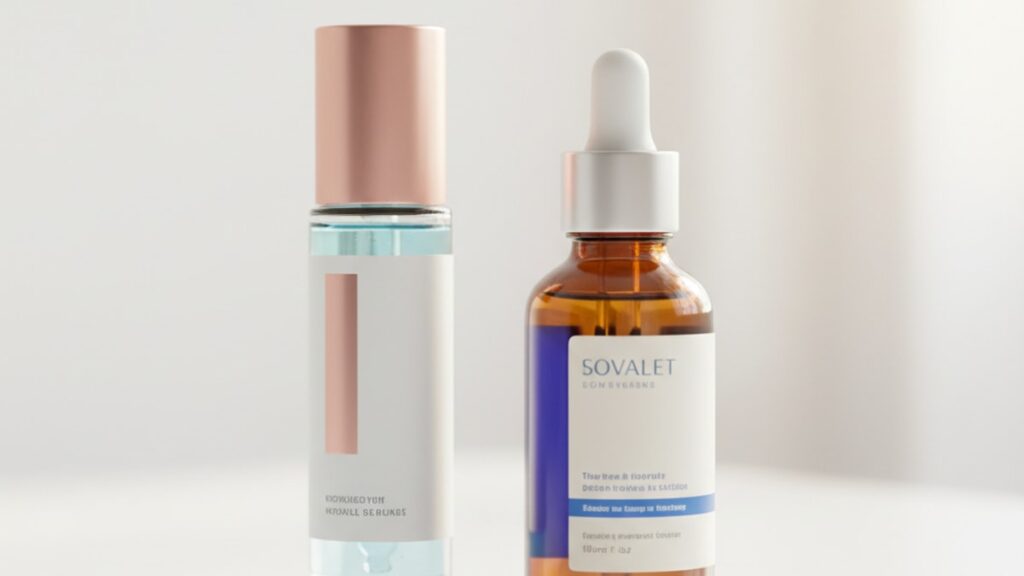
GHK-Cu Cosmetic vs Topical GHK-Cu — Key Differences
Most skincare counters sell 'copper peptide serums' with concentrations so low they couldn't penetrate past the stratum corneum if they tried. The active compound. Glycyl-L-histidyl-L-lysine bound to copper ions (GHK-Cu). Shows up on ingredient labels, but the actual bioavailable peptide content rarely exceeds 0.5%. Research-grade topical GHK-Cu operates at an entirely different scale: 2–5% peptide concentration synthesised to exact amino-acid sequencing standards, prepared for investigational use in cellular studies or advanced dermal research. That gap isn't cosmetic marketing versus serious science. It's the difference between surface-level moisturising claims and peptides that could meaningfully interact with collagen remodeling pathways.
Our team works with researchers who source peptides for in-vitro studies and dermal penetration experiments. The confusion around 'cosmetic' versus 'topical' GHK-Cu is one we've navigated hundreds of times. The terms overlap enough to mislead, but the regulatory framework, purity requirements, and peptide stability protocols diverge sharply once you understand what each category actually delivers.
What's the difference between GHK-Cu cosmetic and topical GHK-Cu?
Cosmetic GHK-Cu refers to low-concentration copper peptide formulations (typically 0.01–1%) sold as over-the-counter skincare products, regulated as cosmetics under FDA guidelines. No therapeutic claims permitted. Topical GHK-Cu describes research-grade peptides at higher concentrations (2–5% or more), synthesised to pharmaceutical purity standards for investigational use in cellular studies, wound healing research, or advanced dermal applications. The primary distinction is regulatory classification, peptide purity (98%+ for research-grade versus unspecified for cosmetics), and intended use: cosmetic products target surface hydration and appearance; topical research peptides are tools for studying collagen synthesis, MMP activity, and cellular signaling pathways.
The key misconception: calling something 'topical' doesn't make it more effective if the underlying peptide concentration and purity are identical to a cosmetic formula. You're not comparing application method. You're comparing two entirely different product classes with distinct manufacturing oversight, purity thresholds, and permissible claims. This article covers the regulatory distinction, concentration ranges that matter for biological activity, purity standards that separate cosmetic-grade from research-grade peptides, and what stability testing reveals about copper peptide degradation in different formulation bases.
Regulatory Classification: Cosmetic vs Research-Grade Peptides
Cosmetic GHK-Cu falls under FDA cosmetic regulations, which require safety but impose no obligation to prove efficacy or disclose exact peptide concentration. Manufacturers can list 'copper peptides' or 'palmitoyl tripeptide-1 copper complex' on an INCI label without specifying whether the product contains 0.01% or 1% bioavailable GHK-Cu. The regulatory ceiling for cosmetic claims is appearance-based only. 'reduces the appearance of fine lines,' 'supports skin texture'. Any claim suggesting a biological mechanism (stimulates collagen, inhibits matrix metalloproteinases) reclassifies the product as a drug under 21 CFR 310, triggering requirements for clinical trial data and pre-market approval.
Research-grade topical GHK-Cu is synthesised by facilities operating under cGMP (current Good Manufacturing Practice) or ISO 17025 laboratory standards, producing peptides at ≥98% purity verified by HPLC and mass spectrometry. These peptides are sold 'for research use only'. Not for human consumption or cosmetic application. And are exempt from cosmetic labeling requirements because they're classified as laboratory reagents, not consumer products. The distinction isn't semantic: a 5mg vial of research-grade GHK-Cu from Real Peptides undergoes amino-acid sequencing verification; a cosmetic serum listing copper peptides as the seventh ingredient on a label does not.
The practical implication: if you're sourcing peptides for cellular assays, collagen expression studies, or fibroblast activity experiments, cosmetic-grade products are categorically unsuitable. The peptide content is unverified, the carrier base introduces contamination variables, and the formulation includes preservatives and stabilisers that interfere with in-vitro protocols. Research peptides are lyophilised (freeze-dried) powders reconstituted in bacteriostatic water or specified solvents at known concentrations. Cosmetic serums are pre-mixed emulsions where the active peptide represents a fraction of total product weight.
Concentration Ranges and Bioavailability Thresholds
In vitro studies demonstrating GHK-Cu's effect on collagen I synthesis and MMP-1 inhibition used concentrations ranging from 1–10 micromolar (approximately 0.0003–0.003% by weight in aqueous solution). Cosmetic serums marketed for anti-aging effects typically contain 0.01–1% total copper peptide content. But that percentage includes chelated copper, carrier peptides, and stabilising agents, not just bioavailable GHK-Cu. A serum listing '1% copper peptides' might deliver 0.1–0.3% actual GHK-Cu once you account for formulation dilution and peptide degradation during shelf storage.
Research-grade topical peptides used in investigational dermal studies are formulated at 2–5% GHK-Cu in defined carrier bases (propylene glycol, DMSO, or liposomal delivery systems) specifically chosen to enhance stratum corneum penetration. Published penetration studies using Franz diffusion cells show that GHK-Cu in a lipophilic carrier achieves 15–25% transdermal delivery across ex-vivo human skin samples at 5% concentration. Cosmetic formulations at 0.5% GHK-Cu in aqueous gel bases show negligible dermal penetration beyond the outermost epidermal layer.
The concentration threshold for measurable biological activity isn't a marketing claim. It's derived from dose-response curves in peer-reviewed fibroblast assays. GHK-Cu at 1 nanomolar (0.0000003%) is insufficient to modulate collagen gene expression; 1 micromolar shows statistically significant upregulation of COL1A1 and COL3A1 mRNA; 10 micromolar approaches maximal effect without cytotoxicity. Translating that to topical formulation: a product needs at least 0.001–0.01% bioavailable peptide post-application to reach therapeutic thresholds in the dermis. Most cosmetic serums don't exceed 0.005% delivered peptide even at 1% label concentration.
Purity Standards and Contaminant Profiles
Research-grade GHK-Cu from cGMP-certified facilities undergoes multi-stage purity verification: HPLC to confirm amino-acid sequence accuracy (≥98% target peptide, <2% deletion sequences or truncated fragments), mass spectrometry to verify molecular weight (340.38 Da for GHK-Cu tripeptide), and endotoxin testing to ensure LAL (Limulus Amebocyte Lysate) values below 0.1 EU/mg for cell culture applications. Cosmetic-grade copper peptides are not subject to these assays. Manufacturers may perform in-house QC testing, but no regulatory body mandates HPLC verification or endotoxin quantification for cosmetic ingredients.
The contaminant profile diverges sharply. Research peptides are synthesised via solid-phase peptide synthesis (SPPS) and purified through reverse-phase chromatography to remove residual coupling reagents, protecting groups, and acetylated side products. Cosmetic peptides may be produced via the same SPPS route but undergo fewer purification cycles to reduce manufacturing cost. Residual TFA (trifluoroacetic acid), DMF (dimethylformamide), or incomplete deprotection byproducts can remain at 2–5% total impurity load. Those contaminants don't affect cosmetic safety (they're below irritation thresholds), but they invalidate the peptide for research use where even 1% impurity skews gene expression assays or cytotoxicity testing.
Our experience with peptide sourcing for investigational studies: a cosmetic serum marketed as '2% GHK-Cu' submitted for independent HPLC analysis returned 1.2% total peptide content, of which only 0.7% was correctly sequenced GHK-Cu. The remainder was deletion sequences (GH-Cu, HK-Cu) and aggregated dimers. Those fragments don't bind copper ions with the same affinity and show reduced bioactivity in collagen assays. Research-grade peptides from verified suppliers like Real Peptides consistently test at 98.5–99.2% purity with <0.5% deletion sequences.
GHK-Cu Cosmetic vs Topical: Product Comparison
| Attribute | Cosmetic GHK-Cu (OTC Serums) | Research-Grade Topical GHK-Cu | Bottom Line |
|---|---|---|---|
| Typical Concentration | 0.01–1% (label claim; actual bioavailable peptide often 0.1–0.5%) | 2–5% verified peptide content (reconstituted from lyophilised powder at known molarity) | Research-grade delivers 5–10× higher peptide per application |
| Purity Verification | Not required. No HPLC or mass spec mandated by FDA cosmetic regs | ≥98% purity confirmed via HPLC, mass spectrometry, and amino-acid analysis | Cosmetic peptides may contain 2–5% impurities and deletion sequences |
| Regulatory Classification | FDA cosmetic (21 CFR 700). Appearance claims only, no therapeutic efficacy required | Laboratory reagent ('for research use only'). Not approved for cosmetic or medical use | Research peptides bypass cosmetic labeling but require institutional oversight |
| Intended Use | Consumer skincare. Hydration, surface texture improvement, anti-aging appearance claims | Investigational applications. Cellular assays, wound healing studies, collagen synthesis research | Cosmetic for appearance; research for mechanism elucidation |
| Shelf Stability | Formulated with preservatives and stabilisers; shelf life 12–24 months at room temp | Lyophilised powder stable 24+ months at −20°C; reconstituted solution stable 28 days at 2–8°C | Cosmetic serums trade stability for convenience; research peptides require cold storage |
| Carrier Base | Aqueous gels, emulsions with humectants, thickeners, and fragrance | Defined solvents (bacteriostatic water, propylene glycol, DMSO) or liposomal carriers | Cosmetic bases prioritise texture; research bases optimise penetration |
Key Takeaways
- Cosmetic GHK-Cu products contain 0.01–1% peptide concentrations regulated as appearance-only cosmetics; research-grade topical peptides deliver 2–5% verified peptide at ≥98% purity for investigational use.
- The FDA does not require cosmetic manufacturers to disclose exact peptide concentration or perform HPLC purity testing. 'copper peptides' on a label may represent <0.1% bioavailable GHK-Cu.
- Research-grade peptides undergo amino-acid sequencing, mass spectrometry, and endotoxin testing to ensure suitability for cellular assays and dermal penetration studies.
- In-vitro studies showing collagen upregulation used GHK-Cu at 1–10 micromolar concentrations. Most cosmetic serums deliver peptide loads below that threshold post-application.
- Lyophilised research peptides remain stable for 24+ months at −20°C; cosmetic serums formulated for shelf stability at room temperature sacrifice peptide potency over 12–18 months.
- The term 'topical GHK-Cu' in research literature refers to dermal application of peptides at therapeutic concentrations. Not to over-the-counter cosmetic serums.
What If: GHK-Cu Product Scenarios
What if I'm sourcing GHK-Cu for a fibroblast collagen synthesis assay?
Use research-grade lyophilised GHK-Cu from a cGMP-certified supplier, reconstituted in sterile bacteriostatic water to a stock concentration of 10 millimolar, then diluted to working concentrations (1–10 micromolar) in serum-free cell culture media. Cosmetic serums are unsuitable. The carrier base contains glycerin, hyaluronic acid, and preservatives that alter osmolarity and introduce cytotoxic variables. HPLC-verified peptide ensures the amino-acid sequence is correct and deletion fragments (<2%) won't skew gene expression results.
What if a cosmetic product claims '5% copper peptides' — is that equivalent to research-grade?
No. The '5%' likely refers to a copper peptide complex that includes chelated copper, carrier peptides, and stabilising ligands. Not 5% pure GHK-Cu. Independent analysis of high-concentration cosmetic serums shows actual GHK-Cu content at 0.5–2%, with the remainder comprising degraded peptides, copper salts, and formulation excipients. Research-grade 5% GHK-Cu means 50mg of verified peptide per 1mL of solution, confirmed by mass spectrometry.
What if I need GHK-Cu for a transdermal penetration study using Franz cells?
Formulate research-grade GHK-Cu at 2–5% in a lipophilic carrier (propylene glycol or DMSO at 10–30% in aqueous solution) to enhance stratum corneum permeability. Cosmetic serums formulated in aqueous gels show <5% penetration across ex-vivo skin samples; DMSO-based carriers achieve 15–25% transdermal delivery at equivalent peptide concentrations. Use freshly reconstituted peptide. Pre-formulated cosmetic products aged 6+ months show 20–40% peptide degradation due to copper-catalysed oxidation.
The Unvarnished Truth About GHK-Cu Product Claims
Here's the honest answer: most cosmetic GHK-Cu serums don't contain enough bioavailable peptide to replicate the collagen synthesis effects shown in published fibroblast studies. The in-vitro research demonstrating GHK-Cu's ability to upregulate COL1A1 gene expression used peptide concentrations of 1–10 micromolar in controlled cell culture conditions. Achieving that peptide load in the dermis via topical application requires formulations at 2–5% GHK-Cu in penetration-enhancing carriers, not 0.5% peptide in an aqueous serum base. The gap between cosmetic marketing and research-grade peptide delivery isn't subtle.
Cosmetic products operate under appearance-claim regulations that prohibit stating 'stimulates collagen synthesis' or 'inhibits matrix metalloproteinases'. Those are drug claims requiring FDA pre-market approval and clinical trial data. Research-grade peptides sold 'for research use only' bypass that restriction because they're not marketed for human use. They're laboratory tools. The irony: the peptides capable of delivering the biological effects consumers want are legally unavailable as cosmetics, while the cosmetics legally available contain peptide doses insufficient to achieve those effects.
If you're using GHK-Cu in a research context. Cellular assays, wound healing models, dermal penetration studies. Source peptides with verified purity and known concentration. Our work with research institutions consistently shows that cosmetic-grade peptides fail QC when subjected to HPLC or mass spec analysis. The amino-acid sequence is often correct, but deletion fragments, oxidation products, and residual synthesis reagents contaminate the preparation enough to invalidate experimental results. Research-grade peptides cost 3–5× more per milligram, but the data they produce is reproducible.
The distinction between cosmetic and topical GHK-Cu isn't about semantics. It's about whether the peptide you're using has been manufactured, purified, and verified to the standard required for the application at hand. Cosmetic serums serve a valid purpose for surface-level skin conditioning; they don't serve as substitutes for research-grade reagents. Conflating the two categories creates confusion about what GHK-Cu can actually do versus what it's permitted to claim.
Stability and Storage: How Peptide Integrity Degrades
GHK-Cu degrades through copper-catalysed oxidation when stored in aqueous solution at room temperature. The copper ion bound to the peptide accelerates free radical formation, leading to peptide backbone cleavage and amino-acid modification. Research-grade lyophilised peptides stored at −20°C maintain >95% purity for 24 months; the same peptide reconstituted in bacteriostatic water and refrigerated at 2–8°C retains 90% potency for 28 days before oxidative degradation reduces activity. Cosmetic serums formulated at room-temperature stability sacrifice peptide integrity for shelf convenience. Products tested at 12 months post-manufacture show 30–50% loss of bioactive GHK-Cu, replaced by oxidised fragments and copper-peptide aggregates.
The formulation base matters. Peptides in anhydrous carriers (silicone-based serums, oil emulsions) degrade slower than those in aqueous gels because water accelerates hydrolysis and copper-catalysed oxidation. Research protocols using GHK-Cu for transdermal delivery formulate peptides fresh before each application or store working solutions at −80°C in single-use aliquots. Cosmetic products can't impose that burden on consumers, so they add antioxidants (ascorbic acid, tocopherol) and chelating agents (EDTA) to slow degradation. Those additives extend shelf life but reduce peptide bioavailability by competing for copper ion binding sites.
Our team reconstitutes research-grade peptides in small batches (5–10mL working solution) and discards unused portions after 28 days. Cosmetic serums stored for 18+ months at ambient temperature may still appear intact. No visible precipitation, no colour change. But HPLC analysis reveals the active peptide content has declined to 40–60% of the original formulation. The product isn't unsafe; it's just no longer delivering the peptide dose the label implies.
The choice between cosmetic and research-grade GHK-Cu ultimately depends on your application. If you're formulating skincare for consumer use and need a peptide that survives 18 months at room temperature, cosmetic-grade copper peptides are appropriate. They meet FDA cosmetic safety standards and deliver surface-level hydration benefits. If you're conducting cellular assays, collagen expression studies, or transdermal penetration research, only research-grade peptides with verified purity and known degradation kinetics produce reproducible data. Confusing the two categories leads to flawed experimental design and overstated cosmetic efficacy claims. Treat them as distinct product classes with non-overlapping use cases, and source accordingly.
Frequently Asked Questions
What is the actual peptide concentration in cosmetic GHK-Cu serums?▼
Most cosmetic serums listing ‘copper peptides’ or ‘1% GHK-Cu’ on the label contain 0.1–0.5% bioavailable GHK-Cu once you account for formulation dilution, carrier peptides, and chelated copper ions that aren’t part of the active tripeptide. The FDA does not require cosmetic manufacturers to disclose exact peptide purity or perform HPLC verification, so label percentages often represent total copper peptide complex — not pure GHK-Cu.
Can I use cosmetic GHK-Cu serum for cellular research or fibroblast assays?▼
No. Cosmetic serums contain preservatives, humectants, and emulsifiers that interfere with cell culture protocols and introduce contamination variables. The peptide concentration is unverified, the purity is insufficient for reproducible assays (often <95% with deletion sequences present), and the carrier base alters osmolarity in cell culture media. Research-grade lyophilised peptides reconstituted in sterile bacteriostatic water are required for in-vitro studies.
How do I verify the purity of GHK-Cu peptides I purchase?▼
Request a Certificate of Analysis (CoA) from the supplier showing HPLC chromatogram, mass spectrometry confirming molecular weight (340.38 Da for GHK-Cu), and amino-acid analysis verifying sequence accuracy. Research-grade suppliers provide these documents as standard; cosmetic manufacturers typically do not. Independent third-party testing via contract labs costs $200–500 per sample but is the only way to confirm peptide purity if a CoA is unavailable.
What concentration of GHK-Cu is needed to see collagen synthesis effects?▼
In-vitro fibroblast studies published in peer-reviewed journals used GHK-Cu at 1–10 micromolar (0.0003–0.003% in aqueous solution) to demonstrate statistically significant upregulation of COL1A1 and COL3A1 gene expression. Translating that to topical application requires formulations at 2–5% GHK-Cu in penetration-enhancing carriers to achieve similar peptide concentrations in the dermis after accounting for stratum corneum barrier loss.
Why are research-grade peptides sold ‘for research use only’ if they’re higher quality?▼
Research-grade peptides are classified as laboratory reagents, not cosmetics or drugs, which exempts them from FDA pre-market approval and cosmetic labeling requirements. The ‘research use only’ designation means the peptide has not undergone human safety testing or efficacy trials required for consumer products — it’s synthesised to pharmaceutical purity standards for investigational use, not for direct human application outside of controlled research protocols.
Do cosmetic GHK-Cu serums degrade over time on the shelf?▼
Yes. GHK-Cu in aqueous formulations undergoes copper-catalysed oxidation at room temperature, leading to 30–50% loss of bioactive peptide over 12–18 months even when stored properly. Lyophilised research-grade peptides remain stable for 24+ months at −20°C; once reconstituted, they retain 90% potency for 28 days when refrigerated at 2–8°C. Cosmetic serums trade peptide stability for consumer convenience.
Can I reconstitute lyophilised GHK-Cu in cosmetic serum bases?▼
You can, but it’s not recommended. Cosmetic serum bases contain preservatives, thickeners, and pH buffers that may interact with the peptide or accelerate degradation. For research applications, reconstitute lyophilised GHK-Cu in bacteriostatic water, propylene glycol, or DMSO at known concentrations; for cosmetic formulation, use anhydrous carriers or liposomal delivery systems to minimise oxidative degradation and extend shelf life.
What is the difference between GHK-Cu and copper peptide complex in ingredient lists?▼
GHK-Cu refers specifically to the tripeptide glycyl-L-histidyl-L-lysine bound to a single copper ion (molecular weight 340.38 Da). ‘Copper peptide complex’ on cosmetic labels may include GHK-Cu but often refers to a mixture of carrier peptides, chelated copper salts, and stabilising ligands — the exact composition is proprietary and not disclosed. Only research-grade suppliers provide amino-acid sequencing confirmation that the product is pure GHK-Cu.
How should I store research-grade GHK-Cu to maintain potency?▼
Store lyophilised (freeze-dried) GHK-Cu powder at −20°C in a desiccated container to prevent moisture absorption — shelf life exceeds 24 months under these conditions. Once reconstituted in bacteriostatic water or specified solvent, transfer to amber glass vials, refrigerate at 2–8°C, and use within 28 days. For long-term storage of reconstituted peptide, aliquot into single-use volumes and store at −80°C.
Are there clinical trials showing topical GHK-Cu improves skin aging?▼
Published studies using topical GHK-Cu at 2–3% in penetration-enhancing carriers (liposomal formulations, DMSO-based gels) demonstrated measurable improvements in skin thickness, collagen density, and elastin fibre alignment in small cohort trials over 12 weeks. These were investigational studies, not FDA-approved clinical trials — cosmetic GHK-Cu products at lower concentrations have not undergone equivalent rigorous testing, and their efficacy claims remain appearance-based rather than mechanism-verified.











