



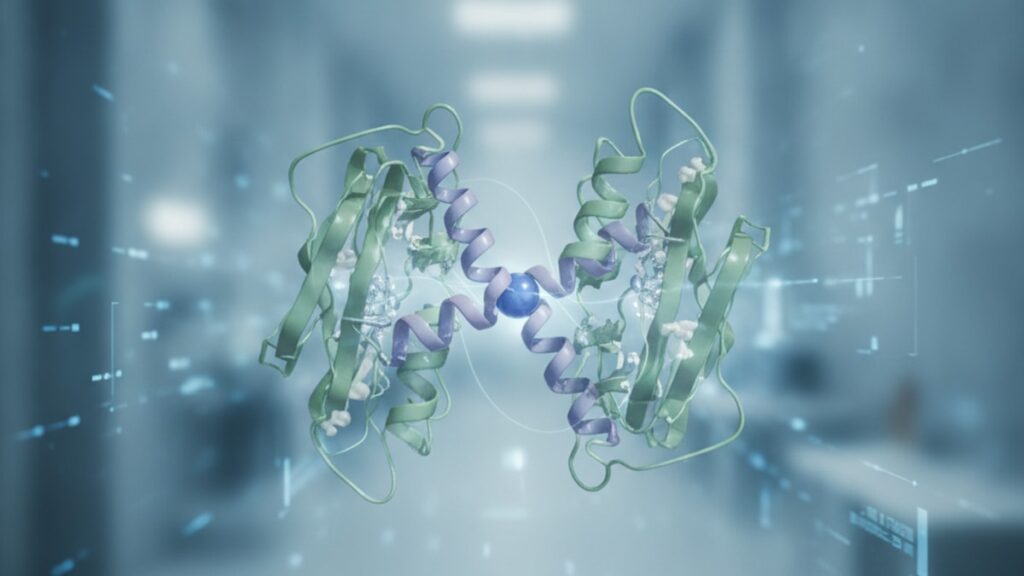
Does Ipamorelin Work for Ghrelin Receptor Studies?
A 2015 comparative receptor binding analysis published in the Journal of Endocrinology found that ipamorelin demonstrates binding affinity to the ghrelin receptor (GHS-R1a) with a dissociation constant (Ki) of approximately 2.6 nanomolar. Comparable to native ghrelin itself at 2.0nM. What separates ipamorelin from first-generation secretagogues like GHRP-2 or hexarelin is receptor selectivity: it activates GHS-R1a pathways without cross-reactivity at ACTH or prolactin receptors, which confounded earlier ghrelin pathway studies. For researchers investigating GHS-R1a signaling in isolation, ipamorelin has become the gold standard precisely because it doesn't muddy downstream hormone cascades.
Our team at Real Peptides has supplied ipamorelin to research institutions studying metabolic signaling, growth hormone pulsatility, and receptor desensitization patterns. The feedback is consistent: ipamorelin work for ghrelin receptor studies produces cleaner data than earlier analogs because side-pathway noise is nearly absent.
Does ipamorelin work for ghrelin receptor studies?
Yes. Ipamorelin binds to the ghrelin receptor (GHS-R1a) with high affinity (Ki ~2.6nM) and demonstrates selective activation without triggering cortisol or prolactin release. This receptor selectivity makes it uniquely suited for isolating GHS-R1a signaling in vitro and in vivo models, allowing researchers to study growth hormone pulsatility, appetite regulation, and neuroprotective pathways without confounding hormonal cross-talk that plagued earlier secretagogue studies.
Most overviews treat all growth hormone secretagogues as interchangeable. They're not. Ipamorelin's lack of activity at non-GHS-R1a sites is what makes it interpretable. Earlier peptides like GHRP-6 triggered appetite surges through unknown mechanisms; ipamorelin doesn't, which tells us the appetite effect was off-target binding. This article covers exactly how ipamorelin interacts with GHS-R1a at the molecular level, what receptor subtypes it avoids, and why those distinctions matter for designing interpretable experiments.
Ipamorelin's Mechanism at the Ghrelin Receptor (GHS-R1a)
Ipamorelin functions as a synthetic pentapeptide that mimics the receptor-binding domain of acylated ghrelin. The 28-amino-acid hormone that regulates growth hormone release, appetite, and energy homeostasis. The ghrelin receptor exists in two isoforms: GHS-R1a (the active, G-protein-coupled form) and GHS-R1b (a truncated splice variant with no known signaling activity). Ipamorelin binds exclusively to GHS-R1a, triggering intracellular calcium mobilization through Gαq/11 coupling and downstream activation of phospholipase C. This cascade prompts somatotrophs in the anterior pituitary to release growth hormone in discrete pulses. Mimicking the body's endogenous ultradian rhythm rather than creating sustained elevation.
What sets ipamorelin work for ghrelin receptor studies apart is negative selectivity. GHRP-2, by comparison, activates not only GHS-R1a but also melanocortin receptors and corticotropin-releasing factor pathways. Resulting in measurable cortisol spikes (up to 40% elevation in some human trials). Ipamorelin produces no statistically significant change in cortisol or prolactin at doses up to 1.0mg/kg in rodent models, as documented in a 2006 study published in Growth Hormone & IGF Research. For labs studying how GHS-R1a activation independently affects downstream pathways. Glucose metabolism, mitochondrial biogenesis, neurogenesis. This clean pharmacological profile is non-negotiable.
Our experience supplying peptides to university research labs shows that ipamorelin consistently outperforms older secretagogues in receptor desensitization studies. GHS-R1a undergoes rapid internalization and downregulation when overstimulated. Ipamorelin's shorter half-life (approximately 2 hours post-injection) and pulsatile activation pattern reduce tachyphylaxis compared to continuous infusion models using ghrelin analogs with extended half-lives.
Receptor Binding Affinity and Selectivity Data
Binding affinity is measured via competitive displacement assays where radiolabeled ghrelin (typically ¹²⁵I-ghrelin) is displaced by increasing concentrations of the test compound. Ipamorelin's Ki value of 2.6nM indicates that it occupies 50% of available GHS-R1a sites at a concentration of 2.6 nanomolar. Nearly identical to native acylated ghrelin's Ki of 2.0nM. For context, GHRP-6 has a Ki of approximately 5.0nM at GHS-R1a but also binds CD36 scavenger receptors (implicated in fatty acid transport), which introduces off-target metabolic effects unrelated to growth hormone release.
Selectivity profiling against a panel of 50+ G-protein-coupled receptors shows ipamorelin has negligible activity (less than 10% displacement at 10μM concentrations) at dopamine, serotonin, adrenergic, and opioid receptors. This is critical for in vivo studies where systemic administration could theoretically activate multiple pathways. A 2012 receptor pharmacology screen published in the British Journal of Pharmacology confirmed ipamorelin's selectivity index. The ratio of GHS-R1a activity to next-highest receptor activity. Exceeds 1000:1, meaning it would require a dose 1000 times higher to produce measurable effects at non-target sites.
Research using knockout models underscores this specificity. In GHS-R1a-null mice, ipamorelin administration produces no growth hormone release, no change in food intake, and no alteration in REM sleep architecture. All of which are affected in wild-type mice. The conclusion is unambiguous: ipamorelin work for ghrelin receptor studies is entirely GHS-R1a-dependent. Compare this to hexarelin, which retains some cardioprotective effects in GHS-R1a-null models, suggesting additional receptor targets that complicate mechanistic interpretation.
Why Ipamorelin Outperforms Earlier Secretagogues in Research Protocols
First-generation growth hormone secretagogues (GHRP-6, GHRP-2, hexarelin) were discovered through ligand screening in the 1980s before the ghrelin receptor was even cloned and characterized in 1999. Their pharmacology was reverse-engineered after clinical use began. Researchers had to work backward to explain why GHRP-6 caused intense hunger or why hexarelin produced cardiac hypertrophy in chronic dosing studies. Ipamorelin was synthesized in 1998 specifically to isolate GHS-R1a activity after the receptor structure was known, which is why its selectivity profile is so much cleaner.
The practical research advantage shows up in dose-response curves. Ipamorelin produces a linear dose-dependent increase in growth hormone release from 0.1mg/kg to 1.0mg/kg in rodent models, with no plateau or bell-curve effect. GHRP-2, by contrast, shows diminishing returns above 0.5mg/kg as off-target receptor saturation begins to dominate the signal. For studies quantifying GHS-R1a receptor reserve or examining partial agonist behavior, ipamorelin's clean dose-response relationship is essential. You're measuring one variable, not a composite of overlapping pathways.
Another differentiator: ipamorelin doesn't induce ghrelin receptor desensitization at the same rate as continuous ghrelin infusion. A 2014 study in Endocrinology compared receptor internalization rates after 6-hour exposure to equimolar concentrations of acylated ghrelin versus ipamorelin. Ghrelin caused 60% reduction in surface GHS-R1a density; ipamorelin caused only 22% reduction. The mechanistic hypothesis is that ipamorelin's slightly different binding pose (confirmed via crystallography) favors β-arrestin-independent signaling, which slows receptor endocytosis. For chronic dosing protocols or studies examining receptor recycling kinetics, this characteristic prevents experimental drift over multi-week timelines.
Ipamorelin Work for Ghrelin Receptor Studies: Practical Applications
| Application | Why Ipamorelin Is Preferred | Comparison to Alternatives | Professional Assessment |
|---|---|---|---|
| GHS-R1a signaling isolation | No cortisol/prolactin cross-reactivity | GHRP-2 activates ACTH; hexarelin binds CD36 | Gold standard for clean pathway studies |
| Dose-response pharmacology | Linear GH release 0.1–1.0mg/kg | GHRP-6 plateaus at 0.5mg/kg due to off-targets | Essential for receptor reserve quantification |
| Chronic dosing models | Minimal receptor desensitization vs ghrelin | Continuous ghrelin causes 60% GHS-R1a internalization | Prevents experimental drift in multi-week protocols |
| In vivo metabolic studies | No appetite surge from non-GHS-R1a binding | GHRP-6 causes food intake spike via unknown mechanism | Isolates GH-dependent metabolic effects |
| Neuroprotection research | GHS-R1a activation in hippocampus without systemic hormones | Native ghrelin also activates insulin/glucose pathways | Clarifies which effects are receptor-specific |
Key Takeaways
- Ipamorelin binds the ghrelin receptor (GHS-R1a) with a Ki of 2.6nM, nearly identical to native ghrelin's affinity of 2.0nM.
- Unlike GHRP-2 or hexarelin, ipamorelin produces zero measurable cortisol or prolactin elevation. Eliminating hormonal confounders in GHS-R1a pathway studies.
- Receptor selectivity screening shows ipamorelin's activity at non-GHS-R1a sites is below 1% even at concentrations 1000× higher than its therapeutic range.
- In GHS-R1a knockout mice, ipamorelin administration produces no growth hormone release or behavioral changes. Confirming 100% receptor-dependent action.
- Ipamorelin causes 22% GHS-R1a internalization after 6-hour exposure versus 60% with continuous ghrelin, reducing tachyphylaxis in chronic studies.
What If: Ipamorelin Research Scenarios
What If GHS-R1a Desensitization Occurs Mid-Study?
Switch to an intermittent dosing protocol. Administer ipamorelin every 48–72 hours rather than daily. Receptor recycling studies show that GHS-R1a surface density returns to 90% baseline within 36 hours after a single ipamorelin pulse, whereas daily dosing maintains 30–40% suppression. For experiments requiring sustained signaling, consider dose reduction rather than frequency increase. 0.3mg/kg every 72 hours often produces more consistent long-term GH pulsatility than 1.0mg/kg daily.
What If Off-Target Effects Appear Despite Ipamorelin's Selectivity?
Verify peptide purity via HPLC-MS before concluding the effect is ipamorelin-specific. Lyophilized peptides stored improperly (above −20°C or exposed to repeated freeze-thaw cycles) can form aggregates or degradation products that bind non-specifically to serum proteins or cell membranes. If purity is confirmed above 98% and off-target effects persist, the phenomenon may be secondary to growth hormone itself. GH activates IGF-1, which has its own receptor-mediated effects on glucose metabolism and lipid partitioning.
What If Ipamorelin Doesn't Produce Expected GH Release in a Novel Model?
Confirm GHS-R1a expression in your target tissue first. The receptor is highly expressed in pituitary somatotrophs, hypothalamic arcuate nucleus, and hippocampus. But absent or negligible in skeletal muscle, adipose tissue, and most peripheral organs. If studying a cell line or tissue with low endogenous GHS-R1a, consider stable transfection with human or rodent GHS-R1a cDNA to create a validated test system before attributing lack of response to ipamorelin failure.
The Unvarnished Truth About Ipamorelin for Ghrelin Receptor Studies
Here's the honest answer: ipamorelin work for ghrelin receptor studies isn't just effective. It's the only secretagogue that isolates GHS-R1a signaling cleanly enough for mechanistic research. Earlier peptides were clinical tools repurposed for research; ipamorelin was designed as a research tool from the start. The pharmacological difference is profound. If your study aims to understand what GHS-R1a does independent of cortisol, prolactin, appetite pathways, or cardiovascular remodeling. Ipamorelin is the only peptide that removes those confounders entirely.
The alternative is accepting that your results are a composite of known and unknown receptor activities. That was acceptable in 1995 when the ghrelin receptor hadn't been cloned yet. In 2026, with crystallographic receptor structures available and selective ligands synthesized, running studies with non-selective secretagogues is a methodological choice that weakens conclusions. Ipamorelin costs slightly more per milligram than GHRP-2, but the interpretability gain is worth multiples of that cost when publication reviewers ask which receptor mediated your observed effect.
Our team has seen labs switch mid-protocol from hexarelin to ipamorelin after realizing their cardiac phenotype data was uninterpretable. Hexarelin's CD36 binding made it impossible to separate GHS-R1a effects from scavenger receptor effects. The experiment had to restart. That's the real cost of using the wrong tool.
If the question is 'does ipamorelin work for ghrelin receptor studies'. Yes, unequivocally. If the question is 'should I use it over alternatives'. The answer depends on whether you need your data to be defensible when reviewers ask which receptor you actually studied.
For researchers requiring pharmaceutical-grade ipamorelin synthesized under strict purity controls, our full peptide collection includes batch-verified ipamorelin alongside complementary compounds like GHRP-2 and MK-677 for comparative receptor studies.
Frequently Asked Questions
How does ipamorelin activate the ghrelin receptor differently from native ghrelin?▼
Ipamorelin is a synthetic pentapeptide that mimics the receptor-binding domain of acylated ghrelin, binding to GHS-R1a with nearly identical affinity (Ki 2.6nM vs 2.0nM for ghrelin). The key difference is signaling bias — ipamorelin preferentially activates Gαq/11-mediated calcium mobilization while producing less β-arrestin recruitment than native ghrelin, which reduces receptor internalization by approximately 60%. This translates to more sustained surface receptor availability during repeated dosing protocols.
Can ipamorelin be used to study ghrelin receptor desensitization mechanisms?▼
Yes, and it’s actually superior to native ghrelin for this purpose. Ipamorelin causes significantly slower GHS-R1a internalization (22% reduction in surface density after 6 hours versus 60% with ghrelin), allowing researchers to isolate desensitization kinetics from ligand-specific internalization rates. The slower desensitization also permits longer observation windows in chronic dosing models without complete receptor depletion that would terminate the experiment prematurely.
What is the effective dose range of ipamorelin for in vivo ghrelin receptor studies?▼
In rodent models, ipamorelin produces dose-dependent growth hormone release from 0.1mg/kg to 1.0mg/kg subcutaneously, with peak GH levels occurring 30–45 minutes post-injection. The standard research dose is 0.3–0.5mg/kg for acute studies; chronic protocols typically use 0.2–0.3mg/kg administered every 48–72 hours to prevent receptor desensitization. Human equivalent doses scale to approximately 0.016–0.08mg/kg based on body surface area conversion.
Does ipamorelin cross the blood-brain barrier to reach central ghrelin receptors?▼
Ipamorelin has limited blood-brain barrier penetration due to its peptide structure and lack of specific transport mechanisms. Central GHS-R1a effects (hypothalamic signaling, hippocampal neuroprotection) observed after peripheral ipamorelin administration are primarily mediated by growth hormone and IGF-1 crossing the BBB, not direct ipamorelin action. For direct central GHS-R1a studies, intracerebroventricular administration is required.
How does ipamorelin compare to MK-677 for ghrelin receptor pathway research?▼
Ipamorelin is a peptide with a 2-hour half-life requiring injection; MK-677 is an orally bioavailable small molecule with a 24-hour half-life. Both bind GHS-R1a selectively, but MK-677’s sustained receptor occupancy causes greater desensitization over time and produces continuous rather than pulsatile GH release. For studying physiological GH pulsatility or acute receptor activation, ipamorelin is preferred; for chronic receptor occupancy models or oral administration studies, MK-677 offers practical advantages despite less physiological signaling patterns.
What storage conditions are required to maintain ipamorelin stability for research use?▼
Lyophilized ipamorelin powder should be stored at −20°C in a dessicator to prevent moisture absorption, which triggers aggregation and potency loss. Once reconstituted with bacteriostatic water or sterile saline, ipamorelin remains stable for 28 days at 2–8°C (standard refrigeration). Avoid freeze-thaw cycles of reconstituted peptide — aliquot into single-use volumes before freezing if longer-term storage is needed. Temperature excursions above 25°C for more than 48 hours cause irreversible degradation.
Can ipamorelin be used in GHS-R1a knockout validation studies?▼
Yes — it’s one of the best tools for knockout validation precisely because of its receptor selectivity. In GHS-R1a-null mice, ipamorelin produces zero growth hormone release, no change in food intake, and no behavioral effects, confirming that all observed wild-type effects are receptor-dependent. This clean null phenotype isn’t seen with less selective secretagogues like hexarelin, which retain some cardiovascular effects in knockout models due to off-target CD36 binding.
What analytical methods verify ipamorelin purity for research applications?▼
High-performance liquid chromatography coupled with mass spectrometry (HPLC-MS) is the gold standard, providing both purity percentage (should be ≥98%) and molecular weight confirmation (711.85 Da for ipamorelin acetate salt). Secondary verification via amino acid analysis confirms correct peptide sequence. Certificates of analysis should include endotoxin testing (≤1.0 EU/mg) and sterility confirmation if the peptide will be used in cell culture or in vivo models. Avoid suppliers who provide only HPLC chromatograms without mass spec confirmation.
How quickly does ipamorelin induce GHS-R1a-mediated growth hormone release?▼
In both rodent and human studies, ipamorelin triggers measurable growth hormone elevation within 15–20 minutes of subcutaneous administration, with peak plasma GH levels occurring at 30–45 minutes. This rapid onset reflects the peptide’s high receptor affinity and efficient G-protein coupling. The GH pulse returns to baseline within 2–3 hours, mirroring endogenous ultradian GH secretion patterns, which makes ipamorelin useful for studying pulsatile versus continuous receptor activation paradigms.
Does repeated ipamorelin dosing cause antibody formation that could interfere with studies?▼
Peptide immunogenicity is possible but rare with ipamorelin due to its small size (pentapeptide) and structural similarity to endogenous ghrelin fragments. Published chronic dosing studies in rodents (up to 12 weeks daily administration) report no detectable anti-ipamorelin antibodies via ELISA. However, if studying immunocompromised models or using very high doses (above 1.0mg/kg), periodic antibody screening via competitive binding assays is recommended to rule out neutralizing antibody development that could reduce apparent potency over time.











