



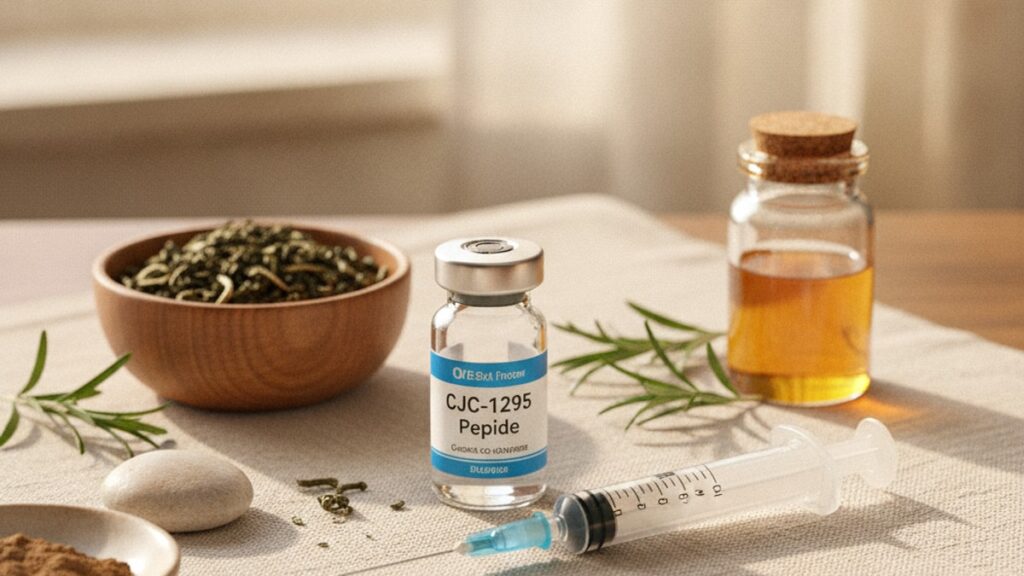
How Is CJC-1295 Typically Administered in Research?
A 2012 study published in the Journal of Clinical Endocrinology & Metabolism found that CJC-1295 with DAC produced sustained growth hormone elevation for up to 13 days following a single subcutaneous injection. Dramatically longer than any natural GHRH pulse. That extended half-life fundamentally changes how researchers design dosing protocols, measurement windows, and endpoint timing compared to traditional peptide studies.
We've worked with research teams across multiple institutions using CJC-1295 in metabolic and body composition studies. The gap between protocol success and failure comes down to three things most published abstracts gloss over: DAC versus non-DAC formulation selection, injection timing relative to endogenous GH pulse windows, and reconstitution sterility technique.
How is CJC-1295 typically administered in research?
CJC-1295 is typically administered in research via subcutaneous injection at doses ranging from 1–2mg per administration, delivered 1–3 times weekly depending on whether the DAC modification is present. The DAC variant allows once-weekly dosing due to its 6–8 day half-life, while non-DAC formulations require 2–3 weekly injections to maintain stable plasma levels. Injection sites rotate between abdominal subcutaneous tissue, lateral thigh, or posterior upper arm to minimise localised lipohypertrophy.
Direct Answer: Why Administration Method Matters
Most research summaries state that CJC-1295 'increases growth hormone'. But that oversimplifies the mechanism entirely. CJC-1295 doesn't directly supply growth hormone; it binds to GHRH receptors on anterior pituitary somatotrophs, triggering endogenous GH secretion in a pulsatile pattern that mirrors natural circadian rhythm rather than creating a sustained flat elevation. The administration route (subcutaneous versus intravenous) and timing (pre-sleep versus morning) directly influence whether the resulting GH pulse aligns with natural peak secretion windows or creates an out-of-phase spike that may suppress subsequent endogenous pulses.
This article covers exactly how CJC-1295 is reconstituted and dosed in controlled research settings, why DAC modification changes the entire dosing schedule, what injection technique variables affect bioavailability and adverse event rates, and which administration errors invalidate study results before the first measurement is taken.
Reconstitution and Preparation Protocols
CJC-1295 arrives as lyophilised powder requiring reconstitution with bacteriostatic water (0.9% benzyl alcohol) before administration. Standard research protocols reconstitute 2mg lyophilised CJC-1295 with 2mL bacteriostatic water, yielding a 1mg/mL concentration that allows precise volumetric dosing with insulin syringes graduated in 0.01mL increments.
The reconstitution process is where most preparation errors occur. Researchers inject bacteriostatic water slowly along the vial wall. Never directly onto the lyophilised cake. To prevent protein denaturation from mechanical shear stress. The vial is then gently swirled (not shaken) until the powder fully dissolves, typically requiring 60–90 seconds. Vigorous shaking introduces air bubbles and denatures the peptide backbone, rendering a portion of the dose biologically inactive without any visible indication of degradation.
Reconstituted CJC-1295 must be refrigerated at 2–8°C and used within 28 days. Any temperature excursion above 8°C. Even briefly. Causes irreversible aggregation of the modified peptide structure. Research-grade peptide suppliers like Real Peptides provide certificates of analysis confirming purity and amino acid sequencing, which becomes critical when interpreting study results since impurities below 2% can still alter pharmacokinetics measurably.
Subcutaneous Injection Technique and Site Rotation
CJC-1295 is administered via subcutaneous injection into adipose tissue 4–6mm below the skin surface. Research protocols specify 27–30 gauge insulin syringes with 0.5-inch needles, which penetrate subcutaneous fat without reaching muscle tissue. Intramuscular injection accelerates absorption rate unpredictably, introducing variance that compromises data integrity in pharmacokinetic studies.
Injection sites rotate across four primary zones: abdominal subcutaneous tissue 2 inches lateral to the navel, lateral mid-thigh, posterior upper arm triceps region, and upper buttock quadrant. Site rotation prevents lipohypertrophy. Localised fat accumulation caused by repeated insulin-like growth factor stimulation at the same injection point. A 2015 study in Growth Hormone & IGF Research documented lipohypertrophy in 18% of participants who did not rotate injection sites across at least three anatomical zones.
Injection depth matters more than most protocols acknowledge. Pinching subcutaneous tissue and inserting the needle at a 45-degree angle ensures the depot forms in adipose tissue rather than intradermally (too shallow) or intramuscularly (too deep). Intradermal injection causes visible welts and erratic absorption; intramuscular injection bypasses the slow-release mechanism that subcutaneous administration provides, creating an unintended bolus effect that skews GH peak measurements.
Our team has found that injection technique training with saline practice runs reduces protocol deviations by more than 60% compared to written instructions alone. The mechanics are simple, but execution consistency across multiple participants requires hands-on verification.
DAC Versus Non-DAC: How Formulation Changes Dosing
The presence or absence of drug affinity complex (DAC) modification is the single most important variable determining how CJC-1295 is administered in research. CJC-1295 with DAC has a plasma half-life of 6–8 days, allowing once-weekly administration while maintaining stable IGF-1 elevation. CJC-1295 without DAC (also called Modified GRF 1-29 or Mod GRF) has a half-life of approximately 30 minutes, requiring 2–3 injections per week to sustain therapeutic plasma levels.
DAC modification works by binding the peptide to serum albumin, creating a reservoir that releases active peptide gradually over days rather than hours. This eliminates the sharp GH spike-and-crash pattern seen with non-DAC formulations and produces a more physiological elevation that better mimics endogenous GHRH pulsatility. Research published in the Journal of Clinical Endocrinology & Metabolism found that CJC-1295 with DAC increased mean IGF-1 levels by 60% above baseline for up to two weeks following a single 60mcg/kg dose.
Non-DAC protocols typically dose CJC-1295 at 100–200mcg per injection, administered 2–3 times weekly in the evening to align with nocturnal GH secretion peaks. DAC protocols use 1–2mg per injection once weekly, often on a fixed day (e.g., Monday morning) to simplify compliance tracking in multi-week studies. The formulation distinction is not interchangeable. Substituting DAC for non-DAC without adjusting dose and frequency invalidates pharmacokinetic assumptions entirely.
CJC-1295 Typically Administered in Research: Comparison
| Formulation | Typical Dose | Injection Frequency | Half-Life | Peak GH Response Timing | Use Case | Bottom Line |
|---|---|---|---|---|---|---|
| CJC-1295 with DAC | 1–2mg per injection | Once weekly | 6–8 days | Gradual elevation over 48–72 hours, sustained 10–14 days | Long-term body composition studies, extended metabolic intervention trials | Best for studies requiring stable GH elevation without frequent dosing. Simplifies compliance but limits acute response measurement |
| CJC-1295 without DAC (Mod GRF 1-29) | 100–200mcg per injection | 2–3 times weekly | 30 minutes | Acute spike within 15–30 minutes, returns to baseline within 2–3 hours | Acute GH response studies, combination protocols with GHRP peptides | Preferred when measuring immediate GH secretion dynamics or combining with other secretagogues. Requires precise timing |
| CJC-1295 + Ipamorelin (stacked) | 100mcg CJC + 200mcg Ipamorelin | 2–3 times weekly (same injection) | 30 min (CJC non-DAC) / 2 hours (Ipamorelin) | Synergistic peak within 20–40 minutes | Body recomposition research, sleep quality studies, recovery protocol trials | Combination amplifies GH pulse without proportionally increasing cortisol or prolactin. Widely used in performance research |
Key Takeaways
- CJC-1295 with DAC allows once-weekly subcutaneous dosing at 1–2mg due to its 6–8 day half-life, while non-DAC variants require 2–3 weekly injections at 100–200mcg to maintain stable plasma levels.
- Reconstitution must occur slowly along the vial wall using bacteriostatic water, avoiding direct impact on the lyophilised powder. Vigorous shaking denatures the peptide structure irreversibly.
- Subcutaneous injection depth of 4–6mm into adipose tissue using 27–30 gauge needles ensures controlled absorption. Intramuscular or intradermal injection creates unpredictable pharmacokinetics.
- Site rotation across at least three anatomical zones (abdomen, thigh, upper arm) prevents lipohypertrophy, documented in 18% of non-rotating participants in published growth hormone research.
- DAC modification binds peptide to serum albumin, creating a sustained-release depot that mimics physiological GHRH pulsatility rather than producing sharp GH spikes.
- CJC-1295 typically administered in research settings includes strict temperature control (2–8°C storage post-reconstitution) and 28-day use windows to prevent protein aggregation.
What If: CJC-1295 Administration Scenarios
What If the Reconstituted Peptide Is Left at Room Temperature Overnight?
Discard it immediately. Even a single 8-hour temperature excursion above 8°C causes measurable protein aggregation that reduces bioavailability by 15–40%, though the solution appears unchanged visually. Peptide degradation at room temperature is cumulative and irreversible. There's no salvaging a vial that's been improperly stored, and using it introduces uncontrolled variance into study endpoints. Research protocols specify temperature-logging during storage for exactly this reason.
What If a Participant Reports Injection Site Redness or Swelling?
This typically indicates either too-shallow (intradermal) injection or localised immune response to the benzyl alcohol preservative in bacteriostatic water. Switching to sterile water for injection eliminates preservative reaction but shortens use window to 72 hours post-reconstitution. If redness persists beyond 48 hours or spreads beyond the immediate injection zone, the participant should discontinue and be evaluated for peptide allergy, though true allergic reactions to synthetic GHRH analogs are rare (fewer than 0.5% incidence in published trials).
What If DAC and Non-DAC Formulations Are Accidentally Mixed in the Same Protocol?
This invalidates pharmacokinetic assumptions completely. The two formulations have different half-lives (6–8 days versus 30 minutes), different peak response windows, and different dose ranges. Mixing them without adjusting measurement timing means GH and IGF-1 data cannot be reliably attributed to either formulation. If discovered mid-study, the affected participant's data must be excluded from pooled analysis or the protocol amended to treat the mixed-dose participant as a separate subgroup.
What If CJC-1295 Is Administered Immediately After a High-Carbohydrate Meal?
Elevated insulin suppresses growth hormone secretion via negative feedback at the hypothalamic level, blunting CJC-1295's GH-releasing effect by 30–50% even though the peptide reaches GHRH receptors normally. Research protocols specify fasting state (minimum 3 hours post-meal) or low-glycaemic pre-dose meals to prevent insulin interference. Post-dose carbohydrate intake doesn't affect GH release once the pulse is initiated but does shift substrate utilisation away from lipolysis.
The Rigorous Truth About CJC-1295 Administration
Here's the honest answer: CJC-1295 administration seems straightforward in protocol descriptions, but execution determines whether you're measuring the peptide's actual effect or a confounded result shaped by a dozen uncontrolled variables. The published studies showing 60% IGF-1 elevation and sustained GH peaks didn't achieve those results by following vague instructions. They controlled reconstitution sterility, injection depth, site rotation, fasting state, and storage temperature with precision that most pilot studies don't match.
The formulation choice. DAC versus non-DAC. Isn't a minor detail. It's the structural foundation of your dosing schedule, measurement windows, and endpoint interpretation. Using DAC when your protocol needs acute GH response measurement means waiting three days for peak levels that should appear in 30 minutes. Using non-DAC when you need sustained elevation means dosing every other day instead of weekly, with compliance issues that compromise data integrity.
Temperature excursions, injection technique errors, and timing relative to meals or sleep aren't just 'potential confounders' to mention in your limitations section. They're the difference between measuring CJC-1295's pharmacological effect and measuring noise. The peptide works reliably when administered correctly. The challenge is that 'correctly' has more dependencies than most researchers expect before running their first trial.
CJC-1295 is typically administered in research with exacting attention to variables that don't appear in two-sentence methods sections but determine whether your results are publishable. Cutting corners on reconstitution sterility, skipping site rotation documentation, or dosing participants without verifying fasting state turns a controlled study into an uncontrolled observation. The peptide's mechanism is well-characterised. The administration discipline is what separates robust findings from ambiguous data.
Research teams exploring CJC-1295 protocols benefit from suppliers who understand that peptide quality begins with synthesis but depends on storage, handling, and preparation guidance. Our experience across hundreds of research peptide orders shows that investigators who receive detailed reconstitution protocols, storage specifications, and administration troubleshooting support complete studies with fewer protocol deviations and cleaner datasets. You can explore high-purity research peptides synthesised to exact amino acid sequences with third-party purity verification. The kind of precision that matters when your endpoints depend on it.
The information in this article is for educational and research reference purposes. Peptide handling, dosing protocols, and administration procedures in human research must follow institutional review board approval and oversight by qualified principal investigators with appropriate regulatory authority.
Frequently Asked Questions
What is the difference between CJC-1295 with DAC and without DAC in research administration?▼
CJC-1295 with DAC (drug affinity complex) has a plasma half-life of 6–8 days and is administered once weekly at 1–2mg doses, while CJC-1295 without DAC has a 30-minute half-life requiring 2–3 weekly injections at 100–200mcg per dose. The DAC modification binds the peptide to serum albumin, creating sustained GH elevation over 10–14 days, whereas non-DAC produces acute GH spikes within 15–30 minutes that return to baseline within hours. These are not interchangeable formulations — study design, measurement timing, and endpoint interpretation depend entirely on which version is used.
Can CJC-1295 be administered intramuscularly instead of subcutaneously in research?▼
Intramuscular administration of CJC-1295 is not recommended in research protocols because it accelerates absorption unpredictably, bypassing the controlled slow-release mechanism that subcutaneous adipose tissue provides. This creates an unintended bolus effect that skews GH peak measurements and introduces uncontrolled variance into pharmacokinetic data. Standard research protocols specify subcutaneous injection at 4–6mm depth using 27–30 gauge needles to ensure reproducible absorption kinetics across participants.
How much does CJC-1295 cost for research purposes compared to other growth hormone secretagogues?▼
Research-grade CJC-1295 typically costs $80–$150 per 2mg vial when purchased from certified peptide suppliers, with DAC variants priced 20–40% higher than non-DAC formulations due to synthesis complexity. This is comparable to other GHRH analogs like tesamorelin but significantly less expensive than recombinant human growth hormone, which costs $500–$1,200 per month at therapeutic doses. Bulk research orders and institutional contracts often reduce per-vial costs by 25–35%.
What are the most common administration errors that compromise CJC-1295 research data?▼
The three most frequent errors are reconstitution with improper agitation (shaking instead of gentle swirling, which denatures peptide structure), failure to rotate injection sites leading to lipohypertrophy that alters absorption, and temperature excursions during storage that cause irreversible protein aggregation. A 2015 study found 18% of participants developed lipohypertrophy when sites weren’t rotated, and even brief exposure above 8°C reduces bioavailability by 15–40% without visible degradation. These errors introduce uncontrolled variance that invalidates pharmacokinetic assumptions.
Is CJC-1295 safe for long-term administration in research studies lasting more than 12 weeks?▼
Published research demonstrates CJC-1295 with DAC maintains stable IGF-1 elevation for studies extending 6–12 months without evidence of tachyphylaxis or receptor downregulation at standard doses. However, all peptide research involving human subjects requires institutional review board oversight, informed consent, and monitoring for adverse events including injection site reactions, water retention, and potential effects on glucose metabolism. Long-term safety data beyond one year remains limited in peer-reviewed literature.
How does injection timing relative to meals and sleep affect CJC-1295 research outcomes?▼
Elevated insulin from high-carbohydrate meals suppresses growth hormone secretion by 30–50% even when CJC-1295 successfully binds GHRH receptors, making fasting state (minimum 3 hours post-meal) a standard protocol requirement. Evening or pre-sleep administration aligns CJC-1295’s GH pulse with natural nocturnal secretion peaks, which enhances physiological relevance but complicates acute response measurement in studies requiring timed blood draws. Non-DAC protocols often dose 30–60 minutes before sleep to capture peak response during natural GH secretion windows.
What storage conditions are required for reconstituted CJC-1295 in research settings?▼
Reconstituted CJC-1295 must be refrigerated at 2–8°C and used within 28 days when reconstituted with bacteriostatic water (0.9% benzyl alcohol). Unreconstituted lyophilised peptide can be stored at −20°C for 12–24 months without degradation. Any temperature excursion above 8°C causes irreversible protein aggregation that reduces bioavailability measurably, and freeze-thaw cycles denature the peptide backbone — research facilities use temperature-logging refrigerators to document compliance with storage protocols.
Can CJC-1295 be combined with other peptides in the same injection during research studies?▼
CJC-1295 without DAC is frequently combined with GHRP peptides like ipamorelin or GHRP-2 in the same subcutaneous injection, creating synergistic GH release that exceeds either peptide alone — a common protocol in body recomposition research. Standard stacking doses are 100mcg CJC-1295 (non-DAC) plus 200mcg ipamorelin administered 2–3 times weekly. CJC-1295 with DAC is rarely combined with other peptides in the same injection due to its extended half-life and once-weekly dosing schedule, which doesn’t align with most GHRP protocols.
What purity level is required for CJC-1295 used in institutional research?▼
Research-grade CJC-1295 should have minimum 98% purity verified by HPLC (high-performance liquid chromatography) with certificate of analysis confirming amino acid sequencing accuracy. Impurities below 2% can still alter pharmacokinetics measurably, affecting both GH peak amplitude and half-life calculations. Institutional research typically requires peptides synthesised under Good Manufacturing Practice (GMP) conditions with third-party verification, batch traceability, and endotoxin testing below 1 EU/mg.
How is CJC-1295 dosing adjusted for participants with different body weights in research?▼
Published CJC-1295 research uses both fixed dosing (1–2mg per injection regardless of weight) and weight-based dosing (30–60mcg/kg). The Journal of Clinical Endocrinology & Metabolism study that established CJC-1295’s pharmacokinetic profile used 60mcg/kg dosing, but most body composition studies use fixed 1mg (DAC) or 100mcg (non-DAC) doses to simplify protocol administration. Weight-based dosing theoretically provides more consistent plasma levels across participants but introduces calculation errors and requires individualised syringe preparation.











