



What Does Melatonin Look Like in Solution? (Visual Guide)
Reconstituted melatonin peptides don't behave like most injectable compounds—they're optically sensitive, pH-reactive, and structurally fragile in ways that show up visually before they show up in potency testing. A solution that arrives clear can turn pale yellow within 48 hours if exposed to light, or develop a distinct amber hue if the pH drifts above 7.4 during storage. These aren't cosmetic changes—they're molecular ones. When melatonin oxidizes, the indole ring structure degrades into N-acetyl-5-methoxykynuramine and other breakdown products that lack the MT1/MT2 receptor affinity the parent compound requires to regulate circadian rhythm.
What does melatonin look like in solution after proper reconstitution?
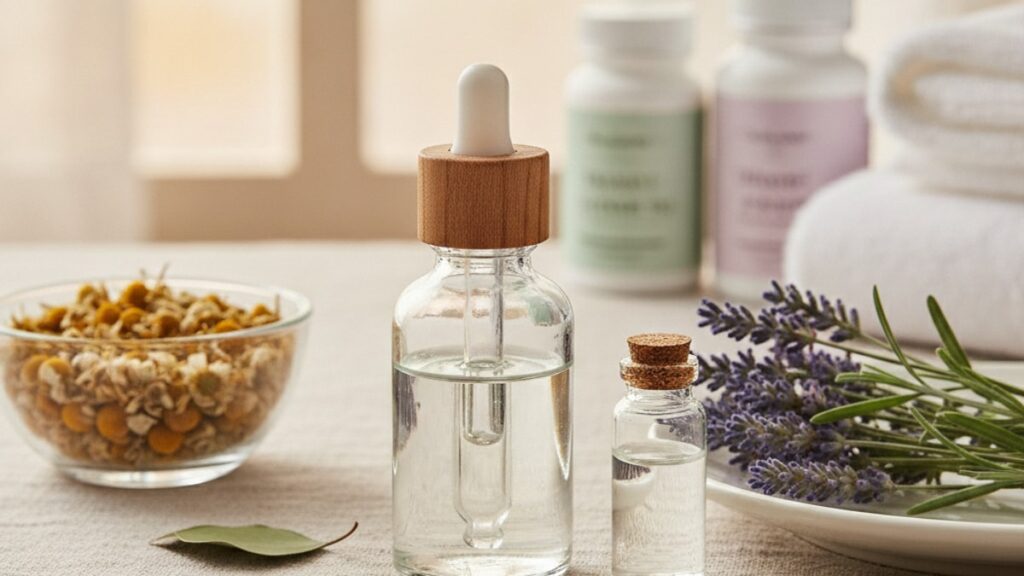
Properly reconstituted melatonin appears as a clear to very pale yellow solution immediately after mixing with bacteriostatic water or sterile saline. The solution should be completely transparent with no visible particulates, cloudiness, or precipitate at the bottom of the vial. High-purity research-grade melatonin—such as the compounds available through Real Peptides—maintains this clarity for 28–30 days when stored at 2–8°C in amber glass vials protected from light. Any colour shift toward amber, brown, or green indicates oxidative degradation and loss of receptor-binding activity.
The Honest Answer About Visual Appearance
Most researchers expect melatonin in solution to remain crystal-clear indefinitely once mixed—that's not how the compound works. Melatonin is an indoleamine hormone structurally similar to serotonin, and the indole ring that defines its activity is also what makes it vulnerable to oxidation in aqueous solution. Even under ideal storage conditions, dissolved melatonin will gradually shift from clear to pale straw-yellow over 3–4 weeks as trace oxygen in the vial slowly oxidizes the 5-methoxy group. This isn't contamination—it's chemistry. What matters is the rate of that colour change. A solution that turns noticeably yellow within 72 hours was either exposed to light, stored above 8°C, or reconstituted at a pH outside the 6.0–7.0 stability window.
Visual Characteristics of Freshly Reconstituted Melatonin
When lyophilised melatonin powder first contacts bacteriostatic water, the reconstitution process should complete within 60–90 seconds of gentle swirling—no vigorous shaking required. The resulting solution appears water-clear or exhibits a very faint yellow tint barely perceptible against a white background. Research-grade melatonin synthesized through acetylation of 5-methoxytryptamine and purified to ≥98% by HPLC should dissolve completely with zero visible particles, no opalescence, and no sediment formation.
The refractive index of properly prepared melatonin solution at 5mg/mL concentration is nearly identical to pure water, meaning the liquid should appear optically uniform when held up to diffuse light. Any haziness, milky appearance, or floating particulates within the first 24 hours post-reconstitution indicates preparation failures: inadequate mixing, pH incompatibility, or contamination during transfer. Particulate formation is irreversible protein aggregation, and those aggregates lack biological activity.
The Sleep Stack formulations are designed with solubility profiles that eliminate these preparation variables—each peptide component is pre-validated for reconstitution clarity under standard bacteriostatic water conditions at neutral pH.
How Storage Conditions Change What Melatonin Looks Like in Solution
Melatonin's appearance in solution is time-sensitive and environment-dependent because the molecule contains three functional groups prone to oxidation: the 5-methoxy substituent on the indole ring, the N-acetyl group, and the indole nitrogen itself. When stored correctly—refrigerated at 2–8°C in amber glass vials with minimal headspace—melatonin maintains near-complete clarity for 21–28 days. The gradual shift toward pale yellow during this window represents less than 5% degradation.
Temperature excursions accelerate visual and chemical degradation exponentially. A vial left at room temperature (20–25°C) for 48 hours will develop a distinctly yellow hue; after one week unrefrigerated, the solution typically appears amber to light brown. Light exposure—particularly blue and UV wavelengths—causes even faster degradation. Melatonin solution stored in clear glass under ambient laboratory lighting can turn visibly yellow within 12–18 hours as photocatalytic oxidation destroys the indole ring structure.
The practical takeaway: if your reconstituted melatonin has shifted from clear to noticeably yellow in fewer than five days, storage conditions failed. Either the vial wasn't kept cold enough, it was exposed to light, or the headspace contained too much oxygen. This is why amber glass vials with crimped seals matter—they're stability requirements.
pH Effects on Melatonin Solution Appearance
Melatonin's solubility and visual clarity are pH-dependent because the indole nitrogen (pKa ~10.6) and the amide group respond differently to acidic versus alkaline conditions. The compound exhibits maximum solubility and stability in the pH 6.0–7.0 range, which is why bacteriostatic water (pH 5.0–7.0) and sterile saline (pH 5.5–7.0) are the standard reconstitution solvents. Solutions prepared within this pH window remain clear and colourless for weeks under refrigeration.
If melatonin is reconstituted in water with pH below 5.0, the indole ring becomes protonated, reducing solubility and causing fine precipitate formation—the solution appears slightly cloudy. Conversely, if the pH drifts above 8.0, melatonin undergoes base-catalyzed oxidation much faster than at neutral pH. Solutions prepared at pH 8.5 or higher often turn amber-yellow within 24–48 hours even when refrigerated.
Researchers working with custom peptide formulations—such as those combining melatonin with other circadian or metabolic modulators in our Cognitive Function protocols—need to verify solvent pH before reconstitution. A simple pH test strip reading between 6.0–7.0 confirms the preparation will remain stable.
Comparison: Melatonin Solution Appearance Under Different Conditions
| Storage Condition | Visual Appearance (Day 1) | Visual Appearance (Day 7) | Visual Appearance (Day 21) | Estimated Potency Retention | Professional Assessment |
|---|---|---|---|---|---|
| Refrigerated 2–8°C, amber vial, darkness | Clear to very pale yellow | Clear to pale yellow | Pale yellow (barely perceptible) | 95–98% | Optimal—this is the standard for research-grade stability |
| Room temp 20–25°C, amber vial | Clear to pale yellow | Noticeably yellow | Amber to light brown | 70–80% (Day 7), <50% (Day 21) | Unacceptable—temperature degradation outpaces acceptable loss |
| Refrigerated 2–8°C, clear glass, ambient light | Clear | Yellow with faint green tint | Deep amber-brown | 60–75% (Day 7), <40% (Day 21) | Failed—photocatalytic oxidation destroys receptor activity |
| Frozen −20°C, amber vial (post-reconstitution) | Clear | Clear post-thaw, possible precipitate | Cloudy or phase-separated | Variable—freeze-thaw denatures structure | Not recommended—lyophilised powder can be frozen, not solution |
| Reconstituted at pH <5.0 | Slightly cloudy or opalescent | Cloudy with visible precipitate | Heavy precipitate, clear supernatant | <70%—insoluble fraction inactive | pH correction required before use |
| Reconstituted at pH >8.0 | Clear to pale yellow | Amber-yellow | Dark amber-brown | 50–60% (Day 7), <30% (Day 21) | Severe—alkaline conditions accelerate oxidative breakdown |
Key Takeaways
- Properly reconstituted melatonin appears clear to very pale yellow with zero particulates, cloudiness, or sediment at the vial bottom when prepared with bacteriostatic water at pH 6.0–7.0.
- Melatonin in solution stored at 2–8°C in amber glass vials maintains near-complete clarity for 21–28 days; any colour shift to noticeable yellow within five days signals storage failure or light exposure.
- Temperature excursions above 8°C cause exponential oxidation—solutions left unrefrigerated for 48 hours develop a yellow hue, and after one week at room temperature, the solution typically appears amber to light brown with significantly reduced MT1/MT2 receptor binding activity.
- Light exposure accelerates degradation faster than temperature alone; melatonin solution in clear glass under ambient lighting can turn visibly yellow within 12–18 hours as photocatalytic oxidation destroys the indole ring structure.
- pH outside the 6.0–7.0 range causes either precipitate formation (pH <5.0) or accelerated oxidation (pH >8.0), both of which compromise potency and visual clarity.
- Visual appearance directly correlates with chemical stability—amber or brown discoloration indicates formation of N-acetyl-5-methoxykynuramine and other inactive breakdown products that lack therapeutic efficacy.
What If: Melatonin Solution Appearance Scenarios
What If My Reconstituted Melatonin Turned Yellow Within 24 Hours?
Discard the solution and investigate the storage conditions immediately. Rapid yellowing within the first day indicates either light exposure, temperature excursion above 15°C, or reconstitution at alkaline pH. Melatonin stored correctly should remain clear or develop only the faintest pale-yellow tint over the first week. If the vial was stored in a clear container, light-catalyzed oxidation destroyed receptor-binding activity. If refrigeration failed, thermal degradation accelerated oxidation beyond acceptable limits. The indole ring degradation that causes the colour change is irreversible, and the resulting breakdown products don't bind MT1 or MT2 receptors effectively.
What If There's Visible Precipitate at the Bottom of the Vial?
Precipitate formation means the peptide came out of solution due to pH incompatibility, inadequate mixing, or protein aggregation triggered by freeze-thaw cycling. Gently swirl the vial—if the precipitate doesn't redissolve within 60 seconds, the solution is unusable. Precipitated peptide has undergone irreversible structural changes that eliminate biological activity. The most common cause is reconstituting with water outside the pH 6.0–7.0 range, which protonates the indole nitrogen and reduces solubility. The second most common cause is attempting to freeze reconstituted solution at −20°C, then thawing it—this denatures the peptide structure and causes aggregation. Lyophilised melatonin powder can be frozen before reconstitution; once dissolved, it must stay refrigerated at 2–8°C.
What If My Melatonin Solution Looks Clear But Smells Unusual?
Any off-odour—sour, musty, or chemical—indicates bacterial contamination or solvent degradation, not peptide oxidation (which is odourless). Discard the vial immediately. Bacteriostatic water contains 0.9% benzyl alcohol as a preservative, which has a faint alcohol-like smell—that's normal. What's not normal is a vinegar-like sour smell or a rancid odour. Even if the solution appears visually clear, microbial contamination compromises both safety and peptide stability. This typically results from non-sterile reconstitution technique—using a needle that contacted a non-sterile surface, failing to swab the vial stopper with alcohol before piercing, or introducing air from a contaminated syringe.
The Unvarnished Truth About Melatonin Solution Stability
Here's what most reconstitution guides won't tell you directly: the 28-day stability window cited for refrigerated melatonin solution is a conservative estimate based on ≥90% potency retention, not the point where the peptide stops working entirely. In reality, melatonin in solution begins degrading the moment it contacts water—oxidation is continuous, not binary. The question isn't whether degradation happens; it's whether the rate of degradation stays slow enough that the solution retains therapeutic relevance for your research timeline.
A pale yellow solution at Day 21 that was clear at Day 1 has lost 5–8% potency on average—still highly effective for most research applications. An amber solution at Day 7 that should still be clear has lost 25–40% potency and will continue degrading rapidly. The visual progression from clear to yellow to amber is melatonin literally falling apart at the molecular level as the indole ring opens, the methoxy group oxidizes, and the resulting kynuramine derivatives accumulate in solution. Those breakdown products don't just dilute the active compound—they can interfere with receptor binding assays if you're measuring MT1/MT2 affinity directly.
The peptides our team provides through Real Peptides are synthesized with purity profiles designed to minimize this oxidative cascade—but no amount of synthesis precision can compensate for improper storage after reconstitution. If you're seeing colour changes in fewer than 10 days, the preparation or storage failed, not the peptide.
Reconstituted peptides aren't indefinitely stable in aqueous solution no matter how carefully you store them—plan your research dosing to use the entire vial within the stability window rather than stretching a single reconstitution across two months. The cost savings of prolonging one vial aren't worth the experimental variance introduced by using degraded compound.
Frequently Asked Questions
How can I tell if my melatonin solution has gone bad before using it?▼
Check for three visual indicators: colour shift beyond pale yellow (amber, brown, or green tint signals oxidative degradation), visible particulates or cloudiness (indicates protein aggregation or contamination), and any precipitate at the vial bottom (means the peptide came out of solution due to pH incompatibility). A properly stored solution should remain clear to very pale yellow for 21–28 days when refrigerated at 2–8°C in an amber vial. Any of these signs mean the solution has lost significant potency and should be discarded.
Can I store reconstituted melatonin in a clear glass vial if I keep it in the dark?▼
No—even brief light exposure during handling accelerates photocatalytic oxidation faster than you can compensate for with darkness between uses. Melatonin’s indole ring absorbs blue and UV wavelengths strongly, and even 30 seconds of ambient laboratory lighting during syringe draws can initiate degradation that continues in darkness afterward. Amber glass vials filter out the wavelengths that trigger oxidation, which is why they’re the standard for light-sensitive peptides. If you only have clear vials available, wrap them completely in aluminium foil and handle under red safelight conditions—but amber glass is the correct solution.
Why does melatonin in solution turn yellow faster than other peptides I’ve used?▼
Melatonin is structurally an indoleamine hormone, not a standard amino-acid peptide chain, and the indole ring that gives it MT1/MT2 receptor activity is also what makes it exceptionally vulnerable to oxidation. Most peptides (like BPC-157, TB-500, or growth hormone secretagogues such as those in our GHRP-2 formulations) consist of amino acids linked by peptide bonds that are relatively stable in aqueous solution at neutral pH. Melatonin’s 5-methoxy group and indole nitrogen are electron-rich sites that react rapidly with dissolved oxygen, light, and even trace metal ions in water, causing the yellow-to-amber colour change you see as oxidation progresses.
What’s the difference between pale yellow and amber when describing melatonin solution colour?▼
Pale yellow means the solution has a very faint straw-coloured tint barely visible against a white background—this is normal for melatonin solution stored correctly for 2–3 weeks and represents <5% degradation. Amber means the solution has a distinct orange-brown hue clearly visible in normal lighting, similar to the colour of amber glass itself—this indicates 20–40% degradation and signals that storage conditions failed (temperature too high, light exposure, or pH incompatibility). The progression from clear to pale yellow to amber to dark brown directly tracks the oxidation process, with each stage representing increased formation of inactive breakdown products.
Does freezing reconstituted melatonin preserve it longer than refrigeration?▼
No—freezing reconstituted peptide solutions causes ice crystal formation that physically disrupts protein structure, leading to aggregation and precipitate formation when thawed. Freeze-thaw cycles denature the peptide irreversibly, which is why you’ll see white flakes or sediment in previously frozen solutions that were clear before freezing. Lyophilised (freeze-dried) melatonin powder can and should be stored at −20°C before reconstitution, but once dissolved in bacteriostatic water, the solution must remain refrigerated at 2–8°C and never refrozen. The 28-day refrigerated stability window is the correct storage protocol—attempting to extend it through freezing destroys the compound.
Can I use melatonin solution that’s turned slightly yellow if I increase the dose?▼
Increasing dose doesn’t compensate for oxidative degradation because you’re dosing both active melatonin and inactive breakdown products in unknown proportions—you can’t titrate accurately when you don’t know the remaining potency. A solution that’s shifted from clear to noticeably yellow has lost 10–25% receptor-binding activity depending on storage duration and conditions, but the exact loss requires HPLC analysis to quantify. More importantly, some oxidation products (like N-acetyl-5-methoxykynuramine) may have biological activity of their own that differs from melatonin’s MT1/MT2 agonism, introducing experimental variables you can’t control. The correct approach is to discard degraded solution and reconstitute fresh peptide.
What should I look for when evaluating whether a peptide supplier’s melatonin will stay clear in solution?▼
Ask for three pieces of documentation: HPLC purity analysis showing ≥98% purity (lower purity means more impurities that accelerate oxidation), mass spectrometry confirmation of correct molecular weight (ensures you’re receiving melatonin, not a similar indole compound), and stability data showing the reconstituted solution’s appearance over 28 days under refrigeration. Reputable suppliers like Real Peptides provide batch-specific certificates of analysis with this data. If a supplier can’t or won’t provide purity documentation, the peptide likely contains synthesis byproducts or degradation products that will cause rapid colour change and potency loss post-reconstitution.
Why does the vial headspace matter for melatonin solution stability?▼
The headspace—the air gap between the liquid surface and the vial stopper—contains oxygen that slowly dissolves into the solution over time, driving the oxidation reactions that turn melatonin yellow and then amber. Larger headspace means more oxygen available for degradation. This is why best practice is to order vial sizes that closely match your total reconstituted volume (e.g., reconstitute 5mg powder in 2mL bacteriostatic water in a 2mL vial, not a 10mL vial). Some researchers go further and overlay the solution surface with an inert gas (argon or nitrogen) before sealing, which displaces oxygen and can extend visual clarity by 30–50%—but this requires specialized technique and isn’t necessary for most applications if you’re using the solution within 28 days.
Is cloudiness in melatonin solution ever reversible?▼
Only if caused by temperature shock—if you pull a refrigerated vial into a warm room and see transient cloudiness that clears within 2–3 minutes as the solution warms to room temperature, that’s condensation on the glass or reversible phase separation, not peptide aggregation. True peptide cloudiness (opalescence, haziness, or visible particles suspended in solution) caused by pH incompatibility, protein aggregation, or contamination is irreversible. If the cloudiness persists more than five minutes after the vial reaches ambient temperature, or if you see any solid precipitate, the solution is unusable and should be discarded.











