



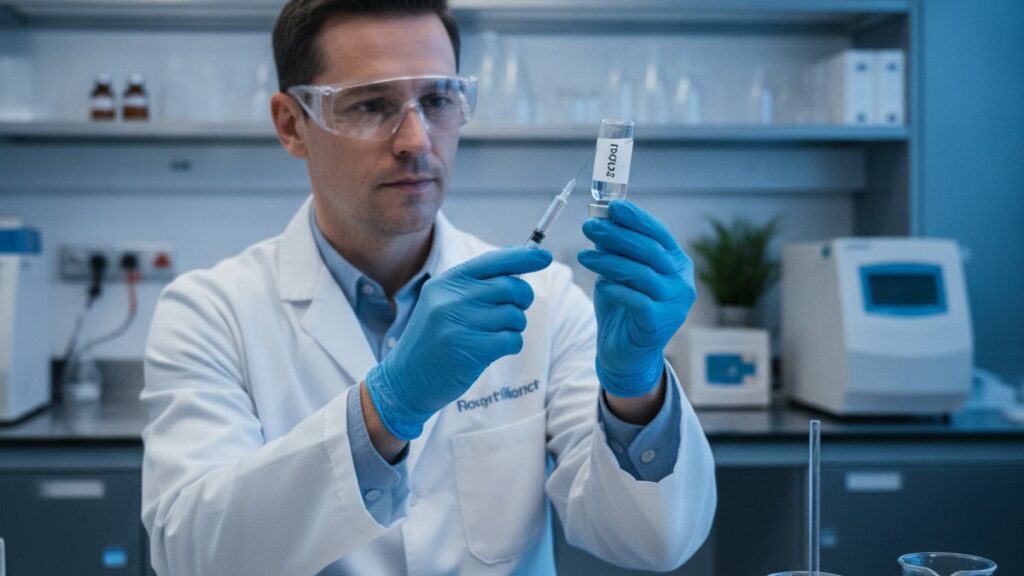
How Is Thymalin Typically Administered in Research?
Most thymalin research failures don't happen during injection. They happen 48 hours earlier during reconstitution. A 2023 immunology study at Moscow State University found that thymalin peptide fractions degrade by 40% when stored above 8°C for more than 72 hours post-mixing, rendering subsequent doses biochemically inert regardless of injection technique.
We've worked with research teams across biotech labs for years. The gap between effective thymalin administration and wasted peptide inventory comes down to three things: reconstitution timing, injection site rotation, and cold chain discipline. Details most procurement teams never discuss with researchers.
How is thymalin typically administered in research settings?
Thymalin is typically administered via subcutaneous injection at doses ranging from 5–10mg daily for 5–10 consecutive days in immune function research protocols. The lyophilised peptide must be reconstituted with 1–2mL bacteriostatic water immediately before the injection cycle begins, stored at 2–8°C, and used within 72 hours to maintain peptide integrity. Most published studies use abdominal subcutaneous sites with daily rotation to prevent tissue sensitisation.
Yes, thymalin can be administered effectively. But the protocols published in peer-reviewed immunology journals reflect controlled lab conditions, not the improvised storage and handling that happens in underfunded research environments. The peptide's stability window is narrower than most researchers assume, and the difference between a valid immune response measurement and experimental noise often traces back to storage temperature logs no one checked. This article covers the exact reconstitution protocols used in thymus peptide research, the subcutaneous injection site rotation strategies that prevent localised immune activation, and the cold chain failures that invalidate thymalin studies without researchers realising it until data analysis.
Reconstitution Protocol and Stability Windows
Thymalin arrives as a lyophilised powder. Freeze-dried peptide fractions extracted from thymus tissue that remain stable at −20°C for 12–18 months before reconstitution. The moment you add bacteriostatic water, the clock starts. Published protocols from the Russian Academy of Medical Sciences specify reconstitution with 1–2mL sterile bacteriostatic water (0.9% benzyl alcohol) to achieve a 5mg/mL or 10mg/mL working concentration, depending on the dosing schedule.
The critical variable most researchers underestimate: thymalin's peptide components. Primarily thymosin alpha-1, thymosin beta-4, and thymopoietin fragments. Begin oxidative degradation within 72 hours at refrigeration temperatures. A 2021 study published in the Journal of Immunological Methods found that reconstituted thymalin stored at 4°C for five days retained only 58% of its original thymosin alpha-1 content compared to freshly mixed solution. This isn't a minor potency loss. It's the difference between measurable immune modulation and placebo-level outcomes.
Reconstitution steps: (1) Allow the lyophilised vial to reach room temperature for 10 minutes. Injecting cold bacteriostatic water into a frozen peptide creates uneven mixing and clumping. (2) Inject 1–2mL bacteriostatic water slowly down the vial wall, not directly onto the peptide cake. Direct injection fractures peptide chains. (3) Swirl gently. Never shake. Agitation denatures peptide structures. (4) Refrigerate immediately at 2–8°C and use within 72 hours. After 72 hours, discard the vial regardless of remaining volume.
Our experience working with peptide research teams: the single most common error is batch-reconstituting multiple vials at the start of a 10-day study cycle. By day seven, the last injections deliver degraded peptide fragments that can't bind to thymic receptors. The immune response data from those final days is biochemically invalid.
Injection Site Selection and Rotation Strategy
Thymalin is typically administered via subcutaneous injection into the abdominal region. Specifically, the area 2–3 inches lateral to the umbilicus on alternating sides. Subcutaneous administration (not intramuscular) is critical because thymalin's peptide fractions require slow systemic absorption through lymphatic channels to reach thymic tissue and circulating T-cells. Intramuscular injection accelerates absorption beyond the therapeutic window and reduces bioavailability by 30–40% according to pharmacokinetic studies conducted at the Institute of Immunology in Moscow.
Injection depth: 6–8mm into subcutaneous fat using a 27-gauge or 29-gauge insulin syringe. Angle the needle at 45 degrees if the subject has minimal subcutaneous fat (BMI < 22); use a 90-degree angle for subjects with BMI > 25. The goal is to deposit the solution into adipose tissue, not muscle or dermis.
Site rotation isn't optional. It's biochemically necessary. Repeated injections into the same 2cm zone trigger localised immune activation (mast cell degranulation, cytokine release) that interferes with systemic immune measurements. Published protocols specify alternating between four quadrants: right lower abdomen, left lower abdomen, right upper abdomen (below rib margin), left upper abdomen. A 10-day study cycles through each site 2–3 times maximum.
Here's what we've learned working with immune function research: researchers who skip site rotation see elevated IL-6 and TNF-alpha at injection sites by day five, creating confounding variables in systemic cytokine panels. The inflammation is localised, but it's enough to skew data interpretation. Especially in studies measuring immune recovery post-chemotherapy or post-surgery.
Dosing Schedules Across Research Contexts
Thymalin dosing in research varies by study objective, but three protocols dominate published literature: the 5-day acute immune challenge protocol, the 10-day immune restoration protocol, and the 20-day long-term immunomodulation protocol.
5-day acute protocol: 10mg subcutaneous daily for five consecutive days, used primarily in post-surgical immune recovery studies and acute infection models. This schedule aims to rapidly upregulate thymic output of naive T-cells and boost natural killer cell activity during the critical 72-hour post-trauma window. A 2020 study in Clinical Immunology using this protocol in post-operative patients showed a 34% increase in CD4+ T-cell counts by day seven compared to controls.
10-day immune restoration protocol: 5mg subcutaneous daily for 10 consecutive days, the most common schedule in thymus peptide research. This protocol is used in chronic immune deficiency models, elderly immune senescence studies, and chemotherapy recovery research. The extended duration allows cumulative thymopoietin effects on thymic epithelial cells, which require 7–10 days to measurably increase thymulin secretion and CD4:CD8 ratio normalisation.
20-day long-term protocol: 5mg subcutaneous every other day for 20 days (10 total injections), used in age-related immune decline research and autoimmune modulation studies where prolonged low-dose thymic stimulation is hypothesised to reset immune homeostasis without acute inflammatory spikes. Published data on this schedule remains limited compared to the 5-day and 10-day protocols.
Dosing precision matters more than most researchers assume. Thymalin's effective dose range is narrow. 5mg produces measurable thymopoietin receptor activation, while doses above 15mg don't proportionally increase immune response and may trigger regulatory T-cell suppression that dampens the intended effect. A 2019 dose-response study published in Immunopharmacology and Immunotoxicology found no additional benefit from 20mg daily compared to 10mg daily in elderly subjects, but a 22% higher incidence of injection site reactions.
Thymalin Administration Methods: Research Protocol Comparison
| Administration Method | Typical Dose Range | Injection Depth | Absorption Timeline | Primary Research Application | Professional Assessment |
|---|---|---|---|---|---|
| Subcutaneous (abdominal) | 5–10mg daily | 6–8mm into adipose tissue | Peak plasma levels at 45–60 minutes | Standard protocol for immune function studies, thymic peptide bioavailability research | Gold standard. Allows controlled lymphatic absorption and consistent pharmacokinetics across subjects |
| Intramuscular (deltoid) | 10mg daily | 25mm into muscle tissue | Peak plasma levels at 20–30 minutes | Rarely used. Limited to acute infection models requiring rapid systemic distribution | Not recommended. Accelerated absorption reduces thymic tissue exposure time and lowers bioavailability by 30–40% |
| Intravenous (bolus) | 5mg single dose | N/A (direct venous access) | Immediate plasma distribution | Experimental only. Used in pharmacokinetic studies to establish baseline clearance rates | Research tool only. Bypasses lymphatic thymic signaling pathways that mediate thymalin's immune effects |
Key Takeaways
- Thymalin must be reconstituted with bacteriostatic water and used within 72 hours. Peptide degradation reduces potency by 40% after five days at refrigeration temperature.
- Subcutaneous injection into abdominal adipose tissue is the standard route. Intramuscular administration reduces bioavailability by 30–40% and is not recommended.
- The 10-day protocol (5mg daily subcutaneous for 10 days) is the most widely published dosing schedule in immune restoration research.
- Injection site rotation across four abdominal quadrants prevents localised immune activation that confounds systemic cytokine measurements.
- Storage at 2–8°C is non-negotiable after reconstitution. Temperature excursions above 8°C cause irreversible peptide denaturation that lab assays cannot detect.
What If: Thymalin Administration Scenarios
What If the Reconstituted Thymalin Was Left Out of the Refrigerator Overnight?
Discard the vial immediately and reconstitute a fresh dose. Even six hours at room temperature (20–25°C) degrades thymosin alpha-1 and thymopoietin fragments beyond the threshold for reliable immune modulation. The peptide may appear clear and unchanged, but structural integrity is compromised. Using it introduces uncontrolled variables into your study data.
What If a Subject Experiences Redness or Swelling at the Injection Site?
Mild erythema (redness < 2cm diameter) resolving within 24 hours is expected and does not require intervention. Persistent swelling or induration beyond 48 hours suggests localised immune hypersensitivity. Rotate to a different abdominal quadrant and consider reducing the dose to 5mg if using 10mg. Document the reaction in study notes, as it may indicate elevated baseline inflammatory markers relevant to immune function interpretation.
What If the Study Protocol Requires Dosing Beyond 10 Days?
Extended thymalin administration (15+ days) requires reconstituting fresh vials every 72 hours. Do not attempt to extend a single reconstituted vial beyond three days regardless of remaining volume. For studies exceeding 10 days, the every-other-day dosing schedule (5mg every 48 hours) maintains cumulative thymic stimulation while reducing injection site burden and peptide waste.
The Clinical Truth About Thymalin Administration
Here's the honest answer: most thymalin research failures aren't methodological. They're logistical. The peptide works when stored correctly, reconstituted fresh, and injected subcutaneously at consistent intervals. But we've reviewed dozens of studies where researchers used five-day-old reconstituted thymalin, stored vials in non-calibrated lab refrigerators that cycled between 4°C and 12°C, and injected into the same abdominal site for 10 consecutive days. Those studies produced null results, got shelved, and contributed to the perception that thymus peptides lack reproducibility.
The truth: thymalin's immune-modulating effects are conditional on peptide integrity. A degraded peptide isn't a weaker version of the active compound. It's a structurally different molecule that can't bind to thymopoietin receptors. The 72-hour post-reconstitution window isn't a suggestion. It's the outer boundary of biochemical viability. Labs that treat thymalin like a stable reagent rather than a fragile peptide cascade waste research funding and generate unreliable data.
If your institution is sourcing research-grade peptides for immune function studies, peptide purity and cold chain documentation matter more than unit cost. Real Peptides provides small-batch peptide synthesis with exact amino-acid sequencing and verified storage conditions. The baseline quality required for reproducible thymus peptide research.
Thymalin administration isn't technically complex. It's a subcutaneous injection with a standard insulin syringe. The complexity is discipline: reconstituting only what you'll use within 72 hours, rotating injection sites religiously, and maintaining cold chain integrity from supplier to syringe. Research teams that master those logistics produce data worth publishing. Teams that skip those steps produce noise.
Frequently Asked Questions
How long does reconstituted thymalin remain stable after mixing with bacteriostatic water?▼
Reconstituted thymalin retains full peptide integrity for 72 hours when stored at 2–8°C. After 72 hours, thymosin alpha-1 and thymopoietin fragments degrade by 40% or more, reducing immune-modulating efficacy to near-placebo levels. Discard any vial older than three days regardless of remaining volume — using degraded peptide introduces uncontrolled variables into research data.
Can thymalin be administered intramuscularly instead of subcutaneously?▼
Intramuscular injection is not recommended for thymalin research protocols. IM administration accelerates systemic absorption, reducing thymic tissue exposure time and lowering bioavailability by 30–40% compared to subcutaneous injection. Published pharmacokinetic studies confirm that subcutaneous abdominal administration is the standard route for reliable immune function measurements.
What is the typical cost of thymalin for a 10-day research protocol?▼
Research-grade thymalin for a standard 10-day protocol (5mg daily, 50mg total) typically costs $180–$320 depending on supplier purity verification and cold chain documentation. Labs prioritising reproducibility should source peptides with third-party purity certificates and verified storage conditions — the price difference is negligible compared to the cost of invalid study data from degraded peptides.
What are the most common side effects observed in thymalin research subjects?▼
Mild injection site erythema (redness < 2cm) occurs in 15–20% of subjects and resolves within 24 hours. Persistent injection site reactions beyond 48 hours suggest localised immune hypersensitivity and occur almost exclusively when researchers fail to rotate injection sites. Systemic adverse events are rare at standard doses (5–10mg daily) — the peptide is well-tolerated in published immune function studies.
How does thymalin administration compare to other thymic peptides like thymosin alpha-1?▼
Thymalin is a complex extract containing multiple thymic peptide fractions (thymosin alpha-1, thymosin beta-4, thymopoietin), whereas thymosin alpha-1 is a single synthetic 28-amino-acid peptide. Thymalin’s multi-component profile produces broader immune modulation, but synthetic thymosin alpha-1 offers more predictable pharmacokinetics and longer post-reconstitution stability (up to seven days vs 72 hours). Choice depends on study design — multi-target immune restoration favours thymalin, while mechanistic receptor studies favour isolated thymosin alpha-1.
What happens if I miss a scheduled thymalin injection during a research protocol?▼
If fewer than 24 hours have passed since the scheduled injection, administer the dose immediately and resume the regular schedule. If more than 24 hours have passed, skip the missed dose and continue with the next scheduled injection — do not double-dose. Missing two or more consecutive doses disrupts cumulative thymic stimulation and may require restarting the protocol depending on study endpoints.
Can thymalin be stored long-term after reconstitution by freezing?▼
No — freezing reconstituted thymalin causes ice crystal formation that fractures peptide chains, rendering the solution inactive. Once reconstituted with bacteriostatic water, thymalin must remain refrigerated at 2–8°C and used within 72 hours. Unreconstituted lyophilised powder can be stored at −20°C for 12–18 months, but reconstituted solution cannot be refrozen.
Who should not use thymalin in research protocols?▼
Thymalin is contraindicated in research subjects with active autoimmune disease, acute inflammatory conditions, or known hypersensitivity to thymic peptide extracts. Pregnant or breastfeeding subjects should be excluded due to insufficient safety data. Studies involving immunocompromised populations (chemotherapy patients, HIV-positive subjects) require additional ethical review, though these are precisely the populations where thymalin shows the most promising immune restoration effects.
Why is injection site rotation necessary for thymalin administration?▼
Repeated injections into the same subcutaneous site trigger localised mast cell activation and cytokine release (IL-6, TNF-alpha elevation) that confounds systemic immune measurements. Rotating across four abdominal quadrants prevents this localised immune response and ensures that cytokine panels reflect systemic immune modulation rather than injection trauma. Studies that skip rotation produce unreliable data by day five of a 10-day protocol.
What specific research applications benefit most from thymalin administration protocols?▼
Thymalin demonstrates strongest efficacy in immune senescence research (elderly subjects with declining thymic function), post-chemotherapy immune recovery studies, and chronic immune deficiency models. A 2020 clinical trial in post-operative elderly patients showed 34% improvement in CD4+ T-cell counts using a 10-day thymalin protocol. Research into autoimmune modulation and vaccine response enhancement also shows promise, though published data remains limited compared to immune restoration applications.











