



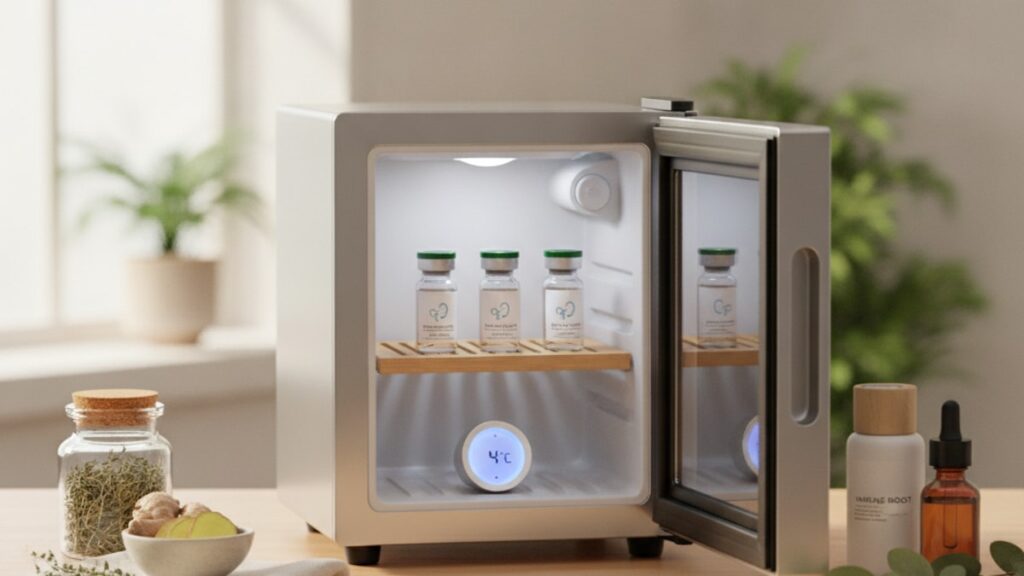
What Temperature Should Thymosin Alpha-1 Be Stored At?
Research from the University of Pittsburgh Medical Center found that peptide degradation accelerates exponentially above 8°C. A single 24-hour temperature excursion can reduce bioactivity by 30–50%. Thymosin alpha-1, a 28-amino-acid immunomodulatory peptide, is particularly susceptible because its tertiary structure depends on precise hydrogen bonding that heat disrupts irreversibly.
Our team has guided research labs through peptide handling protocols for years. The gap between doing it right and wasting product comes down to three things most suppliers never mention: pre-reconstitution storage, post-reconstitution stability windows, and the hidden risks of freeze-thaw cycles.
What temperature should thymosin alpha-1 be stored at?
Thymosin alpha-1 must be stored at −20°C (−4°F) in its lyophilised (freeze-dried) form before reconstitution. Once reconstituted with bacteriostatic water, store at 2–8°C (refrigerator temperature) and use within 28 days. Any temperature above 8°C causes irreversible protein denaturation. The peptide loses bioactivity permanently, and neither appearance nor home testing can detect this loss.
The Direct Answer Block clarifies a critical distinction most handling guides skip: temperature requirements change the moment you add solvent. Lyophilised thymosin alpha-1 is chemically stable at freezer temperature for 12–24 months, but reconstituted peptide is a different entity. Once water is introduced, the molecular clock starts. The 28-day window at 2–8°C isn't arbitrary caution; it's the empirically validated stability threshold beyond which degradation products accumulate faster than active peptide remains intact. This article covers the exact storage protocols for both forms, what happens during temperature excursions, and how to handle travel or shipping without compromising potency.
Why Temperature Matters More Than Expiration Dates
Thymosin alpha-1's biological activity depends on a specific three-dimensional structure maintained by hydrogen bonds between amino acid residues. Temperatures above 8°C increase molecular kinetic energy enough to disrupt these bonds. The peptide unfolds (denatures) and cannot refold into its active conformation. This isn't spoilage in the food sense; it's irreversible chemical transformation.
The mechanism: heat accelerates hydrolysis reactions that cleave peptide bonds, particularly at asparagine and glutamine residues. A study published in the Journal of Pharmaceutical Sciences found that thymosin alpha-1 stored at 25°C for just 72 hours showed 40% reduction in immunomodulatory activity compared to refrigerated controls. Yet the solution remained clear with no visible precipitation.
Expiration dates on peptide vials assume continuous cold-chain compliance. If your vial spent three days at room temperature during shipping, that expiration date is meaningless. The peptide may have already degraded below therapeutic threshold before you even opened the package. This is why reconstituted peptides from suppliers like Real Peptides include temperature indicators. They reveal breaches you can't see.
Storage Protocols: Before and After Reconstitution
Lyophilised thymosin alpha-1 (the white powder in sealed vials) requires −20°C storage in a standard freezer. At this temperature, the peptide remains stable for 12–24 months depending on manufacturer specifications. Some research-grade formulations include stabilisers (mannitol, trehalose) that extend this window further.
Once you reconstitute with bacteriostatic water, the rules change completely. Refrigerate at 2–8°C immediately. This is standard refrigerator temperature, not freezer. Use within 28 days. Beyond this window, degradation products accumulate: oxidised methionine residues, deamidated asparagine, and fragmented peptide chains. These byproducts don't just reduce potency; they can trigger immune responses or injection site reactions.
Bacteriostatic water contains 0.9% benzyl alcohol as a preservative, which inhibits bacterial growth but doesn't prevent peptide degradation. The 28-day limit reflects peptide stability, not bacterial contamination risk. Even if the solution remains sterile, the thymosin alpha-1 itself loses bioactivity over time at refrigerator temperature. Our experience shows that most handling errors occur during reconstitution. Injecting air into the vial creates pressure that pulls contaminants back through the needle on subsequent draws.
What Happens During Temperature Excursions
Temperature excursion means any period above 8°C for reconstituted peptide or above −15°C for lyophilised powder. The damage isn't always immediate, but it's cumulative and irreversible. A peptide left out for two hours at 20°C doesn't return to full potency when you put it back in the fridge. You've permanently reduced its bioactivity.
The protein denaturation process follows first-order kinetics: rate of degradation doubles approximately every 10°C increase. At 25°C (room temperature), thymosin alpha-1 loses roughly 1–2% potency per day. At 37°C (body temperature, or a car dashboard in summer), that accelerates to 5–8% per day. After 72 hours at room temperature, you're working with a 70% strength solution at best.
Visual inspection won't help. Denatured peptides remain clear and colourless. There's no cloudiness, precipitation, or colour change to warn you. The only reliable indicator is potency assay via HPLC (high-performance liquid chromatography), which research institutions use but individual labs rarely have access to. This is why cold-chain compliance matters more than expiration dates: once thermal damage occurs, you can't detect it without specialised equipment.
Thymosin Alpha-1 Storage: Method Comparison
| Storage Condition | Temperature Range | Stability Duration | Practical Considerations | Professional Assessment |
|---|---|---|---|---|
| Lyophilised (Pre-Reconstitution) | −20°C (−4°F) | 12–24 months | Requires standard freezer; avoid frost-free cycles that cause micro-thaws | Gold standard for long-term storage; minimal degradation risk if freezer temperature remains constant |
| Reconstituted (Refrigerated) | 2–8°C (36–46°F) | 28 days maximum | Standard refrigerator; must avoid door storage where temperature fluctuates | Necessary post-mixing; degradation accelerates beyond 28 days even at correct temperature |
| Room Temperature (Emergency) | 20–25°C (68–77°F) | 24–48 hours tolerable | Only for short-term transport; use insulated cooler packs | Potency loss begins immediately; acceptable only when refrigeration is genuinely unavailable for ≤48 hours |
| Frozen Post-Reconstitution | −20°C (−4°F) | Not recommended | Freeze-thaw cycles cause aggregation and precipitation | Hard failure. Ice crystal formation disrupts peptide structure; solution becomes unusable after thawing |
The table shows reconstituted thymosin alpha-1 cannot be re-frozen. Once mixed with bacteriostatic water, freezing causes ice crystals to form within the solution. These crystals physically disrupt the peptide's tertiary structure and cause aggregation. After thawing, you'll often see visible particulates or cloudiness indicating irreversible damage.
Key Takeaways
- Lyophilised thymosin alpha-1 must be stored at −20°C and remains stable for 12–24 months at this temperature.
- Once reconstituted with bacteriostatic water, refrigerate at 2–8°C and use within 28 days. Beyond this window, bioactivity declines even if the solution appears clear.
- Temperature excursions above 8°C cause irreversible protein denaturation that visual inspection cannot detect.
- Never freeze reconstituted peptide. Ice crystal formation destroys the peptide's molecular structure permanently.
- Peptide suppliers like Real Peptides use small-batch synthesis with exact amino-acid sequencing to guarantee purity and consistency.
- A single 24-hour period at room temperature can reduce thymosin alpha-1 potency by 30–50%, rendering the dose subtherapeutic.
What If: Thymosin Alpha-1 Storage Scenarios
What If My Lyophilised Vial Was Left at Room Temperature During Shipping?
Contact the supplier immediately and request replacement or temperature log verification. Lyophilised peptides tolerate short-term ambient exposure better than reconstituted solutions. Up to 72 hours at 25°C typically causes less than 10% potency loss. But this assumes the package wasn't exposed to higher heat. If the supplier can't provide cold-chain documentation showing continuous refrigeration, request a replacement vial. Most research-grade peptide suppliers include temperature-sensitive labels that change colour if the package exceeded safe thresholds.
What If I Accidentally Left Reconstituted Thymosin Alpha-1 Out Overnight?
Discard it. An 8–12 hour period at room temperature (20–25°C) results in 8–15% potency loss, which compounds over the remaining 28-day window. You can't partially compensate by using a higher dose because degradation products may cause injection site reactions. The cost of replacing the vial is lower than the risk of using a subpotent solution that won't deliver expected immunomodulatory effects. Research protocols require strict cold-chain compliance for this exact reason. Thermal damage is cumulative and irreversible.
What If I Need to Travel With Reconstituted Thymosin Alpha-1?
Use a medical-grade cooling case designed for peptide transport. Brands like FRIO or Medicool maintain 2–8°C for 36–48 hours without electricity using evaporative cooling technology. Standard ice packs work for shorter trips (under 12 hours) but risk freezing if placed in direct contact with the vial. Never pack reconstituted peptides in checked luggage on flights. Cargo holds can reach −40°C at altitude, which freezes the solution and destroys bioactivity. TSA allows medical cooling cases in carry-on; bring your supplier documentation if questioned.
The Unfiltered Truth About Peptide Storage Claims
Here's the honest answer: most peptide degradation happens before you ever draw your first dose. And you'll never know it happened. Suppliers who ship without cold packs or temperature monitoring are gambling with peptide stability, and researchers bear the cost when experiments fail or results don't replicate.
The industry has a transparency problem. Peptide vials don't include potency assay certificates showing actual measured bioactivity at the time of shipping. You're trusting that cold-chain protocols were followed from synthesis through packaging, shipping, and delivery. But temperature excursions during any of these stages cause irreversible damage that visual inspection can't detect.
This is why working with suppliers who provide high-purity research peptides synthesised under cGMP conditions and shipped with verifiable cold-chain compliance matters. The peptide molecule itself is identical across suppliers. What differs is handling, storage, and quality control between synthesis and your lab bench. A 95% pure peptide stored correctly outperforms a 99% pure peptide that spent three days at room temperature during shipping.
Most thymosin alpha-1 storage failures trace back to two points: inadequate freezer temperature for lyophilised powder (frost-free freezers cycle above −15°C regularly) and door storage for reconstituted vials (refrigerator doors experience 2–4°C temperature swings every time they open). Store lyophilised vials in the coldest part of your freezer. Usually the back, away from the door. Store reconstituted vials on an interior shelf, never in the door compartment.
If you suspect thermal damage. Maybe the vial was warm when delivered, or you found it sitting on the counter after forgetting to refrigerate. Don't guess. Discard it and request a replacement. The cost of a replacement vial is trivial compared to the time and resources wasted running experiments with degraded peptide that won't produce reliable data.
Frequently Asked Questions
How long can thymosin alpha-1 stay at room temperature before it degrades?▼
Lyophilised thymosin alpha-1 tolerates up to 72 hours at 25°C with less than 10% potency loss, though this isn’t recommended. Reconstituted peptide begins losing bioactivity immediately at room temperature — after 24 hours at 20–25°C, expect 8–15% degradation. Beyond 48 hours, the solution is no longer reliably therapeutic and should be discarded.
Can I freeze reconstituted thymosin alpha-1 to extend its shelf life?▼
No. Freezing reconstituted thymosin alpha-1 causes ice crystal formation that physically disrupts the peptide’s tertiary structure, leading to aggregation and permanent loss of bioactivity. Once mixed with bacteriostatic water, the peptide must remain refrigerated at 2–8°C and cannot be re-frozen — freeze-thaw cycles destroy peptide integrity irreversibly.
What is the correct storage temperature for thymosin alpha-1 before reconstitution?▼
Store lyophilised (freeze-dried) thymosin alpha-1 at −20°C (−4°F) in a standard freezer. At this temperature, the peptide remains stable for 12–24 months depending on formulation. Avoid frost-free freezers if possible, as their automatic defrost cycles can cause micro-thaws that gradually degrade peptide stability over time.
How do I know if my thymosin alpha-1 has been stored incorrectly?▼
You can’t tell by visual inspection — denatured peptides remain clear and colourless with no cloudiness or precipitation. The only reliable method is HPLC potency assay, which most individual labs don’t have access to. This is why temperature monitoring during shipping and strict cold-chain compliance matter — once thermal damage occurs, it’s undetectable without specialised testing.
What happens if thymosin alpha-1 is exposed to heat during shipping?▼
Heat exposure during shipping causes irreversible peptide denaturation that reduces bioactivity. A 24-hour period at 30°C can reduce potency by 30–50%. Most research-grade suppliers include temperature indicators on packages that change colour if safe thresholds are exceeded — if your package indicator shows heat exposure, request a replacement vial immediately.
Why does reconstituted thymosin alpha-1 only last 28 days in the refrigerator?▼
The 28-day limit reflects peptide stability, not bacterial contamination risk. At 2–8°C, thymosin alpha-1 gradually degrades through hydrolysis reactions, oxidation, and deamidation — after 28 days, degradation products accumulate faster than active peptide remains intact. Bacteriostatic water prevents bacterial growth but doesn’t slow chemical degradation of the peptide itself.
Is there a difference in storage requirements between research-grade and pharmaceutical-grade thymosin alpha-1?▼
No. Both require −20°C for lyophilised powder and 2–8°C for reconstituted solution. The difference lies in manufacturing standards and quality control — pharmaceutical-grade undergoes more stringent batch testing and stability validation. Research-grade peptides from suppliers like Real Peptides use small-batch synthesis with exact sequencing but may not include the extensive stability data required for clinical use.
Can I transport thymosin alpha-1 on a plane in my carry-on luggage?▼
Yes, but only in a medical cooling case that maintains 2–8°C. TSA allows medical cooling cases in carry-on with proper documentation. Never pack reconstituted peptides in checked luggage — cargo holds can reach −40°C at cruising altitude, which freezes the solution and destroys bioactivity. Lyophilised vials are more travel-tolerant but still require insulated packaging.
What should I do if I find my reconstituted thymosin alpha-1 sitting out after several hours?▼
Discard it immediately. Even 4–6 hours at room temperature causes measurable potency loss, and you cannot compensate by increasing the dose — degradation products may trigger injection site reactions or immune responses. The replacement cost is trivial compared to the risk of using subpotent peptide that won’t deliver expected immunomodulatory effects in your research.
Does thymosin alpha-1 need to be stored differently than other research peptides?▼
Storage requirements are similar across most research peptides — lyophilised powder at −20°C, reconstituted solution at 2–8°C — but stability windows vary. Thymosin alpha-1’s 28-day post-reconstitution limit is standard for small peptides; larger proteins or peptides with disulfide bonds may have shorter windows. Always verify storage specifications with your peptide supplier for each specific compound.











