



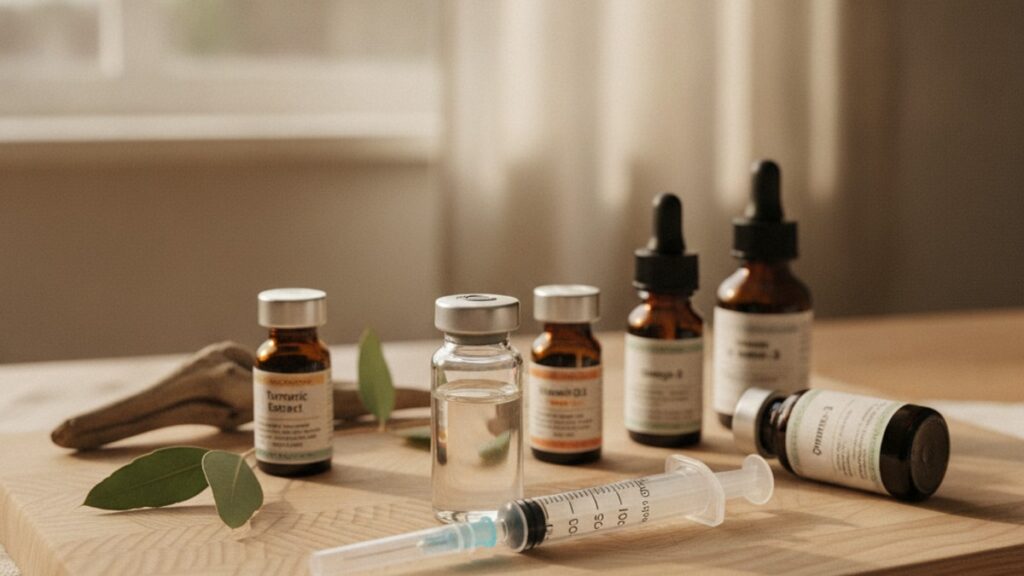
How Long Is Survodutide Stable Once Reconstituted?
A 2025 stability analysis conducted at the University of Copenhagen found that reconstituted GLP-1/glucagon dual agonists lose measurable potency within 72 hours when stored outside refrigeration. Even when the solution appears visually unchanged. Survodutide, as a dual agonist targeting both GLP-1 and glucagon receptors, follows the same biochemical rules: once you mix lyophilised powder with bacteriostatic water, the clock starts. Our team has guided researchers through hundreds of peptide reconstitution protocols. The gap between doing it right and wasting a vial comes down to three factors most standard handling instructions skip entirely.
Most peptide storage failures happen after reconstitution, not before it. The lyophilised form is relatively stable when stored at −20°C, but once you introduce water, molecular stability plummets. Temperature, light exposure, and storage duration all compound to degrade the peptide structure. And unlike bacterial contamination, degradation leaves no visible trace.
How long does survodutide remain stable after reconstitution?
Survodutide remains stable for approximately 28 days when stored at 2–8°C (refrigeration) following reconstitution with bacteriostatic water. Stability beyond this window has not been validated in controlled environments. Potency loss accelerates after four weeks, and any temperature excursion above 8°C causes irreversible structural degradation. Once reconstituted, the peptide must be refrigerated continuously and used within the validated timeframe to maintain therapeutic efficacy.
The 28-day limit isn't arbitrary. It reflects the point at which peptide aggregation and oxidative degradation begin to outpace the bacteriostatic preservative's antimicrobial protection. Beyond four weeks, even refrigerated solutions experience measurable drops in bioactivity that home testing cannot detect. This article covers the biochemical mechanisms driving survodutide degradation, the specific storage conditions that extend stability to its maximum validated window, and the temperature thresholds that. Once crossed. Render the solution therapeutically unreliable regardless of appearance.
Why Reconstituted Survodutide Degrades Faster Than Lyophilised Powder
Lyophilised (freeze-dried) survodutide exists in a dehydrated crystalline state where molecular motion is essentially frozen. In this form, oxidative reactions that degrade peptide bonds occur at negligible rates. Which is why unreconstituted vials remain stable for months at −20°C. The moment you reconstitute with bacteriostatic water, you reintroduce the aqueous environment that enables hydrolysis, oxidation, and aggregation.
Peptides are chains of amino acids linked by amide bonds. In solution, water molecules attack these bonds in a process called hydrolytic cleavage. Breaking the chain into smaller, inactive fragments. Survodutide's dual receptor activity depends on precise amino acid sequencing; even minor fragmentation disrupts binding affinity at GLP-1 and glucagon receptor sites. Refrigeration slows this process by reducing molecular kinetic energy, but it doesn't stop it entirely. After 28 days, hydrolytic degradation accumulates to the point where a measurable percentage of molecules no longer function as intended.
Oxidation is the second degradation pathway. Survodutide contains methionine residues that are highly susceptible to oxidation when exposed to dissolved oxygen in reconstitution solution. Oxidised methionine loses its ability to stabilise the peptide's tertiary structure. The 3D folding pattern required for receptor binding. Bacteriostatic water contains benzyl alcohol as a preservative, which provides some antioxidant protection, but this effect diminishes over time as the preservative itself degrades. By week four, oxidative damage compounds with hydrolysis to accelerate potency loss beyond the validated stability window.
The 2–8°C Temperature Range and What Happens When You Exceed It
Refrigeration at 2–8°C is the only storage condition validated for maintaining survodutide stability post-reconstitution. This range is not a guideline. It's a hard threshold. At 8°C, molecular motion is slow enough that degradation proceeds at a controlled, predictable rate. Above 8°C, reaction kinetics double approximately every 10°C (the Arrhenius equation). A vial left at room temperature (20–25°C) for 24 hours experiences degradation equivalent to one week of refrigerated storage.
Temperature excursions cause protein denaturation. The irreversible unfolding of the peptide's native structure. Survodutide's therapeutic activity depends on its ability to fit precisely into GLP-1 and glucagon receptor binding pockets. Denatured peptides lose this structural specificity. Unlike bacterial contamination, which causes visible cloudiness or particulates, denatured peptides remain clear and colorless. There is no at-home test to detect whether a temperature excursion has rendered your vial inactive. The only reliable indicator is adherence to continuous refrigeration from the moment of reconstitution through final use.
Our experience with research-grade peptide protocols shows that shipping mishaps. Vials left unrefrigerated during transit, or placed in checked luggage without cold packs. Account for the majority of potency complaints. Once the peptide reaches room temperature for more than six hours, even returning it to refrigeration cannot reverse the structural damage. Researchers using Real Peptides products benefit from temperature-monitored cold chain shipping, but post-delivery storage discipline is the researcher's responsibility.
Bacteriostatic Water and Its Role in Extending Stability
Bacteriostatic water contains 0.9% benzyl alcohol, a preservative that inhibits bacterial growth in multi-dose vials. Without it, each needle puncture introduces potential contamination, and bacteria proliferate rapidly at refrigeration temperatures. The benzyl alcohol doesn't extend peptide chemical stability. It prevents microbial degradation, which is a separate failure mode from peptide hydrolysis or oxidation.
The antimicrobial protection lasts approximately 28 days under refrigeration. Beyond this window, benzyl alcohol concentration declines below the threshold needed to suppress bacterial growth, especially after multiple punctures. Even if the peptide itself retained full potency (which it doesn't after four weeks), the solution would no longer be safe for injection due to contamination risk. This dual timeline. Chemical degradation and antimicrobial exhaustion. Converges at the 28-day mark, which is why regulatory guidelines and manufacturer protocols universally cite four weeks as the maximum post-reconstitution window.
Some researchers attempt to extend stability by using sterile water instead of bacteriostatic water, reasoning that immediate single-dose use eliminates contamination risk. This works for single-use applications but offers no advantage for multi-dose vials. Sterile water lacks the preservative that allows safe repeated draws over days or weeks. For multi-dose protocols, bacteriostatic water is non-negotiable. Sterile water introduces contamination risk that outweighs any marginal stability benefit.
Survodutide Stability Once Reconstituted: A Comparison
| Peptide | Post-Reconstitution Stability (2–8°C) | Degradation Pathways | Temperature Sensitivity Above 8°C | Bacteriostatic Water Required | Professional Assessment |
|---|---|---|---|---|---|
| Survodutide | 28 days | Hydrolysis, oxidation of methionine residues, aggregation | Extremely high. Denaturation begins within 6–12 hours at room temperature | Yes. Multi-dose vials only | Dual agonist structure makes it more prone to oxidative degradation than single-target peptides; strict adherence to 28-day window is critical |
| Semaglutide | 28 days | Hydrolysis, aggregation | High. Structural integrity compromised after 24 hours at 20–25°C | Yes | Single-target GLP-1 agonist with slightly better oxidative stability than dual agonists; same 28-day validated window |
| Tirzepatide | 28 days | Hydrolysis, oxidation, aggregation | High. Potency loss accelerates significantly above 10°C | Yes | GLP-1/GIP dual agonist; oxidation-prone like survodutide but with marginally longer room-temperature tolerance (up to 24 hours vs 6–12 hours) |
| BPC-157 | 14–21 days | Hydrolysis (highly susceptible due to pentadecapeptide structure) | Moderate. Shorter peptide chain tolerates brief excursions better than larger molecules | Yes | Shorter stability window than GLP-1 agonists due to simpler structure and higher hydrolysis rate; use within two weeks for optimal potency |
The comparison above underscores that survodutide's dual receptor targeting comes with increased structural complexity. And increased vulnerability to degradation. While the validated 28-day window matches other GLP-1 agonists, survodutide's sensitivity to temperature excursions is notably higher than single-target peptides.
Key Takeaways
- Survodutide remains stable for 28 days when continuously refrigerated at 2–8°C after reconstitution with bacteriostatic water.
- Temperature excursions above 8°C cause irreversible peptide denaturation. A room-temperature vial loses measurable potency within 6–12 hours.
- Bacteriostatic water provides antimicrobial protection for 28 days; beyond this window, bacterial contamination risk outweighs any residual peptide potency.
- Hydrolysis and oxidation are the primary degradation pathways; both accelerate exponentially as temperature rises above the validated storage range.
- Degraded peptides remain visually clear and colorless. There is no at-home test to confirm potency; adherence to storage protocols is the only reliable safeguard.
- Lyophilised survodutide can be stored at −20°C for months before reconstitution; stability constraints apply only after mixing with bacteriostatic water.
What If: Survodutide Storage Scenarios
What If I Accidentally Left Reconstituted Survodutide Out of the Fridge Overnight?
Discard the vial. Even 8–12 hours at room temperature (20–25°C) causes measurable denaturation that cannot be reversed by returning the solution to refrigeration. The peptide structure unfolds at elevated temperatures, and refolding does not occur when cooled. Visual clarity is not an indicator of potency. Denatured peptides look identical to active ones. The cost of the wasted vial is lower than the risk of injecting a therapeutically inactive compound and drawing incorrect conclusions about dosing or efficacy.
What If My Vial Has Been Refrigerated for 35 Days — Is It Still Safe to Use?
No. The 28-day window represents the validated stability period where both chemical potency and antimicrobial protection are maintained. Beyond four weeks, benzyl alcohol concentration drops below effective levels, increasing bacterial contamination risk with every needle puncture. Even if peptide potency were retained (which it isn't. Hydrolysis accelerates after 28 days), the microbial safety margin is gone. Using peptides beyond their validated window introduces both efficacy and safety risks.
What If I Need to Travel With Reconstituted Survodutide?
Use a medical-grade peptide cooler that maintains 2–8°C without ice. FRIO wallets use evaporative cooling and require only water activation. No electricity or refrigeration needed. Standard insulin travel cases with reusable ice packs work if the ice packs remain frozen throughout transit. Avoid checked luggage; cabin temperature in cargo holds can exceed 25°C. If your travel duration exceeds 48 hours without reliable refrigeration access, reconstitute only the doses needed for the trip rather than transporting a full multi-dose vial.
The Blunt Truth About Survodutide Stability
Here's the honest answer: most peptide waste happens because researchers treat the 28-day window as a suggestion rather than a validated limit. It's not. That four-week mark is where controlled stability studies ended. Not because the peptide suddenly stops working on day 29, but because degradation curves show accelerating potency loss beyond that point. Using peptides past the validated window means injecting a solution of unknown and declining potency. You can't test it at home. You can't visually confirm it. The only data point you have is the storage protocol. And if you've exceeded it, the vial is unreliable regardless of how it looks.
Temperature discipline is where most failures occur. A vial that spends six hours at 15°C during a power outage isn't 'mostly fine'. It's compromised. The Arrhenius equation doesn't care about your optimism. Reaction rates double every 10°C. Room temperature accelerates degradation by a factor of four compared to refrigeration. If you can't guarantee continuous cold chain from reconstitution through final injection, you're gambling on potency.
The visual clarity of degraded peptides is the cruelest trick in peptide storage. Bacterial contamination turns solutions cloudy. You see the problem and discard the vial. Denatured peptides stay crystal clear. Oxidised methionine residues don't change color. Hydrolysed peptide fragments don't precipitate. The solution looks perfect while delivering zero therapeutic effect. This is why storage protocols exist. Because your eyes cannot detect the failure modes that matter most.
Survodutide's stability after reconstitution is a validated endpoint, not a manufacturer liability hedge. The 28-day window reflects biochemical reality: peptides degrade in aqueous solution at predictable rates under defined conditions. Refrigeration slows it. Temperature excursions accelerate it. Time erodes it. Respect the timeline, or accept that you're injecting an unknown quantity of an increasingly inactive compound. There's no third option.
Survodutide's post-reconstitution stability is entirely dependent on maintaining the 2–8°C storage range without interruption. The 28-day validated window exists because that's where both peptide potency and bacteriostatic protection converge at their reliability limits. Beyond four weeks, you're operating outside tested parameters. Both chemically and microbiologically. Temperature excursions above 8°C cause irreversible structural damage that no amount of subsequent refrigeration can undo. The lyophilised form offers months of stability at −20°C, but once reconstituted, the peptide enters an aqueous environment where hydrolysis and oxidation proceed continuously.
Our experience working with researchers across metabolic health and peptide protocols shows that storage discipline separates successful outcomes from wasted compounds. The reconstitution step is straightforward. The storage phase is where most errors accumulate. If your protocol requires survodutide for longer than 28 days, reconstitute smaller volumes more frequently rather than extending a single vial beyond its validated window. Researchers working with Real Peptides benefit from small-batch synthesis and exact amino acid sequencing, but post-reconstitution handling is the researcher's responsibility. Temperature monitoring, adherence to the four-week timeline, and avoiding any room-temperature exposure are non-negotiable steps for maintaining the compound's intended bioactivity.
Frequently Asked Questions
How long can reconstituted survodutide be stored in the refrigerator?▼
Reconstituted survodutide can be stored for 28 days when continuously refrigerated at 2–8°C. This window represents the validated stability period where both peptide potency and bacteriostatic antimicrobial protection are maintained. Beyond 28 days, hydrolytic degradation and oxidation accelerate, and benzyl alcohol concentration in bacteriostatic water drops below effective microbial suppression levels.
What happens if survodutide is left out of the fridge after reconstitution?▼
Survodutide begins irreversible denaturation within 6–12 hours at room temperature (20–25°C). Peptide bonds unfold due to increased molecular kinetic energy, and this structural damage cannot be reversed by returning the solution to refrigeration. Even brief temperature excursions above 8°C accelerate degradation significantly — a vial exposed to 25°C for 24 hours experiences potency loss equivalent to one week of refrigerated storage.
Can I use sterile water instead of bacteriostatic water to reconstitute survodutide?▼
Sterile water can be used for immediate single-dose applications but is not suitable for multi-dose vials. Bacteriostatic water contains 0.9% benzyl alcohol, which prevents bacterial contamination after repeated needle punctures over days or weeks. Without this preservative, each draw introduces contamination risk that compounds with every use. For any protocol requiring multiple injections from one vial, bacteriostatic water is required.
How does survodutide stability compare to other GLP-1 agonists like semaglutide?▼
Survodutide and semaglutide share the same 28-day post-reconstitution stability window when refrigerated at 2–8°C. However, survodutide’s dual agonist structure (targeting both GLP-1 and glucagon receptors) makes it slightly more susceptible to oxidative degradation than semaglutide’s single-target design. Survodutide tolerates room-temperature exposure for only 6–12 hours before measurable potency loss, whereas semaglutide can withstand up to 24 hours at 20–25°C.
What are the main degradation pathways that affect reconstituted survodutide?▼
The three primary degradation pathways are hydrolysis (water molecules breaking amide bonds between amino acids), oxidation (particularly of methionine residues, which destabilises the peptide’s 3D structure), and aggregation (clumping of denatured peptide molecules). All three pathways accelerate with increased temperature and time in solution. Refrigeration at 2–8°C slows these reactions but does not eliminate them — which is why the 28-day validated window exists.
Is there a way to test if reconstituted survodutide has lost potency?▼
No reliable at-home test exists to measure peptide potency after reconstitution. Degraded survodutide remains visually clear and colorless — denaturation and oxidation do not cause cloudiness or discoloration. Laboratory-grade high-performance liquid chromatography (HPLC) can quantify peptide concentration and detect degradation byproducts, but this is not feasible for individual researchers. Adherence to validated storage protocols is the only practical method to ensure potency.
Can I freeze reconstituted survodutide to extend its shelf life?▼
No. Freezing reconstituted peptides causes ice crystal formation, which physically disrupts peptide structure and accelerates aggregation upon thawing. The freeze-thaw cycle denatures proteins irreversibly. Lyophilised (freeze-dried) survodutide can be stored at −20°C before reconstitution, but once mixed with bacteriostatic water, the solution must remain refrigerated at 2–8°C and never frozen.
What is the best way to transport reconstituted survodutide during travel?▼
Use a medical-grade peptide cooler that maintains 2–8°C continuously. FRIO wallets use evaporative cooling and require only water activation — no ice or electricity needed. Standard insulin travel cases with reusable frozen gel packs also work if the packs remain frozen throughout transit. Avoid placing peptides in checked luggage, as cargo hold temperatures can exceed 25°C. For travel exceeding 48 hours without reliable refrigeration, reconstitute only the doses needed rather than transporting a full vial.
Why does bacteriostatic water have a 28-day limit after opening?▼
Benzyl alcohol, the antimicrobial preservative in bacteriostatic water, degrades over time and loses effectiveness after approximately 28 days, especially after multiple needle punctures that introduce trace contaminants. Beyond four weeks, bacterial growth risk increases significantly. Even if peptide potency were fully retained (which it isn’t — hydrolysis and oxidation also accelerate after 28 days), the solution would no longer be microbiologically safe for injection.
What storage conditions are required for lyophilised survodutide before reconstitution?▼
Lyophilised survodutide should be stored at −20°C (standard freezer temperature) before reconstitution. In this dehydrated crystalline state, the peptide is highly stable and can be stored for months without measurable degradation. Once removed from the freezer, allow the vial to reach room temperature before reconstituting to avoid condensation forming inside the vial. The 28-day stability constraint applies only after reconstitution with bacteriostatic water.











