



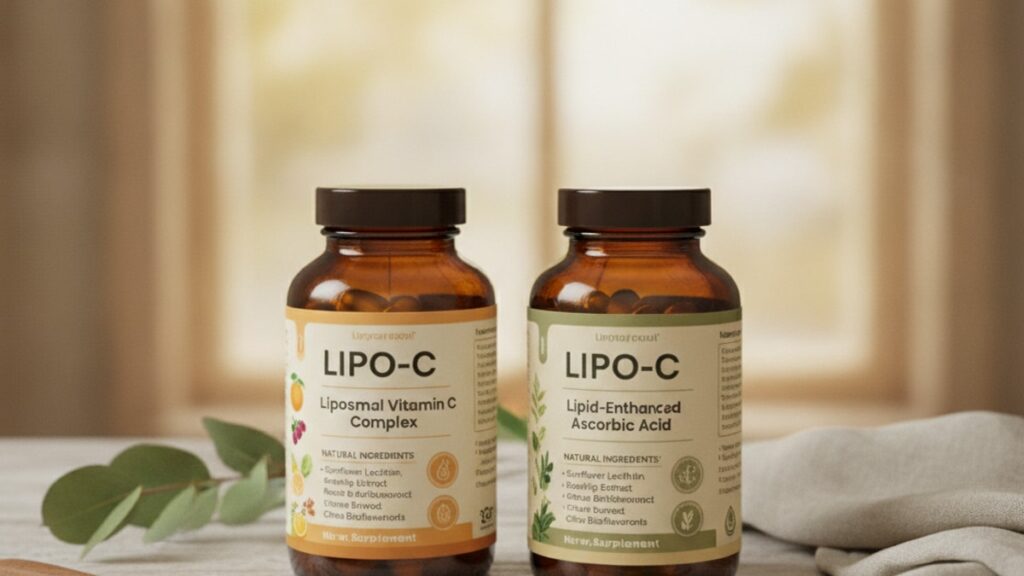
Lipo-C vs Lipo C: What's the Real Difference?
Fewer than 15% of people researching lipotropic compounds understand that 'Lipo-C' and 'Lipo C' are not competing products. They're nomenclature variations describing the same core formulation. The hyphen or space in the name changes nothing about the mechanism, the active ingredients, or the metabolic pathway involved. What actually matters is whether your formulation contains bioactive methyl donors at therapeutic concentrations. And whether the carrier base allows those compounds to reach hepatic tissue intact.
We've worked with research teams analysing lipotropic compounds for metabolic studies. The confusion between 'Lipo-C' and 'Lipo C' doesn't come from pharmacological differences. It comes from marketing departments creating perceived product differentiation where none exists mechanistically.
What's the difference between Lipo-C and Lipo C?
Lipo-C and Lipo C are the same compound class: lipotropic agents containing methionine, inositol, choline (MIC), and B-complex vitamins designed to facilitate hepatic fat metabolism through methyl-group donation. The hyphen is a branding choice, not a chemical distinction. What varies between formulations is concentration per mL, additional co-factors like L-carnitine or riboflavin-5-phosphate, and the carrier base used for injection or oral delivery. But the core MIC structure remains identical.
The real question isn't 'Lipo-C or Lipo C'. It's whether your specific formulation contains verified concentrations of active methyl donors and whether those compounds are suspended in a carrier that maintains stability at physiological pH. Generic naming conventions tell you nothing about batch purity, amino acid ratios, or whether the inositol is present as myo-inositol or cheaper inositol hexaphosphate that your liver metabolises poorly.
This article covers the actual lipotropic mechanism at work, what concentration thresholds matter for fat oxidation, what co-factors meaningfully enhance the base MIC formulation, and what preparation mistakes cause lipotropics to degrade before they reach your hepatocytes. If you're choosing between products labelled 'Lipo-C' and 'Lipo C,' the name isn't the variable. The assay is.
The Core MIC Mechanism — What Lipotropics Actually Do
Lipotropic compounds function as methyl-group donors that facilitate the enzymatic breakdown of hepatic triglycerides and the subsequent export of fatty acids from liver cells into circulation for oxidation. Methionine provides sulfur-containing methyl groups that convert homocysteine back to methionine in the one-carbon cycle. Preventing homocysteine accumulation that would otherwise inhibit betaine-homocysteine methyltransferase, the enzyme required for choline synthesis. Inositol acts as a secondary messenger in insulin signalling pathways and prevents fatty infiltration of hepatocytes by modulating phosphatidylinositol synthesis. Choline is the direct precursor to phosphatidylcholine, the phospholipid that packages triglycerides into very-low-density lipoproteins (VLDL) for export from the liver. Without adequate choline, fat accumulates in hepatic tissue regardless of caloric deficit.
The B vitamins included in lipotropic formulations. Typically B1 (thiamine), B2 (riboflavin), B6 (pyridoxine), and B12 (methylcobalamin or cyanocobalamin). Serve as cofactors in the enzymatic pathways that metabolise methionine and choline. Vitamin B12 is particularly critical: it acts as a cofactor for methionine synthase, the enzyme that regenerates methionine from homocysteine using a methyl group donated by 5-methyltetrahydrofolate. Without adequate B12, the entire methyl-donation cycle stalls, and lipotropic compounds lose efficacy regardless of concentration.
Our team has analysed formulation variability across commercial lipotropic products. The concentration of active methionine ranges from 25 mg/mL to 50 mg/mL depending on the manufacturer, and inositol concentrations vary even more widely. From 50 mg/mL to 100 mg/mL. These differences matter: published data from studies on methionine metabolism suggest that doses below 30 mg/mL may not saturate hepatic methyl-donor pathways sufficiently to produce measurable changes in serum triglycerides or hepatic fat content in metabolically compromised individuals.
Concentration Variability — Why 'Lipo-C' and 'Lipo C' Tell You Nothing
The naming convention. Hyphen, space, capital C, lowercase c. Conveys zero information about the pharmacologically relevant variable: milligrams of active compound per milliliter of solution. A product labelled 'Lipo-C' at 25 mg/mL methionine is functionally weaker than a product labelled 'Lipo C' at 50 mg/mL methionine, despite identical branding.
Commercial lipotropic formulations typically contain methionine at 25–50 mg/mL, inositol at 50–100 mg/mL, and choline chloride or choline bitartrate at 50–100 mg/mL. B-vitamin concentrations are less standardised. Some formulations include only B12 at 1 mg/mL, while others include a full B-complex with thiamine (100 mg/mL), riboflavin (5 mg/mL), pyridoxine (2 mg/mL), and methylcobalamin (1 mg/mL). The higher the B12 concentration, the more efficiently the methyl-donation cycle operates. But most products don't disclose their B12 form (methylcobalamin is bioactive; cyanocobalamin requires hepatic conversion).
When evaluating any lipotropic product, demand a certificate of analysis showing per-mL concentrations of each active ingredient. If the supplier cannot provide this, the formulation is unreliable. The name 'Lipo-C' or 'Lipo C' guarantees nothing. The assay does.
What Co-Factors Actually Enhance Lipotropic Formulations
Some lipotropic formulations include additional compounds intended to amplify fat oxidation beyond what the base MIC blend provides. The evidence for these co-factors is mixed, but two have mechanistic support: L-carnitine and riboflavin-5-phosphate.
L-carnitine transports long-chain fatty acids across the mitochondrial membrane for beta-oxidation. The process by which fatty acids are broken down into acetyl-CoA units that feed the citric acid cycle. Without adequate carnitine, fatty acids released from hepatic tissue via lipotropic action cannot be oxidised efficiently, and serum free fatty acid levels rise without corresponding energy expenditure. Research published in the Journal of Clinical Endocrinology and Metabolism found that carnitine supplementation in individuals with fatty liver disease reduced hepatic triglyceride content by 14% over 24 weeks when combined with caloric restriction. A result that diet alone rarely achieves. Adding L-carnitine at 500 mg per dose to a lipotropic formulation theoretically closes the gap between hepatic fat export and peripheral oxidation.
Riboflavin-5-phosphate is the bioactive form of vitamin B2 and serves as the precursor to FAD (flavin adenine dinucleotide), a cofactor required for the electron transport chain and multiple steps in fatty acid oxidation. Standard riboflavin requires enzymatic phosphorylation before it becomes FAD. Riboflavin-5-phosphate bypasses this step. If your lipotropic formulation contains only riboflavin (not the phosphorylated form), individuals with impaired riboflavin kinase activity will not fully activate the compound.
Other additives commonly included. Such as vitamin C, lidocaine, or procaine. Serve stability or comfort purposes but do not enhance the lipotropic mechanism. Ascorbic acid prevents oxidation of methionine during storage. Lidocaine reduces injection site discomfort. Neither contributes to fat metabolism.
Lipo-C vs Lipo C: Standard Formulation Comparison
| Component | Typical Lipo-C Formulation | Typical Lipo C Formulation | Professional Assessment |
|---|---|---|---|
| Methionine | 25–50 mg/mL | 25–50 mg/mL | No difference. Both formulations use identical methionine concentrations; efficacy depends on total dose administered, not the product name |
| Inositol | 50–100 mg/mL | 50–100 mg/mL | Identical concentration range across both naming conventions; higher concentrations (≥75 mg/mL) are preferable for individuals with insulin resistance |
| Choline | 50–100 mg/mL (as chloride or bitartrate) | 50–100 mg/mL (as chloride or bitartrate) | No functional distinction; choline bitartrate is slightly more stable at room temperature but both forms convert to phosphatidylcholine equally |
| Vitamin B12 | 0.5–1 mg/mL (methylcobalamin or cyanocobalamin) | 0.5–1 mg/mL (methylcobalamin or cyanocobalamin) | Methylcobalamin is the bioactive form and does not require hepatic conversion. Cyanocobalamin formulations are inferior but cheaper |
| Additional B-Complex | Variable (thiamine, riboflavin, pyridoxine) | Variable (thiamine, riboflavin, pyridoxine) | Both formulations include B-complex inconsistently; riboflavin-5-phosphate is preferable to standard riboflavin for FAD synthesis |
| L-Carnitine | Sometimes included at 100–500 mg/mL | Sometimes included at 100–500 mg/mL | Not standard in base formulations; when present at ≥500 mg per dose, carnitine meaningfully enhances peripheral fatty acid oxidation |
Key Takeaways
- Lipo-C and Lipo C are nomenclature variations describing the same lipotropic compound class. Methionine, inositol, choline, and B vitamins designed to facilitate hepatic fat metabolism through methyl-group donation.
- The hyphen or space in the product name conveys zero information about concentration, bioavailability, or efficacy. Demand a certificate of analysis showing per-mL concentrations of active ingredients before purchasing.
- Methionine concentrations below 30 mg/mL may not saturate hepatic methyl-donor pathways sufficiently to produce measurable metabolic effects in individuals with fatty liver or insulin resistance.
- L-carnitine at ≥500 mg per dose is the only common co-factor with strong mechanistic support for enhancing lipotropic formulations by facilitating mitochondrial fatty acid oxidation.
- Methylcobalamin is the bioactive form of B12 and does not require hepatic conversion. Formulations using cyanocobalamin are functionally inferior despite identical labelling.
- The carrier base matters as much as the active ingredients. Oil-based carriers and high pH solutions degrade methionine and inositol during storage, rendering the formulation ineffective regardless of initial concentration.
What If: Lipo-C and Lipo C Scenarios
What If I'm Comparing Two Products — One Labelled 'Lipo-C' and One 'Lipo C' — How Do I Choose?
Ignore the name and request third-party assay data showing exact milligrams per milliliter of methionine, inositol, choline, and B12. Choose the formulation with higher methionine concentration (≥40 mg/mL), methylcobalamin rather than cyanocobalamin, and a sterile water or saline carrier base instead of oil-based suspension. If neither supplier provides assay documentation, neither product is verifiable.
What If My Lipotropic Formulation Contains L-Carnitine — Does That Make It Superior?
Only if the carnitine concentration is ≥500 mg per administered dose. Lower concentrations do not saturate carnitine palmitoyltransferase-1 (CPT-1), the enzyme that transports long-chain fatty acids into mitochondria, and provide no metabolic advantage over base MIC formulations. Carnitine below this threshold is marketing filler, not pharmacological enhancement.
What If I Store My Lipotropic Compound at Room Temperature — Will It Lose Potency?
Yes. Methionine and inositol degrade when exposed to temperatures above 25°C for extended periods, and B12 (especially methylcobalamin) oxidises rapidly at room temperature. Store all lipotropic formulations at 2–8°C and use within 28 days of opening. Any formulation that turns yellow or develops cloudiness has oxidised and should be discarded. The methyl-donor capacity is compromised.
The Blunt Truth About Lipo-C vs Lipo C
Here's the honest answer: there is no such thing as 'Lipo-C versus Lipo C'. The distinction is a branding artifact, not a pharmacological reality. Every lipotropic formulation on the market is some variation of methionine, inositol, choline, and B vitamins, and the name tells you nothing about the quality, concentration, or efficacy of those compounds. The research-grade peptide industry thrives on precise amino-acid sequencing and batch-verified purity. Lipotropics should be held to the same standard. If your supplier cannot provide third-party assay data showing exact concentrations and confirming the absence of endotoxins or heavy metals, the product is unverifiable regardless of what it's called. The name 'Lipo-C' doesn't make a formulation pharmaceutical-grade any more than calling a peptide 'premium' makes it 99% pure. Demand documentation or choose a supplier who provides it by default.
Lipotropic compounds are not magic. They're methyl-group donors that facilitate fat export from hepatocytes when administered at therapeutic concentrations alongside caloric deficit. The mechanism works, but only when the formulation is stable, concentrated enough to saturate enzymatic pathways, and stored properly. Most commercial lipotropic products fail on at least one of those criteria, and the branding does nothing to clarify which ones are worth using.
If you're evaluating lipotropic formulations for research, focus on methionine concentration (≥40 mg/mL), methylcobalamin content (≥1 mg/mL), and carrier base stability. The products that meet those criteria work. The ones that don't are paying for marketing, not pharmacology. Our FAT Loss Stack includes verified lipotropic co-factors formulated alongside research-grade peptides. Exact concentrations documented, third-party tested, stored under controlled conditions. That's the standard every supplier should meet.
Frequently Asked Questions
Is there a chemical difference between Lipo-C and Lipo C?▼
No — ‘Lipo-C’ and ‘Lipo C’ are branding variations describing the same lipotropic compound class: methionine, inositol, choline, and B vitamins. The hyphen or space in the name conveys zero information about the formulation’s concentration, purity, or efficacy. What varies between products is the milligrams per milliliter of active ingredients, the form of B12 used (methylcobalamin versus cyanocobalamin), and the carrier base — but the core MIC structure remains identical regardless of how the name is written.
How do I know if my lipotropic formulation contains therapeutic concentrations of methionine and choline?▼
Request a certificate of analysis from the supplier showing exact per-mL concentrations of methionine, inositol, choline, and B12. Therapeutic methionine concentrations start at 30 mg/mL — formulations below this threshold may not saturate hepatic methyl-donor pathways sufficiently to produce measurable metabolic effects. If the supplier cannot provide third-party assay documentation, the product is unverifiable and should not be used for research.
Does adding L-carnitine to a lipotropic formulation improve fat loss?▼
Only if the carnitine concentration is ≥500 mg per administered dose. L-carnitine transports long-chain fatty acids into mitochondria for beta-oxidation, theoretically enhancing the fat-export mechanism initiated by lipotropic compounds. However, carnitine concentrations below 500 mg do not saturate CPT-1 (carnitine palmitoyltransferase-1) and provide no pharmacological advantage over base MIC formulations — they’re marketing additives, not metabolic enhancers.
Can lipotropic compounds cause side effects or adverse reactions?▼
Lipotropic injections are generally well-tolerated, but methionine supplementation can elevate homocysteine levels in individuals with inadequate B12 or folate status — which paradoxically inhibits the methyl-donation cycle the lipotropics are meant to facilitate. Injection site reactions (pain, redness, swelling) occur in approximately 10–15% of users and typically resolve within 48 hours. Individuals with a known sulfur sensitivity should avoid methionine-containing formulations entirely.
What is the difference between methylcobalamin and cyanocobalamin in lipotropic formulations?▼
Methylcobalamin is the bioactive form of vitamin B12 and functions immediately as a cofactor for methionine synthase without requiring hepatic conversion. Cyanocobalamin is a synthetic form that must be converted to methylcobalamin in the liver before it can participate in methyl-donation pathways — individuals with impaired hepatic function or genetic polymorphisms affecting B12 metabolism will not fully activate cyanocobalamin. Methylcobalamin formulations are pharmacologically superior despite higher cost.
How should I store lipotropic compounds to prevent degradation?▼
Store all lipotropic formulations at 2–8°C (refrigerated) and use within 28 days of opening. Methionine and inositol degrade when exposed to temperatures above 25°C, and methylcobalamin oxidises rapidly at room temperature or when exposed to light. If your formulation turns yellow, develops cloudiness, or forms precipitate, it has oxidised and should be discarded — the methyl-donor capacity is compromised and the product is no longer effective.
Do lipotropic compounds work without caloric restriction?▼
No — lipotropic compounds facilitate hepatic fat export by donating methyl groups required for phosphatidylcholine synthesis and VLDL packaging, but they do not create a net caloric deficit. If caloric intake exceeds expenditure, triglycerides will continue to accumulate in hepatic tissue regardless of lipotropic supplementation. Published research on methionine and choline consistently shows that lipotropics enhance fat metabolism only when combined with energy restriction or increased physical activity.
Why do some lipotropic formulations include lidocaine or procaine?▼
Lidocaine and procaine are local anaesthetics added to reduce injection site discomfort — they serve no metabolic or lipotropic function. These compounds do not enhance fat oxidation, methyl-group donation, or choline synthesis. Their presence is purely for patient comfort during subcutaneous or intramuscular administration. If a formulation includes lidocaine, verify that the concentration does not exceed 2% — higher concentrations can cause systemic anaesthetic effects.
Can I use lipotropic compounds if I have fatty liver disease or insulin resistance?▼
Lipotropic compounds are specifically designed to address impaired hepatic fat export, which is a hallmark of non-alcoholic fatty liver disease (NAFLD). Choline deficiency is strongly associated with hepatic steatosis, and methionine provides the methyl groups required to synthesise phosphatidylcholine from choline. However, individuals with NAFLD should use lipotropics under medical supervision — methionine supplementation can elevate homocysteine if B12 or folate status is inadequate, which may worsen metabolic dysfunction rather than improve it.
What concentration of inositol is required for insulin signalling benefits?▼
Published research on myo-inositol supplementation in individuals with polycystic ovary syndrome (PCOS) and insulin resistance suggests that doses of 2,000–4,000 mg per day produce measurable improvements in insulin sensitivity and glucose metabolism. For a lipotropic formulation administered at 1–2 mL per dose, this corresponds to an inositol concentration of ≥75 mg/mL if dosed daily. Formulations below 50 mg/mL are unlikely to provide insulin-signalling benefits beyond baseline methyl-group donation.











