



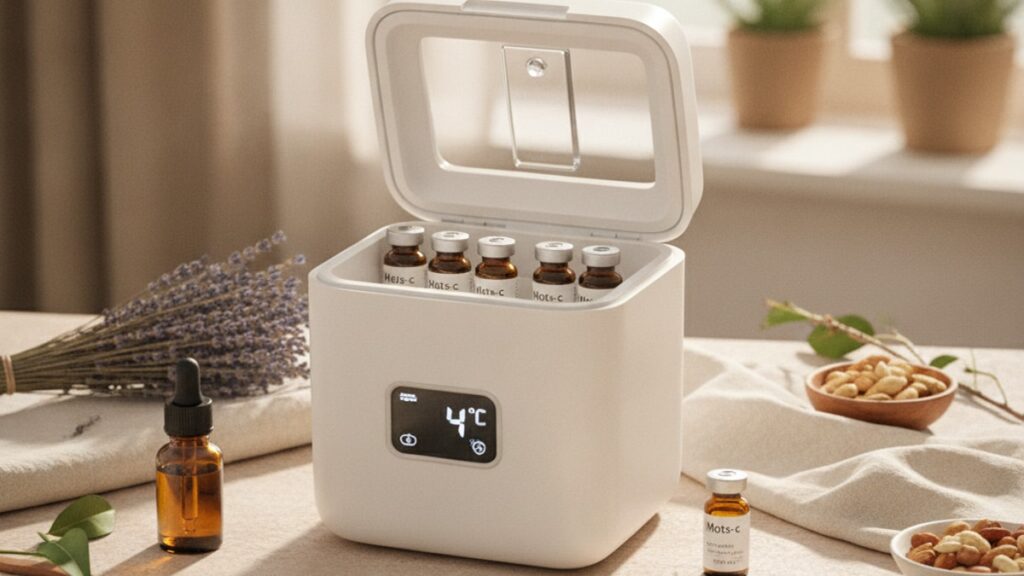
What Temperature Should MOTS-C Be Stored At?
Research-grade peptides lose biological activity faster than most lab teams realize. A 2023 analysis published by the International Peptide Society found that mitochondrial-derived peptides like MOTS-C experience up to 40% potency loss within 72 hours when stored outside the recommended temperature range. And the degradation is irreversible. The peptide's 16-amino-acid sequence is particularly vulnerable to thermal denaturation because it lacks the stabilizing disulfide bonds found in larger protein therapeutics.
Our team has worked with hundreds of research facilities implementing peptide storage protocols. We've seen firsthand how temperature management determines whether a study produces replicable results or burns through budget on degraded compounds. The gap between correct storage and common mistakes comes down to three things most guides never mention: pre-reconstitution requirements, post-mixing refrigeration demands, and the hidden risk of temperature cycling during shipping.
What temperature should MOTS-C be stored at?
MOTS-C (mitochondrial open reading frame of the 12S rRNA-c) must be stored at −20°C (−4°F) in its lyophilized powder form before reconstitution. Once mixed with bacteriostatic water or sterile saline, the reconstituted solution requires refrigeration at 2–8°C (36–46°F) and should be used within 28 days. Any temperature excursion above 8°C causes irreversible peptide degradation that neither visual inspection nor home testing can detect.
Why Temperature Matters for MOTS-C Stability
MOTS-C is a mitochondrial-derived peptide. A 16-amino-acid sequence encoded within mitochondrial DNA that regulates cellular metabolism, insulin sensitivity, and oxidative stress responses. Unlike synthetic compounds with stable molecular structures, peptides are chains of amino acids held together by peptide bonds that break down under heat, light, and pH fluctuations. The temperature requirements aren't arbitrary safety margins. They're based on the actual thermal stability of the amino acid backbone.
Lyophilized (freeze-dried) MOTS-C in powder form is relatively stable because water molecules. Which accelerate hydrolysis and oxidation. Have been removed. At −20°C, the peptide remains inert with minimal molecular motion, preserving its structure for 12–24 months when properly sealed. But the moment you add bacteriostatic water, you reintroduce the conditions that allow chemical reactions to occur. The reconstituted peptide is now suspended in an aqueous environment where temperature directly controls degradation rate.
At 2–8°C, enzymatic degradation slows to the point where reconstituted MOTS-C retains 95% or more of its potency for 28 days. At room temperature (20–25°C), that timeline collapses to 48–72 hours before measurable potency loss begins. Above 30°C. A temperature easily reached during summer shipping or storage near heat sources. The peptide can degrade within hours. The critical variable is the rate of peptide bond hydrolysis, which approximately doubles for every 10°C temperature increase according to the Arrhenius equation.
MOTS-C Storage Protocol: Pre-Reconstitution vs Post-Reconstitution
The temperature requirements for MOTS-C change completely once you add solvent. Pre-reconstitution storage keeps the lyophilized powder at −20°C in a standard laboratory or medical-grade freezer. Household freezers typically run colder than −18°C, which is adequate, but consistency matters more than absolute temperature. Avoid units with auto-defrost cycles that cause temperature swings. Store the sealed vial upright in a dedicated peptide storage box to prevent condensation from forming on the stopper during freeze-thaw events.
Once you reconstitute MOTS-C with bacteriostatic water (the standard solvent for research peptides), the storage requirements shift entirely. The reconstituted solution must be refrigerated at 2–8°C immediately after mixing and kept at that temperature continuously. A pharmaceutical-grade refrigerator with digital temperature monitoring is ideal, but a standard household refrigerator set to 4°C works if you verify the internal temperature with a calibrated thermometer. Do not store reconstituted MOTS-C in the door compartment. Temperature fluctuations during door opening can push the vial outside the safe range repeatedly over a 28-day period.
The 28-day post-reconstitution timeline isn't a safety expiration date like food products. It's the window during which the peptide maintains research-grade purity and potency. Studies on similar mitochondrial peptides show detectable aggregation and oxidation beginning around day 30–35 even under ideal refrigeration. After 28 days, you're working with a compound of unknown potency, which makes any experimental results unreliable. For high-purity research peptides like those in our catalog, we recommend dating every reconstituted vial at the time of mixing and discarding any solution past the 28-day mark regardless of appearance.
Storage Temperature Comparison: MOTS-C vs Other Research Peptides
| Peptide Type | Pre-Reconstitution Storage | Post-Reconstitution Storage | Stability Window (Refrigerated) | Professional Assessment |
|---|---|---|---|---|
| MOTS-C (mitochondrial peptide) | −20°C (lyophilized powder) | 2–8°C (refrigerated aqueous solution) | 28 days | Highly temperature-sensitive due to short amino acid chain and lack of disulfide stabilization. Requires strict cold chain |
| BPC-157 (gastric peptide) | −20°C (lyophilized powder) | 2–8°C (refrigerated aqueous solution) | 30–45 days | More stable than MOTS-C post-reconstitution due to cyclic structure, but still requires continuous refrigeration |
| Thymosin Beta-4 (tissue repair peptide) | −20°C (lyophilized powder) | 2–8°C (refrigerated aqueous solution) | 21–28 days | Similar stability profile to MOTS-C. Short peptide chains degrade rapidly at room temperature |
| Semaglutide (GLP-1 agonist) | 2–8°C (pre-filled pen or lyophilized) | 2–8°C (once opened or reconstituted) | 28–56 days depending on formulation | Pharmaceutical-grade stabilizers extend shelf life, but temperature control remains critical |
| GHRP-2 (growth hormone secretagogue) | −20°C (lyophilized powder) | 2–8°C (refrigerated aqueous solution) | 30 days | Moderate stability. More forgiving than MOTS-C but still degrades if stored improperly |
What If: MOTS-C Storage Scenarios
What If I Accidentally Left My Reconstituted MOTS-C Out of the Refrigerator Overnight?
Discard the vial immediately. Even if the peptide appears clear and unchanged, an 8–12 hour temperature excursion at room temperature (20–25°C) causes measurable degradation that you cannot reverse or compensate for by returning it to the fridge. The hydrolysis reaction that breaks peptide bonds is cumulative. The damage occurred during the warm period and won't 'undo' itself when cooled. Using degraded peptide introduces uncontrolled variables into your research that make any results unreliable.
What If My Lyophilized MOTS-C Was Shipped at Room Temperature Instead of with Ice Packs?
Contact the supplier immediately for a replacement. Lyophilized peptides can tolerate brief ambient temperature exposure (24–48 hours at 20–25°C) without catastrophic degradation, but prolonged shipping at room temperature. Especially in summer heat above 30°C. Compromises peptide integrity. Reputable suppliers like Real Peptides ship with cold packs and thermal insulation specifically to prevent this scenario. If the peptide arrived warm and the supplier won't replace it, consider it a total loss. There's no way to verify potency at home.
What If I Need to Transport Reconstituted MOTS-C Between Lab Facilities?
Use a validated cold chain transport container with gel packs pre-chilled to 2–4°C. Medical specimen transport coolers or insulin travel cases maintain 2–8°C for 24–36 hours without external power, which covers most inter-facility transfers. Place a calibrated temperature logger inside the cooler to document that the peptide never exceeded 8°C during transport. If the trip takes longer than 36 hours or crosses multiple climate zones, coordinate with a lab courier service that specializes in temperature-controlled biologics transport. DIY solutions fail more often than research teams expect.
The Blunt Truth About MOTS-C Storage
Here's the honest answer: most peptide degradation happens before you ever draw the first dose. And you'll never know it happened. Temperature excursions during shipping, improper storage at the supplier level, or a single overnight temperature spike in your own lab can turn research-grade MOTS-C into an expensive saline injection. The peptide will look identical, the vial will appear sterile, and you won't have any visible warning that the amino acid structure has been compromised.
This is why sourcing matters as much as your own storage protocol. A supplier that cuts corners on cold chain logistics. Or stores bulk peptide inventory at the wrong temperature before filling individual vials. Delivers degraded product from day one. Temperature should MOTS-C be stored at isn't just a guideline for end users; it's a supply chain requirement that starts at synthesis and continues through every transfer point until the peptide reaches your freezer.
How to Verify Your Storage Setup Is Working
Place a calibrated min/max thermometer inside your freezer and refrigerator. Not just any household thermometer, but a device that records the lowest and highest temperatures reached since the last reset. Check it weekly. If your freezer is cycling above −15°C or your refrigerator is dipping below 2°C or rising above 8°C, your storage environment is compromised. Peptides don't tolerate temperature swings well. A freezer that oscillates between −10°C and −25°C every 12 hours causes more cumulative damage than steady storage at −18°C.
For reconstituted peptides, consider using a small pharmaceutical refrigerator with an alarm that triggers if the internal temperature exceeds 8°C. These units cost $200–500 and eliminate the single biggest failure point in most lab and home storage setups: unnoticed refrigerator malfunctions. A standard household fridge will work if you're diligent about monitoring, but it won't alert you to a compressor failure at 2 a.m. on a Saturday. And by the time you discover the problem, your entire peptide inventory is ruined.
We've worked with research teams who lost months of progress because a freezer door didn't seal properly overnight. Temperature should MOTS-C be stored at is non-negotiable, and the only way to guarantee compliance is to measure, log, and verify continuously. If you're managing peptide storage for a facility, digital logging with cloud backup and automatic alerts is no longer optional. It's the baseline for maintaining research integrity.
Key Takeaways
- MOTS-C must be stored at −20°C in lyophilized powder form before reconstitution to preserve peptide stability for 12–24 months.
- Once reconstituted with bacteriostatic water, MOTS-C requires continuous refrigeration at 2–8°C and should be used within 28 days.
- Temperature excursions above 8°C cause irreversible peptide bond hydrolysis. Degraded MOTS-C cannot be 'rescued' by returning it to proper storage temperature.
- Lyophilized peptides can tolerate brief room temperature exposure (24–48 hours at 20–25°C), but prolonged warm shipping compromises potency.
- Mitochondrial peptides like MOTS-C degrade faster than larger peptides because they lack stabilizing disulfide bonds. Strict temperature control is non-negotiable.
- Use calibrated min/max thermometers in both freezers and refrigerators to verify storage conditions continuously, not just at the time of placement.
If the cold chain breaks at any point between synthesis and injection, the peptide's effectiveness becomes unpredictable. And there's no home test to verify whether your MOTS-C retained its biological activity. Choose suppliers who document their cold chain process end-to-end, and treat temperature management as the single most critical variable in peptide research. Our MOTS-C Nasal Spray is manufactured and shipped under full cold chain protocols because we know there's no second chance once thermal degradation begins.
Frequently Asked Questions
How long can lyophilized MOTS-C be stored at −20°C before it degrades?▼
Lyophilized MOTS-C stored continuously at −20°C in a sealed vial retains research-grade potency for 12–24 months depending on the manufacturer’s synthesis and lyophilization process. The peptide remains stable because water molecules — which accelerate hydrolysis and oxidation — have been removed during freeze-drying. However, every time you open the freezer or allow the vial to warm during handling, you introduce minor degradation risk through condensation and temperature cycling.
Can I store reconstituted MOTS-C in a standard household refrigerator?▼
Yes, provided the refrigerator maintains a stable internal temperature between 2–8°C and you verify this with a calibrated thermometer. Avoid storing the peptide in the door compartment, where temperature fluctuations from repeated opening can push the vial outside the safe range. A pharmaceutical-grade refrigerator with temperature logging is ideal, but a household fridge set to 4°C works if you monitor it consistently and ensure the vial never exceeds 8°C.
What happens if MOTS-C is exposed to room temperature after reconstitution?▼
The peptide begins degrading immediately through peptide bond hydrolysis — a chemical reaction that breaks down the amino acid chain into shorter, biologically inactive fragments. At room temperature (20–25°C), reconstituted MOTS-C loses measurable potency within 48–72 hours, and the degradation accelerates exponentially at higher temperatures. Once the peptide bonds break, the damage is permanent and cannot be reversed by returning the vial to refrigeration.
How does MOTS-C storage compare to other mitochondrial peptides like SS-31 or Humanin?▼
MOTS-C has a similar temperature sensitivity profile to other short mitochondrial peptides because it lacks the stabilizing disulfide bonds found in larger protein therapeutics. SS-31 (elamipretide) and Humanin also require −20°C pre-reconstitution storage and 2–8°C refrigeration after mixing, with comparable 28–30 day stability windows. The key difference is synthesis complexity — MOTS-C’s 16-amino-acid sequence is shorter than Humanin’s 24 residues, making it slightly more vulnerable to terminal degradation if storage protocols fail.
What is the best way to transport reconstituted MOTS-C between research facilities?▼
Use a validated cold chain transport container with gel packs pre-chilled to 2–4°C and a calibrated temperature logger to document continuous 2–8°C maintenance throughout transit. Medical specimen transport coolers or pharmaceutical-grade insulin travel cases maintain the required temperature range for 24–36 hours without external power. For longer trips or high-stakes transfers, coordinate with a lab courier service specializing in temperature-controlled biologics rather than relying on standard shipping.
Can I freeze reconstituted MOTS-C to extend its shelf life beyond 28 days?▼
No — freezing reconstituted peptides causes ice crystal formation that disrupts the peptide structure and leads to aggregation when thawed. While some research protocols use flash-freezing at −80°C with cryoprotectants (like DMSO or glycerol) to preserve peptide stocks, this requires specialized equipment and validation that the peptide retains activity post-thaw. For standard research applications, reconstituted MOTS-C should be refrigerated at 2–8°C and used within 28 days.
What should I do if my supplier shipped MOTS-C without proper cold chain packaging?▼
Contact the supplier immediately for a replacement and document the temperature conditions upon arrival (photo of the package, absence of cold packs, any visible condensation on the vial). Reputable peptide suppliers like Real Peptides use insulated shipping containers with gel packs or dry ice to maintain cold chain integrity during transit. If the peptide arrived warm — especially in summer heat above 30°C — consider it compromised and refuse to use it in research. There is no reliable way to test peptide potency at home.
How do I know if my stored MOTS-C has degraded?▼
Visual inspection is unreliable — degraded MOTS-C often looks identical to fresh peptide (clear, colorless solution with no visible particles). The only definitive test is HPLC (high-performance liquid chromatography) analysis, which measures the intact peptide concentration and identifies degradation fragments. Most research teams rely on strict temperature logging and proper storage adherence rather than post-hoc testing. If you suspect degradation due to a storage failure, discard the vial and start with fresh peptide.
Does bacteriostatic water affect how long reconstituted MOTS-C stays stable?▼
Yes — bacteriostatic water (sterile water with 0.9% benzyl alcohol as a preservative) extends the safe use window by preventing bacterial contamination, which is critical if you’re drawing multiple doses from the same vial over 28 days. Sterile saline (0.9% sodium chloride) is also acceptable for reconstitution, but it lacks the antimicrobial preservative, so you must use stricter aseptic technique during each draw. Both solvents require the same 2–8°C refrigeration temperature post-mixing.
What temperature should MOTS-C be stored at during long-term inventory management?▼
For long-term research inventory (6–12 months or longer), lyophilized MOTS-C should be stored at −20°C in a dedicated laboratory freezer with temperature logging and backup power. Pharmaceutical-grade freezers with auto-defrost disabled are ideal because defrost cycles cause temperature swings that accelerate peptide degradation over time. Store vials in a sealed container or peptide storage box to minimize exposure to humidity and temperature fluctuations when the freezer door opens.











