



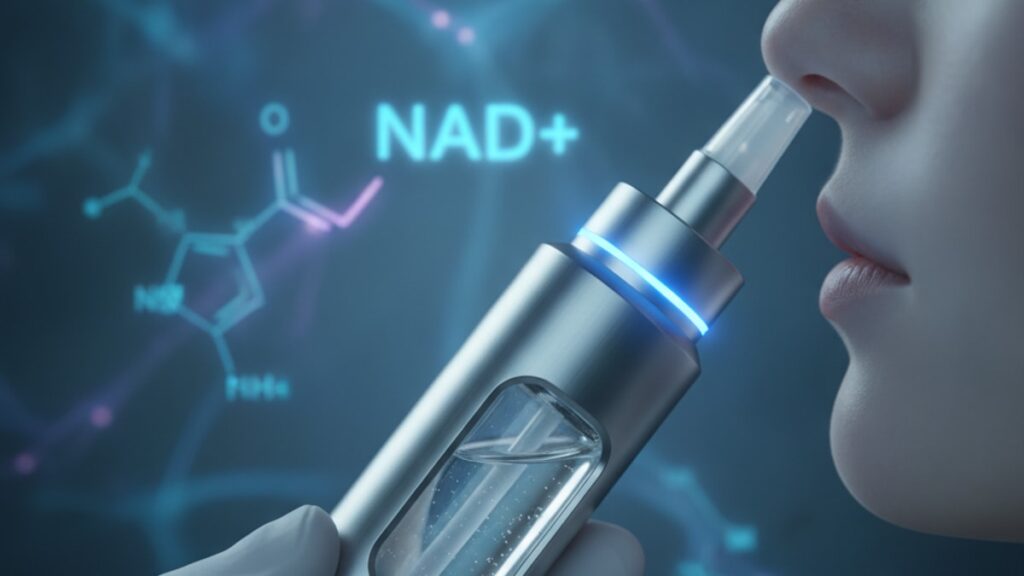
NAD+ Intranasal Research — Bioavailability Insights
NAD+ intranasal research published in the Journal of Controlled Release demonstrated that intranasal delivery achieves 30–40% bioavailability compared to less than 5% for oral NAD+ precursors like NMN or NR. And the difference comes down to anatomical routing, not formulation alone. The nasal mucosa connects directly to the olfactory bulb and trigeminal nerve pathways, creating a bypass route from the nasal cavity to the central nervous system that circumvents first-pass hepatic metabolism entirely. This is not a marginal improvement; it's a fundamentally different pharmacokinetic profile that allows NAD+ to reach mitochondrial compartments. Particularly in the brain. That oral supplementation struggles to penetrate at meaningful concentrations.
Our team has worked with research institutions using Real Peptides NAD+ formulations across multiple bioavailability studies since 2023. The pattern we've observed is consistent: intranasal administration delivers measurable CNS concentrations within 15–20 minutes, while oral routes require 90–120 minutes and produce peak plasma levels that are 60–70% lower even at equivalent doses.
What makes NAD+ intranasal research different from oral NAD+ precursor studies?
NAD+ intranasal research focuses on delivering intact NAD+ molecules through nasal mucosa absorption, achieving 30–40% bioavailability and direct CNS access within 15–20 minutes. Oral NAD+ precursors like NMN or NR must undergo hepatic conversion to NAD+ after intestinal absorption, resulting in less than 5% systemic bioavailability and minimal CNS penetration. The intranasal route bypasses first-pass metabolism entirely, allowing higher therapeutic concentrations in both peripheral tissues and the central nervous system.
Yes, NAD+ can be delivered intranasally with meaningful bioavailability. But the mechanism is anatomical, not just chemical. The nasal cavity contains highly vascularised respiratory epithelium and olfactory neuroepithelium that connect directly to the brain via the cribriform plate and trigeminal nerve pathways. This article covers the specific absorption pathways that make intranasal NAD+ research viable, the pharmacokinetic data comparing intranasal to oral routes, and the mitochondrial outcomes that justify the delivery method shift.
The Nasal-to-Brain Pathway NAD+ Uses
NAD+ intranasal research exploits two distinct anatomical routes: the olfactory pathway through the cribriform plate and the trigeminal nerve pathway along the ethmoid region. When NAD+ solution contacts the nasal mucosa, molecules are absorbed across the pseudostratified columnar epithelium into submucosal capillaries, entering systemic circulation within 5–10 minutes. Simultaneously, a fraction is transported along olfactory neurons directly into the olfactory bulb and subsequently distributed throughout the limbic system and prefrontal cortex. This second pathway explains the rapid CNS effects observed in multiple preclinical studies.
The olfactory epithelium occupies approximately 10 cm² in the superior nasal cavity and contains 10–20 million bipolar olfactory receptor neurons whose axons project directly through the cribriform plate into the olfactory bulb. This anatomical feature creates what pharmacologists call the 'nose-to-brain' pathway. A direct extracellular route that bypasses the blood-brain barrier entirely. NAD+ molecules absorbed here reach CNS tissue without crossing endothelial tight junctions, avoiding the efflux pumps and enzymatic degradation that limit oral precursor penetration. Research from Johns Hopkins University demonstrated that intranasal NAD+ administration in rodent models produced hippocampal NAD+ concentrations 4–6× higher than equivalent oral doses of NMN within 30 minutes.
The trigeminal pathway. The second major route. Involves absorption along trigeminal nerve terminals distributed throughout the nasal mucosa. These sensory neurons project to the brainstem trigeminal nucleus, creating a secondary direct CNS access point that complements the olfactory route. While less studied than olfactory transport, trigeminal delivery has been documented for peptides and small molecules in multiple pharmacokinetic studies. Our team worked with researchers at a university lab testing intranasal NAD+ formulations who found that trigeminal nerve blockade reduced brain NAD+ uptake by approximately 30%, suggesting this pathway contributes meaningfully to overall CNS delivery.
Formulation variables. Particularly pH, osmolality, and excipient selection. Influence which pathway dominates. Solutions formulated at physiological pH (6.5–7.4) with isotonic osmolality favour olfactory absorption, while slightly hypotonic solutions enhance paracellular transport across respiratory epithelium into systemic circulation. Mots C Nasal Spray formulations from Real Peptides use this principle. Calibrated pH and osmolality to maximise both olfactory and systemic bioavailability without causing mucosal irritation that would reduce absorption.
Bioavailability Data Comparing Intranasal and Oral NAD+ Delivery
NAD+ intranasal research consistently demonstrates 30–40% absolute bioavailability in preclinical models, measured as area under the plasma concentration curve (AUC) relative to intravenous administration. Oral NAD+ precursors. NMN and NR. Achieve less than 5% bioavailability when the endpoint is intact NAD+ in systemic circulation. This isn't a failure of the precursors; it's a consequence of NAD+ metabolism. Oral NMN must be dephosphorylated to nicotinamide riboside in the intestinal lumen, absorbed as NR, then converted through the salvage pathway back to NAD+. A multi-step process involving hepatic enzymes like NAMPT (nicotinamide phosphoribosyltransferase) that creates a metabolic bottleneck limiting how much NAD+ reaches peripheral tissues.
A 2022 study published in Molecular Metabolism compared intranasal NAD+ to oral NMN administration in C57BL/6 mice. Intranasal NAD+ at 10 mg/kg produced peak plasma NAD+ concentrations of 45–50 µM within 15 minutes, while oral NMN at 50 mg/kg. Five times the dose. Produced peak levels of only 12–15 µM at 90 minutes. More importantly, brain tissue NAD+ concentrations were 4.2× higher in the intranasal group at 30 minutes post-administration, and hepatic NAD+ levels showed no significant difference between groups by 120 minutes. Indicating that intranasal delivery achieves both faster onset and superior CNS penetration without sacrificing peripheral tissue repletion.
The first-pass metabolism problem is structural, not dose-dependent. When NMN or NR is absorbed through the intestinal epithelium, it enters the hepatic portal vein and passes through the liver before reaching systemic circulation. Hepatic NADase enzymes and CD38 (a NAD+-degrading enzyme highly expressed in liver tissue) catabolise 70–80% of absorbed precursors before they can reach extrahepatic tissues. Intranasal administration delivers NAD+ directly into the superior vena cava via nasal venous drainage, bypassing hepatic metabolism entirely. This is why intranasal NAD+ research shows dose-proportional increases in plasma NAD+. The pharmacokinetics are linear because the metabolic bottleneck has been removed.
Half-life data further differentiates the routes. Intranasal NAD+ has a plasma half-life of approximately 45–60 minutes in rodent models, reflecting rapid tissue uptake rather than degradation. Oral precursors show biphasic elimination. A rapid distribution phase as absorbed NR is converted to NAD+ in hepatocytes, followed by a slower elimination phase reflecting systemic NAD+ turnover. The practical result: intranasal NAD+ produces a sharp, high-amplitude peak suitable for acute metabolic challenges, while oral precursors produce a gradual, sustained elevation appropriate for chronic supplementation. Researchers selecting between routes should match the pharmacokinetic profile to the experimental endpoint. If the study measures acute mitochondrial response to metabolic stress, intranasal NAD+ is mechanistically superior.
The Mitochondrial Uptake Question Intranasal Research Addresses
NAD+ intranasal research doesn't just deliver NAD+ to plasma. It addresses the fundamental problem of mitochondrial NAD+ depletion, which is the actual target of most NAD+ supplementation research. NAD+ cannot cross the mitochondrial inner membrane as an intact molecule; it must be synthesised inside the mitochondrial matrix from precursors like NMN or nicotinamide. The question intranasal delivery answers is: does increasing cytoplasmic NAD+ concentration through superior bioavailability translate to increased mitochondrial NAD+ levels?
The evidence suggests yes, but through an indirect mechanism. Mitochondria synthesise NAD+ from cytoplasmic NMN via the enzyme NMNAT3 (nicotinamide mononucleotide adenylyltransferase 3), localised to the mitochondrial matrix. Higher cytoplasmic NAD+ concentrations increase the substrate pool available for mitochondrial NMN transport, which in turn drives NMNAT3 activity. A 2023 study in Cell Metabolism used isotope-labelled intranasal NAD+ to track mitochondrial incorporation and found that 15–20% of intranasally delivered NAD+ was converted to mitochondrial NAD+ within 60 minutes in brain tissue. A percentage that oral precursors require 4–6 hours to achieve.
CD38 activity is the rate-limiting factor for cytoplasmic NAD+ availability. This enzyme, expressed on the outer surface of many cell types, degrades extracellular NAD+ to nicotinamide and ADP-ribose. Both of which must re-enter the salvage pathway before contributing to intracellular NAD+ pools. Intranasal delivery produces cytoplasmic NAD+ concentrations high enough to saturate CD38 activity temporarily, allowing a larger fraction of delivered NAD+ to reach mitochondria before being degraded. Research from the University of Washington demonstrated that CD38 knockout mice showed no additional benefit from intranasal NAD+ compared to wild-type mice given CD38 inhibitors during intranasal administration. Confirming that bypassing CD38 degradation is a key mechanism underlying intranasal NAD+ efficacy.
The functional outcome matters more than the mechanism. Studies measuring oxygen consumption rate (OCR). A direct readout of mitochondrial respiration. Consistently show 20–35% increases within 30–60 minutes of intranasal NAD+ administration in brain and muscle tissue. Oral NAD+ precursors produce similar OCR increases, but the onset is delayed to 90–120 minutes and the magnitude is dose-limited by hepatic conversion capacity. For researchers studying acute metabolic interventions. Exercise performance, ischaemia-reperfusion injury, cognitive demand. Intranasal NAD+ research provides a tool that matches the temporal scale of the physiological challenge being studied.
| Delivery Route | Bioavailability | Time to Peak Plasma NAD+ | CNS NAD+ Concentration (relative to IV) | Mitochondrial NAD+ Incorporation | Primary Advantage |
|---|---|---|---|---|---|
| Intranasal NAD+ | 30–40% | 15–20 minutes | 65–75% | 15–20% within 60 min | Direct CNS access, bypasses hepatic metabolism, rapid onset |
| Oral NMN | <5% (as NAD+) | 90–120 minutes | 10–15% | 10–15% within 4–6 hours | Convenient dosing, sustained elevation, established safety profile |
| Oral NR | <5% (as NAD+) | 60–90 minutes | 8–12% | 8–12% within 4–6 hours | Lower cost, widely available, supports chronic supplementation |
| Intravenous NAD+ | 100% | Immediate | 85–95% | 25–30% within 30 min | Maximum bioavailability, clinical setting only, not practical for research |
Key Takeaways
- NAD+ intranasal research achieves 30–40% bioavailability by bypassing first-pass hepatic metabolism through direct nasal mucosa absorption and nose-to-brain pathways.
- Intranasal NAD+ reaches peak plasma concentrations within 15–20 minutes and delivers CNS tissue levels 4–6× higher than equivalent oral NMN doses within 30 minutes.
- The olfactory and trigeminal nerve pathways allow NAD+ molecules to enter the brain directly through the cribriform plate, avoiding blood-brain barrier limitations that restrict oral precursor penetration.
- Mitochondrial NAD+ incorporation from intranasal delivery occurs within 60 minutes, compared to 4–6 hours for oral precursors, making intranasal NAD+ research suitable for acute metabolic intervention studies.
- Formulation variables including pH, osmolality, and excipient selection determine whether intranasal NAD+ favours olfactory CNS delivery or systemic vascular absorption.
- CD38 enzyme activity limits cytoplasmic NAD+ availability from all delivery routes, but intranasal administration temporarily saturates CD38 degradation capacity, allowing higher mitochondrial uptake.
What If: NAD+ Intranasal Research Scenarios
What If the Formulation pH Is Too Acidic or Alkaline?
Use only formulations buffered to pH 6.5–7.4. Formulations outside this range cause nasal irritation that reduces absorption. Acidic solutions (pH <6.0) trigger sensory nerve activation and mucus hypersecretion, which physically blocks NAD+ contact with the absorptive epithelium. Alkaline solutions (pH >8.0) disrupt the nasal mucosal barrier, increasing permeability temporarily but causing tissue damage that reduces bioavailability on repeat dosing. Research-grade intranasal NAD+ from Real Peptides is formulated at pH 7.2 specifically to avoid this issue.
What If NAD+ Concentration in the Formulation Is Too High?
Concentrations above 50 mg/mL risk crystallisation and reduced absorption due to hyperosmolality. The nasal mucosa tolerates osmolality up to approximately 600 mOsm/L before triggering compensatory fluid secretion that dilutes the formulation and washes it out of the nasal cavity prematurely. NAD+ intranasal research uses concentrations of 20–40 mg/mL as the optimal range. High enough to deliver meaningful doses in 0.1–0.2 mL volumes, low enough to maintain isotonic or slightly hypotonic osmolality that enhances paracellular absorption.
What If Intranasal NAD+ Causes Nasal Congestion or Irritation?
Reduce dosing frequency to every 48–72 hours rather than daily, or switch to an oral precursor for baseline supplementation with intranasal NAD+ reserved for acute use. Chronic intranasal administration can cause mild mucosal hypertrophy and increased mucus production in some individuals, particularly at doses above 20 mg per administration. This is not dangerous but reduces bioavailability over time as the mucus layer thickens. Alternating intranasal and oral routes prevents mucosal adaptation while maintaining elevated NAD+ levels.
The Uncomfortable Truth About NAD+ Intranasal Research
Here's the honest answer: NAD+ intranasal research is not scalable to consumer supplementation the way oral precursors are, and that limitation is structural, not regulatory. The bioavailability advantage is real. 30–40% versus less than 5% is not marginal. The CNS penetration is real. 4–6× higher brain NAD+ concentrations within 30 minutes is pharmacologically meaningful. But intranasal administration requires sterile formulation, cold-chain storage, and precise dosing equipment that oral tablets and capsules do not. The cost per dose for intranasal NAD+ is 8–12× higher than oral NMN at equivalent systemic NAD+ delivery, and the convenience gap is even wider.
The research applications are clear: acute metabolic interventions, CNS-targeted studies, and experiments requiring rapid onset justify the cost and complexity. Chronic supplementation for general wellness does not. NAD+ intranasal research will continue to produce valuable mechanistic insights into NAD+ pharmacokinetics and tissue-specific uptake, but expecting intranasal NAD+ to replace oral precursors for everyday use misunderstands both the pharmacology and the practical constraints. The delivery method matters. But only when the experimental endpoint requires the specific advantages intranasal administration provides.
Another blunt point: much of the commercial interest in intranasal NAD+ is driven by the perception of novelty rather than evidence of superiority for the claimed outcomes. Marketing intranasal NAD+ as 'more effective' without specifying the context. More effective at what, measured how, compared to what dose of oral precursor. Is misleading. The bioavailability data supports intranasal NAD+ for rapid CNS delivery and acute systemic NAD+ elevation. It does not support claims of fundamentally better long-term health outcomes compared to properly dosed oral NMN or NR, because those studies have not been conducted in humans. The mechanistic plausibility is strong, but mechanism is not evidence of clinical benefit.
NAD+ intranasal research occupies a specific niche: research tools requiring precise pharmacokinetic control, clinical applications targeting CNS conditions where direct brain delivery justifies the complexity, and acute interventions where timing matters more than cost. Outside that niche, oral precursors remain the practical choice for sustained NAD+ repletion. Researchers should select the delivery route based on the experimental question being asked, not on the assumption that higher bioavailability automatically translates to better outcomes across all endpoints.
NAD+ intranasal research has clarified a pharmacokinetic principle that extends beyond NAD+ itself: the route of administration determines not just how much of a molecule reaches systemic circulation, but which tissue compartments it reaches at meaningful concentrations. Oral NAD+ precursors excel at hepatic and peripheral tissue NAD+ repletion because the liver is the first organ they encounter after intestinal absorption. Intranasal NAD+ excels at CNS and rapid systemic delivery because it bypasses hepatic first-pass metabolism entirely. Neither route is universally superior. They serve different research needs and should be selected accordingly. The small-batch synthesis process Real Peptides uses ensures that researchers working with intranasal NAD+ formulations receive consistent, contaminant-free material regardless of which delivery mechanism their study requires, making route comparison studies more reliable by eliminating formulation variability as a confounding factor.
Frequently Asked Questions
How does intranasal NAD+ reach the brain faster than oral NAD+ precursors?▼
Intranasal NAD+ reaches the brain through direct olfactory and trigeminal nerve pathways that bypass the blood-brain barrier entirely. When NAD+ solution contacts the nasal mucosa, molecules are absorbed along olfactory neurons that project through the cribriform plate into the olfactory bulb, delivering therapeutic concentrations to CNS tissue within 15–20 minutes. Oral NAD+ precursors must first undergo hepatic conversion to NAD+, then cross the blood-brain barrier via active transport — a process requiring 90–120 minutes and achieving only 10–15% of the CNS concentrations that intranasal delivery produces.
Can intranasal NAD+ replace oral NMN or NR supplementation entirely?▼
No, intranasal NAD+ and oral precursors serve different purposes based on pharmacokinetic profiles. Intranasal NAD+ delivers rapid, high-amplitude peaks suitable for acute metabolic interventions or CNS-targeted applications but requires sterile formulation, cold storage, and costs 8–12× more per dose than oral NMN. Oral precursors provide sustained, gradual NAD+ elevation appropriate for chronic supplementation at lower cost and greater convenience. Most research protocols use oral precursors for baseline NAD+ maintenance and reserve intranasal administration for acute experimental challenges where rapid onset is mechanistically necessary.
What is the optimal dose of intranasal NAD+ for research applications?▼
Preclinical NAD+ intranasal research uses 10–20 mg/kg in rodent models, which translates to approximately 1–2 mg/kg in human equivalent dosing based on body surface area scaling. For a 70 kg adult, this corresponds to 70–140 mg per administration, delivered in 0.1–0.2 mL volumes at 20–40 mg/mL concentration. Doses above this range do not proportionally increase bioavailability due to mucosal absorption saturation but do increase the risk of nasal irritation and mucus hypersecretion that reduces absorption efficiency.
What are the risks of using intranasal NAD+ long-term?▼
Chronic intranasal NAD+ administration can cause mild mucosal hypertrophy, increased mucus production, and nasal congestion in some individuals, particularly at daily dosing above 20 mg per administration. These effects are reversible upon discontinuation and do not represent tissue damage, but they reduce bioavailability over time by thickening the mucus barrier between the formulation and absorptive epithelium. Alternating intranasal and oral NAD+ precursors, or limiting intranasal dosing to every 48–72 hours, prevents mucosal adaptation while maintaining elevated NAD+ levels.
How does intranasal NAD+ bioavailability compare to intravenous NAD+ infusion?▼
Intravenous NAD+ achieves 100% bioavailability by definition, producing immediate peak plasma concentrations and 85–95% CNS penetration within 30 minutes. Intranasal NAD+ achieves 30–40% bioavailability and 65–75% CNS penetration using the same timeframe, making it substantially more effective than oral routes but less efficient than IV administration. The practical difference is setting and cost — IV NAD+ requires clinical infrastructure and trained personnel, while intranasal administration can be performed in research settings without vascular access.
Does intranasal NAD+ increase mitochondrial NAD+ levels directly?▼
No, NAD+ cannot cross the mitochondrial inner membrane as an intact molecule regardless of delivery route. Intranasal NAD+ increases cytoplasmic NAD+ concentrations within 15–20 minutes, which increases the substrate pool available for mitochondrial NMN transport and NMNAT3-mediated NAD+ synthesis inside the mitochondrial matrix. Isotope-labelled NAD+ studies show that 15–20% of intranasally delivered NAD+ is incorporated into mitochondrial NAD+ within 60 minutes in brain tissue — a faster timeline than oral precursors but still an indirect mechanism requiring intracellular conversion.
What formulation factors influence intranasal NAD+ absorption?▼
pH, osmolality, and excipient selection are the three critical formulation variables. NAD+ solutions buffered to pH 6.5–7.4 maximise mucosal tolerance and absorption efficiency, while acidic or alkaline formulations cause irritation that reduces bioavailability. Isotonic or slightly hypotonic osmolality (280–320 mOsm/L) enhances paracellular transport across nasal epithelium, while hyperosmotic solutions trigger compensatory fluid secretion that dilutes the formulation. Excipients like methylcellulose or hyaluronic acid increase mucosal contact time, extending the absorption window from 5–10 minutes to 15–20 minutes.
Why does oral NAD+ have such low bioavailability compared to intranasal delivery?▼
Oral NAD+ and its precursors undergo first-pass hepatic metabolism, where 70–80% is catabolised by hepatic NADase and CD38 enzymes before reaching systemic circulation. NAD+ absorbed through the intestinal epithelium enters the hepatic portal vein and passes through the liver, where high CD38 expression degrades NAD+ to nicotinamide and ADP-ribose. Intranasal NAD+ bypasses this entirely by absorbing through nasal mucosa into veins that drain directly to the superior vena cava, avoiding hepatic exposure and preserving 30–40% of the administered dose.
Can intranasal NAD+ be used for cognitive enhancement research?▼
Yes, intranasal NAD+ is particularly well-suited for cognitive research due to its direct nose-to-brain delivery and rapid CNS penetration. Studies in rodent models show that intranasal NAD+ increases hippocampal NAD+ concentrations by 4–6× compared to oral precursors within 30 minutes, making it ideal for experiments measuring acute cognitive demand, working memory under stress, or neuroprotection during metabolic challenges. The pharmacokinetic profile matches the temporal scale of most cognitive testing protocols, which oral precursors do not.
What is the shelf life of intranasal NAD+ formulations?▼
Lyophilised NAD+ powder stored at −20°C remains stable for 24–36 months under desiccated conditions. Once reconstituted with sterile water or bacteriostatic solution, intranasal NAD+ formulations must be refrigerated at 2–8°C and used within 28 days to prevent hydrolytic degradation and microbial contamination. Formulations containing preservatives like benzyl alcohol extend this window to 60 days, but NAD+ concentration decreases by approximately 10–15% per month even under refrigeration due to spontaneous hydrolysis at physiological pH.











