



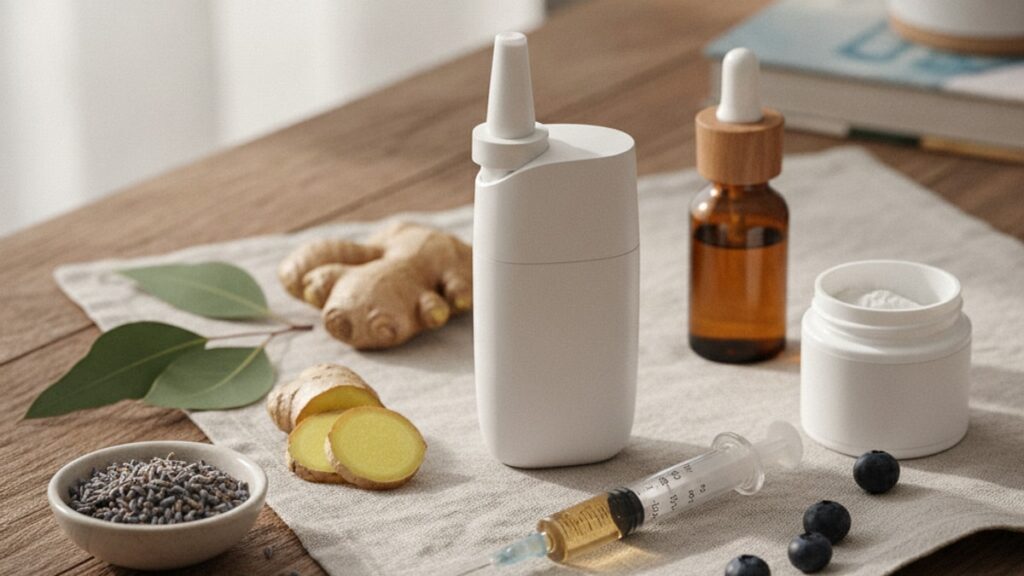
Oxytocin Nasal vs Injectable — Absorption & Use Compared
Injectable oxytocin achieves near-100% bioavailability within minutes. Nasal administration peaks at 3–5%. That gap isn't accidental. Different delivery routes exist because different therapeutic contexts demand different pharmacokinetic profiles. Injectable oxytocin is the clinical standard for labor induction and postpartum hemorrhage control. Situations where immediate, measurable plasma concentration matters. Nasal oxytocin serves behavioral research, anxiety modulation studies, and social cognition trials where sustained low-dose exposure and non-invasive administration outweigh bioavailability concerns.
Our team has worked with research-grade peptides across both delivery formats for years. The confusion around oxytocin nasal vs injectable stems from conflicting claims in wellness marketing versus clinical literature. One promises emotional breakthroughs, the other focuses on uterine contraction timing. This article clarifies absorption mechanisms, dosage protocols, clinical versus research applications, and what determines which route is appropriate for which use case.
What is the difference between oxytocin nasal spray and injectable oxytocin?
Oxytocin nasal spray delivers the peptide through intranasal mucosa with 3–5% systemic bioavailability and peak plasma concentration within 30–45 minutes. Injectable oxytocin (intramuscular or intravenous) achieves near-complete bioavailability with onset in 3–5 minutes for IM and immediate effect via IV. Nasal administration bypasses first-pass hepatic metabolism but suffers from significant absorption variability. Factors like nasal congestion, mucosal hydration, and spray technique can reduce effective delivery by 40–60%. Injectable routes guarantee predictable plasma levels, making them the medical standard for obstetric and emergency uses.
The primary functional difference is control. Nasal oxytocin works for applications where exact dosing precision isn't critical. Behavioral trials, exploratory research on social bonding, or settings where frequent non-invasive dosing is required. Injectable oxytocin is used when the therapeutic window is narrow and the consequence of underdosing is clinical failure. Labor augmentation, retained placenta management, postpartum hemorrhage prevention.
Bioavailability & Absorption Mechanisms: Why Route Determines Outcome
Bioavailability is the percentage of administered peptide that reaches systemic circulation in active form. For oxytocin nasal vs injectable, this difference defines clinical utility. Injectable oxytocin (IM or IV) delivers nearly 100% of the administered dose into circulation. Intramuscular injection peaks within 3–5 minutes with a half-life of 3–10 minutes depending on injection site vascularity. Intravenous administration is immediate. Onset within 60 seconds, which is why IV oxytocin is titrated via infusion pump during labor.
Nasal oxytocin absorption depends on the trigeminal and olfactory pathways. Peptide molecules cross the nasal mucosa and enter systemic circulation via the cribriform plate or through direct mucosal capillary absorption. Intranasal bioavailability for oxytocin ranges from 3–5% in controlled studies. Significantly lower than injectable routes because most of the sprayed peptide is either swallowed (degraded by gastric acid) or cleared by mucociliary action before absorption. Studies published in Psychoneuroendocrinology found peak plasma oxytocin concentrations 30–45 minutes post-administration with intranasal doses of 24–40 IU, but individual variability was high. Some subjects showed negligible plasma elevation.
The mechanism matters because oxytocin's half-life in plasma is extremely short (3–10 minutes). If only 3–5% of a nasal dose reaches circulation, and the peptide degrades within minutes, sustained receptor occupancy requires repeated dosing or high initial doses. Injectable administration bypasses this issue entirely. The full dose is immediately bioavailable, receptor binding occurs within minutes, and clinical effect (uterine contraction, milk ejection) is measurable in real time. Real Peptides provides research-grade oxytocin formulations designed for precise experimental protocols where peptide purity and consistent dosing are non-negotiable.
Clinical vs Research Applications: When Each Route Is Appropriate
Oxytocin nasal vs injectable is not a question of better or worse. It's a question of context. Injectable oxytocin is FDA-approved for obstetric use: labor induction, augmentation of uterine contractions, management of postpartum hemorrhage, and facilitation of milk let-down in lactation failure. These are medical interventions where plasma oxytocin concentration must be controlled, onset must be rapid, and underdosing has immediate adverse consequences. IV oxytocin infusion during labor is titrated in milliunits per minute because the therapeutic window between effective contraction and uterine hyperstimulation is narrow. Nasal administration cannot provide this level of control.
Nasal oxytocin is used almost exclusively in research settings. Behavioral neuroscience, psychiatry trials, and social cognition studies. A 2010 meta-analysis in Biological Psychiatry reviewed 38 randomized controlled trials using intranasal oxytocin (24–48 IU) to investigate effects on trust, empathy, social anxiety, and autism spectrum disorder symptoms. Results were mixed. Some trials showed modest improvements in eye contact duration and subjective trust ratings, others found no significant effect. The variability is partly explained by the absorption issue: if bioavailability fluctuates between 2–8% depending on individual anatomy and administration technique, the actual dose reaching the brain varies considerably.
There is no FDA approval for nasal oxytocin in psychiatric or wellness contexts. Off-label use exists, but prescribing nasal oxytocin for anxiety, relationship enhancement, or mood disorders is not supported by Phase III clinical evidence. Injectable oxytocin is not used for these purposes either. The half-life is too short for sustained central nervous system effects, and repeated IM injections are not practical for chronic administration.
When researchers compare oxytocin nasal vs injectable in experimental models, they choose nasal for convenience and non-invasiveness in repeated-measures designs (e.g., daily dosing over 8 weeks in a social anxiety trial). Injectable routes are reserved for studies requiring precise plasma concentration curves. Pharmacokinetic trials, dose-response experiments, or animal models where IM/IV access is already established.
Dosage, Administration Protocols & Practical Constraints
Standard intranasal oxytocin dosing in research trials ranges from 24–48 IU per administration. Delivered as 3–6 sprays (typically 4 IU per spray) divided between nostrils. Subjects are instructed to exhale fully before spraying, aim the nozzle toward the inner canthus of the eye (not straight back), and avoid sniffing forcefully (which propels the solution into the nasopharynx where it's swallowed rather than absorbed). Even with perfect technique, absorption is inconsistent. Nasal congestion from allergies, recent upper respiratory infection, or chronic rhinitis can reduce effective delivery by 50% or more.
Injectable oxytocin for obstetric use is dosed in units (IU) but administered via IV infusion at rates measured in milliunits per minute. A typical labor induction protocol starts at 1–2 mU/min and titrates upward every 30 minutes based on contraction frequency and fetal heart rate response. Intramuscular oxytocin (10 IU IM) is used postpartum to prevent hemorrhage. Onset within 3–5 minutes, duration of action 30–60 minutes. The difference in precision is stark: nasal oxytocin is a single bolus with variable absorption and no real-time feedback, while IV oxytocin is adjusted minute-by-minute.
Timing also matters. Nasal oxytocin requires 30–45 minutes to reach peak plasma concentration. Too slow for acute medical intervention. Injectable routes act within minutes, making them suitable for emergency use. For research contexts where the goal is to observe behavioral changes over a 2-hour testing session, nasal administration 30 minutes before testing is logistically simpler than IM injection.
Storage and handling differ as well. Injectable oxytocin must be refrigerated at 2–8°C and protected from light. Exposure to temperatures above 25°C for more than 48 hours degrades the peptide. Nasal formulations have similar storage requirements, but once a nasal spray bottle is opened and used, contamination risk increases with each administration unless the formulation contains preservatives like benzalkonium chloride. Research-grade peptides from suppliers like Real Peptides are produced under strict synthesis protocols to ensure amino acid sequencing accuracy and peptide integrity. Critical when comparing results across studies.
Oxytocin Nasal vs Injectable: Side-by-Side Comparison
Before choosing a delivery route, understand how absorption, onset, duration, and practical constraints align with the intended use.
| Feature | Nasal Oxytocin | Injectable Oxytocin (IM/IV) | Bottom Line |
|---|---|---|---|
| Bioavailability | 3–5% systemic absorption | Near-100% (IM/IV) | Injectable guarantees predictable plasma levels; nasal does not |
| Onset of Action | 30–45 minutes to peak | 3–5 min (IM), <1 min (IV) | Injectable is the only option for acute medical use |
| Duration of Effect | 60–90 minutes (variable) | 30–60 min (IM), minutes (IV infusion-dependent) | Nasal offers slightly longer but inconsistent duration |
| Administration Complexity | Self-administered, non-invasive | Requires injection (clinical or trained administration) | Nasal is easier for repeated non-clinical dosing |
| Dose Precision | Low. Absorption varies 40–60% based on technique and nasal physiology | High. Dose delivered equals dose absorbed | Only injectable allows titration and real-time adjustment |
| FDA Approval | None for psychiatric or wellness use | Approved for labor induction, postpartum hemorrhage, lactation support | Injectable has regulatory backing; nasal is research-only |
| Primary Use Context | Behavioral research, social cognition trials, exploratory psychiatric studies | Obstetric emergencies, labor augmentation, postpartum bleeding prevention | Route choice depends entirely on whether precision or convenience is the priority |
Key Takeaways
- Injectable oxytocin achieves near-100% bioavailability with onset in 3–5 minutes (IM) or under 60 seconds (IV), making it the medical standard for labor induction and postpartum hemorrhage control.
- Nasal oxytocin delivers only 3–5% systemic absorption with peak effect at 30–45 minutes. Suitable for behavioral research where convenience outweighs dosing precision.
- Intranasal absorption is highly variable. Factors like nasal congestion, spray technique, and mucosal hydration can reduce effective delivery by 40–60%.
- No FDA approval exists for nasal oxytocin in psychiatric, anxiety, or wellness contexts. Off-label use lacks Phase III clinical evidence.
- Injectable oxytocin allows real-time dose titration (e.g., IV infusion adjusted by milliunits per minute), which nasal administration cannot replicate.
- Research trials use nasal oxytocin (24–48 IU) for non-invasive repeated dosing in social cognition and behavioral studies, not because it's more effective but because IM/IV access isn't practical for multi-week protocols.
What If: Oxytocin Nasal vs Injectable Scenarios
What If I Need Rapid Onset for a Clinical Emergency?
Use injectable oxytocin exclusively. Nasal administration takes 30–45 minutes to reach peak plasma concentration. Far too slow for postpartum hemorrhage, retained placenta, or labor augmentation where minutes matter. IV oxytocin acts within 60 seconds; IM within 3–5 minutes. Medical settings require the control and speed only injectable routes provide.
What If I'm Designing a Behavioral Research Study and Want Non-Invasive Dosing?
Nasal oxytocin is appropriate here. Subjects can self-administer under supervision, and repeated dosing over weeks is feasible without requiring clinical injection access. Accept that bioavailability will be low and variable, and design your sample size and outcome measures accordingly. Plasma oxytocin measurement is recommended to confirm absorption if results are inconsistent.
What If My Nasal Spray Isn't Producing the Expected Effect?
Check three factors: technique (are you spraying toward the inner eye corner and not sniffing hard?), nasal congestion (allergies or infection block absorption), and product integrity (has the peptide been stored properly at 2–8°C?). If absorption remains poor, consider that nasal oxytocin's 3–5% bioavailability means most of the dose never reaches circulation. This isn't a defect; it's the inherent limitation of the route.
What If I Want to Use Oxytocin for Anxiety or Relationship Enhancement?
No FDA-approved oxytocin product exists for psychiatric or wellness use. Neither nasal nor injectable. Research trials have tested intranasal oxytocin (24–48 IU) in social anxiety and autism studies with mixed results. Off-label prescribing happens, but evidence is insufficient to recommend it as standard care. If you pursue this, work with a prescriber who understands the limitations and monitors outcomes carefully.
The Unvarnished Truth About Oxytocin Nasal vs Injectable
Here's the honest answer: marketing around nasal oxytocin for wellness, bonding, or emotional regulation vastly overstates what the evidence supports. The mechanism is real. Oxytocin does modulate social behavior and stress response. But the delivery method matters. With 3–5% bioavailability, intranasal oxytocin is not delivering pharmacologically meaningful doses to the brain in most users. The studies showing positive effects used controlled research settings, precise timing, and often failed to replicate in larger trials.
Injectable oxytocin is a medical tool with a narrow, well-defined use case: obstetric emergencies and labor management. It's not a psychiatric medication, and it's not practical for chronic administration. The half-life is too short. Plasma oxytocin drops to baseline within 10–20 minutes after injection ends. You can't maintain therapeutic levels without continuous infusion, which no one does outside a labor and delivery unit.
If you're comparing oxytocin nasal vs injectable for research purposes, the route depends on your experimental design. Not on which is "better." Nasal is easier and non-invasive; injectable is precise and fast. If you're comparing them for personal use in a wellness context, you're operating outside the bounds of regulatory approval and solid clinical evidence. That doesn't mean it can't work for some people. It means the data isn't there to predict who will respond and who won't.
For researchers sourcing peptides for experimental protocols, purity and consistency matter more than delivery route. Real Peptides produces research-grade oxytocin with verified amino acid sequencing and batch-tested purity. The baseline requirement for any study where you need confidence that the peptide you're administering is chemically identical to what you think you're testing.
The bottom line: oxytocin nasal vs injectable isn't about choosing the better option. It's about matching the route to the application. Medical emergencies require injectable precision. Behavioral research tolerates nasal convenience. Wellness claims require skepticism until better evidence arrives.
Frequently Asked Questions
How does intranasal oxytocin reach the brain if bioavailability is only 3–5%?▼
Intranasal oxytocin reaches the central nervous system through two pathways: direct transport via olfactory and trigeminal nerve channels that bypass the blood-brain barrier, and systemic absorption through nasal mucosa with subsequent crossing into cerebrospinal fluid. Even though systemic bioavailability is low, enough peptide reaches the brain to produce measurable changes in regional activity (observed via fMRI) and modest behavioral effects in some individuals. The mechanism is real but inconsistent — individual anatomy, nasal physiology, and administration technique all influence how much oxytocin actually reaches target receptors.
Can I use nasal oxytocin for the same purposes as injectable oxytocin?▼
No. Injectable oxytocin is FDA-approved for obstetric uses only — labor induction, postpartum hemorrhage prevention, and lactation support. Nasal oxytocin has no FDA approval for any medical use; it’s used off-label in research for social cognition and behavioral studies. The low bioavailability and slow onset of nasal administration make it unsuitable for any clinical emergency or situation requiring precise dose control. These are fundamentally different tools for different contexts.
What is the correct dosage for intranasal oxytocin in behavioral research?▼
Most published trials use 24–48 IU of intranasal oxytocin administered 30–45 minutes before testing or intervention. This is typically delivered as 3–6 sprays (4–8 IU per spray) divided between nostrils. Dosing is not standardized — some studies use single 24 IU doses, others use 40 IU. There is no established therapeutic range because nasal oxytocin lacks FDA approval for clinical use, and absorption varies widely between individuals.
Why do some people feel no effect from nasal oxytocin?▼
Intranasal oxytocin has highly variable absorption — factors like nasal congestion, mucosal dryness, spray technique, and individual anatomy can reduce effective delivery by 40–60%. If someone has chronic allergies, structural nasal abnormalities, or simply sprays incorrectly (sniffing too hard, aiming the nozzle straight back instead of toward the inner eye), very little peptide reaches systemic circulation. Additionally, oxytocin’s effects on mood and social behavior are subtle and context-dependent — not everyone responds even with adequate absorption.
Is injectable oxytocin more effective than nasal oxytocin for anxiety or depression?▼
Neither is approved or recommended for psychiatric use. Injectable oxytocin has a half-life of 3–10 minutes, meaning any central effect dissipates within 20–30 minutes unless you maintain continuous infusion — which is impractical outside clinical settings. Nasal oxytocin has been tested in small trials for social anxiety and autism with mixed results, but it’s not a standard psychiatric treatment. If you’re considering oxytocin for mental health, discuss it with a psychiatrist — off-label use exists, but evidence is insufficient to predict outcomes reliably.
Can I travel with nasal oxytocin, and how should I store it?▼
Yes, but temperature control is critical. Nasal oxytocin must be stored at 2–8°C and protected from light — prolonged exposure to temperatures above 25°C degrades the peptide structure. For travel, use an insulated medical cooler or insulin travel case that maintains refrigeration for 24–48 hours. Once a nasal spray bottle is opened, contamination risk increases with repeated use unless the formulation contains preservatives. Check expiration dates and inspect the solution for discoloration or particulates before each use.
What are the side effects of intranasal oxytocin?▼
Intranasal oxytocin is generally well-tolerated in research trials. Reported side effects include nasal irritation, mild headache, and in rare cases, transient changes in blood pressure or heart rate. Because systemic absorption is low, serious adverse events are uncommon. Injectable oxytocin carries greater risk — uterine hyperstimulation, water intoxication (if administered with excess IV fluids), and rarely, cardiac arrhythmias. Both routes can cause allergic reactions in sensitive individuals.
How long does the effect of nasal oxytocin last compared to injectable?▼
Nasal oxytocin peaks at 30–45 minutes and has a duration of effect lasting 60–90 minutes, though this varies considerably. Injectable oxytocin (IM) acts within 3–5 minutes and lasts 30–60 minutes; IV administration is immediate but lasts only as long as the infusion continues. The longer apparent duration of nasal oxytocin is partly due to slower, sustained absorption — but because bioavailability is so low, the overall magnitude of effect is much smaller than injectable.
Is compounded nasal oxytocin the same as pharmaceutical-grade injectable oxytocin?▼
Both contain the same active peptide (oxytocin, a 9-amino-acid sequence), but formulation, purity standards, and regulatory oversight differ. FDA-approved injectable oxytocin (Pitocin) is manufactured under strict GMP standards with batch testing for potency and sterility. Compounded nasal oxytocin is prepared by state-licensed pharmacies or 503B facilities and may not undergo the same level of quality verification. If sourcing for research, choose suppliers like [Real Peptides](https://www.realpeptides.co/?utm_source=other&utm_medium=seo&utm_campaign=mark_real_peptides) that provide certificates of analysis confirming peptide purity and correct sequencing.
Can I use nasal oxytocin during pregnancy or breastfeeding?▼
No established safety data exists for intranasal oxytocin during pregnancy — it has not been studied in pregnant populations for non-obstetric uses. Injectable oxytocin is used during labor under medical supervision, but that’s a controlled clinical setting with continuous monitoring. Using nasal oxytocin off-label during pregnancy or breastfeeding is not recommended without explicit prescriber guidance and a clear medical rationale.
What is the cost difference between oxytocin nasal spray and injectable oxytocin?▼
Injectable oxytocin (Pitocin) used in hospitals for labor is relatively inexpensive — around $10–30 per 10-unit vial, though hospital charges can be much higher. Compounded nasal oxytocin varies widely depending on the pharmacy and whether it’s prescribed off-label or sourced for research — prices range from $50–150 for a 30-day supply. Research-grade peptides for experimental use have different pricing structures based on purity grade and synthesis batch size.
Does nasal oxytocin have abuse potential or risk of dependence?▼
There is no evidence that oxytocin (nasal or injectable) has abuse potential or causes physical dependence. It’s not a controlled substance and doesn’t produce euphoria or reward pathway activation like addictive drugs. However, psychological dependence on any substance used for mood or social enhancement is possible if someone believes they can’t function without it — that’s a behavioral pattern, not a pharmacological property of oxytocin itself.











