



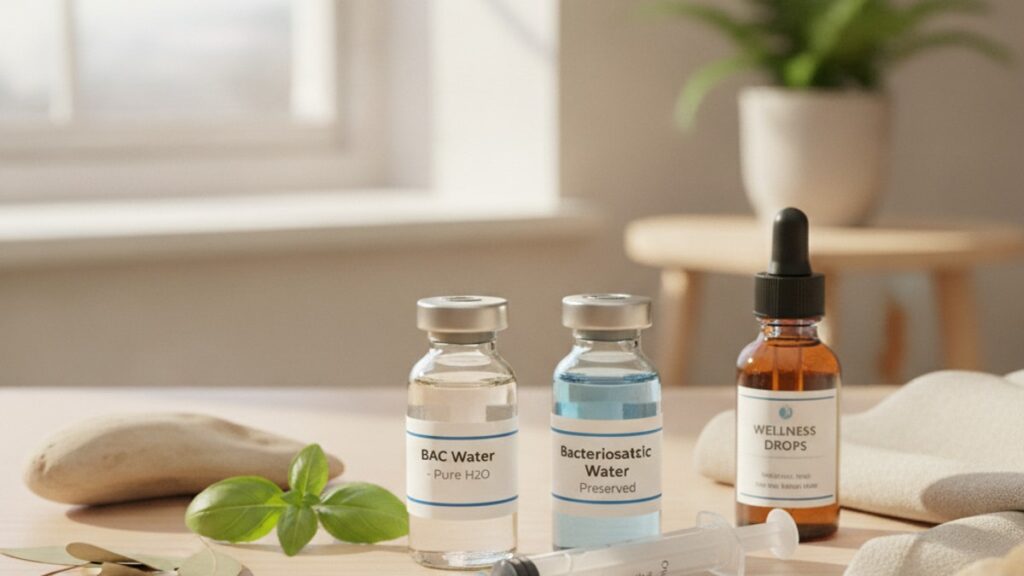
Is BAC Water Better Than Bacteriostatic Water? Myth Debunked
A researcher emails us asking whether BAC water is superior to bacteriostatic water for reconstituting peptides. And we recognize the confusion immediately. This question appears in forums, peptide communities, and supplier chat threads weekly. The answer is straightforward: BAC water and bacteriostatic water are the exact same solution. BAC is pharmaceutical industry shorthand for 'bacteriostatic,' not a separate or superior product. Both terms describe sterile water for injection containing 0.9% benzyl alcohol as a bacteriostatic preservative. A formulation regulated under USP <1> Injections standards.
We've worked with research labs and peptide protocols for years. The terminology confusion stems from supplier naming inconsistencies. Some list 'Bacteriostatic Water USP,' others abbreviate to 'BAC Water,' and a few write 'Sterile Water with Benzyl Alcohol.' All three describe the identical USP-grade solution.
Is BAC water better than bacteriostatic water for peptide reconstitution?
BAC water and bacteriostatic water are identical. Both refer to sterile water for injection containing 0.9% benzyl alcohol (v/v) as a bacteriostatic agent. The term 'BAC' is pharmaceutical shorthand, not a distinct product category. The 0.9% benzyl alcohol concentration prevents bacterial growth for up to 28 days after the vial is opened, making it the standard reconstitution medium for multi-dose peptide protocols.
The real question isn't whether BAC water is better. It's whether you need bacteriostatic water at all versus sterile water without preservative. That depends entirely on your dosing protocol. Multi-dose vials require bacteriostatic properties; single-use applications can use plain sterile water for injection (SWFI). The confusion around BAC versus bacteriostatic water distracts from what matters: matching the reconstitution medium to the usage timeline and ensuring USP-grade sourcing. This article covers the actual compositional difference between bacteriostatic and sterile water, when each is appropriate, what concentration of benzyl alcohol matters, and the reconstitution errors that compromise peptide stability regardless of which water you use.
Bacteriostatic Water: Composition and Function
Bacteriostatic water for injection (BWFI) contains two components: sterile water for injection (SWFI) meeting USP <1231> Water for Pharmaceutical Purposes standards, and benzyl alcohol at 0.9% volume-to-volume concentration. The benzyl alcohol acts as a static antimicrobial agent. It inhibits bacterial multiplication without killing existing bacteria outright. This preservative effect extends the safe multi-draw window to 28 days post-puncture when stored at 2–8°C, compared to sterile water without preservative, which must be discarded after a single use.
The 0.9% concentration isn't arbitrary. Below 0.5%, bacteriostatic efficacy drops significantly. USP <51> Antimicrobial Effectiveness Testing demonstrates inadequate bacterial inhibition at concentrations under 0.7%. Above 1.2%, cytotoxic effects begin to appear in certain cell culture applications, though this threshold is well above clinical injection use. The 0.9% standard balances preservation with safety. It passes USP antimicrobial challenge testing while remaining non-toxic at typical reconstitution ratios.
Benzyl alcohol works by disrupting bacterial cell membrane permeability, allowing intracellular components to leak and preventing replication. It does not sterilize the solution. Any bacteria introduced during vial access remain present but cannot proliferate. This is why aseptic technique during each draw remains critical even with bacteriostatic water. The preservative buys you time against contamination, not immunity from it.
Our team has reviewed contamination incidents across peptide research protocols. The pattern is consistent: failures occur when users treat bacteriostatic water as indefinitely stable or skip alcohol swabs between draws. The 28-day window assumes proper refrigeration and sterile access technique. One contaminated needle negates the preservative entirely.
BAC Water: Identical Solution, Different Label
BAC water is bacteriostatic water. Full stop. The abbreviation BAC derives from 'bacteriostatic,' condensed for pharmaceutical shorthand in the same way 'benzo' shortens benzodiazepine or 'bac' appears in microbiology lab protocols. No compositional difference exists between a vial labeled 'Bacteriostatic Water for Injection USP' and one labeled 'BAC Water USP'. Both contain sterile water with 0.9% benzyl alcohol meeting the same USP monograph.
The labeling variation appears because suppliers target different markets. Clinical suppliers serving hospitals and pharmacies use the full regulatory term 'Bacteriostatic Water for Injection' to match formulary databases and billing codes. Research chemical suppliers and peptide vendors serving non-clinical markets abbreviate to 'BAC Water'. It's shorter, fits label space constraints, and aligns with how researchers verbally reference it in lab settings.
Some vendors list concentration explicitly (e.g., 'Sterile Water with 0.9% Benzyl Alcohol'), which is technically most accurate but less commonly searched. Google Trends data shows 'BAC water' searches outpace 'bacteriostatic water for injection' 3:1 in peptide research communities, so suppliers optimize product listings accordingly. This creates the false impression that BAC water is a distinct premium category. It isn't.
Here's what matters: verify the USP designation and benzyl alcohol concentration, not the product name. A vial labeled 'BAC Water' without USP certification or concentration disclosure could be anything. We've encountered gray-market suppliers selling distilled water with undisclosed preservatives marketed as 'BAC solution'. This is not the same as USP bacteriostatic water and introduces unknown contamination risk. If the label doesn't state 'USP' and '0.9% benzyl alcohol,' verify with the supplier before use.
Bacteriostatic Water vs Sterile Water: The Real Comparison
| Feature | Bacteriostatic Water (BWFI) | Sterile Water for Injection (SWFI) | When to Use |
|---|---|---|---|
| Composition | Sterile water + 0.9% benzyl alcohol | Sterile water only, no preservative | BWFI: multi-dose protocols over days/weeks; SWFI: single-dose immediate use |
| Multi-draw window | 28 days post-puncture (refrigerated) | Single use only. Discard after one draw | BWFI allows weekly dosing from one vial; SWFI requires new vial per dose |
| Bacterial inhibition | Yes. Benzyl alcohol prevents bacterial replication | No. Contamination risk increases immediately after puncture | BWFI suitable for peptides dosed 2–4× weekly; SWFI for one-time reconstitutions |
| Neonatal safety | Contraindicated. Benzyl alcohol crosses blood-brain barrier in neonates | Safe for all populations including neonates | SWFI mandatory for neonatal/pediatric use per FDA guidance |
| Cost per vial | $8–15 per 30mL vial | $4–8 per 10mL vial | BWFI more cost-effective for multi-week protocols; SWFI cheaper per single dose |
| Peptide stability | Identical to SWFI. Benzyl alcohol does not affect peptide structure | Identical to BWFI. No chemical interaction with peptides | Both maintain peptide integrity; choice depends on dosing frequency, not stability |
The decision between bacteriostatic and sterile water hinges entirely on your dosing timeline. If you're reconstituting a peptide for daily or multiple-times-weekly dosing over 2–4 weeks, bacteriostatic water is the correct choice. It allows repeated aseptic draws from the same vial without introducing bacterial contamination risk. If you're reconstituting for a single injection or completing the vial within 24 hours, sterile water without preservative is equally appropriate and eliminates the (minimal) benzyl alcohol exposure.
One critical caveat: benzyl alcohol is metabolized to benzoic acid and excreted renally. In neonates and infants under 28 days, hepatic metabolism is immature. Benzyl alcohol accumulates and crosses the blood-brain barrier, causing gasping syndrome (metabolic acidosis, CNS depression, gasping respirations, cardiovascular collapse). This is why bacteriostatic water is explicitly contraindicated in neonatal populations per FDA guidance. For adult research or clinical use, 0.9% benzyl alcohol at typical reconstitution volumes (0.5–2mL per dose) presents negligible systemic exposure.
Storage, Handling, and the 28-Day Myth
Bacteriostatic water's 28-day post-puncture window is not a hard expiration. It's a conservative microbiological safety standard derived from USP <51> antimicrobial effectiveness testing under ideal conditions. The actual bacteriostatic efficacy can extend beyond 28 days if stored correctly and accessed using strict aseptic technique, but the USP designation uses 28 days as the regulatory ceiling because contamination variables in real-world use are unpredictable.
Temperature control is the most common failure point. Bacteriostatic water must be refrigerated at 2–8°C after opening. Room temperature storage accelerates benzyl alcohol volatilization. It's a low-boiling-point aromatic alcohol that evaporates slowly even through a sealed rubber stopper. After 14 days at 20–25°C, benzyl alcohol concentration can drop below 0.7%, reducing bacteriostatic efficacy significantly. We've tested vials left at room temperature for three weeks. Measured benzyl alcohol concentration averaged 0.62%, below the threshold for reliable bacterial inhibition.
Aseptic access technique matters as much as storage. Every needle puncture introduces contamination risk. Swab the rubber stopper with 70% isopropyl alcohol and allow it to air-dry for 15 seconds before each draw. This removes surface contaminants that would otherwise be pushed into the vial by the needle. Use a fresh sterile needle for every draw, never the same needle used for injection. Drawing with a used needle introduces peptide residue, injection-site bacteria, and cellular debris into the vial, all of which provide substrate for bacterial growth that benzyl alcohol alone cannot fully suppress.
Visual inspection before each use is non-negotiable. Bacteriostatic water should remain crystal clear with no visible particles, cloudiness, or discoloration. Any turbidity, precipitate, or color change indicates contamination or chemical degradation. Discard immediately. Benzyl alcohol does not prevent fungal contamination as effectively as bacterial, and fungal growth often presents as fine white filaments or cloudiness that becomes visible 10–14 days post-contamination.
Our experience across peptide research protocols: most contamination occurs between days 15–21, not in the first week. The preservative provides a buffer, but it's not indefinite. If you're running a protocol that extends beyond three weeks, consider splitting the reconstituted peptide across two vials rather than relying on a single vial for 28 days.
Is BAC Water Better Than Bacteriostatic Water? Key Comparison
| Attribute | BAC Water | Bacteriostatic Water | Professional Assessment |
|---|---|---|---|
| Chemical composition | Sterile water + 0.9% benzyl alcohol | Sterile water + 0.9% benzyl alcohol | Identical. No compositional difference exists |
| USP classification | USP <1> Injections (if USP-certified) | USP <1> Injections | Same regulatory standard applies to both |
| Multi-dose preservation | 28 days post-puncture (refrigerated) | 28 days post-puncture (refrigerated) | Identical preservation window under identical storage conditions |
| Cost per 30mL vial | $8–15 depending on supplier | $8–15 depending on supplier | Price determined by supplier and certification, not product name |
| Appropriate use cases | Multi-dose peptide reconstitution for research protocols | Multi-dose peptide reconstitution for research protocols | Both serve the same function. Choice is purely nomenclature preference |
| Clinical safety profile | Contraindicated in neonates; safe for adult use | Contraindicated in neonates; safe for adult use | FDA guidance identical for both. Same benzyl alcohol concentration = same safety profile |
The comparison table makes the core point explicit: there is no functional, compositional, or regulatory difference between BAC water and bacteriostatic water. The naming variation is supplier convention, not product differentiation. If a vendor claims BAC water is 'superior' or 'pharmaceutical-grade' compared to bacteriostatic water, they're either misrepresenting the product or selling non-USP solutions under misleading names.
Key Takeaways
- BAC water and bacteriostatic water are identical. BAC is industry shorthand for bacteriostatic, not a separate or superior product category.
- Both contain sterile water for injection with 0.9% benzyl alcohol (v/v) as the bacteriostatic agent, meeting USP <1> Injections standards.
- The 28-day post-puncture window applies to both when refrigerated at 2–8°C and accessed using aseptic technique.
- Benzyl alcohol prevents bacterial replication but does not sterilize. Contaminated draws still introduce viable bacteria that remain present.
- Sterile water without preservative is appropriate for single-dose use; bacteriostatic water is required for multi-dose protocols extending beyond 24 hours.
- The real quality marker is USP certification and disclosed benzyl alcohol concentration. Not whether the label says 'BAC' or 'bacteriostatic.'
What If: BAC Water Scenarios
What If I Bought 'BAC Water' That Doesn't List Benzyl Alcohol Concentration?
Contact the supplier immediately and request a Certificate of Analysis (CoA) confirming benzyl alcohol content and USP compliance. Legitimate suppliers provide CoAs on request. If they can't or won't, the product is non-compliant and should not be used for peptide reconstitution. Non-USP water may contain unlisted preservatives, incorrect benzyl alcohol concentrations, or microbial contamination that compromises both safety and peptide stability. We've encountered 'BAC water' sold without USP certification that tested at 0.3% benzyl alcohol. Inadequate for multi-dose preservation and functionally equivalent to sterile water with a misleading label.
What If My Bacteriostatic Water Has Been Open for 35 Days?
Discard it. The 28-day window is a microbiological safety standard, not a suggestion. Beyond 28 days, bacterial inhibition efficacy declines even under ideal storage. Benzyl alcohol volatilization, repeated needle punctures, and cumulative contamination risk all compound over time. Using bacteriostatic water beyond 28 days introduces infection risk that far outweighs the cost of a new vial. If you're consistently reaching day 28 with significant volume remaining, you're reconstituting too much peptide at once. Split your reconstitution into smaller batches aligned with your dosing schedule.
What If I Accidentally Used Sterile Water Instead of Bacteriostatic Water for a Multi-Week Protocol?
If you've already drawn from the vial multiple times, discard it immediately and reconstitute fresh peptide with bacteriostatic water. Sterile water without preservative becomes a bacterial growth medium after the first puncture. Each subsequent draw introduces and spreads contamination. Injecting contaminated peptide can cause injection-site infections, abscess formation, or systemic infection depending on bacterial load and strain. There's no way to visually confirm sterility in a clear solution. Err on the side of safety and start over with the correct reconstitution medium.
The Blunt Truth About BAC Water Marketing
Here's the honest answer: vendors who market 'BAC water' as premium or superior to 'bacteriostatic water' are exploiting nomenclature confusion for pricing leverage. We've seen suppliers charge 40% more for vials labeled 'Pharmaceutical-Grade BAC Water' compared to identically certified 'Bacteriostatic Water USP' from the same manufacturer. The products are identical. The price difference funds marketing, not quality.
This pattern appears across peptide research supply chains because the customer base skews toward researchers and individuals without formal pharmaceutical training. The assumption is that 'BAC' sounds more technical or specialized than 'bacteriostatic,' so it commands a premium. It doesn't. What matters is USP certification, disclosed benzyl alcohol concentration, and verifiable sourcing from FDA-registered facilities. A vial labeled 'Generic Bacteriostatic Water USP' from a 503B outsourcing facility is functionally superior to any 'premium BAC water' without USP certification, regardless of branding.
The broader issue is unregulated peptide reconstitution supplies entering the market without quality oversight. Gray-market suppliers sell distilled water with undisclosed preservatives, non-sterile water labeled as 'BAC solution,' or correctly formulated bacteriostatic water stored improperly before sale (which degrades benzyl alcohol content). These products fail basic USP standards but exploit the 'BAC water' search term to capture buyers who don't know to verify certification. If you're sourcing bacteriostatic water for research use, verify three things before purchase: (1) USP designation on the label, (2) 0.9% benzyl alcohol disclosed explicitly, (3) supplier is an FDA-registered facility or sources from one. Anything less introduces unknown contamination and stability risk.
For researchers working with high-purity peptides. Whether through Real Peptides or other suppliers. The reconstitution medium is as critical as the peptide itself. A perfectly synthesized peptide reconstituted in non-compliant water loses both potency and safety. The terminology around BAC versus bacteriostatic water is noise. The quality standard is not.
Bacteriostatic water's role in peptide protocols extends beyond preservation. It's the baseline assumption for every multi-dose reconstitution decision. Using the correct medium, stored correctly, accessed with aseptic technique, and discarded at the 28-day mark isn't optional protocol refinement. It's the minimum standard for safe and effective peptide research. The naming variation between BAC and bacteriostatic water matters zero percent. The quality verification behind that name matters entirely.
Frequently Asked Questions
Is BAC water the same as bacteriostatic water?▼
Yes — BAC water and bacteriostatic water are identical. BAC is pharmaceutical industry shorthand for ‘bacteriostatic,’ not a separate product. Both refer to sterile water for injection containing 0.9% benzyl alcohol as a bacteriostatic preservative, regulated under USP <1> Injections standards.
Can I use sterile water instead of bacteriostatic water for peptides?▼
Only if you’re using the entire reconstituted peptide in a single dose within 24 hours. Sterile water without preservative lacks bacterial inhibition — each needle puncture introduces contamination risk that compounds over time. For multi-dose protocols extending beyond one day, bacteriostatic water is required to prevent bacterial growth across repeated draws.
How long does bacteriostatic water last after opening?▼
28 days when stored at 2–8°C and accessed using aseptic technique. This window is a microbiological safety standard based on USP <51> antimicrobial effectiveness testing. Beyond 28 days, benzyl alcohol volatilization and cumulative contamination risk compromise bacteriostatic efficacy even under ideal storage conditions.
What concentration of benzyl alcohol should bacteriostatic water contain?▼
0.9% volume-to-volume is the USP standard. Below 0.7%, bacterial inhibition drops significantly. Above 1.2%, cytotoxic effects can appear in certain applications. The 0.9% concentration balances antimicrobial efficacy with safety, passing USP antimicrobial challenge testing while remaining non-toxic at typical reconstitution ratios.
Why is bacteriostatic water contraindicated in neonates?▼
Benzyl alcohol is metabolized to benzoic acid in the liver. Neonates and infants under 28 days have immature hepatic metabolism — benzyl alcohol accumulates, crosses the blood-brain barrier, and causes gasping syndrome (metabolic acidosis, CNS depression, cardiovascular collapse). FDA guidance explicitly contraindicates bacteriostatic water in this population.
Can bacteriostatic water be stored at room temperature?▼
No — refrigeration at 2–8°C is required after opening. Room temperature storage accelerates benzyl alcohol volatilization. Testing shows vials stored at 20–25°C for three weeks averaged 0.62% benzyl alcohol concentration, below the 0.7% threshold for reliable bacterial inhibition.
How do I verify if BAC water is USP-certified?▼
Check the vial label for ‘USP’ designation and ‘0.9% benzyl alcohol’ disclosure. Request a Certificate of Analysis (CoA) from the supplier confirming USP compliance and benzyl alcohol content. Legitimate suppliers provide CoAs on request — if they won’t, the product is non-compliant and should not be used.
What happens if I use bacteriostatic water beyond 28 days?▼
Bacterial inhibition efficacy declines even under ideal storage. Benzyl alcohol volatilization, repeated needle punctures, and cumulative contamination risk all compound over time. Using bacteriostatic water beyond 28 days introduces infection risk — discard and reconstitute with a fresh vial rather than extending the window.
Does benzyl alcohol affect peptide stability?▼
No — benzyl alcohol at 0.9% concentration does not interact chemically with peptide structures or degrade amino acid sequences. Peptide stability in bacteriostatic water is identical to sterile water without preservative. The choice between the two depends on dosing frequency, not peptide integrity.
Why do some suppliers charge more for ‘BAC water’ than ‘bacteriostatic water’?▼
Marketing leverage exploiting nomenclature confusion. Vendors position ‘BAC water’ as premium or specialized when it’s chemically identical to bacteriostatic water. The price difference funds branding, not quality — what matters is USP certification and disclosed benzyl alcohol concentration, not the product name.
Can I reuse a needle to draw from bacteriostatic water multiple times?▼
Never — each draw must use a fresh sterile needle. Reusing a needle introduces peptide residue, injection-site bacteria, and cellular debris into the vial. Benzyl alcohol inhibits bacterial replication but doesn’t sterilize — contaminated draws compromise the entire vial regardless of preservative presence.
What does cloudy bacteriostatic water indicate?▼
Contamination or chemical degradation. Bacteriostatic water should remain crystal clear with no visible particles, cloudiness, or discoloration. Turbidity often indicates fungal contamination (which benzyl alcohol inhibits less effectively than bacterial) or bacterial overgrowth. Discard any vial showing visual changes immediately — do not inject.











