



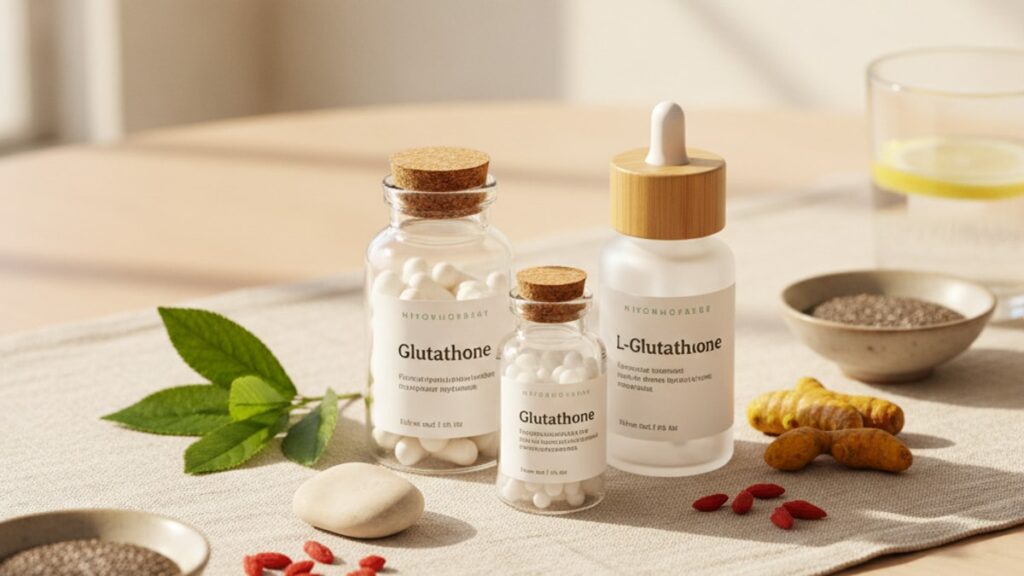
Glutathione vs L-Glutathione — What's the Difference?
Those small black pellets aren't what most people assume. Remove them and your turf would flatten, overheat, and wear out years early.
Wait. Wrong hook entirely. Let's talk glutathione.
Walk into any supplement aisle and you'll see bottles labeled 'glutathione' next to bottles labeled 'L-glutathione'. Often at wildly different price points. The naming implies a meaningful difference. There isn't one. Both terms refer to reduced glutathione (GSH), the biologically active tripeptide your cells use for detoxification, immune function, and oxidative stress management. The 'L-' prefix denotes the stereochemistry of the cysteine amino acid within the molecule. The left-handed (levorotatory) form that naturally occurs in living organisms. Every glutathione supplement on the market, unless explicitly stated otherwise, contains L-glutathione. The label variation is marketing, not chemistry.
Our team works directly with research institutions testing peptide purity and bioavailability. The confusion around glutathione terminology runs deeper than most product descriptions acknowledge. And the form that actually impacts absorption has nothing to do with whether the bottle says 'L-glutathione' or just 'glutathione.'
What's the difference between glutathione and L-glutathione?
There is no functional difference. Glutathione and L-glutathione are the same molecule. The 'L-' refers to the stereochemical configuration of the cysteine residue within the tripeptide structure (gamma-L-glutamyl-L-cysteinylglycine). All biologically active glutathione in human cells exists in this L-form. The naming distinction appears on supplement labels due to regulatory and marketing conventions, but both terms describe reduced glutathione (GSH). The form that functions as the body's master antioxidant.
The Real Chemical Identity Behind the Labels
Glutathione is a tripeptide. Three amino acids bonded in sequence: glutamate, cysteine, and glycine. The 'L-' prefix on amino acids indicates chirality. The three-dimensional spatial arrangement of atoms around a central carbon. Life on Earth evolved using L-amino acids almost exclusively. When you see 'L-glutathione' on a label, the manufacturer is specifying that the cysteine (and technically the glutamate) within the molecule exists in the naturally occurring left-handed form. This is standard for all peptides used in biological research and supplementation. The D-form (right-handed) would not function in human metabolism.
Here's what genuinely distinguishes supplement products: reduced versus oxidized glutathione. Reduced glutathione (GSH) contains a free thiol (-SH) group on the cysteine residue, which is what allows it to neutralize free radicals by donating electrons. Oxidized glutathione (GSSG) forms when two GSH molecules link via a disulfide bond after neutralizing reactive oxygen species. Your cells maintain a GSH:GSSG ratio of approximately 100:1 under normal conditions. Oxidized glutathione must be enzymatically recycled back to GSH by glutathione reductase using NADPH as a cofactor. Most oral supplements contain reduced glutathione because that's the active form, though some products contain the oxidized form (which your body can still convert back).
The bioavailability problem isn't the L- versus D- configuration. It's that oral glutathione, regardless of label, gets cleaved into its component amino acids by peptidases in the small intestine before reaching systemic circulation. A 2014 study published in the European Journal of Nutrition found that oral GSH supplementation at 500mg daily did increase blood glutathione levels by 30–35% over baseline, but the mechanism was indirect: providing the precursor amino acids allowed tissues to synthesize more glutathione intracellularly rather than absorbing intact GSH molecules.
How the Body Actually Uses Glutathione (and Why Form Matters)
Glutathione functions as the primary intracellular antioxidant and detoxification agent across all mammalian cells. It neutralizes hydrogen peroxide, lipid peroxides, and xenobiotics through direct chemical reaction and serves as a cofactor for glutathione peroxidase (GPx) and glutathione S-transferase (GST) enzymes. The thiol group on cysteine is what makes this possible. Without that -SH group in its reduced state, the molecule cannot perform its antioxidant role.
Your liver synthesizes approximately 8–10 grams of glutathione daily through two ATP-dependent enzymatic steps. Gamma-glutamylcysteine synthetase (rate-limiting) combines glutamate and cysteine, then glutathione synthetase adds glycine to complete the tripeptide. The availability of cysteine. The least abundant of the three amino acids. Determines synthesis rate, which is why N-acetylcysteine (NAC) supplementation often proves more effective than glutathione supplementation for raising tissue levels. NAC provides cysteine in a stable, absorbable form that bypasses the intestinal breakdown issue.
We've found that researchers prioritizing glutathione for cellular studies consistently choose reduced L-glutathione not because it's superior to 'glutathione' but because that's the standardized nomenclature in scientific literature. The critical factor in Real Peptides formulations isn't what the compound is called. It's purity, stability during storage, and the absence of oxidative degradation before use.
Glutathione vs L-Glutathione: Comparison Table
| Attribute | Glutathione | L-Glutathione | Bottom Line |
|---|---|---|---|
| Chemical Identity | Tripeptide: gamma-L-glutamyl-L-cysteinylglycine | Tripeptide: gamma-L-glutamyl-L-cysteinylglycine | Identical molecule. Names are interchangeable |
| Biological Activity | Functions as master antioxidant and detoxification cofactor | Functions as master antioxidant and detoxification cofactor | No difference. Both describe the active reduced form (GSH) |
| Oral Bioavailability | Low. Cleaved by intestinal peptidases into amino acids before absorption | Low. Cleaved by intestinal peptidases into amino acids before absorption | Neither form survives intact passage through the GI tract |
| Supplement Cost | Typically priced based on purity and manufacturing standard | Often marketed at premium pricing due to 'L-' prefix | Price difference is marketing, not chemistry |
| Clinical Use | Reduced form (GSH) used in IV protocols; precursors (NAC, glycine) more common orally | Reduced form (GSH) used in IV protocols; precursors (NAC, glycine) more common orally | Both terms appear in peer-reviewed trials without distinction |
| Professional Assessment | Standard nomenclature in research contexts | Redundant label used for consumer clarity or premium positioning | Focus on purity and delivery method. Not the name |
Key Takeaways
- Glutathione and L-glutathione are the same molecule. The 'L-' denotes the natural stereochemistry of amino acids in all biological peptides.
- Reduced glutathione (GSH) is the active antioxidant form; oxidized glutathione (GSSG) must be enzymatically recycled by glutathione reductase to function.
- Oral glutathione supplements, regardless of label, are cleaved by intestinal peptidases into amino acids before systemic absorption. Raising blood levels indirectly by providing synthesis precursors.
- Clinical evidence suggests 500mg daily oral GSH increases blood glutathione by 30–35%, but N-acetylcysteine (NAC) often proves more effective because it bypasses intestinal breakdown.
- The critical quality factors are purity, absence of oxidative degradation, and manufacturing standards. Not whether the product says 'glutathione' or 'L-glutathione.'
- Intravenous glutathione delivers intact GSH directly to tissues, avoiding the GI breakdown issue entirely, which is why IV protocols are used clinically for acute antioxidant support.
What If: Glutathione Scenarios
What If I Take Glutathione Daily — Will My Levels Actually Increase?
Yes, but through an indirect mechanism: oral glutathione gets broken down into its component amino acids (glutamate, cysteine, glycine) in your intestines, then those amino acids travel to tissues where cells synthesize new glutathione intracellularly. A controlled trial published in the European Journal of Nutrition found that 500mg daily GSH supplementation raised blood glutathione by 30–35% after eight weeks. The effect is real but depends on your baseline synthesis capacity and cysteine availability. If you're already consuming adequate protein and sulfur-containing amino acids, additional oral glutathione may produce minimal gains beyond what your body already makes from dietary sources.
What If the Bottle Just Says 'Glutathione' Without the 'L-' — Is It a Different Form?
No. It's the same compound. Unless explicitly labeled as D-glutathione (which would be biologically inactive and not sold as a supplement), any glutathione product contains the L-form by default because that's the only stereochemistry that exists in living organisms. The naming convention varies by manufacturer: some include the 'L-' for technical precision, others omit it because redundancy. A 250mg capsule of 'glutathione' contains identical tripeptide structure to a 250mg capsule labeled 'L-glutathione'. Check the CoA (certificate of analysis) for purity and oxidation state instead of assuming the label indicates a superior product.
What If I Want Maximum Glutathione Benefit — Should I Take GSH or a Precursor Like NAC?
For most people seeking to raise tissue glutathione, N-acetylcysteine (NAC) at 600–1200mg daily proves more cost-effective and reliable than oral GSH because NAC provides the rate-limiting amino acid (cysteine) in a form that survives intestinal transit. GSH still works. It just gets disassembled and reassembled, whereas NAC goes directly to synthesis. If rapid, high-dose glutathione delivery is the goal (acute oxidative stress, heavy metal chelation protocols), intravenous GSH administered by a clinician bypasses the gut entirely and delivers intact tripeptide to tissues. Research-grade peptides like those available through Real Peptides maintain stability and purity critical for consistent outcomes in controlled studies.
The Blunt Truth About Glutathione Labeling
Here's the honest answer: the 'L-glutathione' label is redundant. Every glutathione molecule in every supplement, every research vial, every IV bag, and every cell in your body is already L-glutathione. That's the only form that exists in nature. The 'L-' isn't designating a premium version or enhanced bioavailability. It's stating the obvious stereochemistry of the amino acids within the peptide. Manufacturers add it because consumers assume more technical language equals higher quality, and regulators sometimes require full chemical nomenclature for clarity.
What actually determines effectiveness is the oxidation state (reduced GSH versus oxidized GSSG), the purity of the synthesis, and. Most critically for oral supplements. Whether the delivery system protects the peptide from enzymatic breakdown before it reaches tissues. Liposomal encapsulation and sublingual delivery attempt to solve this, with mixed clinical evidence. The straightforward reality: if you want to raise glutathione levels systemically, you're choosing between oral supplementation (which works indirectly via amino acid provision), intravenous administration (which works directly but requires clinical setting), or precursor supplementation with NAC or glycine (which sidesteps the bioavailability issue by feeding synthesis pathways upstream).
The difference between products labeled 'glutathione' versus 'L-glutathione' is zero. The difference between reduced and oxidized glutathione matters biochemically but not for most supplementation goals since your cells recycle GSSG back to GSH continuously. What separates effective from ineffective products is manufacturing rigor, storage conditions that prevent oxidative degradation, and realistic expectations about how oral peptides behave in the digestive tract. If a brand charges significantly more for 'L-glutathione' versus 'glutathione' without any other formulation difference. You're paying for a redundant prefix, not superior chemistry.
The peptide integrity that matters in research contexts. Where Real Peptides maintains rigorous synthesis and quality standards. Is purity, exact amino acid sequencing, and absence of oxidative byproducts. The label distinction between 'glutathione' and 'L-glutathione' is not where quality differentiates.
Frequently Asked Questions
Is L-glutathione the same as reduced glutathione?▼
Yes — L-glutathione is reduced glutathione (GSH). The ‘L-‘ denotes the stereochemistry of the amino acids within the tripeptide, while ‘reduced’ specifies that the thiol group on cysteine remains in its active -SH form rather than oxidized into a disulfide bond. All biologically active glutathione supplements contain reduced L-glutathione unless explicitly labeled as oxidized (GSSG), which is uncommon because the reduced form is what cells use for antioxidant activity.
Can your body absorb glutathione if taken orally?▼
Oral glutathione is absorbed, but not as an intact tripeptide — intestinal peptidases cleave it into glutamate, cysteine, and glycine before those amino acids enter systemic circulation. Research from the European Journal of Nutrition found that 500mg daily oral GSH raised blood glutathione levels by 30–35% over eight weeks, but the mechanism is indirect: tissues use the absorbed amino acids to synthesize new glutathione intracellularly. Liposomal and sublingual formulations attempt to bypass enzymatic breakdown, though clinical evidence for superior bioavailability remains mixed.
What is the difference between glutathione and N-acetylcysteine (NAC)?▼
Glutathione is the finished tripeptide (glutamate-cysteine-glycine) your cells use directly for antioxidant defense, while NAC is a precursor that provides cysteine — the rate-limiting amino acid in glutathione synthesis. NAC is often more effective than oral glutathione for raising tissue levels because it survives intestinal transit intact and feeds the synthesis pathway upstream, whereas oral glutathione gets disassembled and must be reassembled inside cells. Both approaches raise glutathione, but NAC avoids the bioavailability limitations of oral peptide supplementation.
How much glutathione should I take daily?▼
Clinical trials typically use 250–500mg oral glutathione daily, which has been shown to raise blood levels by 30–35% over baseline after consistent use for 8–12 weeks. Higher doses (1000mg+) are sometimes used but do not proportionally increase tissue glutathione due to saturation of synthesis pathways. For precursor supplementation, NAC is dosed at 600–1200mg daily. Dosing should account for dietary sulfur intake, baseline glutathione status, and individual synthesis capacity — a prescribing clinician familiar with antioxidant protocols can adjust based on oxidative stress markers.
Does glutathione help with skin lightening or anti-aging?▼
Glutathione’s role in skin lightening comes from its ability to inhibit tyrosinase, the enzyme that catalyzes melanin production, though evidence for clinically significant skin tone changes from oral supplementation is limited and inconsistent. IV glutathione at high doses (600–1200mg per session) is used in some cosmetic protocols, but long-term safety data is sparse and FDA has not approved glutathione for skin lightening. Its anti-aging effects relate more to oxidative stress reduction and immune function support — glutathione declines with age, and maintaining adequate levels may support cellular health, though it is not a standalone anti-aging intervention.
What depletes glutathione levels in the body?▼
Chronic oxidative stress, alcohol consumption, acetaminophen overdose, heavy metal exposure, and aging all deplete glutathione. Acetaminophen is metabolized through a pathway that consumes glutathione — overdose can exhaust liver GSH stores entirely, leading to hepatotoxicity (this is why NAC is the standard antidote for acetaminophen poisoning). Inflammatory conditions, poor sleep, and nutrient deficiencies (especially selenium, which is required for glutathione peroxidase function) also impair glutathione metabolism. Maintaining adequate dietary protein, sulfur amino acids, and selenium helps preserve baseline levels.
Can I take glutathione if I have a sulfur sensitivity?▼
Glutathione contains cysteine, a sulfur-containing amino acid, so individuals with true sulfur sensitivity or CBS gene mutations that impair sulfur metabolism may experience adverse reactions including headaches, fatigue, or gastrointestinal distress. If you react poorly to high-sulfur foods (eggs, cruciferous vegetables, garlic) or sulfur-containing supplements like MSM or NAC, glutathione supplementation may trigger similar symptoms. Start with a low dose (100–250mg) and monitor response, or work with a clinician familiar with sulfur metabolism issues to determine whether glutathione or alternative antioxidant support is appropriate.
Is glutathione supplementation safe long-term?▼
Oral glutathione at standard doses (250–500mg daily) has been used in clinical trials for up to six months without significant adverse effects. Long-term safety data beyond one year is limited. The primary concern with chronic high-dose supplementation is that exogenous glutathione could theoretically downregulate endogenous synthesis via feedback inhibition, though this has not been definitively demonstrated in humans. IV glutathione carries risks associated with any injectable therapy (infection, vein irritation) and should only be administered in clinical settings. For most individuals using oral glutathione or precursors like NAC, long-term use appears safe when dosed appropriately.
Why is some glutathione sold as ‘liposomal’ — does that make a difference?▼
Liposomal glutathione encapsulates the tripeptide in phospholipid vesicles designed to protect it from enzymatic breakdown in the digestive tract and enhance absorption through intestinal membranes. The theory is sound — liposomal delivery has improved bioavailability for other compounds like vitamin C — but clinical evidence specifically for liposomal glutathione is limited and mixed. Some studies show modest improvements in blood levels compared to non-liposomal GSH, others find no significant difference. Liposomal products typically cost more; whether that cost translates to meaningfully better outcomes depends on formulation quality and individual digestive enzyme activity.
What is the relationship between glutathione and detoxification?▼
Glutathione is the primary cofactor for Phase II liver detoxification, where glutathione S-transferase (GST) enzymes conjugate GSH to toxins, heavy metals, and drug metabolites to make them water-soluble and excretable. This process consumes glutathione — each conjugation reaction uses one GSH molecule, which is then excreted with the toxin. Chronic exposure to environmental toxins, medications metabolized through GST pathways, or heavy metals like mercury and lead can deplete glutathione stores faster than synthesis keeps up. This is why NAC is used clinically in acetaminophen overdose and why glutathione or precursor supplementation is sometimes recommended during detoxification protocols.











