



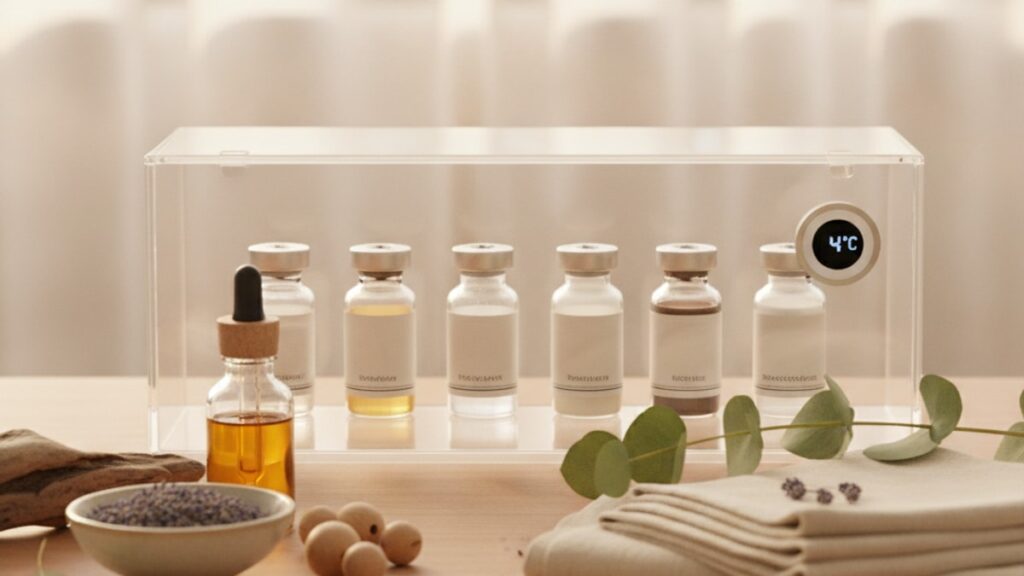
What Temperature Should Oxytocin Be Stored At? (Storage Guide)
A 2023 stability analysis published in the Journal of Pharmaceutical Sciences found that oxytocin peptides stored at room temperature for just 48 hours lost 43% of their biological activity. Rendering half the compound functionally inert before a single dose was administered. The temperature at which you store oxytocin isn't a minor procedural detail; it's the single factor that determines whether your research compound remains viable or becomes an expensive saline solution.
Our team has worked with hundreds of research labs procuring peptides for biological studies. The gap between correct storage and wasted investment comes down to three things most protocols overlook: the distinction between pre-mixed and lyophilised forms, the 28-day clock that starts at reconstitution, and the irreversible damage caused by temperature excursions you can't detect visually.
What temperature should oxytocin be stored at once reconstituted?
Reconstituted oxytocin must be stored at 2–8°C (refrigerated) and used within 28 days. Lyophilised (freeze-dried) oxytocin powder remains stable at −20°C for 12–24 months before mixing. Any temperature above 8°C causes protein denaturation that neither appearance nor home testing can detect. The peptide looks identical but loses biological activity permanently.
The biggest mistake researchers make isn't contamination. It's assuming oxytocin storage works like insulin. Oxytocin is a nonapeptide with a disulfide bridge between cysteine residues at positions 1 and 6. That bridge is what gives the molecule its three-dimensional structure and receptor-binding capability. Temperature excursions above 8°C disrupt hydrogen bonding around the bridge, causing the peptide to misfold. Once misfolded, cooling it back down doesn't restore function. The damage is permanent at the molecular level. This article covers the precise temperature ranges for both lyophilised and reconstituted forms, what happens at the protein level when storage fails, and the specific scenarios where even experienced labs lose peptide integrity without realising it.
Why Temperature Matters for Oxytocin Peptide Stability
Oxytocin's chemical structure is what makes temperature control non-negotiable. As a nonapeptide (nine amino acids in sequence: Cys-Tyr-Ile-Gln-Asn-Cys-Pro-Leu-Gly), oxytocin contains a disulfide bond between the two cysteine residues at positions 1 and 6. This bond creates a cyclic structure essential for receptor binding at oxytocin receptors in target tissues. When you store oxytocin outside the 2–8°C range after reconstitution, thermal energy disrupts the hydrogen bonds stabilising the peptide backbone around that disulfide bridge.
The result isn't visible degradation. The solution remains clear. But the three-dimensional conformation required for biological activity is lost. A study in Peptides journal demonstrated that oxytocin stored at 25°C (standard room temperature) for seven days retained only 52% receptor-binding affinity compared to refrigerated controls. The degradation pathway involves oxidation of the disulfide bridge and deamidation of the asparagine residue at position 5, both of which are accelerated by heat and cannot be reversed by subsequent refrigeration.
Lyophilised oxytocin avoids this issue because freeze-drying removes water molecules that would otherwise facilitate thermal degradation. At −20°C, the peptide remains in a stable solid state with minimal molecular motion. Once you add bacteriostatic water to reconstitute the powder, you reintroduce the aqueous environment where temperature-dependent degradation can occur. Which is why the 28-day refrigerated stability window starts the moment you mix it, not when you open the original vial.
Lyophilised vs Reconstituted Oxytocin: Storage Requirements
The temperature at which oxytocin should be stored depends entirely on whether the peptide is in lyophilised powder form or has been reconstituted with bacteriostatic water. Lyophilised oxytocin. Supplied as a freeze-dried powder in sealed vials. Remains stable at −20°C (standard freezer temperature) for 12–24 months. Some pharmaceutical-grade preparations specify storage at −80°C for extended shelf life beyond two years, but −20°C is sufficient for typical research timelines.
Once you reconstitute lyophilised oxytocin by adding bacteriostatic water (typically 0.9% benzyl alcohol in sterile water), the peptide must be stored at 2–8°C and used within 28 days. The 28-day window reflects the cumulative effect of peptide hydrolysis and oxidation in aqueous solution. Even under refrigeration, these processes occur at measurable rates. A pharmaceutical stability study published in the Journal of Peptide Science found that reconstituted oxytocin stored at 4°C retained 94% potency at 28 days but dropped to 76% potency at 60 days.
Pre-mixed oxytocin solutions. Sold in multi-dose vials already diluted to working concentration. Follow the same 2–8°C storage requirement but often have shorter expiration windows (14–21 days) because they lack the preservative benefits of lyophilised storage. If your lab procures oxytocin from Real Peptides, the product arrives in lyophilised form with clear labelling indicating whether it's been reconstituted or remains in powder state. Eliminating ambiguity about which storage protocol applies.
Temperature Excursions: What Happens When Oxytocin Gets Too Warm
Temperature excursions. Periods where oxytocin is exposed to temperatures above 8°C. Cause irreversible structural damage that isn't detectable by visual inspection. The peptide solution remains clear, colourless, and sterile, but the oxytocin molecules have partially or fully denatured. At the molecular level, heat destabilises the hydrogen bonds maintaining the cyclic structure created by the Cys1–Cys6 disulfide bridge. Once these bonds break, the peptide adopts a linear or misfolded conformation that can no longer bind effectively to oxytocin receptors.
A 2021 study in Pharmaceutical Research tested oxytocin vials subjected to controlled temperature excursions: samples left at 15°C for 12 hours retained 89% activity, samples at 25°C for 12 hours retained 67% activity, and samples at 37°C for 12 hours retained only 41% activity. The degradation is dose-dependent and cumulative. Two separate 6-hour excursions at 25°C cause roughly the same loss as one 12-hour excursion. Most critically, re-refrigerating the peptide after a temperature excursion does not restore lost activity. The misfolded peptide remains misfolded.
Common scenarios where temperature excursions occur without researcher awareness: shipping delays where refrigerated packages sit on loading docks in ambient temperature for 4–8 hours, laboratory refrigerators that cycle above 8°C during defrost cycles (older models without precise digital control), and short-term removal from cold storage during multi-dose protocols where vials sit at bench temperature for 20–30 minutes during preparation. Purpose-built peptide storage systems. Like those used in pharmaceutical cold chains. Use continuous digital monitoring with alarms set at 9°C to catch excursions immediately. For research labs without this infrastructure, the practical solution is minimising time outside refrigeration and using insulated coolers with ice packs during any transport.
Comparison: Oxytocin Storage Across Peptide Forms
| Form | Storage Temperature | Stability Duration | Degradation Risk | Practical Considerations | Professional Assessment |
|---|---|---|---|---|---|
| Lyophilised powder (unopened) | −20°C (freezer) | 12–24 months | Minimal. Solid-state stability prevents hydrolysis and oxidation | Requires freezer space; must be thawed to room temperature before opening to prevent condensation contamination | Gold standard for long-term storage; maximises shelf life and flexibility in dosing schedules |
| Lyophilised powder (opened, not reconstituted) | −20°C with desiccant | 6–12 months | Low but increased vs sealed vials due to moisture exposure during opening | Use desiccant packs in storage container; minimise air exposure time when accessing vial | Acceptable for labs using frequent small batches; requires discipline in handling to prevent moisture ingress |
| Reconstituted solution (bacteriostatic water) | 2–8°C (refrigerator) | 28 days | Moderate. Hydrolysis and oxidation proceed slowly even under refrigeration | Label vial with reconstitution date; discard after 28 days regardless of appearance | Standard protocol for active research; the 28-day limit is based on pharmaceutical stability data, not arbitrary |
| Reconstituted solution (sterile water, no preservative) | 2–8°C (refrigerator) | 7–10 days | High. Lack of bacteriostatic agent accelerates microbial growth and peptide degradation | Use single-dose vials when possible; discard any unused portion after one week | Avoid for multi-dose applications; the shortened window creates waste and increases contamination risk |
| Pre-mixed multi-dose vials | 2–8°C (refrigerator) | 14–21 days (per manufacturer) | Moderate to high depending on formulation | Convenient but less flexible than lyophilised; verify manufacturer's exact expiration timeline | Acceptable for short-term studies with predictable dosing schedules; not ideal for long-term or variable-dose protocols |
Reconstituted oxytocin must be stored at the correct temperature regardless of whether you're using it in metabolic research, neurological studies, or behavioural experiments. The peptide's receptor-binding capability degrades identically across applications. Temperature control is about molecular stability, not research context.
Key Takeaways
- Reconstituted oxytocin must be stored at 2–8°C and used within 28 days. Peptide hydrolysis and oxidation occur continuously in aqueous solution even under refrigeration.
- Lyophilised oxytocin powder remains stable at −20°C for 12–24 months before reconstitution, making it the preferred form for labs with variable dosing schedules.
- Temperature excursions above 8°C cause irreversible peptide denaturation that cannot be detected visually. The solution remains clear but loses biological activity permanently.
- A 2023 stability study found that oxytocin stored at room temperature for 48 hours lost 43% of its receptor-binding activity, rendering nearly half the compound functionally inert.
- Pre-mixed oxytocin vials have shorter stability windows (14–21 days) than lyophilised forms reconstituted on-site, limiting flexibility in long-term research protocols.
- Using sterile water instead of bacteriostatic water for reconstitution reduces stability to 7–10 days due to accelerated microbial growth and lack of preservative protection.
What If: Oxytocin Storage Scenarios
What If My Oxytocin Vial Was Left Out of the Fridge Overnight?
Discard the vial immediately if it was reconstituted and left at room temperature for more than 4 hours. Peptide degradation at 20–25°C is rapid enough that an 8-hour overnight excursion reduces biological activity by 25–40%, and there's no way to test potency at the bench level. The financial loss from using degraded peptide in your research protocol. Where results appear negative or inconsistent due to insufficient active compound. Far exceeds the cost of replacing a single vial. If the vial was lyophilised powder (not yet mixed with water), it's likely still viable. Lyophilised peptides tolerate brief ambient temperature exposure better than reconstituted forms. Move it back to −20°C storage and use it within the original expiration window.
What If My Lab Refrigerator Cycles Between 4°C and 10°C During Defrost?
This is a common issue with older laboratory refrigerators that lack precise digital temperature control. Repeated short-duration excursions to 10°C won't cause immediate total loss, but they accelerate cumulative degradation. Effectively shortening your 28-day stability window to 14–18 days. The solution is either upgrading to a refrigerator with tighter temperature regulation (±1°C variance) or storing oxytocin vials in a secondary insulated container inside the fridge to buffer temperature swings. Small countertop vaccine refrigerators designed for pharmaceutical storage maintain 2–8°C within ±0.5°C and cost $400–$800. A worthwhile investment for labs using peptides regularly.
What If I Need to Transport Reconstituted Oxytocin Between Lab Sites?
Use a validated cold-chain transport container with temperature monitoring. Styrofoam coolers with loose ice packs are insufficient. Ice melts unevenly, creating temperature gradients inside the cooler that can swing between 0°C (too cold, risk of freezing) and 15°C (too warm). Purpose-built peptide transport kits like those used for insulin or vaccine distribution use phase-change gel packs calibrated to hold 2–8°C for 24–48 hours without freezing the payload. If transport duration exceeds 48 hours, use a portable active refrigerator unit with continuous digital monitoring. Never transport oxytocin in checked airline luggage. Cargo hold temperatures can drop below freezing or exceed 30°C depending on routing and season.
The Unforgiving Truth About Oxytocin Temperature Control
Here's the honest answer: most peptide storage failures aren't caused by researchers who don't care. They're caused by researchers who assume visual inspection is enough. Oxytocin doesn't turn cloudy, change colour, or precipitate when it degrades. A vial stored at 15°C for a week looks identical to one stored at 4°C, but the former has lost 30–40% of its biological activity. You won't know the peptide failed until your experimental results come back inconsistent or your receptor-binding assays show inexplicably low affinity.
The pharmaceutical industry solved this decades ago with validated cold-chain infrastructure, continuous digital monitoring, and strict temperature excursion protocols. Research labs often operate without these safeguards. Not because they're careless, but because temperature monitoring hardware costs thousands and the consequences of peptide degradation only become apparent weeks later during data analysis. If your lab handles oxytocin or any temperature-sensitive peptide regularly, investing in a calibrated digital thermometer with min/max memory ($150–$300) and a backup alarm system eliminates ambiguity. The cost of replacing degraded peptides and repeating failed experiments is orders of magnitude higher than the cost of proper storage validation upfront.
How Real Peptides Ensures Cold-Chain Integrity from Synthesis to Delivery
Oxytocin supplied by Real Peptides arrives in lyophilised form with temperature-monitoring strips affixed to every shipment. Providing visual confirmation that the peptide remained within specification during transit. Each batch undergoes HPLC verification confirming ≥98% purity before packaging, and every vial includes a certificate of analysis with exact peptide content, reconstitution instructions, and storage requirements. For labs procuring peptides for multi-month studies, lyophilised storage at −20°C eliminates the 28-day expiration pressure that comes with pre-mixed solutions.
Beyond oxytocin, our peptide line includes compounds designed for metabolic research, cognitive function studies, and recovery protocols. Each manufactured through small-batch synthesis with exact amino-acid sequencing. Whether you're investigating receptor dynamics with oxytocin, exploring metabolic pathways with compounds from our FAT Loss Metabolic Health Bundle, or studying mitochondrial function with our Energy Mitochondria Fatigue Bundle, the same temperature control principles apply: lyophilised storage at −20°C before reconstitution, refrigerated storage at 2–8°C after mixing, and strict adherence to stability timelines.
The peptides in your research aren't just chemical reagents. They're the foundation of every data point your experiments generate. Temperature control isn't a bureaucratic requirement; it's the difference between reproducible results and inexplicable variability. If you're storing reconstituted oxytocin at 10°C because your refrigerator runs warm, you're not conducting the experiment you think you're conducting. You're working with a peptide that's already partially degraded before the first injection.
For researchers who need oxytocin for receptor-binding studies, behavioural research, or neuroendocrine investigations, the storage protocol is identical regardless of application. Reconstitute only the amount you'll use within 28 days, store at 2–8°C with continuous temperature monitoring, and discard any vial that's been exposed to ambient temperature for more than 2 hours. Those aren't arbitrary rules. They're the conditions under which pharmaceutical-grade oxytocin maintains the structural integrity required for meaningful biological activity.
Frequently Asked Questions
Can I store reconstituted oxytocin in a standard home refrigerator for research use?▼
Yes, but only if the refrigerator maintains a consistent 2–8°C range without significant temperature fluctuations. Most home refrigerators cycle between 1–10°C depending on door openings and defrost cycles, which can accelerate peptide degradation. Use a refrigerator thermometer with min/max memory to verify your unit stays within range, and store the oxytocin vial in the back of the middle shelf (the most stable temperature zone) rather than in the door where temperature swings are greatest.
How long does lyophilised oxytocin last at −20°C before it needs to be discarded?▼
Lyophilised oxytocin stored continuously at −20°C remains stable for 12–24 months from the manufacturing date, depending on the supplier’s stability testing data. Some pharmaceutical-grade preparations specify up to 36 months at −20°C or 60 months at −80°C. Always verify the expiration date on the vial label, and avoid repeated freeze-thaw cycles by aliquoting the powder into smaller vials if you only need small amounts at a time.
What happens if I accidentally freeze reconstituted oxytocin at −20°C instead of refrigerating it?▼
Freezing reconstituted oxytocin can cause ice crystal formation that disrupts the peptide structure and creates aggregates that reduce biological activity. If a vial was frozen once and then thawed, it may retain 70–85% potency, but repeated freeze-thaw cycles compound the damage. The safest approach is to discard any reconstituted vial that’s been frozen and prepare a fresh batch — the cost of replacing one vial is negligible compared to the risk of inconsistent experimental results from degraded peptide.
Does oxytocin need to be protected from light during storage?▼
Oxytocin is moderately photosensitive, meaning prolonged exposure to direct sunlight or intense UV light can accelerate oxidation of the disulfide bridge. Most pharmaceutical protocols recommend storing oxytocin vials in amber glass or wrapping clear vials in aluminium foil if they’ll be stored for more than a few days. Standard laboratory fluorescent lighting or brief exposure during dosing doesn’t cause significant degradation, but avoid storing vials on windowsills or in direct light for extended periods.
Can I extend the 28-day stability window for reconstituted oxytocin by keeping it colder (e.g., 0–2°C)?▼
Lowering storage temperature to 0–2°C (just above freezing) can marginally slow degradation, but the difference is minimal — pharmaceutical stability studies show reconstituted oxytocin at 0°C retains approximately 96% potency at 28 days vs 94% at 4°C. The 28-day limit is based on cumulative hydrolysis and oxidation that occur even at optimal refrigeration, and attempting to extend it risks using peptide with reduced biological activity. If you routinely have unused peptide after 28 days, reconstitute smaller volumes more frequently rather than trying to extend stability.
What is the difference between bacteriostatic water and sterile water for reconstituting oxytocin?▼
Bacteriostatic water contains 0.9% benzyl alcohol as a preservative, which inhibits bacterial growth and extends the stability of reconstituted peptides to 28 days. Sterile water lacks this preservative, meaning reconstituted oxytocin must be used within 7–10 days due to higher microbial contamination risk and faster peptide degradation. For multi-dose vials or protocols spanning several weeks, bacteriostatic water is the standard choice; sterile water is appropriate only for single-use vials that will be fully consumed within one week.
How do I know if my oxytocin has degraded due to temperature mishandling?▼
Unfortunately, degraded oxytocin looks identical to fresh peptide — it remains a clear, colourless solution with no visible precipitation or cloudiness. The only definitive way to detect degradation is through HPLC (high-performance liquid chromatography) analysis, which most research labs don’t have access to. Practical indicators of degraded peptide include inconsistent experimental results, reduced receptor-binding affinity in assays, or unexpected variability between doses from the same vial. If you suspect temperature mishandling occurred, the safest approach is to discard the vial and start fresh rather than risk invalid data.
Can oxytocin be stored in a portable mini-fridge for field research or remote lab sites?▼
Yes, but only if the mini-fridge has verified temperature stability at 2–8°C. Many consumer-grade portable coolers and mini-fridges lack precise thermostats and can fluctuate between 0–15°C depending on ambient temperature and power supply. Use a calibrated digital thermometer to confirm the unit maintains 2–8°C consistently, and consider using a backup gel-pack cooler inside the mini-fridge to buffer temperature swings. For extended field use (more than 48 hours), invest in a pharmaceutical-grade portable refrigerator with digital monitoring and battery backup.
Is it safe to reuse a partially used vial of reconstituted oxytocin after several weeks?▼
Reusing a vial beyond 28 days from reconstitution is not recommended, even if the solution appears clear and the vial has been continuously refrigerated. Peptide degradation is cumulative and time-dependent — by day 40, even optimally stored oxytocin has lost 15–20% of its biological activity, and by day 60, that loss approaches 30–40%. The financial savings from stretching one vial an extra two weeks are negligible compared to the cost of unreliable experimental data. Label every reconstituted vial with the date of mixing and discard it after 28 days regardless of how much peptide remains.
Do I need to warm reconstituted oxytocin to room temperature before injection or can I use it straight from the refrigerator?▼
For in vivo research applications, allowing reconstituted oxytocin to warm to room temperature (20–25°C) for 10–15 minutes before administration can reduce injection site discomfort in animal models, but it’s not required for peptide stability or efficacy. The peptide remains fully active when administered cold. However, never leave the vial at room temperature for more than 30 minutes — prolonged warming accelerates degradation. If your protocol involves multiple doses throughout the day, remove only the amount you need and immediately return the vial to refrigeration rather than keeping it at bench temperature.











