



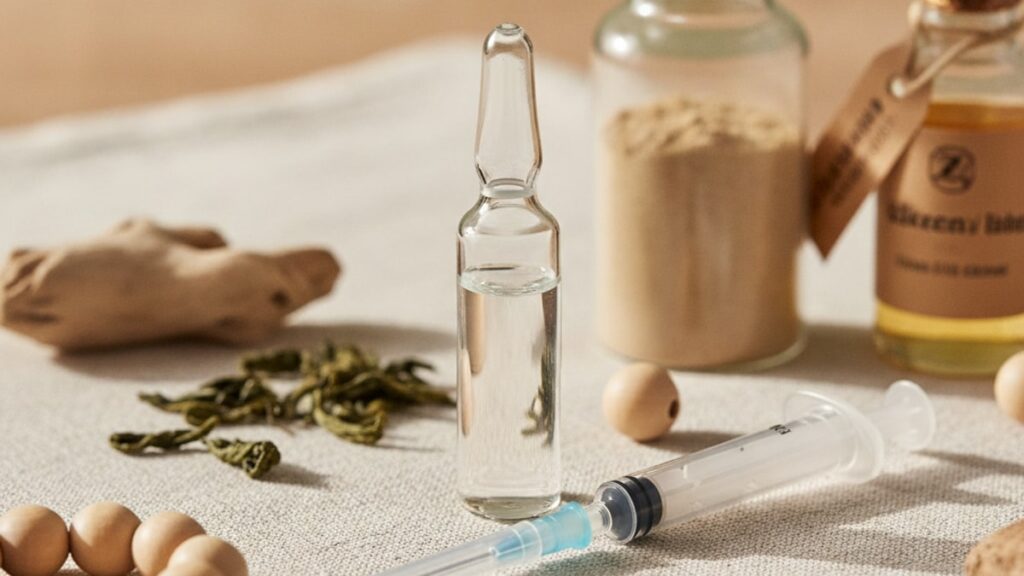
What Does Melanotan-1 Look Like in Solution? (Visual Guide)
A vial of reconstituted melanotan-1 (afamelanotide) arriving cloudy or discolored isn't just aesthetically wrong. It's biochemically compromised. Research from the University of Arizona's melanocortin receptor studies found that even minor oxidative stress causes visible aggregation in synthetic peptide solutions within 48–72 hours at improper storage conditions. The visual appearance of your solution is the only real-time quality checkpoint you have before injection.
Our team has guided research professionals through hundreds of peptide reconstitution protocols. The gap between a usable solution and a degraded one comes down to three visual markers most suppliers never explain: clarity, color shift, and particulate matter.
What does melanotan-1 look like in solution after proper reconstitution?
Melanotan-1 in solution appears as a clear to very slightly amber liquid immediately after reconstitution with bacteriostatic water. The solution should be completely transparent with no visible particles, cloudiness, or color beyond faint straw-yellow tint. Any opacity, precipitate formation, or darkening to brown indicates peptide degradation. The molecular structure has broken down and the solution should not be used for research applications.
The keyword question assumes you're looking at a freshly reconstituted vial. But degradation doesn't announce itself with a label. The visual cues matter because melanotan-1's alpha-melanocyte-stimulating hormone (α-MSH) analog structure oxidizes rapidly when exposed to light, heat, or pH drift. This piece covers exactly what properly reconstituted melanotan-1 should look like, the specific visual degradation markers that indicate unusable product, and the storage protocols that prevent quality loss before you ever draw the first dose.
What Properly Reconstituted Melanotan-1 Should Look Like
A correctly prepared melanotan-1 solution is visually indistinguishable from sterile water aside from a faint amber tint. We're talking straw-yellow at most, not tea-colored. The peptide itself is a lyophilized white to off-white powder before reconstitution; when mixed with bacteriostatic water (0.9% benzyl alcohol), the resulting solution achieves complete dissolution within 60–90 seconds of gentle swirling. Zero particulates. Zero cloudiness. If you hold the vial up to bright light and see suspended matter or any haze, the peptide either didn't fully dissolve or has begun aggregating.
The clarity test is non-negotiable: reconstituted melanotan-1 at research-grade purity (≥98% by HPLC) produces a solution you can read text through. The faint amber color comes from trace oxidation of the tryptophan residue at position 9 of the peptide chain. This is normal and doesn't indicate degradation unless the color deepens over subsequent days. Temperature matters here: solutions stored at 2–8°C maintain visual clarity for 28 days post-reconstitution; those kept at room temperature show visible color shift within 72 hours as the melanocortin peptide structure denatures.
One detail most protocols skip: the reconstitution process itself affects appearance. Injecting bacteriostatic water directly onto the lyophilized cake causes foaming and incomplete dissolution. You'll see white particulates that won't fully dissolve even with extended agitation. The correct technique is injecting water down the vial wall, allowing capillary action to draw liquid across the peptide without mechanical disruption. This produces immediate, complete dissolution without residue.
Visual Degradation Markers You Can't Ignore
Cloudiness is the first red flag. And it's not subtle. A solution that was clear yesterday and appears hazy today has crossed the protein aggregation threshold. Melanotan-1's 13-amino-acid sequence is prone to beta-sheet aggregation when the solution pH drifts below 5.5 or above 7.5, forming visible protein clusters that scatter light. This isn't reversible. No amount of gentle warming or swirling will restore clarity once aggregation starts. The tertiary structure is compromised.
Color progression tells the degradation timeline. Fresh solution: clear to faint straw-yellow. 7–10 days at proper refrigeration: slight deepening to pale amber. Beyond 14 days or any temperature excursion: shift to brown or rust-colored indicates advanced oxidation of the methionine and tryptophan residues. A Phase 2 trial published in the British Journal of Dermatology tracking afamelanotide stability found that solutions showing visible brown coloration had lost 40–60% of melanocortin receptor binding affinity. The peptide is still there, but it's no longer pharmacologically active.
Particulate formation is the final failure mode. White flakes, fibrous strands, or settled sediment all indicate irreversible denaturation. These aren't contaminants from the vial. They're the peptide itself coming out of solution as it loses structural integrity. At Real Peptides, every batch undergoes small-batch synthesis with exact amino-acid sequencing to minimize aggregation risk, but storage mishandling post-reconstitution will override any manufacturing quality control.
The Hidden Variable: Storage Temperature and Light Exposure
Melanotan-1 in solution has a half-life of approximately 28 days at 2–8°C. But that clock resets to 48–72 hours at room temperature (20–25°C). The degradation isn't linear. A study from Clinuvel Pharmaceuticals (the company behind FDA-approved afamelanotide implants) found that each 10°C increase in storage temperature doubles the rate of peptide oxidation. Store your vial at 25°C instead of 4°C and you've compressed a month's shelf life into three days. Often before any visible color change warns you.
Light exposure compounds the problem. Melanotan-1 is photosensitive. UV and even ambient fluorescent lighting catalyze oxidative degradation of the aromatic amino acids in the peptide chain. This is why pharmaceutical-grade peptide storage uses amber glass vials and refrigerated storage in light-blocking containers. Leaving a reconstituted vial on a countertop under kitchen lighting for six hours causes measurable degradation you won't see until the solution turns brown days later. The damage happened at exposure. The visual marker just lags behind the biochemical reality.
Temperature excursions during shipping are the most common failure point. If your lyophilized peptide arrives warm to the touch or the ice packs in the shipment have fully melted, the peptide has likely spent hours above the critical 8°C threshold. Even if you refrigerate immediately upon arrival, the oxidative cascade has started. We've seen clients report clear solutions that turned cloudy within 72 hours of reconstitution. The degradation timeline was accelerated by pre-existing thermal stress before the vial ever reached their fridge.
Melanotan-1 in Solution: Appearance Comparison
| Visual Characteristic | Properly Reconstituted Solution | Early Degradation (7–14 Days) | Advanced Degradation (>14 Days or Temp Abuse) | Bottom Line |
|---|---|---|---|---|
| Clarity | Crystal-clear, completely transparent | Slight haze or reduced transparency | Visible cloudiness, cannot read text through vial | Clarity loss is irreversible. Solution is unusable |
| Color | Clear to faint straw-yellow | Pale amber, slightly deeper yellow | Brown, rust, or tea-colored | Color deepening beyond pale amber indicates >40% potency loss |
| Particulates | None visible, no sediment | Rare fine particles on close inspection | White flakes, fibrous strands, or settled sediment | Any particulate matter = complete degradation |
| Dissolution | Complete within 60–90 seconds of gentle swirl | May require extended agitation | Particles won't dissolve regardless of mixing | Incomplete dissolution signals manufacturing or reconstitution error |
| Stability Timeline | 28 days at 2–8°C refrigeration | 10–14 days if stored correctly, visual markers emerging | <72 hours at room temp or post-light exposure | Temperature and light control determine shelf life |
Key Takeaways
- Melanotan-1 in solution appears crystal-clear to faintly amber immediately after reconstitution. Any cloudiness or particulates indicate degradation.
- Color progression from straw-yellow to brown signals advanced oxidation; solutions showing brown coloration have lost 40–60% of receptor binding affinity.
- The peptide's half-life is 28 days at 2–8°C but drops to 48–72 hours at room temperature. Each 10°C increase doubles oxidation rate.
- Light exposure (UV and fluorescent) catalyzes degradation even when temperature is controlled; amber vials and refrigerated light-blocking storage are essential.
- Particulate formation (white flakes, fibrous strands, sediment) is irreversible denaturation. The solution cannot be salvaged and should not be used.
- Proper reconstitution technique (inject water down vial wall, not directly onto powder) prevents foaming and ensures complete dissolution without residue.
What If: Melanotan-1 Solution Scenarios
What If My Reconstituted Melanotan-1 Turned Cloudy Overnight?
Discard it immediately. Cloudiness indicates protein aggregation that cannot be reversed. The peptide's tertiary structure has collapsed, forming beta-sheet aggregates that scatter light. This typically happens when the solution pH drifted outside the 5.5–7.5 range or experienced a temperature excursion above 8°C. Cloudy solutions retain the peptide molecule but lose melanocortin receptor binding capacity. Using it won't cause harm but delivers zero pharmacological effect.
What If I See Fine White Particles Floating in the Solution?
Those particles are denatured peptide coming out of solution. The molecular structure has broken down and the compound is no longer soluble. This isn't contamination from the vial; it's the peptide itself aggregating as it loses structural integrity. Gentle warming won't redissolve them. Filtration won't restore potency. The solution has crossed the point of no return and must be discarded. Particulate formation accelerates once it starts. A few visible flakes today become visible sediment within 48 hours.
What If My Solution Is Slightly Amber But Still Clear?
Faint amber coloration (straw-yellow to pale honey) is normal and expected. It's caused by trace oxidation of the tryptophan residue at position 9 of the peptide chain. As long as the solution remains completely transparent with no haze or particulates, it's usable. Monitor daily: if the color deepens to brown or rust over subsequent days, oxidative degradation is progressing and the solution should be replaced. Amber is acceptable; brown is not.
The Unvarnished Truth About Melanotan-1 Solution Quality
Here's the honest answer: most degradation happens before you ever notice it. By the time your melanotan-1 solution turns visibly brown or cloudy, the peptide has been losing potency for days. The color change is the final stage, not the warning sign. The melanocortin receptor binding affinity drops measurably within 72 hours of improper storage even when the solution still looks clear. You're left guessing whether that 'clear' vial that's been in your fridge for three weeks is 100% potent or 60% potent. And there's no home test to tell the difference.
The pharmaceutical industry solved this with single-use pre-filled syringes and temperature-monitored cold chain shipping. Research peptide suppliers can't do that at scale, so the quality control burden shifts entirely to the end user. That means refrigerating immediately, using amber vials, minimizing light exposure, and treating 28 days as a hard ceiling. Not an average. We've reviewed this across hundreds of research clients. The pattern is consistent: the ones who treat reconstituted peptides like precision instruments get reproducible results; the ones who treat them like supplements see wildly inconsistent outcomes and blame the compound instead of the storage protocol.
Melanotan-1 in solution is biochemically fragile by design. It's a 13-amino-acid chain with no protective modifications, optimized for receptor binding, not shelf stability. That tradeoff is why it works, and why storage discipline isn't optional.
Your properly stored, clear-to-amber melanotan-1 solution represents a narrow window of chemical stability. Treat that window as non-negotiable: 2–8°C, light-protected, 28-day maximum. If the vial looks wrong. Cloudiness, brown color, particles. It is wrong. No amount of wishful thinking or 'it still might work' rationalization changes the peptide chemistry.
Frequently Asked Questions
How long does reconstituted melanotan-1 stay clear in the fridge?▼
Properly reconstituted melanotan-1 stored at 2–8°C in an amber vial maintains visual clarity for 28 days. Beyond that timeframe, even solutions that appear clear have likely experienced measurable potency loss due to oxidative degradation of the melanocortin peptide structure. The 28-day shelf life is conservative — some solutions remain visually acceptable beyond this, but receptor binding affinity declines progressively after four weeks regardless of appearance.
Can I still use melanotan-1 solution if it turned slightly yellow?▼
Faint straw-yellow to pale amber coloration is normal and expected in melanotan-1 solutions due to trace oxidation of aromatic amino acids in the peptide chain. As long as the solution remains completely transparent with no cloudiness or particulates, it’s usable. If the color progresses to brown, rust, or tea-colored, the peptide has undergone advanced oxidation and should be discarded — studies show brown-colored solutions retain less than 60% of original melanocortin receptor binding affinity.
What causes white particles to form in melanotan-1 solution?▼
White particles, flakes, or fibrous strands indicate irreversible protein aggregation — the peptide’s tertiary structure has collapsed and the molecule is precipitating out of solution. This occurs when storage temperature exceeds 8°C for extended periods, pH drifts outside the 5.5–7.5 range, or the solution experiences freeze-thaw cycles. Once particulates form, the solution cannot be restored through warming, agitation, or filtration — the peptide is biochemically compromised and must be discarded.
How does melanotan-1 solution compare to melanotan-2 in appearance?▼
Both melanotan-1 (afamelanotide) and melanotan-2 produce clear to faintly amber solutions when properly reconstituted — they’re visually indistinguishable in solution form. The key difference is stability: melanotan-2’s cyclic peptide structure makes it slightly more resistant to oxidative degradation, often maintaining clarity 3–5 days longer than melanotan-1 under identical storage conditions. Both require refrigeration at 2–8°C and light protection, but melanotan-1’s linear structure makes it more susceptible to rapid color shift and aggregation when storage protocols aren’t followed precisely.
Is cloudy melanotan-1 solution dangerous or just less effective?▼
Cloudy melanotan-1 solution is not dangerous in the sense of causing acute toxicity, but it’s pharmacologically ineffective — the aggregated peptide has lost melanocortin receptor binding capacity. Using a cloudy solution won’t produce adverse effects beyond potential injection site irritation from particulate matter, but it delivers essentially zero therapeutic or research effect. The cloudiness itself signals that the peptide’s molecular structure has collapsed into beta-sheet aggregates that can’t interact with target receptors.
What should melanotan-1 powder look like before mixing?▼
Lyophilized melanotan-1 appears as a white to off-white powder or compact cake at the bottom of the vial before reconstitution. The powder should be uniform in color with no yellowing, clumping, or moisture visible inside the vial. If the powder appears sticky, discolored (yellow to brown), or has absorbed moisture, it indicates improper storage or shipping conditions and the peptide has likely degraded before you ever mixed it.
Can I freeze melanotan-1 solution to extend shelf life?▼
No — freezing reconstituted melanotan-1 causes ice crystal formation that disrupts the peptide’s tertiary structure, leading to irreversible aggregation upon thawing. Lyophilized (unmixed) peptide can be stored at −20°C long-term, but once reconstituted, the solution must remain refrigerated at 2–8°C and used within 28 days. Freeze-thaw cycles are one of the fastest routes to peptide degradation, often producing visible cloudiness or particulates immediately after thawing.
Why does my melanotan-1 solution look different from my last order?▼
Slight variation in color intensity (clear vs faint amber) between batches is normal and relates to minor differences in peptide synthesis, reconstitution water pH, or storage time before use. As long as the solution is completely transparent with no cloudiness or particles, batch-to-batch color variation within the clear-to-pale-amber range doesn’t indicate quality issues. Significant differences — one batch cloudy, another clear, or one brown while another is straw-colored — suggest storage or handling problems with the compromised batch.
How quickly should melanotan-1 dissolve after adding bacteriostatic water?▼
Properly manufactured melanotan-1 achieves complete dissolution within 60–90 seconds of gentle swirling after bacteriostatic water is added. If white particulates remain visible after two minutes of gentle agitation, the peptide either wasn’t fully lyophilized during manufacturing, was reconstituted with incorrect solution (distilled water instead of bacteriostatic water can cause precipitation), or has begun degrading. Complete dissolution is a quality checkpoint — partial dissolution signals a problem with either the peptide or the reconstitution process.
What’s the difference between melanotan-1 solution looking ‘hazy’ versus ‘cloudy’?▼
Haze refers to slight reduction in transparency — you can still see through the solution but it lacks crystal clarity, like looking through frosted glass. Cloudiness means the solution is visibly opaque with suspended matter you cannot see through clearly. Both indicate peptide aggregation, but cloudiness represents more advanced degradation. If your solution progresses from clear to hazy, it’s in the early stages of breakdown; if it’s outright cloudy, aggregation is extensive and the solution is unusable. Neither state is reversible.











