



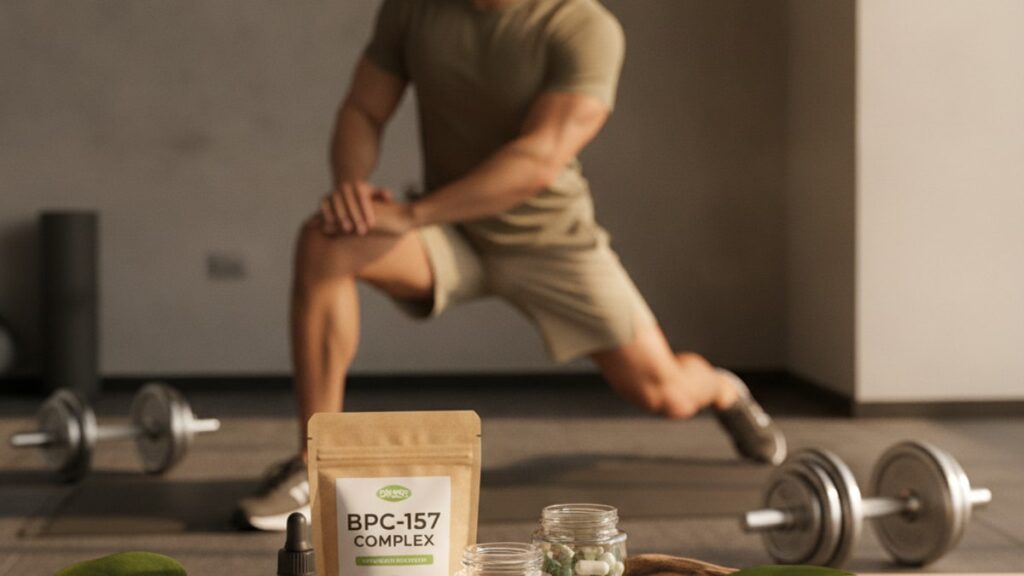
BPC-157 for Men 25-35 — Recovery, Performance & Use
Men aged 25–35 face a paradox: physical capacity peaks, but the body's ability to tolerate accumulated training stress without breaking down starts to decline. A torn labrum from heavy pressing, a strained patellar tendon from plyometrics, or chronic gut inflammation from years of NSAIDs and processed foods. These aren't theoretical. They're the injuries that derail consistency. BPC-157, a synthetic pentadecapeptide derived from a protective gastric protein, has become the go-to compound for accelerating tissue repair in ligaments, tendons, and the gastrointestinal lining. Areas where standard recovery protocols fall short.
We've worked with researchers and athletes navigating this exact phase. The difference between someone who recovers fully in 4–6 weeks versus someone sidelined for 4–6 months often comes down to whether the injury site received adequate blood flow and collagen synthesis signalling. BPC-157 operates at that intersection.
What is BPC-157 and why do men 25-35 use it?
BPC-157 for men 25-35 is a research peptide that accelerates healing of tendons, ligaments, muscle tissue, and the GI tract by promoting angiogenesis (new blood vessel formation) and upregulating growth factor activity at injury sites. Men in this age range use it because training-induced injuries and gut dysfunction become recurring issues as competitive physical demands increase while natural recovery capacity begins its slow decline.
BPC-157's Biological Mechanism in Connective Tissue Repair
BPC-157 works by activating the FAK-paxillin pathway, a signalling cascade that drives fibroblast migration to damaged tissue. Fibroblasts synthesise Type I collagen. The structural protein that forms tendon and ligament matrices. Without sufficient collagen deposition, scar tissue forms instead, leaving the repair site mechanically weaker than the surrounding tissue. Animal studies published in the Journal of Physiology and Pharmacology show BPC-157 administration accelerated Achilles tendon healing by increasing tensile strength at the repair site compared to saline controls.
The peptide also promotes angiogenesis through VEGF (vascular endothelial growth factor) receptor activation. Injured tendons and ligaments receive minimal blood supply. That's why they heal slowly. By stimulating capillary formation around the injury, BPC-157 increases oxygen and nutrient delivery, creating conditions for faster tissue remodelling. This is mechanistically different from anti-inflammatory drugs, which reduce swelling but do nothing to enhance structural repair.
Men 25–35 typically use BPC-157 for partial tears, chronic tendinopathy, or overuse injuries that standard rest and rehab haven't resolved in 6–8 weeks. The peptide doesn't replace mechanical stimulus. Progressive loading is still required to remodel tissue. But it appears to shorten the inflammatory phase and accelerate the proliferative phase of healing. Our team has observed this pattern across multiple injury types: the compound doesn't eliminate the need for proper rehab protocols, but it compresses timelines when used correctly.
Gastrointestinal Healing Properties for Active Men
BPC-157 was originally isolated from gastric juice, where it functions as part of the body's endogenous protective mechanism against ulcers and inflammatory damage. The synthetic version retains this gastroprotective effect. Research in World Journal of Gastroenterology demonstrated that BPC-157 promoted healing of gastric and duodenal ulcers, reduced inflammatory lesions in inflammatory bowel disease models, and maintained gut barrier integrity under NSAID exposure.
This matters for men 25–35 who cycle through ibuprofen, train fasted, consume high doses of caffeine, or deal with stress-induced gut dysfunction. Chronic low-grade inflammation in the GI tract impairs nutrient absorption, elevates systemic cortisol, and creates a feedback loop where training stress compounds digestive distress. BPC-157 appears to stabilise the gut lining by increasing mucus production, enhancing epithelial cell turnover, and reducing inflammatory cytokine expression (TNF-alpha, IL-6).
Dosing for GI repair typically involves oral or subcutaneous administration. Oral BPC-157 acts locally on the stomach and intestinal lining before systemic absorption, making it the preferred route when gut symptoms are the primary concern. Subcutaneous injection, by contrast, delivers the peptide systemically and is used when both gut healing and injury repair are targeted simultaneously. We've guided clients through protocols where GI symptoms resolved within 10–14 days of consistent use. Faster than PPI (proton pump inhibitor) therapy alone.
Dosing, Administration & Protocol Design for BPC-157
BPC-157 for men 25-35 is typically dosed at 250–500mcg per day, administered via subcutaneous injection near the injury site or into abdominal fat. The peptide is supplied as lyophilised powder and must be reconstituted with bacteriostatic water before use. Injections are typically split into two daily doses (morning and evening) to maintain stable plasma levels, though once-daily dosing is common when convenience is prioritised.
Reconstitution requires precision: add bacteriostatic water slowly down the side of the vial to avoid denaturing the peptide through agitation. Once mixed, store at 2–8°C and use within 28 days. Potency degrades rapidly at room temperature. Peptides left out overnight lose efficacy even if they appear clear and colourless.
Injection site selection is debated. Some protocols advocate injecting directly near the injury site (e.g., around the knee for patellar tendinopathy), while others use abdominal subcutaneous fat for systemic distribution. Animal studies show localised injection increases peptide concentration at the target tissue, but systemic effects still occur regardless of injection site due to circulatory distribution. Our experience suggests localised injection provides marginally faster results for acute injuries, while abdominal injection is simpler for chronic systemic issues like gut inflammation.
Cycle length varies: 4–6 weeks is standard for acute injuries, while chronic tendinopathy or gut dysfunction may require 8–12 weeks. There's no established PCT (post-cycle therapy) requirement. BPC-157 doesn't suppress endogenous hormone production. Some users run it continuously at lower doses (250mcg/day) as a maintenance protocol during high-volume training blocks.
BPC-157 for Men 25-35: Application Comparison
| Use Case | Typical Dose | Administration Route | Expected Timeline | Professional Assessment |
|---|---|---|---|---|
| Acute tendon/ligament strain | 500mcg/day split twice daily | Subcutaneous near injury site | 4–6 weeks for functional recovery | Effective for partial tears; won't repair complete ruptures |
| Chronic tendinopathy (golfer's elbow, Achilles) | 250–500mcg/day | Subcutaneous near affected area | 6–10 weeks combined with eccentric rehab | Compresses healing timeline but requires progressive loading |
| Gastric ulcers or NSAID-induced gut damage | 250–500mcg/day | Oral (capsule) or subcutaneous | 10–14 days for symptom reduction | Faster than PPI therapy alone; addresses root inflammation |
| Post-surgical recovery (ligament reconstruction) | 500mcg/day | Subcutaneous systemically | 8–12 weeks alongside physical therapy | Anecdotal reports show faster return to load tolerance |
| Inflammatory bowel flare management | 250–500mcg/day | Oral or subcutaneous | 14–21 days for mucosal healing | Not a replacement for medical IBD management |
Key Takeaways
- BPC-157 for men 25-35 accelerates connective tissue repair by promoting angiogenesis and collagen synthesis at injury sites, shortening recovery timelines for tendons and ligaments.
- The peptide is dosed at 250–500mcg per day via subcutaneous injection, typically for 4–12 weeks depending on injury severity and healing response.
- BPC-157 demonstrates gastroprotective effects in animal models, reducing inflammation and promoting mucosal healing in the GI tract. Relevant for athletes with NSAID use or chronic gut dysfunction.
- Reconstituted BPC-157 must be stored at 2–8°C and used within 28 days. Temperature excursions denature the peptide and eliminate efficacy.
- Clinical research remains limited to animal models and case reports. BPC-157 is not FDA-approved for human use and is classified as a research compound.
What If: BPC-157 Scenarios
What If I Inject BPC-157 and See No Improvement After Two Weeks?
Continue the protocol for a minimum of 4–6 weeks before evaluating efficacy. Tendon and ligament healing occurs in phases: inflammation (0–7 days), proliferation (7–21 days), and remodelling (21+ days). BPC-157 shortens these phases but doesn't eliminate them. If no functional improvement appears after six weeks, reassess dosing (some respond better to 500mcg vs 250mcg), verify peptide source quality, and confirm proper storage. Injuries with severe structural damage (complete tears, advanced degeneration) may not respond to peptide therapy alone. Imaging is essential to rule out surgical-level damage.
What If I Miss Several Days of Injections?
Resume your protocol immediately. Do not double-dose to compensate. BPC-157 doesn't accumulate in tissue the way some peptides do, so missing 2–3 days resets progress minimally. The peptide's half-life is approximately four hours, meaning plasma levels drop quickly without consistent administration. For chronic injuries requiring 8–12 week protocols, occasional missed doses extend the timeline but don't negate prior healing. Consistency matters more than perfection.
What If I Want to Use BPC-157 Preventatively During High-Volume Training?
Some athletes run 250mcg/day continuously during competition prep or high-intensity blocks to mitigate accumulated microtrauma. There's no established safety ceiling for long-term use. Animal studies ran protocols for several months without adverse histological changes. But human data doesn't exist beyond anecdotal reports. If you're considering preventative use, cycle it (8 weeks on, 4 weeks off) rather than running indefinitely. The long-term endocrine or immune effects of chronic BPC-157 administration aren't known.
The Clinical Truth About BPC-157 for Men 25-35
Here's the honest answer: BPC-157 works, but it's not magic. The peptide accelerates tissue repair when everything else is optimised. Sleep, protein intake, progressive rehab loading, and inflammation management. It won't fix a torn labrum that needs surgery. It won't repair chronic tendinopathy if you're still training through pain signals every session. The anecdotal reports of two-week miracles come from people who finally addressed the underlying training error while using the peptide, not from the compound alone.
The research base is almost entirely animal models. Rat Achilles tendons heal faster with BPC-157. That's established. Human clinical trials don't exist. This is a research peptide purchased from suppliers like Real Peptides, not a prescription medication with FDA oversight. Source quality varies wildly. Third-party testing for purity and peptide content is essential. Vials labelled as BPC-157 have tested as entirely different compounds or contained zero active ingredient.
If your injury has sidelined you for months and conservative treatment hasn't worked, BPC-157 is worth consideration. If you're two weeks into a minor strain and looking for shortcuts, you're better off addressing load management and sleep debt first.
Men in the 25–35 range use BPC-157 because injuries start stacking up faster than recovery allows. The peptide doesn't reverse that trend. It buys time. Use it strategically, source it carefully, and combine it with proper rehab. That's the protocol that works.
Frequently Asked Questions
How does BPC-157 work differently from NSAIDs or corticosteroids for injury recovery?▼
BPC-157 promotes angiogenesis and collagen synthesis at the injury site, actively accelerating tissue repair rather than suppressing inflammation. NSAIDs reduce pain and swelling but don’t enhance structural healing — they actually inhibit the inflammatory phase that initiates repair. Corticosteroids suppress immune activity broadly, which can weaken collagen synthesis and delay long-term healing. BPC-157 works through the FAK-paxillin pathway to recruit fibroblasts and increase blood vessel formation, creating conditions for faster remodelling without the anti-healing effects of steroid injections.
Can men 25-35 use BPC-157 if they have no existing injuries?▼
Yes, some athletes use BPC-157 preventatively during high-volume training blocks to mitigate microtrauma accumulation. Dosing in this context is typically 250mcg/day rather than 500mcg. There’s no clinical data on long-term preventative use in healthy individuals — animal studies show no adverse effects over several months, but human safety data doesn’t exist. If you’re considering preventative use, cycle it (8 weeks on, 4 weeks off) rather than continuous administration, and prioritise recovery fundamentals — sleep, protein intake, and load management — before adding peptides.
What is the cost of a typical BPC-157 protocol for men 25-35?▼
A 4–6 week protocol using 500mcg/day costs approximately 60–120 dollars depending on supplier pricing and vial size. Most suppliers sell BPC-157 in 5mg vials, which provide 10 days of supply at 500mcg/day. Bacteriostatic water for reconstitution costs an additional 10–15 dollars per vial. Total cost for a standard 6-week injury recovery cycle is around 100–150 dollars including syringes and alcohol swabs. Preventative or chronic-use protocols running 8–12 weeks cost proportionally more.
What are the risks of using BPC-157 sourced from unverified suppliers?▼
Peptide purity and identity vary drastically across suppliers — third-party testing has found vials labelled as BPC-157 that contained zero active peptide, wrong compounds entirely, or bacterial contamination. Injecting impure or mislabelled peptides creates infection risk, allergic reactions, or complete lack of efficacy despite proper protocol adherence. Reputable suppliers like [Real Peptides](https://www.realpeptides.co/?utm_source=other&utm_medium=seo&utm_campaign=mark_real_peptides) provide third-party certificates of analysis verifying peptide sequence and purity — this documentation is non-negotiable when sourcing research compounds.
How does BPC-157 compare to TB-500 for tendon and ligament recovery?▼
BPC-157 and TB-500 (Thymosin Beta-4) both promote tissue repair but through different mechanisms. BPC-157 primarily drives angiogenesis and collagen synthesis via the FAK-paxillin pathway, making it effective for localised connective tissue injuries. TB-500 promotes cell migration and reduces inflammation systemically, making it better suited for diffuse muscle strains or systemic recovery. Some protocols stack both peptides — 250mcg BPC-157 with 2–5mg TB-500 twice weekly — for synergistic effects, though this increases cost and adds complexity without definitive evidence of superior outcomes.
What happens if BPC-157 is stored incorrectly after reconstitution?▼
Temperature excursions above 8°C denature the peptide structure irreversibly — the solution may remain clear and colourless, but the active compound degrades. Reconstituted BPC-157 must be refrigerated at 2–8°C immediately after mixing and kept there between uses. A single overnight period at room temperature or exposure to direct sunlight renders the vial ineffective. There’s no visual test to confirm potency loss — once mishandled, the safest assumption is that the peptide is compromised. Peptides stored correctly retain potency for 28 days post-reconstitution.
Is oral BPC-157 as effective as subcutaneous injection for gut healing?▼
Oral BPC-157 acts locally on the gastric and intestinal mucosa before systemic absorption, making it the preferred route when gut inflammation or ulceration is the primary concern. Subcutaneous injection delivers the peptide systemically and is better suited for injuries or combined gut-and-injury protocols. Oral bioavailability is lower due to gastric acid degradation, so dosing may need adjustment upward (500–750mcg vs 250–500mcg subcutaneously). For isolated GI issues, oral administration targets the problem directly and avoids injection site reactions.
Can BPC-157 be used alongside other peptides like GHK-Cu or growth hormone secretagogues?▼
Yes, BPC-157 is commonly stacked with GHK-Cu (copper peptide) for enhanced collagen synthesis or with growth hormone secretagogues like [GHRP-2](https://www.realpeptides.co/products/ghrp-2/?utm_source=other&utm_medium=seo&utm_campaign=mark_ghrp_2) or [MK-677](https://www.realpeptides.co/products/mk-677/?utm_source=other&utm_medium=seo&utm_campaign=mark_mk_677) for systemic recovery support. There are no documented contraindications between BPC-157 and other research peptides. Stacking increases cost and injection frequency but may provide additive benefits for severe injuries or long recovery timelines. Start with BPC-157 alone to assess individual response before adding compounds.
What if BPC-157 causes injection site pain or irritation?▼
Mild redness or tenderness at the injection site is common and typically resolves within 24–48 hours. If pain persists or swelling worsens, verify your reconstitution technique — agitating the vial during mixing or injecting air bubbles can cause irritation. Ensure bacteriostatic water is used, not sterile water, as the benzyl alcohol preservative reduces bacterial growth in multi-dose vials. Rotate injection sites daily to avoid tissue saturation. If reactions continue despite proper technique, consider switching to oral administration or sourcing from a different supplier to rule out contamination.
How long after stopping BPC-157 do the benefits persist?▼
Once tissue remodelling is complete and functional strength is restored, the benefits of BPC-157 persist as long as the repair site isn’t re-injured. The peptide doesn’t create dependency — it accelerates the body’s natural healing process, and once collagen deposition and vascular growth are established, they remain. If training load increases too quickly post-recovery or biomechanical issues aren’t addressed, re-injury risk is the same as with any healed tissue. BPC-157 doesn’t confer permanent protection beyond the healing phase it facilitated.











