



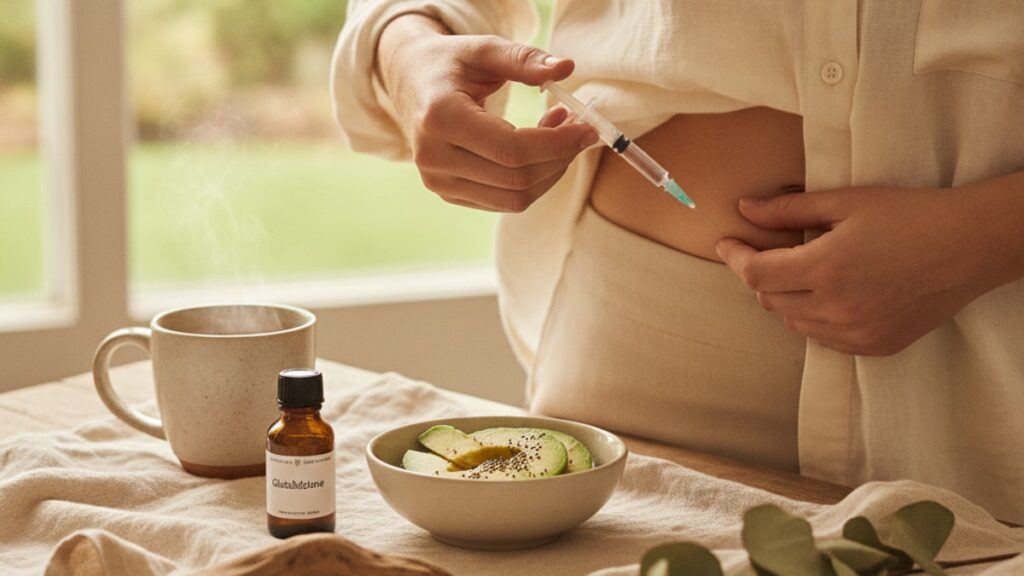
How to Inject Glutathione Subq — Safe Protocol Steps
The most common error people make when learning to inject glutathione subq isn't needle angle or injection speed. It's adding air to the vial during reconstitution. That single step, done wrong, creates a pressure differential that pulls contaminants back through the needle on every subsequent draw. The result: a contaminated vial that degrades faster than it should and delivers inconsistent dosing across the injection cycle.
Our team has guided hundreds of researchers through peptide reconstitution and administration protocols. The gap between doing it right and doing it wrong comes down to three things most guides never mention: bacteriostatic water temperature, needle gauge selection for viscosity, and the reconstitution technique that prevents oxidative degradation before the peptide even reaches the syringe.
How do you inject glutathione subq safely and effectively?
To inject glutathione subq, reconstitute lyophilised glutathione powder with bacteriostatic water at a 1:1 or 2:1 ratio, draw the solution using a sterile syringe, pinch subcutaneous tissue at the injection site (abdomen or thigh), insert the needle at 45–90 degrees, inject slowly over 5–10 seconds, and withdraw. Proper reconstitution prevents oxidation. Reduced L-glutathione degrades rapidly when exposed to air or incorrect pH. Subcutaneous absorption delivers glutathione directly into systemic circulation without first-pass hepatic metabolism, which would otherwise break down oral glutathione before it reaches target tissues.
The standard definition of subcutaneous glutathione injection. 'injecting glutathione under the skin'. Misses the critical distinction between reduced and oxidised glutathione forms. Most lyophilised glutathione supplied for research is reduced L-glutathione (GSH), the biologically active form. Oxidised glutathione (GSSG) has significantly lower bioavailability and different storage requirements. This article covers how to reconstitute reduced glutathione without oxidative loss, proper injection technique for subcutaneous delivery, site rotation protocols to prevent tissue damage, and storage conditions that maintain peptide stability across a 28-day use window.
Step 1: Reconstitute Lyophilised Glutathione with Bacteriostatic Water
Reconstitution is where most glutathione protocols fail. Reduced L-glutathione oxidises rapidly when exposed to atmospheric oxygen, light, or incorrect pH. Once oxidised, the peptide loses most of its biological activity. Lyophilised (freeze-dried) glutathione powder must be reconstituted with bacteriostatic water, not sterile water. Bacteriostatic water contains 0.9% benzyl alcohol, which prevents bacterial growth in multi-dose vials over 28 days. Sterile water has no preservative. Once opened, contamination risk increases with every draw.
Standard reconstitution ratio: 200mg glutathione powder + 2mL bacteriostatic water yields 100mg/mL concentration. For lower concentrations, use 200mg + 4mL bacteriostatic water to achieve 50mg/mL. Inject bacteriostatic water slowly down the inside wall of the vial. Never spray directly onto the powder. Direct impact can denature protein structures before dissolution occurs. Allow the vial to sit undisturbed for 60–90 seconds. Gently swirl. Do not shake. Until the powder fully dissolves. Shaking introduces microbubbles that accelerate oxidation.
Temperature matters: bacteriostatic water should be at room temperature (20–25°C) before reconstitution. Cold water slows dissolution and can leave undissolved particles that clog needles. Once reconstituted, glutathione solution must be stored at 2–8°C (refrigerated) and used within 28 days. Any temperature excursion above 8°C for more than 2 hours causes irreversible oxidation. The solution may still look clear, but potency is compromised.
Real Peptides supplies research-grade peptides through small-batch synthesis with exact amino-acid sequencing. Every batch undergoes third-party purity verification before distribution.
Step 2: Prepare the Injection Site and Draw the Correct Dose
Subcutaneous injection sites for glutathione include the abdomen (2 inches from the navel in any direction), outer thighs, and upper arms. Abdomen is preferred. Subcutaneous fat layer is thickest and most consistent, reducing variability in absorption rate. Rotate injection sites every administration to prevent lipohypertrophy (localised fat accumulation) or lipoatrophy (fat loss) at repeated injection points. A four-quadrant rotation pattern. Lower right abdomen, lower left abdomen, right thigh, left thigh. Allows 7 days between repeat injections at the same site.
Clean the injection site with an alcohol swab and allow it to air-dry for 30 seconds. Injecting through wet alcohol can introduce the antiseptic into tissue, causing stinging and irritation. Draw your dose using a sterile syringe. 1mL insulin syringes with 27–30 gauge needles work best for subcutaneous glutathione. Needle length should be 5–8mm for subcutaneous delivery. Longer needles (12mm+) risk intramuscular injection, which alters absorption kinetics.
When drawing from the vial, insert the needle and invert the vial so the needle tip is submerged in solution. Pull the plunger slowly to avoid creating negative pressure that can pull rubber particles from the vial stopper into the solution. Tap the syringe gently to move air bubbles toward the needle hub, then push the plunger to expel air without wasting solution. A small air bubble (less than 0.1mL) is harmless in subcutaneous injections. It does not enter the bloodstream. However, large air pockets displace solution volume and result in underdosing.
Typical research doses range from 200mg to 600mg per injection, administered 2–3 times weekly. Clinical studies examining glutathione's role as an antioxidant and detoxification cofactor used doses in this range. The specific dose depends on research protocol and peptide concentration after reconstitution.
Step 3: Inject Glutathione Subq Using Proper Technique
Pinch a fold of skin at the prepared injection site between your thumb and index finger. This lifts subcutaneous tissue away from underlying muscle, ensuring the needle stays in the correct tissue layer. Insert the needle at a 45–90 degree angle. The exact angle depends on subcutaneous fat thickness. For individuals with thicker subcutaneous fat, 90 degrees works; for leaner tissue, 45 degrees prevents the needle from reaching muscle.
Insert the needle with a quick, smooth motion. Hesitation increases tissue trauma and bruising. Once the needle is fully inserted, release the pinched skin and inject the solution slowly over 5–10 seconds. Rapid injection (under 3 seconds) increases pressure in the subcutaneous space, causing discomfort and leakage when the needle is withdrawn. Slow injection allows the solution to disperse evenly through tissue without creating a painful pocket.
After injecting the full dose, wait 2–3 seconds before withdrawing the needle. This pause allows subcutaneous pressure to equalise, reducing backflow. Withdraw the needle at the same angle it was inserted and apply gentle pressure with a clean alcohol swab for 5–10 seconds. Do not rub the injection site. Rubbing can disperse the solution unevenly and increase bruising risk.
Dispose of used needles immediately in a sharps container. Never recap needles. Recapping is the leading cause of accidental needle sticks. Most pharmacies and medical supply retailers provide free sharps disposal containers or accept filled containers for safe disposal.
For researchers exploring additional peptide protocols, our Cognitive Function and Body Recomp Bundle collections demonstrate how peptide research extends across metabolic and neurological pathways.
Glutathione Administration: Method Comparison
| Administration Method | Bioavailability | Onset Time | Duration of Elevated Plasma Levels | Convenience | Professional Assessment |
|---|---|---|---|---|---|
| Subcutaneous Injection | ~90% (bypasses first-pass metabolism) | 15–30 minutes | 4–6 hours | Moderate (self-administered after training) | Gold standard for consistent dosing. Absorption rate is predictable, and plasma concentrations remain stable across the therapeutic window. Requires reconstitution and injection technique but eliminates hepatic degradation. |
| Intravenous Infusion | ~100% (direct bloodstream entry) | Immediate | 2–4 hours | Low (requires clinical setting) | Highest bioavailability but impractical for frequent dosing. Used primarily in clinical detoxification protocols where immediate systemic delivery is required. Not viable for long-term maintenance. |
| Oral Supplementation | 10–30% (extensive first-pass metabolism) | 60–90 minutes | 2–3 hours | High (tablet or capsule) | Poor bioavailability due to gastric acid degradation and hepatic metabolism. Liposomal formulations improve absorption to ~40%, but still far below injectable routes. Suitable only for mild supplementation, not therapeutic dosing. |
| Sublingual | 30–50% (partial bypass of first-pass) | 20–40 minutes | 3–5 hours | High (dissolves under tongue) | Better than oral but inconsistent. Absorption depends on mucosal contact time and salivary pH. Swallowing residue negates the benefit. Useful for patients unable to inject but not equivalent to subq delivery. |
Subcutaneous administration remains the most practical method for research applications requiring reliable plasma concentrations. The protocol is straightforward, absorption kinetics are well-documented, and multi-dose vials allow flexible dosing schedules without requiring clinical supervision.
Key Takeaways
- Reconstitute lyophilised glutathione with bacteriostatic water at room temperature, injecting slowly down the vial wall to prevent protein denaturation. Never shake the vial.
- Reduced L-glutathione (GSH) is the biologically active form. Oxidised glutathione (GSSG) has significantly lower efficacy and different storage requirements.
- Subcutaneous injection delivers approximately 90% bioavailability by bypassing first-pass hepatic metabolism, which would otherwise degrade oral glutathione before systemic absorption.
- Store reconstituted glutathione at 2–8°C and use within 28 days. Any temperature excursion above 8°C for more than 2 hours causes irreversible oxidation.
- Rotate injection sites across a four-quadrant pattern (lower abdomen and thighs) to prevent lipohypertrophy or lipoatrophy at repeated injection points.
What If: Glutathione Injection Scenarios
What If the Reconstituted Solution Turns Yellow or Cloudy?
Discard it immediately. Clear, colourless solution is the only acceptable appearance for reconstituted reduced glutathione. Yellowing indicates oxidation. The peptide has converted from reduced (GSH) to oxidised (GSSG) form and lost most of its biological activity. Cloudiness suggests contamination or incomplete dissolution. Neither condition is salvageable through refrigeration or re-mixing. The vial must be discarded and a fresh reconstitution prepared. This is why bacteriostatic water quality and sterile technique during reconstitution are non-negotiable.
What If I Inject Glutathione Subq and Feel a Burning Sensation?
Burning during injection indicates one of three issues: injection speed was too fast, the solution is too cold, or the needle penetrated a nerve bundle. Slow your injection rate to 10 seconds per millilitre. Allow refrigerated solution to warm to room temperature for 5–10 minutes before drawing. Cold solution causes vasoconstriction and discomfort. If burning persists despite correct technique, the injection site may have higher nerve density than expected. Switch to an alternate site (opposite side of abdomen or thigh) for the next injection.
What If I Miss a Scheduled Glutathione Injection?
Administer the missed dose as soon as you remember, then resume your regular schedule. Do not double-dose to 'catch up'. Glutathione has a plasma half-life of approximately 2–3 hours, and doubling the dose does not extend therapeutic effect proportionally. Missing a single injection in a multi-week protocol has minimal impact on cumulative outcomes. If you miss more than two consecutive doses, consult your research protocol to determine whether dose timing needs adjustment.
The Clinical Truth About Glutathione Injection
Here's the honest answer: most commercially available glutathione supplements. Pills, sprays, patches. Deliver negligible systemic glutathione elevation. The data is unambiguous. A 2014 study published in the European Journal of Nutrition found that oral glutathione supplementation at 500mg daily produced no measurable increase in blood glutathione levels after four weeks. First-pass hepatic metabolism degrades glutathione before it reaches systemic circulation. Liposomal formulations improve absorption marginally, but even optimised oral delivery achieves only 30–40% of the bioavailability seen with subcutaneous injection.
Subcutaneous glutathione works because it bypasses the digestive system entirely. Injected glutathione enters capillary beds directly from subcutaneous tissue, avoiding hepatic degradation. This is not a minor pharmacokinetic detail. It's the difference between therapeutic plasma concentrations and negligible effect. Clinical studies using intravenous glutathione (which shares the same bypass mechanism as subcutaneous) consistently show dose-dependent increases in blood glutathione and downstream antioxidant markers. The same effect does not occur with oral administration at equivalent doses.
This is why research protocols requiring measurable glutathione elevation use injectable forms. The marketing claims around oral glutathione are aspirational at best.
The information in this article is for educational purposes. Dosage, timing, and safety decisions should be made in consultation with a licensed prescribing physician or qualified research supervisor.
Learning to inject glutathione subq correctly takes about fifteen minutes of practice. But the difference between correct and incorrect technique compounds across every injection in a protocol. Reconstitution errors cause oxidation before the peptide ever reaches tissue. Poor injection technique causes bruising, leakage, and inconsistent absorption. Storage above 8°C denatures the solution silently. Every one of these errors is avoidable with the protocol outlined here.
Frequently Asked Questions
How do you reconstitute glutathione for subcutaneous injection?▼
Add bacteriostatic water slowly down the inside wall of the vial containing lyophilised glutathione powder — never spray directly onto the powder. Standard ratio is 2mL bacteriostatic water per 200mg glutathione to achieve 100mg/mL concentration. Allow the vial to sit undisturbed for 60–90 seconds, then gently swirl (do not shake) until fully dissolved. Store reconstituted solution at 2–8°C and use within 28 days.
Can you inject glutathione subq at home?▼
Yes, subcutaneous glutathione injection can be self-administered at home after proper training in sterile technique, reconstitution, and injection protocol. The procedure requires bacteriostatic water, sterile syringes, alcohol swabs, and a sharps disposal container. Most individuals achieve competency after 2–3 supervised practice injections. However, dosing and protocol design should be determined by a qualified healthcare provider or research supervisor.
What needle size should I use to inject glutathione subq?▼
Use 27–30 gauge needles with 5–8mm length for subcutaneous glutathione injection. Gauge (diameter) affects comfort — 30 gauge is thinner and less painful but draws solution more slowly. Needle length must stay within subcutaneous tissue without reaching muscle — 5mm works for most individuals, while 8mm is appropriate for those with thicker subcutaneous fat layers. Insulin syringes pre-fitted with these specifications are widely available.
How long does glutathione last after reconstitution?▼
Reconstituted reduced glutathione remains stable for 28 days when stored at 2–8°C in a vial with bacteriostatic water. Beyond 28 days, bacterial contamination risk increases and peptide degradation accelerates. Reduced glutathione oxidises rapidly at room temperature — any storage above 8°C for more than 2 hours causes irreversible loss of potency. Once oxidised, the solution may still appear clear but is no longer therapeutically effective.
What is the difference between reduced and oxidised glutathione?▼
Reduced glutathione (GSH) is the biologically active form that functions as an antioxidant by donating electrons to neutralise free radicals. Oxidised glutathione (GSSG) is the spent form that results after GSH has donated electrons — it must be recycled back to GSH by glutathione reductase before it regains activity. Injectable glutathione is supplied as reduced L-glutathione because it is immediately bioactive, whereas oxidised glutathione requires cellular reduction before it provides antioxidant benefit.
Where is the best site to inject glutathione subq?▼
The abdomen (at least 2 inches away from the navel in any direction) is the preferred site for subcutaneous glutathione injection because the subcutaneous fat layer is thickest and most consistent, which reduces absorption variability. Outer thighs and upper arms are acceptable alternatives. Rotate injection sites across a four-quadrant pattern to prevent lipohypertrophy or lipoatrophy from repeated injections at the same location.
Why does oral glutathione have low bioavailability compared to injections?▼
Oral glutathione undergoes extensive first-pass hepatic metabolism — the liver breaks down glutathione into its constituent amino acids (glutamate, cysteine, glycine) before it reaches systemic circulation. Studies show oral supplementation at 500mg daily produces no measurable increase in blood glutathione levels. Subcutaneous and intravenous routes bypass the digestive system entirely, delivering intact glutathione directly into the bloodstream where it remains bioactive.
How often should I inject glutathione subq?▼
Typical research protocols use 200–600mg glutathione injected subcutaneously 2–3 times per week. Plasma glutathione levels peak 30–60 minutes post-injection and return to baseline within 4–6 hours, which is why divided dosing (rather than once-weekly large doses) maintains more consistent antioxidant support. The exact frequency depends on research objectives and should be determined by protocol design or medical supervision.
Can I travel with reconstituted glutathione?▼
Yes, but temperature management is critical. Reconstituted glutathione must remain between 2–8°C during travel — even a few hours above 8°C causes irreversible oxidation. Use an insulated medical cooler with ice packs or a portable medication refrigerator designed for peptides. TSA allows medically necessary liquids and syringes in carry-on luggage, but carry documentation (prescription or research protocol letter) to avoid delays during security screening.
What are the signs of improper glutathione injection technique?▼
Common signs include persistent bruising at injection sites (indicates needle trauma or inadequate pressure post-injection), leakage of solution after needle withdrawal (injection too fast or needle withdrawn too quickly), painful lumps under the skin (solution injected too rapidly or into scar tissue), and burning sensation during injection (solution too cold or injection speed too fast). Proper technique eliminates all of these issues.











