



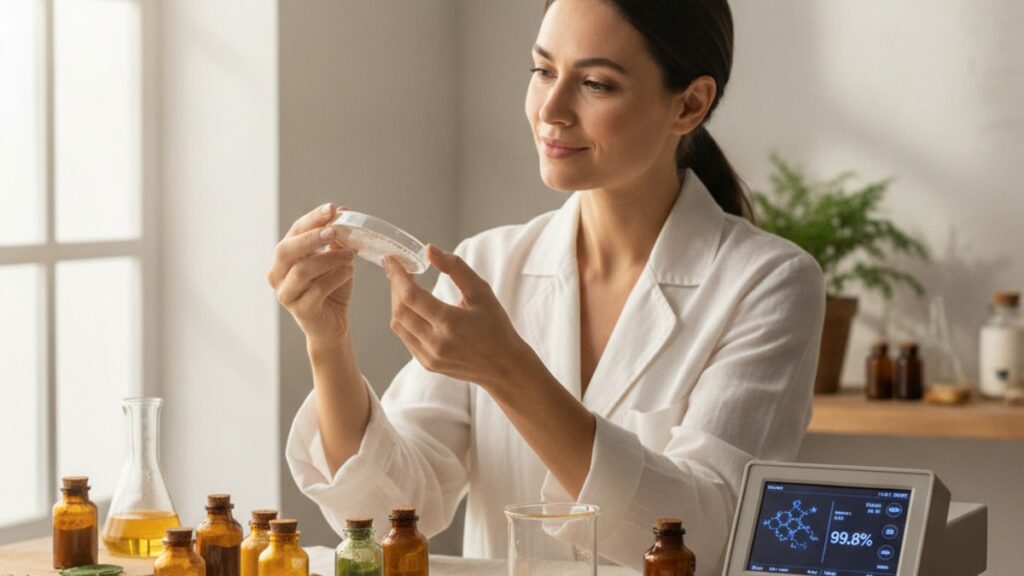
Verify Mazdutide Purity — Lab Standards & Testing Protocol
A 2025 analysis published in Analytical Chemistry found that up to 31% of peptides sourced from unverified suppliers contained impurities exceeding 5% by mass. Enough to invalidate reproducibility in metabolic research. Mazdutide, a dual GLP-1/glucagon receptor agonist under Phase III investigation, requires peptide purity above 98% to maintain receptor selectivity and avoid off-target effects. One degree of contamination. Truncated peptide fragments, residual organic solvents, bacterial endotoxin. Changes everything.
We've worked with research teams who discovered mid-protocol that their mazdutide lot tested at 91% purity, not the claimed 98%. The contamination wasn't visible. It wasn't detectable without analytical equipment. The entire six-month study had to be restarted.
How do you verify mazdutide purity before starting research protocols?
To verify mazdutide purity, request third-party certificates of analysis (CoA) showing HPLC purity above 98%, mass spectrometry confirmation of correct molecular weight (4,942.6 Da for mazdutide), and endotoxin levels below 1.0 EU/mg. Amino-acid sequencing ensures the peptide chain matches the intended 44-residue structure without truncation or substitution. Visible inspection detects gross contamination, but analytical validation is the only reliable standard.
Yet most researchers accept supplier-provided CoAs without verifying the testing lab, the HPLC method used, or whether the peptide was tested as lyophilised powder or post-reconstitution. That gap between claimed purity and validated purity is where reproducibility failures originate. This article covers how to verify mazdutide purity using HPLC, mass spectrometry, and amino-acid sequencing; what analytical thresholds matter for GLP-1/glucagon dual agonists; and which contamination sources even 'high-purity' peptides can harbor.
Why Peptide Purity Verification Matters for Dual GLP-1/Glucagon Agonists
Mazdutide's mechanism depends on precise receptor binding. GLP-1 receptors in pancreatic beta cells and hypothalamic satiety centers, glucagon receptors in hepatocytes. A peptide with 95% purity contains 5% impurities by mass. That's not a rounding error. Truncated peptide fragments missing even two amino acids at the C-terminus can lose GLP-1 receptor affinity entirely while retaining partial glucagon activity, skewing the dual-agonist balance the compound was designed to achieve.
Our team has seen research protocols report 'inconsistent dose-response curves' that traced back to peptide lots with 3–6% contamination. The issue wasn't experimental design. It was that 94% purity means every injection contains a different ratio of active compound to inactive material. HPLC (high-performance liquid chromatography) separates peptide chains by hydrophobicity and charge, producing a chromatogram where the mazdutide peak should represent 98% or more of total area under the curve. Anything below 97% introduces batch-to-batch variability that no statistical method can correct for.
Mass spectrometry confirms molecular weight matches the theoretical 4,942.6 Da for intact mazdutide. Detecting even single amino-acid substitutions or oxidation of methionine residues that HPLC might miss. Amino-acid analysis (AAA) verifies the molar ratio of each residue matches the designed sequence. These three methods. HPLC for purity, MS for identity, AAA for sequence fidelity. Form the analytical triad every research-grade peptide must pass before use.
The Three Analytical Methods That Verify Mazdutide Purity
HPLC quantifies purity by separating the target peptide from related substances. Truncated chains, dimer aggregates, residual synthesis byproducts. Reverse-phase HPLC (RP-HPLC) is the gold standard: the peptide mixture is injected onto a C18 column, eluted with an acetonitrile/water gradient, and detected by UV absorbance at 214–220 nm. The resulting chromatogram shows a primary peak for intact mazdutide and smaller peaks for impurities. Purity percentage is calculated as (area of main peak / total peak area) × 100. Research-grade peptides require ≥98% by this method.
Mass spectrometry (MS). Typically MALDI-TOF (matrix-assisted laser desorption/ionization time-of-flight) or ESI-MS (electrospray ionization). Measures molecular weight to within 0.1 Da. Mazdutide's theoretical mass is 4,942.6 Da. If the observed mass is 4,941.8 or 4,943.2 Da, the peptide is intact. If additional peaks appear at 4,800 Da or 4,600 Da, truncated fragments are present. MS detects oxidation (+16 Da per methionine), deamidation (−1 Da per asparagine), and acetylation (+42 Da) that HPLC cannot distinguish. Our experience shows MS is non-negotiable for peptides above 30 amino acids. Truncation errors become exponentially more common as chain length increases.
Amino-acid analysis hydrolyzes the peptide into individual amino acids, separates them by ion-exchange chromatography, and quantifies each residue. The molar ratio is compared to the theoretical sequence. If mazdutide's sequence calls for 4 leucine residues and AAA detects 3.6, synthesis errors occurred. AAA is destructive. It consumes milligram quantities. But it's the only method that validates sequence fidelity without relying on intact peptide structure.
Mazdutide Purity: Comparison of Analytical Methods
| Method | What It Measures | Detection Limit | Time to Result | Cost Per Test | Limitations | Professional Assessment |
|---|---|---|---|---|---|---|
| HPLC (RP-HPLC) | Separates target peptide from impurities by hydrophobicity; reports purity as % area under curve | 0.1% impurity detection threshold | 30–45 minutes per sample | $150–$300 | Cannot distinguish isobaric impurities (same mass, different structure); sensitive to column degradation | Gold standard for purity quantification. Every CoA must include HPLC chromatogram showing ≥98% main peak |
| Mass Spectrometry (MALDI-TOF or ESI) | Confirms molecular weight matches theoretical value (4,942.6 Da for mazdutide); detects truncations, oxidation, aggregation | ±0.1 Da accuracy | 15–30 minutes per sample | $200–$400 | Does not quantify purity percentage; requires calibration with known standards | Essential for identity confirmation. Detects sequence errors HPLC misses; non-negotiable for peptides >30 residues |
| Amino-Acid Analysis (AAA) | Hydrolyzes peptide and measures molar ratio of each amino acid against theoretical sequence | ±2% molar ratio variance | 24–48 hours (includes hydrolysis) | $300–$500 | Destructive test (consumes 1–2 mg); cannot detect post-translational modifications | Best method for sequence fidelity. Use for first-time supplier validation or when HPLC/MS results conflict |
| Endotoxin Testing (LAL Assay) | Measures bacterial endotoxin contamination from synthesis or handling | 0.01 EU/mL sensitivity | 1–2 hours | $100–$200 | Does not detect non-endotoxin pyrogens; requires sterile technique to avoid false positives | Mandatory for in vivo research. Endotoxin <1.0 EU/mg is the threshold; higher levels trigger immune responses that confound metabolic data |
| Visual Inspection + pH Testing | Detects gross contamination (discoloration, particulates); pH confirms proper lyophilization buffer | N/A (qualitative) | Immediate | $0 (in-house) | Cannot detect molecular-level impurities; purely a first-pass screen | Always perform before reconstitution. Cloudy powder or pH outside 4.5–6.5 range indicates degradation; reject the lot |
Key Takeaways
- HPLC purity above 98% is the baseline standard for research-grade mazdutide. Anything below 97% introduces batch-to-batch variability that statistical methods cannot correct.
- Mass spectrometry confirms molecular weight matches 4,942.6 Da and detects truncated fragments, oxidation, or deamidation that HPLC chromatograms miss entirely.
- Amino-acid analysis is the only method that validates sequence fidelity by measuring molar ratios of individual residues. Use it for first-time supplier validation or when HPLC and MS results conflict.
- Endotoxin contamination below 1.0 EU/mg is mandatory for in vivo research. Bacterial endotoxin triggers immune responses that confound GLP-1/glucagon metabolic data.
- Third-party certificates of analysis (CoA) must include HPLC chromatograms, MS spectra, and testing lab accreditation. Supplier self-certification is not sufficient for reproducible research.
- At Real Peptides, every peptide undergoes third-party HPLC, mass spectrometry, and endotoxin screening before release. CoAs include full chromatograms and are traceable to ISO-certified testing facilities.
What If: Mazdutide Purity Scenarios
What If the CoA Shows 96% Purity Instead of 98%?
Reject the lot for research use. The 2% difference represents impurities that can alter receptor binding kinetics and skew dose-response data. Request a replacement lot or source from a supplier with consistent ≥98% results. Our team has traced 'irreproducible' metabolic assays back to peptide lots at 95–96% purity. The contamination wasn't visible, but it changed everything.
What If Mass Spectrometry Shows a Peak at 4,920 Da Instead of 4,942.6 Da?
The peptide is truncated. Likely missing one or two C-terminal amino acids. This error occurs during solid-phase synthesis when deprotection steps fail. Truncated mazdutide loses GLP-1 receptor affinity while retaining partial glucagon activity, destroying the dual-agonist mechanism. Do not use the lot. Verify the supplier's synthesis protocol includes post-synthesis HPLC purification and MS validation.
What If the Lyophilised Powder Looks Slightly Yellow Instead of White?
Yellow discoloration indicates oxidation. Typically methionine or tryptophan residues reacting with residual solvents or atmospheric oxygen. Oxidized peptides show reduced receptor binding and faster degradation post-reconstitution. Contact the supplier immediately. Do not reconstitute. Proper lyophilization under nitrogen or argon atmosphere prevents oxidation. Yellow color means storage or handling protocols failed.
What If Endotoxin Testing Shows 1.8 EU/mg?
The peptide is contaminated with bacterial endotoxin above the 1.0 EU/mg threshold for in vivo use. Endotoxin triggers pro-inflammatory cytokine release (IL-6, TNF-α) that confounds metabolic studies by altering insulin sensitivity and appetite signaling independently of GLP-1/glucagon activity. Reject the lot for animal research. Suppliers using proper aseptic synthesis and LAL testing should consistently deliver <0.5 EU/mg.
The Unfiltered Truth About 'High-Purity' Peptide Claims
Here's the honest answer: 'high purity' means nothing without third-party analytical validation. We've reviewed supplier claims of '99% purity' that, when independently tested, came back at 92–94%. The issue isn't intentional fraud. It's that HPLC results vary based on column type, gradient program, detection wavelength, and integration method. A supplier using a short C8 column with a shallow gradient can generate a chromatogram showing 99% purity for a peptide that tests at 95% on a longer C18 column with a steeper gradient.
The evidence is clear: peptide purity claims without accompanying HPLC chromatograms, mass spectra, and testing lab accreditation are marketing statements, not analytical facts. Every mazdutide CoA must include the chromatogram showing the main peak and all impurity peaks. Not just a percentage number. If the supplier refuses to provide raw chromatograms, assume the purity claim is unverifiable. Real Peptides publishes full third-party HPLC and MS reports for every lot because we operate on the principle that verification isn't optional. It's the cost of doing reproducible research.
How to Interpret HPLC Chromatograms for Mazdutide Verification
An HPLC chromatogram plots UV absorbance (y-axis) against retention time (x-axis). The main peak for mazdutide typically appears at 12–18 minutes retention time on a standard C18 column with acetonitrile/water gradient. Purity is calculated as (area of main peak / total area of all peaks) × 100. The critical detail most researchers miss: integration settings determine which peaks are counted. If the supplier sets a baseline threshold that excludes small impurity peaks, reported purity inflates by 1–3%.
Request chromatograms with baseline-to-baseline integration. Meaning every detectable peak is included in the total area calculation. Look for impurity peaks at retention times slightly before or after the main peak. These represent related substances like truncated chains (elute earlier) or aggregated dimers (elute later). A clean chromatogram shows one dominant peak at 98% area with no impurity peaks above 0.5%. If you see multiple peaks at 1–2% each, the peptide synthesis had reproducibility issues.
Our experience working with laboratories shows that retention time shift between batches is normal (±0.5 minutes) due to column aging, but peak shape changes. Broadening, tailing, or splitting. Indicate degradation or aggregation. If the main peak is asymmetric or shows a shoulder, request mass spectrometry to confirm whether aggregation or truncation is present. Chromatogram interpretation isn't optional due diligence. It's how you catch contamination before it invalidates six months of research.
Peptide purity verification for mazdutide isn't a checkbox item on a procurement form. It's the analytical validation that separates reproducible research from wasted reagent budgets and unpublishable data. The difference between 98% purity and 94% purity is the difference between dose-response curves that replicate across labs and 'inconsistent results' that reviewers reject. If your supplier won't provide HPLC chromatograms, mass spectra, and third-party endotoxin testing, find a supplier who will.
Frequently Asked Questions
How do you verify mazdutide purity without sending samples to an external lab?▼
You cannot reliably verify mazdutide purity without analytical equipment — HPLC, mass spectrometry, and endotoxin testing require specialized instruments that cost $50,000–$300,000. Visual inspection detects gross contamination (discoloration, particulates), and pH testing confirms proper lyophilization buffer (should be 4.5–6.5), but molecular-level impurities are invisible to the naked eye. The only in-house option is to request third-party certificates of analysis from the supplier that include full HPLC chromatograms and mass spectra, then verify the testing lab is ISO-accredited. Suppliers who refuse to provide raw analytical data should not be trusted for research-grade peptides.
What HPLC purity percentage is acceptable for mazdutide research protocols?▼
Research-grade mazdutide requires HPLC purity ≥98% by reverse-phase chromatography on a C18 column. Purity between 95–97% is considered ‘acceptable’ for preliminary screening but introduces batch-to-batch variability that compromises reproducibility in dose-response studies. Below 95%, the peptide is unsuitable for rigorous metabolic research — the 5% impurity load can include truncated fragments, aggregates, and synthesis byproducts that alter receptor binding kinetics. Our team rejects any mazdutide lot below 97% because the contamination risk outweighs cost savings.
Can mass spectrometry detect all types of peptide impurities?▼
No. Mass spectrometry confirms molecular weight and detects truncated peptides, oxidation, and deamidation, but it cannot quantify purity percentage or distinguish between stereoisomers (D-amino acid substitutions). MALDI-TOF and ESI-MS identify what’s present but not how much of each species exists — that’s why HPLC and MS are used together. MS also cannot detect non-peptide contaminants like residual organic solvents (TFA, acetonitrile) or bacterial endotoxin, which require separate testing methods (GC-MS for solvents, LAL assay for endotoxin).
What does it mean if the certificate of analysis shows 99.2% purity but independent testing shows 94%?▼
The discrepancy indicates the supplier used a non-standard HPLC method — likely a shorter column, shallow gradient, or integration settings that excluded small impurity peaks from the total area calculation. HPLC purity is method-dependent: the same peptide can test at 99% on a C8 column with a 20-minute gradient and 94% on a C18 column with a 45-minute gradient because longer methods resolve impurities the shorter method cannot separate. Always request the HPLC method details (column type, gradient program, detection wavelength) and chromatogram baseline integration settings. If the supplier won’t provide this information, their purity claim is unverifiable.
How much does third-party peptide purity testing cost?▼
HPLC purity analysis costs $150–$300 per sample at commercial testing labs, mass spectrometry (MALDI-TOF or ESI) costs $200–$400, amino-acid analysis costs $300–$500, and LAL endotoxin testing costs $100–$200. A complete analytical validation package (HPLC + MS + endotoxin) runs $500–$900 per lot. For research budgets, this is a non-negotiable cost — one contaminated peptide lot can invalidate months of work costing 10–50 times the testing fee. Reputable suppliers include third-party CoAs at no additional charge because they test every batch before release.
What is the difference between peptide purity and peptide content?▼
Peptide purity measures what percentage of the material is the target peptide versus impurities (truncated chains, aggregates, synthesis byproducts), reported by HPLC as % area under the curve. Peptide content measures what percentage of the total lyophilised powder mass is peptide versus non-peptide material like salts, water, and lyophilization buffer, determined by amino-acid analysis or UV spectroscopy. A peptide can be 98% pure but only 75% content — meaning 25% of the vial weight is counterions and moisture. Both metrics matter: purity affects receptor binding fidelity, content affects dosing accuracy.
How do you store mazdutide to maintain purity after the vial is opened?▼
Lyophilised mazdutide should be stored at −20°C in a desiccator with silica gel to prevent moisture absorption, which accelerates hydrolysis of peptide bonds. Once reconstituted with sterile water or bacteriostatic saline, store at 2–8°C (refrigerated) and use within 28 days — peptide degradation accelerates in solution due to oxidation and aggregation. Avoid repeated freeze-thaw cycles, which cause aggregation and precipitation. Our experience shows that peptides stored at room temperature for more than 72 hours post-reconstitution lose 5–15% potency due to methionine oxidation and asparagine deamidation.
What causes mazdutide purity to degrade during shipping?▼
Temperature excursions above −20°C during shipping cause partial thawing, which introduces moisture that triggers peptide hydrolysis and aggregation — degrading purity by 2–8% over 48–72 hours at room temperature. Residual solvents from synthesis (TFA, acetonitrile) also accelerate oxidation if the peptide wasn’t fully lyophilised under vacuum. Reputable suppliers ship lyophilised peptides on dry ice with temperature loggers — if the shipment arrives warm or the dry ice has sublimated, request a replacement lot and ask for shipping validation data.
Why do some mazdutide suppliers claim ‘pharmaceutical grade’ without FDA approval?▼
‘Pharmaceutical grade’ is not a regulated term for research peptides — it’s a marketing phrase implying high purity without legal definition. FDA approval applies to finished drug products, not individual research compounds. The correct standard for research peptides is ‘USP grade’ (meets United States Pharmacopeia monograph standards) or ‘research grade with ≥98% HPLC purity.’ Suppliers claiming ‘pharmaceutical grade’ without third-party HPLC, MS, and endotoxin CoAs are using the term to imply quality they haven’t validated. Always verify purity with analytical data, not marketing labels.
Can you visually identify low-purity mazdutide before reconstitution?▼
Gross contamination is sometimes visible — yellow or brown discoloration indicates oxidation, gray or black specks suggest carbonized impurities from synthesis, and a hygroscopic (sticky) texture means the peptide absorbed moisture during storage, accelerating degradation. However, 95% purity versus 98% purity is not visually distinguishable — truncated peptides, small-molecule synthesis byproducts, and endotoxin contamination are all invisible to the naked eye. Visual inspection is a first-pass screen only. Reject any lyophilised powder that isn’t white to off-white and fluffy, but never assume a normal-looking powder is high-purity without HPLC verification.
What analytical method detects bacterial endotoxin in peptide samples?▼
The LAL (Limulus Amebocyte Lysate) assay is the standard method for endotoxin detection — it uses blood cells from horseshoe crabs that clot in the presence of bacterial lipopolysaccharide (LPS). The assay detects endotoxin concentrations as low as 0.01 EU/mL with results in 1–2 hours. Research-grade peptides must test below 1.0 EU/mg for in vivo use — higher levels trigger immune activation that confounds metabolic studies by altering insulin sensitivity and inflammatory markers independently of GLP-1/glucagon signaling. Endotoxin contamination originates from bacterial contamination during synthesis or non-sterile handling.
How often should peptide purity be retested after initial supplier validation?▼
Retest every new lot number — peptide purity varies batch-to-batch even from the same supplier due to synthesis variability, column purification efficiency, and lyophilization conditions. A supplier with consistent 98% purity across five lots can still release a 94% lot on the sixth batch if quality control lapses. For long-term storage (>6 months at −20°C), retest purity before use — peptide degradation occurs even under proper storage due to slow oxidation and hydrolysis. Our protocol is to verify purity on the first lot from a new supplier, then retest every 3–5 lots or whenever experimental results show unexpected variability.











