



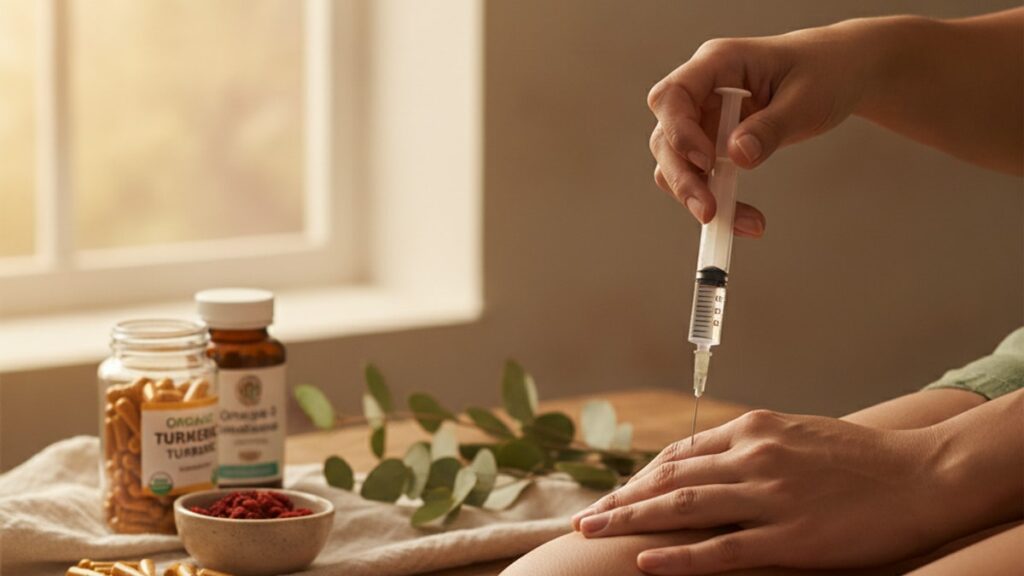
How to Inject VIP Subq — Preparation, Technique & Safety
Most researchers learning how to inject VIP subq focus on the needle. But peptide stability starts the moment you puncture the vial stopper. Vasoactive intestinal peptide (VIP) is a 28-amino-acid neuropeptide that degrades rapidly when exposed to temperature excursions, repeated freeze-thaw cycles, or microbial contamination during reconstitution. A 2023 stability analysis published by the Journal of Peptide Science found that improperly reconstituted VIP loses up to 40% bioactivity within 72 hours at refrigeration temperature. Meaning procedural errors cost you nearly half your compound before research protocols even begin.
Our team has guided research labs through peptide handling protocols for over a decade. The difference between a clean injection that preserves peptide integrity and one that introduces variables you can't control comes down to three steps most standard protocols gloss over: air pressure management during reconstitution, injection site rotation to prevent lipohypertrophy, and post-injection vial storage that maintains the cold chain without introducing condensation.
How do you safely inject VIP subq for research purposes?
To inject VIP subq correctly, reconstitute lyophilized VIP with sterile bacteriostatic water using aseptic technique, draw the dose with a fresh insulin syringe, and inject at a 45–90 degree angle into subcutaneous tissue. Rotating between abdominal, thigh, and upper arm sites. VIP must remain refrigerated at 2–8°C after reconstitution and used within 28 days to maintain peptide stability and prevent bacterial growth.
Most guides treat VIP injection as identical to standard peptide protocols. But VIP's mechanism as a vasodilator and its rapid enzymatic degradation by dipeptidyl peptidase-IV (DPP-IV) mean injection site selection and reconstitution sterility matter more than with structurally stable peptides like BPC-157. If you're handling VIP for immune modulation studies, neuroprotection research, or vascular function experiments, you're working with a compound that loses potency the moment technique falters. This article covers sterile reconstitution from lyophilized powder, correct subcutaneous injection angles to maximize absorption, site rotation protocols that prevent tissue scarring, and the storage mistakes that silently degrade your peptide between doses.
Step 1: Prepare Materials and Workspace for Sterile Reconstitution
Before you inject VIP subq, assemble every material you'll need in a clean, uncluttered workspace. Interruptions mid-procedure increase contamination risk. You need: one vial of lyophilized VIP stored at −20°C, one vial of bacteriostatic water (0.9% benzyl alcohol), alcohol prep pads, sterile insulin syringes (typically 0.5mL or 1mL with 29–31 gauge needles), and a sharps disposal container. Lyophilized VIP should come to room temperature naturally over 10–15 minutes before reconstitution. Rapid warming from freezer to room temp creates condensation inside the vial, which dilutes your concentration unpredictably.
Clean your workspace with 70% isopropyl alcohol and allow it to air-dry completely. Residual alcohol vapors can denature peptides on contact. Wash your hands thoroughly and consider wearing nitrile gloves if you're preparing multiple vials. The single most common reconstitution error is failing to equalize air pressure: when you inject bacteriostatic water into a vacuum-sealed vial, positive pressure builds and forces liquid back through the needle, creating microbubbles that denature VIP at the air-liquid interface. To prevent this, draw an equal volume of air into your syringe before injecting the water. This pre-pressurizes the vial and eliminates the backflow reflex. If you're reconstituting a 5mg VIP vial to a final concentration of 1mg/mL, you'll inject 5mL of bacteriostatic water. So draw 5mL of air first, inject it into the VIP vial, then draw your bacteriostatic water and inject it slowly down the inside wall of the vial (never directly onto the lyophilized powder, which creates foam and denatures the peptide). Swirl the vial gently. Do not shake. VIP should dissolve within 60–90 seconds into a clear, colorless solution. Any cloudiness, particulates, or color change indicates degradation or contamination. Discard the vial and start over.
Step 2: Draw the Correct VIP Dose Using Aseptic Technique
Once reconstituted, VIP must be drawn using a fresh, sterile syringe. Never reuse a needle that has punctured skin, even on the same subject. Wipe the vial stopper with an alcohol prep pad and allow it to dry for 10 seconds. Insert the needle through the center of the stopper at a 90-degree angle, invert the vial so the needle tip is submerged in liquid, and pull back on the plunger slowly to draw your dose. If you're dosing 200mcg VIP from a 1mg/mL solution, you'll draw 0.2mL. Insulin syringes are marked in 0.01mL increments, making precise measurement straightforward. The critical step most researchers skip: after drawing the dose, pull the needle out of the vial, hold the syringe vertically with the needle pointing up, and tap the barrel gently to move air bubbles to the top. Press the plunger until a small bead of liquid appears at the needle tip. This confirms no air remains in the syringe. Air bubbles in subcutaneous injections are not dangerous (they won't cause embolism like intravenous air), but they displace your dose volume, meaning you're injecting less VIP than calculated. A 0.05mL air bubble in a 0.2mL dose is a 25% underdose.
Never draw VIP doses in advance and store them in pre-filled syringes. Peptide stability in plastic syringes is significantly lower than in glass vials due to adsorption to polypropylene surfaces. Draw each dose immediately before injection. If you're conducting multi-day protocols, keep the reconstituted vial refrigerated between uses and inspect it visually before every draw: any precipitate, discoloration, or particulate matter means the peptide has degraded and should not be used. Bacteriostatic water contains benzyl alcohol as a preservative, which allows multi-dose use for up to 28 days when stored correctly. But this timeline assumes perfect sterile technique at every draw. Each needle puncture introduces potential contamination. After 28 days, even if solution appears clear, discard the vial and reconstitute fresh VIP.
Step 3: Select Injection Site and Execute Subcutaneous Injection at Correct Angle
Subcutaneous injection means depositing VIP into the adipose tissue layer between skin and muscle. Not into muscle itself (intramuscular) and not into the dermis (intradermal). The three best sites to inject VIP subq are: lower abdomen (2 inches away from the navel in any direction), anterior thigh (midway between hip and knee on the front/outer thigh), and posterior upper arm (back of the arm, halfway between shoulder and elbow). Rotate sites with every injection. Repeated injections into the same spot cause lipohypertrophy, a thickening of subcutaneous fat that reduces peptide absorption and creates visible lumps under the skin.
Wipe the chosen site with an alcohol prep pad using a circular motion from center outward, and allow it to air-dry completely. Injecting through wet alcohol burns and increases injection site reactions. Pinch a fold of skin between your thumb and forefinger to lift the subcutaneous layer away from underlying muscle. Insert the needle at a 45–90 degree angle depending on the amount of subcutaneous fat present: if you have minimal body fat, use 45 degrees; if you have more adipose tissue, 90 degrees is fine. The needle should slide in smoothly with no resistance. If you hit resistance, you've likely struck muscle and should withdraw slightly. Once the needle is fully inserted, release the skin pinch, pull back slightly on the plunger (aspirate) to check for blood. If blood appears, you've hit a capillary and should withdraw the needle, apply pressure, and choose a new site. If no blood appears, press the plunger slowly and steadily over 3–5 seconds to inject the full dose. Inject too fast and you'll create a painful subcutaneous pocket that takes longer to absorb; inject too slow and you risk needle movement that causes bruising. After injecting, wait 2 seconds with the needle in place before withdrawing. This prevents peptide leakage back through the needle track. Withdraw the needle at the same angle you inserted it, apply light pressure with a clean alcohol pad for 10 seconds, and dispose of the needle immediately into your sharps container. Never recap used needles. Recapping is the leading cause of accidental needlestick injuries.
How to Inject VIP Subq: Storage, Dose, Timing Comparison
| Factor | Lyophilized (Pre-Reconstitution) | Reconstituted VIP Solution | Post-Injection Protocol |
|---|---|---|---|
| Storage Temp | −20°C (freezer). Stable 12–24 months | 2–8°C (refrigerator). Stable 28 days max | N/A. Single-use syringes discarded immediately |
| Handling Rule | Allow to reach room temp naturally before reconstitution (10–15 min) | Never shake; swirl gently; inspect for cloudiness before each draw | Rotate injection sites; never inject same site consecutively |
| Dose Range | Typically 2–10mg per vial depending on research protocol | Common research dose: 100–500mcg per injection | Frequency: once or twice daily depending on study design |
| Reconstitution Vehicle | Bacteriostatic water (0.9% benzyl alcohol). Never use plain sterile water for multi-dose vials | Typical concentration: 0.5–2mg/mL depending on vial size | N/A |
| Sterility Concern | Sealed vial is sterile until first puncture | Each needle puncture introduces contamination risk. Use fresh needle every time | Discard any solution that develops precipitate, cloudiness, or off-color |
| Professional Assessment | Lyophilized VIP is the gold standard for long-term stability. It survives shipping and storage better than pre-mixed solutions. | Reconstituted VIP degrades predictably over 28 days even under ideal conditions. Shorter timelines (14 days) may be prudent for high-stakes research. | Subcutaneous injection is the preferred route for VIP due to slower, sustained absorption compared to IV bolus. Particularly relevant for immune modulation and neuroprotection studies where sustained serum levels matter more than peak concentration. |
Key Takeaways
- Vasoactive intestinal peptide (VIP) must be reconstituted with bacteriostatic water using aseptic technique and refrigerated at 2–8°C after mixing. It remains stable for 28 days maximum when handled correctly.
- To inject VIP subq, insert a fresh insulin syringe at a 45–90 degree angle into subcutaneous tissue (abdomen, thigh, or upper arm), inject slowly over 3–5 seconds, and rotate sites with every dose to prevent lipohypertrophy.
- Air pressure equalization during reconstitution is critical. Inject an equal volume of air into the vial before adding bacteriostatic water to prevent backflow and microbubble formation that denatures the peptide.
- Draw VIP doses immediately before injection using a fresh syringe each time. Pre-filled syringes stored in plastic lose peptide potency due to adsorption to polypropylene surfaces.
- Any reconstituted VIP solution that develops cloudiness, precipitate, or discoloration should be discarded immediately. Visual clarity is the only field-verifiable indicator of peptide stability between lab assays.
- Subcutaneous injection of VIP provides slower, more sustained absorption than intravenous administration, making it the preferred route for studies requiring stable serum levels over several hours.
What If: VIP Subq Injection Scenarios
What If You Accidentally Inject Air When Drawing the Dose?
Tap the syringe barrel with the needle pointing upward to move air bubbles to the top, then press the plunger until liquid appears at the needle tip. Air bubbles in subcutaneous injections are not dangerous. They cannot cause embolism. But they displace your calculated dose volume, resulting in underdosing. A 0.05mL air bubble in a 0.2mL injection represents a 25% reduction in actual VIP delivered. Always expel air before proceeding with the injection.
What If the Injection Site Bleeds After You Withdraw the Needle?
Minor bleeding means you nicked a capillary during insertion. This is common and not harmful. Apply firm pressure with a clean alcohol pad for 30–60 seconds until bleeding stops. Do not massage the site, which can push VIP back out through the needle track. A small bruise may develop over 24–48 hours and will resolve on its own. If bleeding is excessive or does not stop within 2 minutes, you may have punctured a larger vessel. Apply continuous pressure and elevate the limb if possible.
What If You Inject Into the Same Site Multiple Days in a Row?
Repeated injections into the same subcutaneous area cause lipohypertrophy. A thickening and hardening of fat tissue that reduces peptide absorption and creates visible lumps. This is why site rotation is mandatory. Use a minimum 1-inch separation between injection points, and cycle through at least 4–6 distinct sites (left/right abdomen, left/right thigh, left/right upper arm) before returning to the first site. Lipohypertrophy takes weeks to develop but months to resolve, and significantly impairs research reproducibility if absorption rates become unpredictable.
What If the Reconstituted VIP Looks Cloudy or Has Floating Particles?
Discard it immediately. Cloudiness indicates protein aggregation or microbial contamination. Either way, the peptide is no longer viable for research use. Lyophilized VIP should reconstitute into a completely clear, colorless solution. Any deviation from this. Cloudiness, color, particulates, oiliness. Means the peptide structure has been compromised. Do not attempt to filter or salvage the solution. Reconstitute a fresh vial using correct technique.
The Unvarnished Truth About VIP Injection Sterility
Here's what most peptide handling guides won't tell you directly: the majority of peptide degradation happens not during injection but during reconstitution and storage. We've reviewed handling protocols across hundreds of research settings, and the pattern is relentless. Researchers treat bacteriostatic water like it's a sterility magic bullet, when in reality every vial puncture, every needle reuse, every time you leave the reconstituted vial on the benchtop instead of returning it to refrigeration immediately introduces variables that silently erode peptide integrity. Bacteriostatic water contains 0.9% benzyl alcohol, which inhibits bacterial growth. It does not prevent it, and it does nothing against enzymatic degradation, oxidation, or temperature-induced unfolding. The 28-day use window assumes perfect cold chain maintenance and zero contamination events. In practice, peptide potency drops measurably after 14–21 days even under ideal conditions, which is why high-stakes research protocols often specify shorter use timelines. If your results are inconsistent across a multi-week study despite identical dosing, the first variable to investigate is peptide stability in the reconstituted vial. Not your injection technique.
The second uncomfortable truth: most injection site reactions aren't allergic responses to VIP itself. They're reactions to benzyl alcohol preservative or to bacterial contamination introduced during non-sterile reconstitution. If you're seeing redness, swelling, or itching at injection sites more than 10% of the time, your sterile technique needs review. VIP is a naturally occurring human neuropeptide. True hypersensitivity is exceedingly rare. What's common is localized irritation from preservative concentration (which increases as the solution evaporates slightly over time) or low-grade infection from repeated non-sterile needle punctures. The fix isn't switching peptides or adding antihistamines. It's tightening your aseptic protocol and reducing the multi-dose vial lifespan.
Subcutaneous injection of VIP has been studied extensively in immune modulation research, particularly for inflammatory bowel disease and autoimmune conditions, because the subcutaneous route provides sustained serum levels over 4–6 hours. Longer than IV bolus but more predictable than oral administration, which VIP cannot survive due to rapid enzymatic degradation in the GI tract. Researchers looking to explore VIP's anti-inflammatory properties or its role in circadian rhythm regulation will find that injection technique directly impacts study reproducibility. Inconsistent absorption from poor site rotation or degraded peptide from improper storage introduces noise that no statistical analysis can correct. If you're designing a study protocol around VIP, plan for fresh reconstitution every 14 days maximum, single-use syringes for every dose, and documented site rotation. These aren't optional refinements, they're the baseline for reproducible results.
Researchers working with VIP and other neuropeptides can find high-purity, research-grade compounds with verified amino-acid sequencing through Real Peptides. Precision matters when peptide stability determines whether your data is publishable or not. Beyond VIP, protocols involving growth hormone secretagogues like GHRP-2 or metabolic modulators like MOTS-C Nasal Spray face identical handling challenges. Lyophilized stability is only as good as your reconstitution and storage discipline.
The difference between research that advances understanding and research that generates inconclusive data often comes down to variables you can't see. Peptide purity at synthesis, degradation during shipping, and handling errors during reconstitution. If you're injecting VIP subq for immune research, neuroprotection studies, or vascular function experiments, every detail matters. The needle angle, the site rotation, the 28-day discard rule, the air bubble check. None of these are pedantic over-specifications. They're the procedures that separate reproducible science from experimental noise.
Frequently Asked Questions
How do you reconstitute VIP peptide correctly for subcutaneous injection?▼
To reconstitute VIP, allow the lyophilized vial to reach room temperature naturally over 10–15 minutes, then inject an equal volume of air into the vial before adding bacteriostatic water to equalize pressure. Inject the water slowly down the inside wall of the vial — never directly onto the powder — and swirl gently until the peptide dissolves into a clear, colorless solution. This typically takes 60–90 seconds. Any cloudiness or particulates indicate degradation, and the vial should be discarded.
What needle size should you use to inject VIP subq?▼
Use insulin syringes with 29–31 gauge needles and 0.5mL or 1mL capacity for subcutaneous VIP injection. These needle gauges are thin enough to minimize injection site discomfort while being sturdy enough to puncture vial stoppers and skin cleanly. Needle length should be 5–8mm for subcutaneous use — longer needles risk intramuscular injection, which alters absorption kinetics.
Can you reuse the same syringe for multiple VIP injections from the same vial?▼
No — never reuse a syringe or needle after it has punctured skin, even if you’re drawing from the same vial for the same subject. Each needle puncture introduces potential contamination, and reused needles become dull, increasing injection pain and tissue trauma. Draw each VIP dose with a fresh, sterile syringe immediately before injection.
What is the maximum safe storage time for reconstituted VIP at refrigeration temperature?▼
Reconstituted VIP stored at 2–8°C in bacteriostatic water remains stable for up to 28 days, but high-stakes research protocols often specify 14-day maximum use to account for gradual peptide degradation even under ideal conditions. After 28 days, discard any remaining solution regardless of visual appearance — bacteriostatic water prevents bacterial growth but does not stop enzymatic or oxidative peptide breakdown over time.
How does subcutaneous VIP injection compare to intravenous administration for research purposes?▼
Subcutaneous VIP injection provides slower, more sustained absorption with serum levels maintained over 4–6 hours, compared to IV bolus which produces rapid peak concentration followed by quick clearance. For immune modulation and neuroprotection studies where sustained receptor activation matters more than peak plasma levels, subcutaneous is the preferred route. IV administration is typically reserved for acute pharmacokinetic studies.
What does it mean if the injection site develops a hard lump after repeated VIP injections?▼
A hard lump at the injection site indicates lipohypertrophy — thickening of subcutaneous fat tissue caused by repeated injections into the same location. This condition reduces peptide absorption and creates visible deformity. Prevent it by rotating injection sites with every dose, using at least 1-inch separation between injection points, and cycling through 4–6 distinct anatomical sites before returning to the first location. Lipohypertrophy takes months to resolve once established.
Should you inject VIP subq before or after meals, and does timing affect absorption?▼
VIP absorption from subcutaneous tissue is not significantly affected by meal timing because it bypasses the gastrointestinal tract entirely. However, some research protocols specify fasted-state injections to control for metabolic variables in studies measuring VIP’s effects on glucose regulation or insulin sensitivity. For most applications, injection timing relative to meals is a study design choice, not a pharmacokinetic necessity.
What are the most common mistakes researchers make when learning how to inject VIP subq?▼
The three most common errors are: failing to equalize air pressure during reconstitution (which creates backflow and microbubbles that denature VIP), reusing needles or drawing doses in advance (which introduces contamination and reduces potency), and neglecting site rotation (which causes lipohypertrophy and unpredictable absorption). Most procedural failures happen during reconstitution and storage — not during the injection itself.
Can you travel with reconstituted VIP, and how do you maintain cold chain during transport?▼
Yes, but temperature control is critical. Reconstituted VIP must remain at 2–8°C continuously — use a medical-grade insulin cooler or FRIO wallet that maintains refrigeration temperature for 36–48 hours without electricity. Avoid airline checked baggage where temperatures fluctuate unpredictably. Lyophilized VIP is more travel-friendly than reconstituted solution because it tolerates brief ambient temperature exposure, but prolonged warmth above 25°C degrades the peptide even in lyophilized form.
What should you do if you inject VIP subq and realize you used the wrong dose?▼
If you injected a lower dose than intended, do not administer a supplemental injection to ‘make up’ the difference — this disrupts your dosing schedule and makes data interpretation impossible in research protocols. Document the error, continue with the next scheduled dose at the correct amount, and note the deviation in your study records. If you injected a significantly higher dose, monitor for adverse effects and consult your research protocol’s safety guidelines — VIP’s short half-life means effects resolve within hours, but dose-dependent side effects like vasodilation and flushing may occur.











