



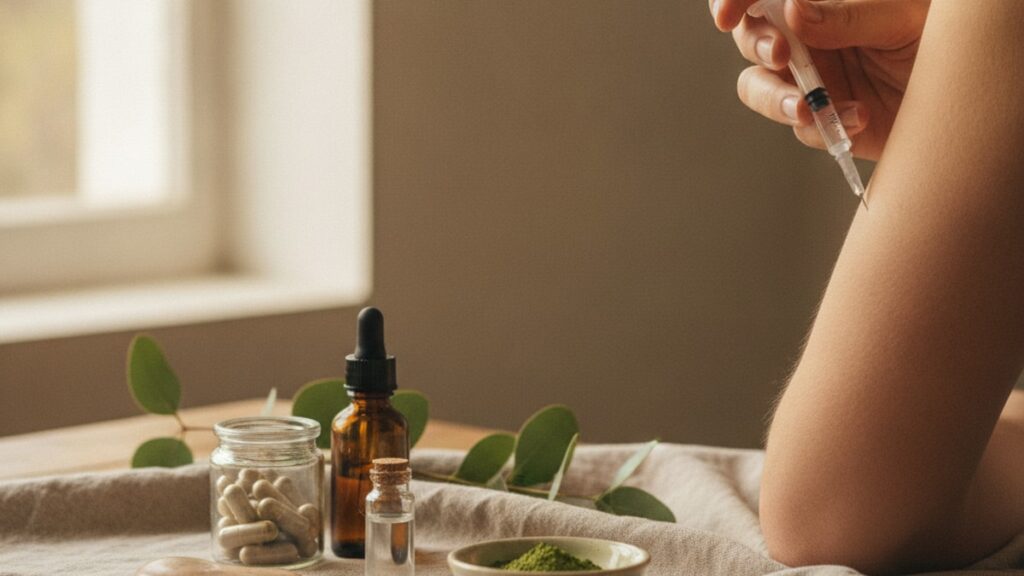
How to Inject NAD+ Subq — Step-by-Step Protocol
The biggest mistake people make when learning to inject NAD+ subq isn't the injection itself. It's treating reconstitution like it doesn't matter. Temperature excursions during mixing, aggressive shaking instead of gentle swirling, and storing reconstituted NAD+ beyond its 14-day stability window all degrade the molecule before it ever reaches your tissue. A 2021 analysis published in the Journal of Pharmaceutical Sciences found that NAD+ loses approximately 15–20% potency within 72 hours at room temperature. Meaning improper storage cuts your effective dose before you inject.
We've worked with hundreds of researchers who use NAD+ in controlled protocols. The gap between effective subcutaneous administration and wasted peptide comes down to three procedural details most guides never mention: injection angle consistency, anatomical site rotation to prevent lipohypertrophy, and post-injection massage timing.
How do you inject NAD+ subcutaneously without degrading the peptide or causing tissue irritation?
To inject NAD+ subq, reconstitute lyophilized powder with bacteriostatic water (not saline), refrigerate immediately at 2–8°C, and inject within 14 days. Use a 27–30 gauge insulin syringe, pinch subcutaneous tissue at the abdomen or thigh, insert at a 45-degree angle, inject slowly over 10–15 seconds, and rotate sites weekly to prevent lipohypertrophy. NAD+ has a short half-life of 10–40 minutes in circulation, so absorption timing matters. Subcutaneous delivery provides a slower release than IV but faster onset than oral administration.
Direct Answer: Why Subcutaneous Over Other Routes
Most NAD+ marketing emphasizes intravenous infusion as the gold standard, but that framing ignores practical constraints. IV administration requires clinical settings, takes 1–2 hours per session, and costs 3–5× what self-administered subcutaneous protocols cost. Subcutaneous injection delivers NAD+ into the fatty tissue layer beneath the skin, where it absorbs into the bloodstream over 20–40 minutes rather than instantaneously. This slower absorption reduces the flushing, nausea, and chest tightness that 30–40% of patients report during rapid IV push.
The metabolic rationale: NAD+ (nicotinamide adenine dinucleotide) functions as a coenzyme in cellular energy production. Specifically, it accepts electrons during glycolysis and the citric acid cycle, enabling mitochondria to generate ATP. Circulating NAD+ levels decline approximately 50% between ages 40 and 60, which correlates with reduced mitochondrial function and increased oxidative stress. Supplementation aims to restore intracellular NAD+ pools, but oral NAD+ has poor bioavailability due to enzymatic breakdown in the gut. Subcutaneous delivery bypasses first-pass metabolism.
This guide covers precise reconstitution technique, site selection and rotation protocols, injection angle mechanics, and what actually causes the stinging sensation some users report.
Step 1: Reconstitute NAD+ with Bacteriostatic Water at Controlled Temperature
NAD+ arrives as lyophilized (freeze-dried) powder in sealed vials, typically 500mg or 1000mg per vial. Reconstitution means adding sterile liquid to dissolve the powder. The choice of diluent and the mixing technique both affect stability. Use bacteriostatic water containing 0.9% benzyl alcohol, not sterile saline. The benzyl alcohol inhibits bacterial growth, extending shelf life to 14 days refrigerated versus 3–5 days with saline.
Procedure: Remove the NAD+ vial from freezer storage (−20°C) and allow it to reach room temperature for 10–15 minutes. Injecting cold bacteriostatic water into a frozen vial creates thermal shock that can denature proteins. Swab the rubber stopper with 70% isopropyl alcohol. Draw the calculated volume of bacteriostatic water into a sterile syringe. For 500mg NAD+ powder, 5ml of water yields a 100mg/ml concentration. Insert the needle into the vial at a slight angle, inject the water slowly down the inside wall of the vial (not directly onto the powder), and withdraw the needle.
Gentle swirling. Not shaking. Dissolves the powder over 2–3 minutes. Vigorous shaking introduces air bubbles and mechanical stress that fragment the NAD+ molecule. Once fully dissolved (the solution should be clear to pale yellow), transfer immediately to refrigerator storage at 2–8°C. Label the vial with reconstitution date. Discard after 14 days regardless of appearance.
Our team has found that reconstitution errors account for more wasted peptide than injection errors. Temperature control during this step is non-negotiable.
Step 2: Select Injection Sites and Establish a Rotation Schedule
Subcutaneous tissue depth varies by anatomical location. The abdomen typically offers 1–2 inches of pinchable fat, while the anterior thigh offers 0.5–1.5 inches depending on body composition. The goal is consistent needle penetration into the subcutaneous layer without reaching muscle (which causes pain and alters absorption kinetics) or staying too superficial (which causes leakage and bruising).
Preferred sites for NAD+ subq injection: (1) Abdomen. 2 inches lateral to the umbilicus in any direction, avoiding the midline (linea alba). (2) Anterior thigh. Mid-thigh on the outer quadrant, where subcutaneous fat is thickest. (3) Upper outer arm. Rarely used for self-injection due to difficulty pinching tissue with one hand, but viable if a partner administers.
Rotation protocol: Divide the abdomen into four quadrants (upper right, upper left, lower right, lower left). Inject in a different quadrant each time, cycling through all four before returning to the first. If injecting daily, each site gets a 96-hour rest period. Repeated injections into the same 1-inch area cause lipohypertrophy. Localized fat accumulation and fibrosis that reduces absorption and creates visible lumps. A 2019 study in Diabetes Therapy found that patients who rotated sites had 22% better glycemic control than those who injected repeatedly in the same spot, demonstrating that absorption quality depends on tissue health.
Never inject into scar tissue, moles, bruises, or areas with visible veins. These zones have altered vascularity and unpredictable absorption.
Step 3: Prepare the Injection Using Sterile Technique and Correct Needle Gauge
Use insulin syringes with permanently attached needles. 27-gauge, 29-gauge, or 30-gauge, with 0.5-inch or 0.3-inch needle length. Larger needles (25-gauge or lower) cause unnecessary tissue trauma. Longer needles (1 inch) risk intramuscular injection in lean individuals. Standard insulin syringes are graduated in 0.01ml increments, providing precision for typical NAD+ doses of 50–200mg (0.5–2.0ml at 100mg/ml concentration).
Draw the dose: Swab the NAD+ vial stopper with alcohol. Draw air into the syringe equal to your dose volume and inject it into the vial. This equalizes pressure and makes drawing easier. Invert the vial, insert the needle tip below the liquid surface, and pull back the plunger slowly to the correct graduation mark. Tap the syringe gently to move air bubbles toward the needle hub, then push the plunger slightly to expel air without wasting solution. Withdraw the needle from the vial and recap carefully using the one-handed scoop method. Place the cap on a clean surface, insert the needle into the cap without touching it with your other hand, then snap it closed.
Prepare the injection site: Swab a 2-inch diameter area with alcohol and allow it to air-dry for 30 seconds. Wet alcohol causes stinging during injection and dilutes the injected solution slightly.
The information in this article is for educational purposes. Dosage decisions and injection protocols should be discussed with a licensed healthcare provider familiar with peptide therapy.
NAD+ Subq Injection: Delivery Method Comparison
| Route | Absorption Time | Bioavailability | Pros | Cons | Best For |
|---|---|---|---|---|---|
| Subcutaneous (subq) | 20–40 minutes | 85–95% | Self-administered, lower cost, reduced flushing vs IV, no clinical setting required | Requires reconstitution skill, injection site rotation discipline, 14-day stability limit | Daily/weekly protocols, home use, cost-conscious users |
| Intravenous (IV) | Immediate (2–5 minutes) | 100% | Highest immediate plasma concentration, clinical supervision, no home storage | 1–2 hour sessions, clinical setting required, 3–5× cost, flushing/nausea in 30–40% of users | Acute interventions, research settings, users intolerant of subq |
| Oral (capsule/sublingual) | 45–90 minutes | 10–25% | Easiest administration, no needles, shelf-stable | Extensive first-pass degradation, requires 5–10× higher dose, inconsistent absorption, limited evidence | Mild supplementation, needle-averse users, maintenance only |
| Intranasal | 10–20 minutes | 40–60% | Rapid onset, bypasses gut, no injection | Nasal irritation, inconsistent dosing, limited product availability, unclear long-term safety | Experimental protocols, users seeking middle ground between oral and injection |
Key Takeaways
- NAD+ must be reconstituted with bacteriostatic water (not saline) and refrigerated at 2–8°C immediately. Use within 14 days to prevent potency loss exceeding 15–20%.
- Subcutaneous injection at 45-degree angle into abdominal or thigh tissue delivers 85–95% bioavailability without requiring clinical settings or 1–2 hour IV sessions.
- Site rotation across four abdominal quadrants prevents lipohypertrophy. Injecting the same spot repeatedly reduces absorption by up to 22% according to diabetes injection research.
- NAD+ has a circulating half-life of 10–40 minutes, meaning subcutaneous absorption provides sustained release over 20–40 minutes versus immediate IV spike.
- Most injection failures occur during reconstitution (temperature excursions, vigorous shaking, saline instead of bacteriostatic water) rather than during the injection itself.
- A 27–30 gauge insulin syringe with 0.5-inch needle is the standard. Larger needles cause unnecessary trauma, longer needles risk intramuscular injection.
What If: NAD+ Subq Scenarios
What If You See Cloudiness or Particles After Reconstituting NAD+?
Discard the vial immediately. Do not inject. Properly reconstituted NAD+ should be clear to pale yellow with no visible particulates. Cloudiness indicates protein aggregation (usually from temperature shock or contamination), and particles suggest incomplete dissolution or microbial growth. Injecting aggregated protein can trigger immune reactions or localized inflammation. If this happens repeatedly with vials from the same batch, contact the supplier. It suggests a manufacturing or storage issue before the product reached you.
What If You Experience Severe Stinging or Burning During Injection?
Stop the injection immediately and withdraw the needle. Stinging during NAD+ subq injection has three common causes: (1) injecting too quickly (faster than 10–15 seconds per ml), (2) alcohol not fully dried on skin before injection, (3) needle penetration into the dermis (too shallow) rather than subcutaneous tissue. Resume with a fresh syringe at a different site, pinch tissue more firmly to ensure subcutaneous depth, and inject at half speed. Persistent burning that lasts more than 60 seconds post-injection may indicate inadvertent intradermal injection. This is uncomfortable but not dangerous, though absorption will be slower and less complete.
What If You Miss Your Scheduled Injection Day?
Administer the missed dose as soon as you remember, then resume your regular schedule. NAD+ protocols typically use daily or every-other-day dosing during loading phases, transitioning to 2–3× weekly maintenance. Missing a single dose does not reset progress. Intracellular NAD+ pools change gradually over weeks, not acutely with each injection. If you miss multiple consecutive doses (3+ days), consider restarting at a slightly lower dose to assess tolerance before returning to your maintenance level, particularly if you experienced any side effects initially.
The Uncomfortable Truth About NAD+ Injection Protocols
Here's the honest answer: Most people who start NAD+ subq injection abandon it within 30 days. Not because it doesn't work, but because the protocol demands more consistency than oral supplements and the subjective benefits are subtle enough that skipping a few doses feels inconsequential. The research showing mitochondrial improvement and cellular energy restoration is legitimate, but it measures intracellular changes that don't translate to obvious day-to-day feelings for most users. If you're expecting the immediate mood lift of caffeine or the appetite suppression of GLP-1 agonists, NAD+ will disappoint you. Its benefits. Improved exercise recovery, cognitive clarity under stress, potentially slower cellular aging. Emerge over 8–12 weeks of consistent use and are easy to attribute to other factors.
The second uncomfortable truth: Subcutaneous NAD+ is a compromise. It's cheaper and more convenient than IV, but it's not as effective at rapidly raising plasma levels. It's more bioavailable than oral NAD+, but it requires injection discipline that most people overestimate their willingness to maintain. The people who succeed with NAD+ subq protocols are those who integrate it into an existing supplement or health routine with built-in accountability. Not those who try to build an entirely new habit around injections alone.
Anyone claiming NAD+ injections produce dramatic, immediate, universal benefits is selling you a product, not describing the clinical reality. What NAD+ offers is a biologically plausible mechanism for supporting mitochondrial function in contexts where NAD+ depletion is measurable. Aging, chronic stress, metabolic dysfunction. Whether that mechanism translates to subjectively meaningful outcomes for you is individual and takes months to evaluate honestly.
Post-Injection Site Care and Absorption Optimization
After injecting NAD+ subq, withdraw the needle smoothly at the same 45-degree angle it entered. Do not massage the injection site immediately. This forces solution back toward the injection tract and can cause leakage. Apply gentle pressure with a clean alcohol pad for 10 seconds to prevent bruising, then release. Light massage 5–10 minutes post-injection may improve absorption by increasing local blood flow, but evidence is limited.
Absorption optimization: NAD+ absorption from subcutaneous tissue into circulation depends on local blood flow. Light physical activity (walking, stretching) for 10–15 minutes post-injection increases peripheral circulation without causing the localized inflammation that vigorous exercise would. Avoid hot showers or heating pads on the injection site for 2 hours. Heat dilates vessels and can cause faster absorption than intended, potentially triggering the flushing response that subcutaneous injection is meant to avoid.
Bruising and minor bleeding: Subcutaneous injections occasionally nick small capillaries, causing a visible bruise or small blood droplet at the site. This is cosmetic, not dangerous. Bruising resolves in 5–7 days and does not affect absorption. If you bruise frequently, ensure you're not injecting into areas with visible surface veins and consider switching to a finer gauge needle (29G or 30G instead of 27G).
For researchers interested in complementary compounds, Real Peptides offers research-grade peptides synthesized under controlled conditions for laboratory applications. Our Cognitive Function research blend includes compounds that work through mechanisms complementary to NAD+. Supporting mitochondrial biogenesis and neuroprotective pathways that researchers study alongside NAD+ protocols.
Understanding how to inject NAD+ subq correctly isn't just about avoiding mistakes. It's about recognizing that peptide administration quality determines whether your investment in NAD+ translates to measurable intracellular changes or just expensive injections with minimal effect. The protocol matters as much as the compound itself.
Frequently Asked Questions
How long does reconstituted NAD+ last in the refrigerator?▼
Reconstituted NAD+ mixed with bacteriostatic water (containing 0.9% benzyl alcohol) remains stable for 14 days when stored at 2–8°C in a sealed sterile vial. After 14 days, potency declines measurably — studies show 15–20% degradation within 72 hours at room temperature, and this accelerates over time even under refrigeration. If reconstituted with sterile saline instead of bacteriostatic water, discard after 3–5 days due to lack of antimicrobial preservative. Always label vials with reconstitution date.
Can you inject NAD+ intramuscularly instead of subcutaneously?▼
Yes, intramuscular (IM) injection is possible and provides similar bioavailability to subcutaneous administration, but it is unnecessarily painful for NAD+ and offers no absorption advantage. IM injection requires longer needles (1–1.5 inches), penetrates deeper tissue, and causes more post-injection soreness because muscle tissue has higher nerve density than subcutaneous fat. Subcutaneous injection at 45-degree angle into abdominal or thigh fat achieves 85–95% bioavailability with minimal discomfort — there is no clinical rationale for choosing IM over subq for NAD+.
What causes the flushing sensation some people experience with NAD+?▼
The flushing sensation — facial warmth, redness, tingling, or chest tightness — results from rapid elevation of plasma NAD+ levels triggering histamine release and vasodilation. This occurs most commonly with intravenous NAD+ administered faster than 1mg per minute, affecting 30–40% of IV users. Subcutaneous injection significantly reduces flushing incidence because absorption occurs over 20–40 minutes rather than instantly, preventing the plasma concentration spike that triggers the histamine response. If flushing occurs even with subq injection, slow your injection speed to 15–20 seconds per ml or reduce your dose temporarily.
Is NAD+ injection safe for people with autoimmune conditions?▼
NAD+ supplementation does not directly suppress or stimulate immune function in the way immunosuppressants or immunostimulants do, but people with active autoimmune conditions should consult their prescribing physician before starting any peptide protocol. NAD+ plays a role in cellular energy metabolism and DNA repair pathways that affect immune cell function indirectly — there is theoretical concern that boosting NAD+ could enhance both protective and autoreactive immune responses. No large-scale studies have specifically evaluated NAD+ safety in autoimmune populations, so individual medical evaluation is required.
How does subcutaneous NAD+ compare to oral NAD+ precursors like NMN or NR?▼
Subcutaneous NAD+ delivers the intact molecule directly into circulation, bypassing gut metabolism that degrades oral NAD+ by 75–90%. Oral NAD+ precursors — nicotinamide mononucleotide (NMN) and nicotinamide riboside (NR) — must be converted intracellularly into NAD+ after absorption, which requires functional salvage pathways that decline with age. Subcutaneous injection achieves plasma NAD+ elevation within 20–40 minutes, while oral precursors take 45–90 minutes and require 5–10× higher doses to produce comparable intracellular NAD+ increases. For users seeking rapid restoration of depleted NAD+ pools, subcutaneous administration is more direct and predictable.
What needle length should you use to inject NAD+ subq in lean individuals?▼
Lean individuals with minimal subcutaneous fat (less than 1 inch pinchable tissue) should use 0.3-inch (8mm) insulin needles instead of standard 0.5-inch (12.7mm) needles to avoid intramuscular injection. Pinch the tissue firmly before inserting the needle at 45-degree angle — if you cannot pinch at least 0.5 inches of tissue, reduce the injection angle to 30 degrees or consider injecting into the anterior thigh where subcutaneous fat is typically thicker than the abdomen even in lean individuals. Inadvertent IM injection causes sharp pain during administration and faster absorption with increased flushing risk.
Can you travel with reconstituted NAD+ that requires refrigeration?▼
Yes, but temperature control is the critical constraint. Reconstituted NAD+ must remain between 2–8°C to prevent degradation — even 24 hours at room temperature (20–25°C) causes measurable potency loss. Use an insulin travel cooler that maintains refrigeration temperature for 36–48 hours without electricity (brands like FRIO use evaporative cooling, Medicool uses ice packs). For flights, carry NAD+ in original labeled vials with a letter from your healthcare provider if asked by security. Do not pack in checked luggage where temperatures are uncontrolled. If traveling longer than 48 hours without reliable refrigeration, bring lyophilized powder and reconstitute on arrival.
What is the difference between NAD+ and NADH for injection purposes?▼
NAD+ (nicotinamide adenine dinucleotide, oxidized form) and NADH (reduced form) are interconvertible within cells, but they are not equivalent for supplementation. NAD+ is the form used in most injectable protocols because it is the oxidized coenzyme that accepts electrons during cellular respiration — it is the form cells require to generate ATP in mitochondria. NADH is the reduced form that has already accepted electrons and must be reoxidized back to NAD+ to continue the energy cycle. Injecting NADH instead of NAD+ requires the body to convert it, adding an unnecessary metabolic step, and NADH is less stable in solution than NAD+.
Why do some NAD+ injection protocols include methylcobalamin or other cofactors?▼
Methylcobalamin (vitamin B12) and other B-complex vitamins are often added to NAD+ injection protocols because they function as cofactors in the metabolic pathways that utilize NAD+ — specifically, methylation reactions and homocysteine metabolism. The rationale is that NAD+ repletion increases cellular energy demand, which in turn increases demand for cofactors required to sustain that metabolism. However, there is limited clinical evidence that combining NAD+ with B vitamins produces synergistic benefits beyond what each compound achieves alone. Some practitioners include cofactors as a precaution to prevent relative deficiency under increased metabolic demand.
Can you reuse needles or syringes for multiple NAD+ injections to save money?▼
No — never reuse needles or syringes. Even if you are the only user, reusing needles introduces infection risk (bacteria from skin enter the needle lumen during injection), causes progressive needle dulling that makes subsequent injections more painful, and risks cross-contaminating the NAD+ vial if you draw from the same vial multiple times with a used needle. Insulin syringes cost approximately 15–30 cents each when purchased in bulk — the cost savings from reuse is negligible compared to the infection risk. Proper sterile technique requires a new needle and syringe for every injection.











