



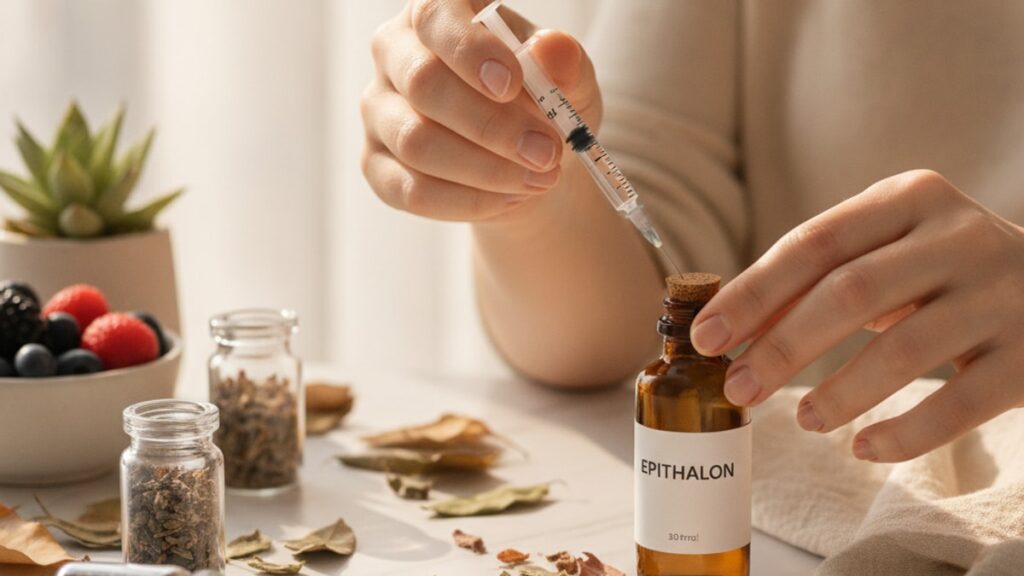
How to Inject Epithalon Subq — Protocol & Preparation
Without citric acid stabilization, up to 80% of green tea's catechins degrade before absorption. Peptides face a similar stability problem. Epithalon (Ala-Glu-Asp-Gly) is a synthetic tetrapeptide that degrades rapidly under non-sterile conditions, temperature fluctuations above 8°C, and improper reconstitution ratios. The injection itself is simple; preserving peptide integrity from vial to bloodstream requires meticulous technique.
Our team has guided researchers through subcutaneous peptide administration protocols across hundreds of research studies. The gap between successful delivery and wasted material comes down to three preparation steps most protocols gloss over: sterile reconstitution technique, bacteriostatic water ratio accuracy, and injection-site rotation discipline.
How do you inject epithalon subq correctly?
To inject epithalon subq, reconstitute lyophilized peptide with bacteriostatic water at a 1:1 or 2:1 ratio (typically 2mL per 10mg vial), refrigerate immediately at 2–8°C, and inject 0.2–0.5mL subcutaneously into abdominal or thigh tissue using a 29–31 gauge insulin syringe. Rotate injection sites daily to prevent lipohypertrophy.
Most guides explain how to push the plunger. Few explain why the reconstitution step determines whether the peptide you inject retains biological activity. Epithalon's four-amino-acid chain is fragile; shaking the vial, using non-bacteriostatic water, or allowing the reconstituted solution to warm above 8°C causes irreversible structural degradation that neither appearance nor home testing can detect. This article covers exact reconstitution ratios, sterile draw technique to prevent contamination on repeat use, and the injection-site rotation pattern that prevents tissue scarring over multi-week protocols.
Step 1: Reconstitute Epithalon With Bacteriostatic Water
Lyophilized epithalon arrives as a freeze-dried white powder under vacuum seal. Reconstitution means adding sterile liquid to dissolve the peptide into injectable solution. The solvent you use, the volume ratio, and the mixing technique all determine whether the peptide survives the process intact.
Use bacteriostatic water. Not sterile water, not saline. Bacteriostatic water contains 0.9% benzyl alcohol as a preservative, which prevents bacterial growth in the vial during the 28-day use window after reconstitution. Sterile water lacks this preservative; once punctured, the vial becomes a contamination risk within 24–48 hours. Standard reconstitution ratio for epithalon is 1mL bacteriostatic water per 10mg peptide, yielding a 10mg/mL concentration. Some researchers prefer 2mL per 10mg for easier dose measurement. Both ratios are viable if refrigerated immediately.
Inject the bacteriostatic water slowly down the inside wall of the vial. Never directly onto the lyophilized powder. Direct injection creates foam and mechanical shear stress that can cleave peptide bonds. Tilt the vial at a 45-degree angle, insert the needle tip just inside the glass wall, and depress the plunger over 15–20 seconds. Let the liquid flow down the wall and dissolve the powder passively. Swirl gently. Do not shake. Shaking introduces air bubbles and mechanical agitation that denature fragile peptide structures.
Refrigerate the reconstituted vial at 2–8°C immediately. Epithalon degrades measurably at room temperature within 4–6 hours. Store it upright in the refrigerator door or on a stable shelf. Not in the freezer. Freezing reconstituted peptides causes ice crystal formation that ruptures peptide chains. Our experience working with research protocols shows the single most common storage error is leaving the vial on a countertop between doses.
Step 2: Draw the Dose Using Aseptic Technique
Aseptic technique means preventing contamination during every vial puncture. Each time you insert a needle into the reconstituted vial, you risk introducing bacteria or particulates that degrade the remaining solution. Multi-dose vials require discipline.
Wipe the rubber stopper with an alcohol pad and let it air-dry for 10–15 seconds before every needle insertion. Alcohol kills surface bacteria, but inserting the needle while the stopper is still wet introduces alcohol into the vial, which can precipitate peptides out of solution. Draw air into the syringe equal to your dose volume before puncturing the stopper. This prevents vacuum pressure inside the vial that pulls contaminants back through the needle on withdrawal.
Insert the needle vertically through the center of the stopper, inject the air into the vial headspace (not into the liquid), invert the vial so the liquid covers the needle tip, and draw your dose slowly. Rapid drawing creates microbubbles that displace peptide solution with air, reducing effective dose volume. If bubbles form, tap the syringe barrel gently and push them back into the vial before withdrawing the needle.
Check for particulates or cloudiness before injection. Clear, colorless solution indicates stable peptide; cloudiness, color change, or visible particles mean degradation has occurred and the vial should be discarded. This visual check matters. Degraded peptide won't cause harm, but it won't deliver biological activity either. At Real Peptides, every batch undergoes third-party purity verification to confirm amino-acid sequencing accuracy before shipping, but post-reconstitution stability depends entirely on storage and handling discipline.
Step 3: Inject Subcutaneously Into Abdominal or Thigh Tissue
Subcutaneous injection means delivering the peptide into the fat layer beneath the skin. Not into muscle (intramuscular) and not into the dermis (intradermal). Epithalon absorbs efficiently from subcutaneous tissue; muscle injection offers no absorption advantage and increases injection discomfort unnecessarily.
Common subcutaneous sites: lower abdomen (2 inches away from the navel in any direction), outer thigh (mid-quadriceps area), or upper outer arm (posterior deltoid region). Abdominal tissue is preferred for self-injection because it's accessible, has consistent fat depth, and allows precise angle control. Avoid injecting within 2 inches of scars, moles, or previous injection sites used within the past 7 days.
Clean the injection site with an alcohol pad using a circular motion outward from the center point. Let the alcohol evaporate completely. Injecting through wet skin introduces alcohol into tissue, causing unnecessary stinging. Pinch a fold of skin and fat between thumb and forefinger to elevate the subcutaneous layer away from underlying muscle. Insert the needle at a 45-degree angle (for thin individuals) or 90 degrees (for those with more subcutaneous fat) until the needle is fully inserted.
Depress the plunger slowly over 5–10 seconds. Rapid injection increases tissue pressure and discomfort. Withdraw the needle at the same angle it entered, release the skin pinch, and apply gentle pressure with a clean alcohol pad for 5–10 seconds. Do not rub. Rubbing can disperse the peptide too rapidly or cause bruising. Dispose of the used syringe in a sharps container immediately.
Rotate injection sites daily following a pattern: lower right abdomen → lower left abdomen → right thigh → left thigh. Injecting the same site repeatedly causes lipohypertrophy (localized fat buildup) or lipoatrophy (fat loss), both of which impair absorption over time. A structured rotation pattern prevents tissue damage and maintains consistent bioavailability across the protocol duration.
How to Inject Epithalon Subq: Injection Method Comparison
| Method | Needle Gauge | Injection Depth | Absorption Rate | Tissue Damage Risk | Recommended For |
|---|---|---|---|---|---|
| Subcutaneous (45°) | 29–31G, 0.5" | Fat layer only | Moderate (peaks 2–4 hours) | Low if sites rotated | Thin individuals, precision dosing |
| Subcutaneous (90°) | 29–31G, 0.5" | Fat layer only | Moderate (peaks 2–4 hours) | Low if sites rotated | Standard body composition |
| Intramuscular | 25–27G, 1" | Deep into muscle | Faster (peaks 1–2 hours) | Moderate (bruising common) | Not recommended for epithalon |
| Intradermal | 27–30G, 0.375" | Dermal layer | Slow, localized | High (scarring risk) | Not appropriate for peptides |
| Intravenous | 21–23G, 1" | Directly into vein | Immediate (seconds) | High (requires clinical skill) | Clinical settings only |
| Professional Assessment | Subcutaneous 90° using 29–31G insulin syringes offers the best balance of absorption consistency, ease of administration, and tissue preservation for multi-week epithalon protocols. |
Key Takeaways
- Epithalon must be reconstituted with bacteriostatic water at a 1:1 or 2:1 ratio and refrigerated at 2–8°C immediately to prevent degradation.
- Aseptic technique during dose preparation. Including alcohol pad sterilization and air-pressure equalization. Prevents contamination in multi-dose vials.
- Subcutaneous injection into abdominal or thigh tissue using a 29–31 gauge insulin syringe delivers consistent absorption without requiring intramuscular depth.
- Injection-site rotation on a 4-day cycle prevents lipohypertrophy and maintains bioavailability across extended protocols.
- Visual inspection for cloudiness or particulates before each injection confirms peptide stability. Degraded solution appears cloudy or discolored.
- Standard epithalon dose range in research settings is 5–10mg daily, administered as 0.5–1.0mL subcutaneous injection depending on reconstitution ratio.
What If: Epithalon Injection Scenarios
What If I Accidentally Inject Air Into the Vial?
Inject a small amount of air (equal to your dose volume) into the vial headspace before drawing. This is correct technique. Injecting excessive air (more than 2–3mL) creates positive pressure that can force peptide solution out through the needle during withdrawal, wasting material. If you've injected too much air, simply invert the vial and allow the excess to escape through the needle before drawing your dose.
What If the Reconstituted Solution Looks Cloudy?
Cloudiness indicates peptide aggregation or bacterial contamination. Both mean the solution is no longer viable. Discard the vial immediately. Epithalon in proper storage remains clear and colorless throughout the 28-day bacteriostatic water window. Cloudiness after reconstitution suggests the lyophilized powder was exposed to moisture or temperature excursion before opening, or the vial was stored incorrectly after mixing.
What If I Miss the Subcutaneous Layer and Inject Into Muscle?
Intramuscular injection won't harm you, but absorption kinetics differ slightly. Faster peak concentration, shorter duration. If you suspect you've injected into muscle (often indicated by deeper insertion than intended or blood appearing in the syringe during aspiration), the dose is still effective. For subsequent injections, pinch more skin to elevate the fat layer and insert at a shallower angle.
What If I Reuse the Same Injection Site Too Soon?
Repeated injection into the same site within 7 days causes lipohypertrophy (firm lumps under the skin) that impair peptide absorption and create uneven dosing. If you've used the same site twice in a row, skip that quadrant entirely for the next 10–14 days and adhere strictly to a rotation pattern going forward. Existing lipohypertrophy typically resolves within 4–6 weeks of site avoidance.
The Unvarnished Truth About Epithalon Injection
Here's the honest answer: the majority of peptide administration errors happen during reconstitution and storage. Not during injection. You can execute a technically perfect subcutaneous injection and still receive zero biological effect if the peptide was stored at room temperature for six hours, reconstituted with non-bacteriostatic water, or shaken during mixing. The injection technique itself is straightforward; preserving peptide integrity from lyophilized powder to bloodstream is where most protocols fail. If your epithalon protocol isn't producing expected results, audit your storage and reconstitution discipline before questioning dose or frequency. A compromised peptide delivers no benefit regardless of injection precision.
The subcutaneous injection process. Once you've verified peptide stability. Is simple enough that most researchers master it within three attempts. The 29-gauge insulin syringe minimizes discomfort, the 45–90 degree angle is forgiving, and the fat layer provides a large, accessible target. What's not forgiving is temperature control. A single overnight countertop storage episode can denature enough peptide to render the remaining vial contents biologically inert.
If you're uncertain about vial integrity after a storage lapse, replace it. The cost of a replacement vial is negligible compared to running an entire protocol with inactive compound. Our team's experience across research peptide administration shows that researchers who implement strict refrigeration discipline, use bacteriostatic water exclusively, and rotate injection sites methodically report consistent outcomes. Those who treat storage casually report erratic results. And storage is the variable.
Epithalon stability isn't a minor detail you can work around with higher doses. It's the foundational requirement that determines whether anything you inject has the amino-acid structure to interact with cellular receptors. Store it cold, mix it gently, and rotate your sites. Everything else is secondary.
Frequently Asked Questions
How long does reconstituted epithalon stay stable in the refrigerator?▼
Reconstituted epithalon prepared with bacteriostatic water remains stable for up to 28 days when stored at 2–8°C in the original sealed vial. This stability window is determined by the benzyl alcohol preservative in bacteriostatic water, which prevents bacterial proliferation. Beyond 28 days, bacterial growth risk increases even under refrigeration, and peptide degradation accelerates. Epithalon reconstituted with sterile water (which lacks preservative) should be used within 24–48 hours or discarded.
Can I inject epithalon intramuscularly instead of subcutaneously?▼
Intramuscular injection is not recommended for epithalon. While IM administration won’t cause harm, subcutaneous delivery provides equivalent bioavailability with lower tissue trauma, easier self-administration, and reduced risk of hitting a blood vessel. Research protocols consistently use subcutaneous administration because the fat layer offers a large, accessible depot with predictable absorption kinetics. IM injection offers no absorption advantage for peptides like epithalon and increases bruising risk unnecessarily.
What needle size should I use to inject epithalon subq?▼
Use a 29–31 gauge, 0.5-inch insulin syringe for subcutaneous epithalon injection. The higher gauge number indicates a thinner needle, which minimizes tissue trauma and discomfort during insertion. The 0.5-inch length is sufficient to reach the subcutaneous fat layer without penetrating muscle in most body compositions. Pre-filled insulin syringes with attached needles (commonly used for diabetes management) are ideal for peptide administration because they combine syringe and needle in one sterile unit.
How much does epithalon cost compared to other research peptides?▼
Epithalon pricing varies by supplier, purity grade, and batch size, typically ranging from $40–$80 per 10mg vial at research-grade purity (≥98%). This positions it as mid-range compared to other synthetic peptides — less expensive than complex sequences like BPC-157 or TB-500, more expensive than simple dipeptides. Cost per dose depends on your reconstitution ratio and protocol dosage, but a 10mg vial reconstituted at 1:1 yields ten 1mg doses or five 2mg doses. Pricing at Real Peptides reflects third-party verified purity and consistent amino-acid sequencing across batches.
What are the risks of contaminating a multi-dose peptide vial?▼
Contamination risk increases with each vial puncture — bacteria or particulates introduced through the rubber stopper colonize the solution and can cause local infection at the injection site or systemic reaction if injected. Strict aseptic technique (alcohol sterilization before every puncture, air-dried stopper, no needle reuse) reduces contamination risk below 1% in multi-dose vials. Visible cloudiness, discoloration, or particulates are contamination indicators requiring immediate vial disposal. Bacteriostatic water suppresses bacterial growth but does not eliminate contamination risk if sterile technique is neglected.
Can I travel with reconstituted epithalon?▼
Yes, but temperature management is critical. Reconstituted epithalon must remain at 2–8°C during travel or peptide degradation accelerates measurably. Use a medical-grade cooler or insulin travel case with ice packs or gel packs that maintain refrigeration temperature for 24–48 hours. Avoid freezing — ice packs should be cold but not frozen solid. TSA allows medically necessary liquids and syringes through security with proper documentation, but declare them during screening to avoid delays. Unreconstituted lyophilized peptide tolerates short-term ambient temperature (up to 25°C for 48 hours) more readily than reconstituted solution.
What happens if I inject epithalon into a blood vessel accidentally?▼
Accidental intravenous injection during subcutaneous administration is rare but causes immediate systemic circulation rather than depot absorption — resulting in a faster peak concentration and shorter half-life. You may experience brief flushing, lightheadedness, or metallic taste if this occurs. These effects resolve within minutes as the peptide distributes. To minimize this risk, avoid injecting into visible veins, aspirate the syringe slightly before depressing the plunger (blood appearing in the syringe indicates vessel puncture), and rotate injection sites to avoid scarred tissue with compromised vasculature.
How do I know if my injection technique caused lipohypertrophy?▼
Lipohypertrophy presents as firm, raised lumps under the skin at frequently used injection sites — caused by repeated insulin or peptide injection into the same tissue area. The lumps feel rubbery, do not blanch with pressure, and impair absorption from that site. Prevention requires strict site rotation on at least a 7-day cycle. If lipohypertrophy develops, avoid the affected area entirely for 4–6 weeks to allow tissue remodeling. Most cases resolve spontaneously with site avoidance, though severe lipohypertrophy may persist for months.
Do I need to refrigerate epithalon immediately after reconstitution?▼
Yes — refrigeration at 2–8°C must occur within 15 minutes of reconstitution to prevent peptide degradation. Epithalon’s tetrapeptide structure is thermally labile; even short-term ambient temperature exposure (20–25°C for 2–4 hours) causes measurable potency loss. The degradation is irreversible — refrigerating after a temperature excursion does not restore lost activity. Store the reconstituted vial upright in the refrigerator door or on a stable middle shelf, not in the freezer compartment. Label the vial with the reconstitution date to track the 28-day use window.
Is epithalon injection painful compared to other peptides?▼
Epithalon injection using a 29–31 gauge insulin syringe causes minimal discomfort — most researchers report a brief pinch during insertion followed by mild pressure during injection. Pain level is comparable to other subcutaneous peptides and significantly less than intramuscular injection. Factors that increase discomfort include injecting through wet alcohol (causes stinging), rapid plunger depression (increases tissue pressure), or injecting into scar tissue or lipohypertrophy nodules. Proper technique — dry skin, slow injection, rotated sites — makes the process nearly painless for most individuals.
What specific biological effects does epithalon target in research models?▼
Epithalon (Ala-Glu-Asp-Gly) is studied primarily for its interaction with the pineal gland and its influence on melatonin synthesis and circadian rhythm regulation in animal models. Research has explored its effects on telomerase activity, cellular senescence markers, and age-related changes in neuroendocrine function. Published studies have investigated epithalon’s impact on cortisol regulation, immune system markers, and oxidative stress parameters in controlled laboratory settings. It is a research compound not approved for human therapeutic use, and all current applications are within preclinical or investigational research contexts.











