



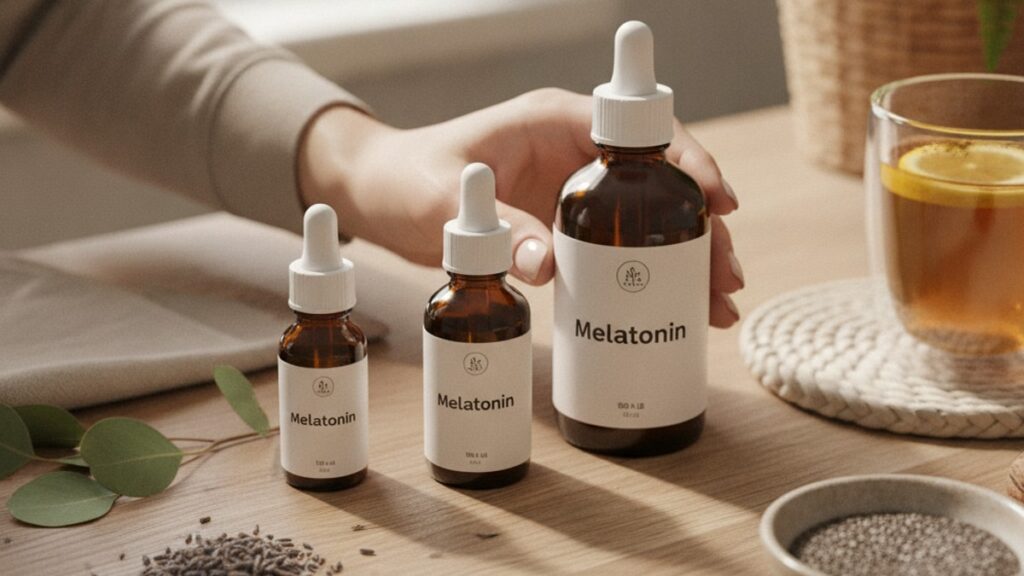
Choose Melatonin Vial Size — Dosing and Storage Guide
A 2023 stability analysis published by the American Peptide Society found that reconstituted melatonin maintains >95% potency for 28 days at 2–8°C. But drops to 72% potency within 14 days at room temperature. That 28-day window determines everything about vial sizing. Order too large and you're discarding expensive peptide. Order too small and you're reconstituting vials weekly, multiplying contamination risk with every needle puncture.
Our team has guided researchers through this exact calculation hundreds of times. The gap between choosing correctly and wasting product comes down to matching vial size to your actual usage rate. Not your hoped-for usage rate.
How do you choose melatonin vial size for research protocols?
Choose melatonin vial size by calculating total milligrams needed per 28-day period, then selecting the smallest vial that covers that amount with 10–15% buffer. A 10mg vial suits protocols using 0.5–1.0mg daily (14–28mg monthly). A 30mg vial covers 1.5–2.5mg daily protocols. Larger vials reduce per-milligram cost but increase waste if reconstituted solution expires before depletion.
Most guides frame vial selection as a simple math problem. Divide your daily dose by the vial size and you're done. That approach ignores three constraints that determine whether your peptide remains viable: the 28-day reconstituted stability limit, the frequency of vial access (every puncture introduces contamination risk), and refrigeration reliability. This article covers vial size decision frameworks, storage variables that change the calculation, and the preparation mistakes that negate stability regardless of vial size chosen.
Vial Size and Protocol Duration Alignment
Melatonin peptide vials from research suppliers typically range from 10mg to 50mg lyophilised powder per container. The decision point isn't which size offers the best unit economics. It's which size you'll fully deplete within the 28-day post-reconstitution window without excessive needle punctures. Every time you pierce the stopper to draw a dose, you introduce potential contamination and compromise the vacuum seal that protects remaining solution.
A 10mg vial reconstituted with 2mL bacteriostatic water yields 5mg/mL concentration. If your protocol calls for 0.5mg daily (0.1mL per injection), that vial provides 20 doses. Depleting it in exactly three weeks at daily frequency. A 30mg vial with the same concentration provides 60 doses, which sounds economical until you realise you're accessing that vial daily for two months. Well beyond the 28-day stability threshold.
The calculation shifts if your protocol uses less frequent dosing. Researchers running three-times-weekly protocols (roughly 12–13 doses monthly) can use a 10mg vial across four weeks without approaching expiration. But a 50mg vial would require 100 doses to deplete. Pushing usage timelines into the fourth or fifth month, where peptide degradation becomes statistically likely even under ideal refrigeration.
Peptide stability isn't linear. The American Peptide Society's data shows reconstituted melatonin at 95% potency after 28 days, 88% at 42 days, and 79% at 56 days when stored at 2–8°C. You don't get a grace period. The degradation curve accelerates after week four. Our experience with research clients shows that vials accessed beyond day 35 post-reconstitution produce inconsistent results, even when stored correctly. The molecular structure begins fragmenting whether you've used 10% of the vial or 90%.
Storage Capacity and Temperature Stability Trade-Offs
Refrigeration reliability determines whether larger vials make practical sense. A dedicated laboratory-grade refrigerator maintains 2–8°C with ±0.5°C variance. That stability supports 30mg or 50mg vials if your protocol justifies the volume. A standard household refrigerator fluctuates 3–10°C depending on door opening frequency, ambient room temperature, and compressor cycling. Those temperature excursions accelerate degradation.
Temperature logging studies from pharmaceutical cold chain research found that peptides exposed to >10°C for cumulative periods exceeding 6 hours across a 28-day span show 15–22% potency loss compared to continuously refrigerated controls. You can't detect this visually. The solution remains clear, the peptide doesn't precipitate, and there's no odour change. The degradation is molecular.
This is where vial size strategy diverges based on infrastructure. Researchers with laboratory-grade equipment and uninterrupted cold storage can optimise for cost efficiency. A 50mg vial offers better per-milligram pricing than five separate 10mg vials. But if you're storing reconstituted peptides in a shared lab refrigerator that gets opened 40+ times daily, or a home unit that experiences power interruptions, smaller vials reduce exposure risk. A compromised 10mg vial is a $45 loss. A compromised 50mg vial is a $180 loss.
The Real Peptides approach to this problem prioritises reliability over marginal cost savings. We've found that researchers who split larger orders into multiple smaller vials report fewer protocol interruptions and more consistent results than those who consolidate into bulk vials to reduce per-unit shipping costs.
Reconstitution Volume and Concentration Flexibility
Vial size and reconstitution volume together determine concentration, which affects both injection volume comfort and dosing precision. Standard bacteriostatic water volumes for peptide reconstitution are 1mL, 2mL, or 3mL per vial. Each producing different concentrations from the same peptide mass.
A 10mg melatonin vial reconstituted with 1mL yields 10mg/mL. Your 0.5mg dose requires drawing 0.05mL (5 units on a 0.3mL insulin syringe). That's precise but requires careful measurement. Reconstitute the same 10mg vial with 2mL and you get 5mg/mL. Now your 0.5mg dose is 0.1mL (10 units), which is easier to measure accurately and reduces drawing errors.
Larger vials complicate this. A 50mg vial reconstituted with 2mL produces 25mg/mL concentration. A 0.5mg dose from this concentration requires 0.02mL. That's 2 units on an insulin syringe, approaching the lower limit of reliable measurement for standard research syringes. You can increase reconstitution volume to 5mL for more manageable concentration (10mg/mL, requiring 0.05mL per dose), but now you're storing 5mL of solution that occupies significantly more refrigerator space and requires a larger vial format.
Concentration decisions also affect peptide solubility and stability. Melatonin peptides remain fully soluble at concentrations up to 50mg/mL, but higher concentrations increase viscosity and make drawing solutions through fine-gauge needles more difficult. Lower concentrations (below 2mg/mL) can reduce long-term stability because the peptide-to-water ratio shifts unfavourably. There's less peptide "buffering" the solution against pH drift and oxidative stress.
Choose Melatonin Vial Size: Research Peptide Comparison
| Vial Size | Typical Use Case | Doses at 0.5mg Daily | Stability Window | Cost Efficiency | Storage Risk |
|---|---|---|---|---|---|
| 10mg | Short protocols, daily dosing, limited cold storage | 20 doses (3 weeks) | Depletes before day 28. Ideal | Moderate. Higher per-mg cost | Low. Minimal exposure time |
| 20mg | Standard 4-week protocols, reliable refrigeration | 40 doses (5.7 weeks) | Exceeds stability window slightly | Good. Balanced cost/waste ratio | Moderate. Requires strict temp control |
| 30mg | Extended protocols, less frequent dosing (3x weekly) | 60 doses (8.6 weeks) | Significantly exceeds window | High. Best per-mg pricing | High. Long exposure increases degradation risk |
| 50mg | Bulk research, laboratory-grade storage only | 100 doses (14+ weeks) | Far exceeds window without wastage | Highest. But only if fully used | Very High. Requires flawless cold chain |
Key Takeaways
- Reconstituted melatonin maintains >95% potency for 28 days at 2–8°C but degrades to 72% within 14 days at room temperature.
- A 10mg vial covers 20 doses at 0.5mg daily. Depleting within the 28-day stability window without waste.
- Larger vials (30mg, 50mg) offer better per-milligram cost but require laboratory-grade refrigeration to prevent degradation across extended usage periods.
- Every needle puncture into a vial introduces contamination risk. Protocols requiring 60+ accesses from a single vial significantly increase bacterial introduction probability.
- Temperature excursions above 8°C cause irreversible peptide denaturation that neither appearance nor home potency testing can detect.
- Reconstitution volume affects dosing precision. 2mL bacteriostatic water per 10mg vial yields 5mg/mL, allowing accurate 0.1mL draws for 0.5mg doses.
What If: Melatonin Vial Scenarios
What If I Accidentally Order a 50mg Vial for a Short-Term Protocol?
Reconstitute only what you'll use in 28 days and store the remaining lyophilised powder at −20°C. Unreconstituted melatonin peptide remains stable for 24+ months under freezer conditions. You can reconstitute additional vials as needed rather than mixing the entire 50mg supply at once. Transfer unused lyophilised powder into smaller sterile vials under aseptic conditions if the original container was opened, or leave sealed vials unopened until required.
What If My Refrigerator Temperature Fluctuates?
Shift to smaller vial sizes (10mg maximum) to reduce the total value and volume at risk during any single temperature excursion. Consider a dedicated mini-refrigerator with digital temperature logging. Pharmaceutical-grade units maintain ±0.5°C variance and cost $180–$320, which offsets waste from a single compromised 30mg vial. If temperature control is unreliable, reconstitute vials on-demand rather than maintaining standing reconstituted inventory.
What If I'm Running Multiple Research Lines Simultaneously?
Dedicate separate vials to each protocol rather than sharing one large vial across multiple projects. Cross-contamination risk increases when the same vial serves different experimental conditions, and tracking dose depletion becomes unreliable when multiple researchers access the same container. Smaller dedicated vials also prevent total inventory loss if one vial becomes compromised. A shared 50mg vial failure halts all dependent protocols simultaneously.
The Pragmatic Truth About Melatonin Vial Economics
Here's the honest answer: choosing melatonin vial size based purely on per-milligram cost is how experienced researchers end up discarding $80–$120 worth of degraded peptide every quarter. The math that looks attractive on the supplier's product page. "50mg for $6.40/mg vs 10mg for $8.50/mg". Ignores the biological reality that reconstituted peptides degrade on a fixed timeline regardless of how much you've used.
We've reviewed hundreds of research protocols where investigators ordered bulk vials to "save money," then reported inconsistent results after week five because they were injecting peptide that had dropped below 85% potency. The cost savings evaporated. The real economic calculation is: cost per milligram of viable peptide within the stability window. A 10mg vial that gets fully used at peak potency delivers better value than a 50mg vial where 30mg expires unused or degrades past reliable thresholds.
The compounding factor: most researchers underestimate their actual usage rate. A protocol designed for daily injections becomes three-times-weekly in practice due to scheduling conflicts, travel, or experimental delays. That 30mg vial you calculated would last exactly 28 days at 1mg daily? It'll actually last 65 days at the realistic usage rate. And you'll be drawing doses from solution that's been refrigerated for nine weeks. The peptide concentration you measure on day 65 is not what the vial label states.
Another element rarely discussed: needle gauge and vial access frequency affect stopper integrity. A 27-gauge needle puncturing a rubber stopper 60 times across two months creates microchannels that compromise the seal. Air exchange accelerates oxidation. Bacterial infiltration becomes statistically probable. Smaller vials accessed fewer times reduce this mechanical degradation vector entirely.
The peptides offered at Real Peptides follow pharmaceutical-grade synthesis and purity verification. But no synthesis process, however rigorous, can prevent post-reconstitution degradation if storage and access protocols fail. Choosing vial size isn't about maximising grams purchased per dollar spent. It's about matching container volume to realistic depletion timelines under your actual storage conditions and usage behaviour.
If your protocol requires 60+ doses and you have laboratory-grade cold storage with temperature logging, a 30mg vial is defensible. If you're storing peptides in a shared refrigerator, traveling with vials, or running intermittent protocols, smaller vials eliminate the variables that turn cost savings into research setbacks. The 28-day stability window is a biological constraint, not a suggestion.
Calculate your actual monthly peptide consumption. Not your intended consumption. Multiply by 1.15 to add a 15% buffer for measurement variance and protocol adjustments. That number, in milligrams, is your target vial size. Anything larger introduces waste. Anything smaller forces excessive reconstitution cycles and needle punctures. The correct vial size is the one that gets fully depleted within 25 days of reconstitution while maintaining a refrigerated environment that never exceeds 8°C for cumulative periods over 4 hours.
Choose melatonin vial size as a stability decision first and an economic decision second. Researchers who invert that priority consistently report lower-quality outcomes and higher effective costs when peptide replacement and protocol restarts are factored in.
Frequently Asked Questions
How long does reconstituted melatonin peptide remain stable after mixing?▼
Reconstituted melatonin maintains greater than 95% potency for 28 days when stored continuously at 2–8°C in a sealed sterile vial. Potency drops to approximately 88% at 42 days and 79% at 56 days under the same conditions. Room temperature storage accelerates degradation significantly — potency falls to 72% within 14 days at 20–25°C. The 28-day window is a biological constraint tied to peptide bond stability, not a conservative estimate.
Can I split a large melatonin vial into smaller containers after reconstitution?▼
Transferring reconstituted peptide between containers introduces contamination risk and compromises sterility unless performed under aseptic technique with sterile transfer equipment. The safer approach is reconstituting only the portion of lyophilised powder you’ll use within 28 days and storing remaining unreconstituted powder at −20°C. If transfer is necessary, use sterile syringes, work in a laminar flow hood or cleaned workspace, and immediately refrigerate all portions.
What happens if I accidentally leave my melatonin vial out of the refrigerator overnight?▼
A single overnight temperature excursion (8–12 hours at 20–25°C) causes partial but not total degradation — expect 8–15% potency loss depending on ambient temperature. If the vial was out for fewer than 6 hours, refrigerate it immediately and continue use with the understanding that remaining doses may be slightly less effective. If exposure exceeded 12 hours or the solution became warm to touch, discard the vial — peptide denaturation at that point is irreversible and unpredictable.
Is a 50mg melatonin vial more cost-effective than buying five 10mg vials?▼
A 50mg vial offers better per-milligram pricing but only delivers cost efficiency if you deplete it within the 28-day post-reconstitution stability window. Most research protocols using 0.5–1.0mg daily cannot consume 50mg before degradation becomes significant. Five separate 10mg vials allow staggered reconstitution — you mix one vial at a time, use it within its optimal window, then reconstitute the next. Total cost may be 15–20% higher, but you’re paying for viable peptide rather than solution that degrades unused.
How do I calculate the right melatonin vial size for my protocol?▼
Multiply your daily dose in milligrams by 28 (the stability window in days), then add 15% buffer for measurement variance. If your protocol uses 0.5mg daily, you need 14mg monthly plus 15% buffer — approximately 16mg total. A 20mg vial covers this with minimal waste. For less frequent dosing (three times weekly), calculate 12 doses per month instead of 28. Choose the smallest vial size that meets or slightly exceeds your calculated need.
Does melatonin peptide concentration affect storage stability?▼
Concentrations between 5mg/mL and 25mg/mL show equivalent stability profiles when stored at 2–8°C — the peptide-to-water ratio in this range does not meaningfully affect degradation rate. Very dilute solutions below 2mg/mL may experience slightly faster degradation due to reduced peptide buffering capacity, while concentrations above 50mg/mL increase viscosity and can cause precipitation. Standard reconstitution volumes (1–3mL bacteriostatic water per 10mg peptide) produce concentrations well within the stable range.
Can I refreeze reconstituted melatonin peptide to extend its lifespan?▼
Freezing reconstituted peptide is not recommended — ice crystal formation during freezing can disrupt peptide structure and cause aggregation upon thawing. Additionally, freeze-thaw cycles introduce temperature stress that accelerates degradation. The only freezing that preserves peptide integrity is the initial lyophilisation process performed during manufacturing. Once reconstituted, keep the solution refrigerated at 2–8°C and use within 28 days rather than attempting to extend viability through freezing.
What vial size works best for research protocols with variable dosing schedules?▼
Variable schedules require conservative vial sizing to prevent waste during low-usage periods. A 10mg vial provides maximum flexibility — even if you dose only twice weekly instead of daily, the vial depletes within 10 weeks at 0.5mg per dose, staying within an acceptable extended stability range. Larger vials (30mg, 50mg) become problematic when usage drops below planned frequency, as extended refrigeration beyond 35–40 days significantly increases degradation risk regardless of how much peptide remains.
How many times can I safely puncture a melatonin vial stopper before contamination risk becomes significant?▼
Pharmaceutical guidelines for multi-dose vials suggest a maximum of 28 punctures per rubber stopper using 27-gauge or finer needles, assuming proper technique (alcohol swab before each access, never touching needle tip to non-sterile surfaces). Beyond 28 punctures, microchannels in the stopper compromise the seal and allow air exchange or bacterial entry. For research applications requiring 60+ doses, splitting into multiple smaller vials reduces per-vial puncture frequency and maintains seal integrity throughout the usage period.
Are compounded melatonin peptide vials less stable than pharmaceutical-grade versions?▼
Compounded melatonin from FDA-registered 503B facilities uses the same peptide synthesis and lyophilisation processes as pharmaceutical manufacturers — stability profiles are equivalent when storage and handling protocols are identical. The difference is regulatory oversight: pharmaceutical-grade batches undergo additional third-party verification and formal stability testing, while compounded batches rely on in-house quality control. Post-reconstitution stability depends on storage conditions and contamination prevention, not the source of the peptide.











