



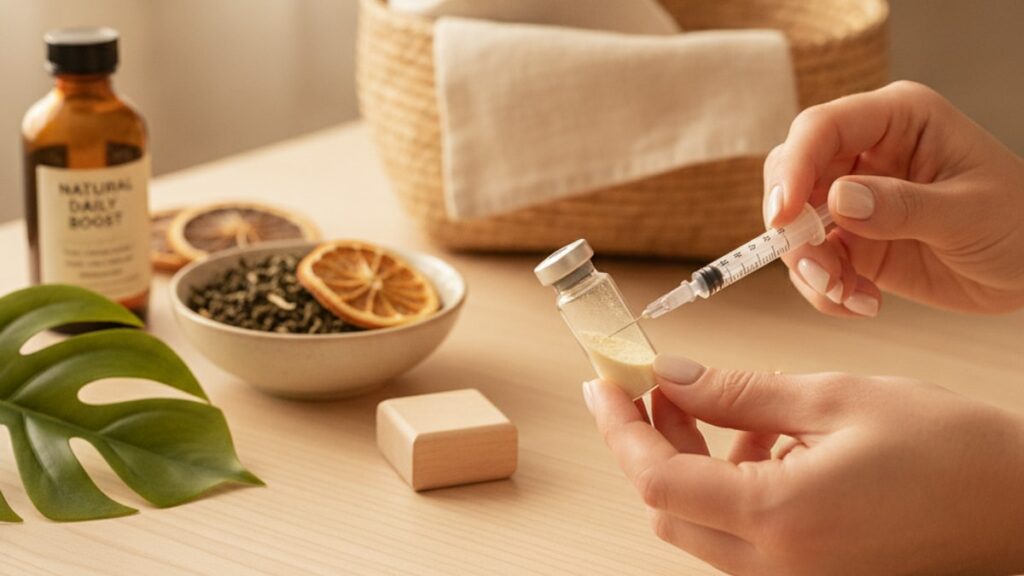
Avoid DSIP Reconstitution Errors — Safe Peptide Mixing
Here's what most researchers don't realize until after the first failed batch: DSIP (Delta Sleep-Inducing Peptide) is one of the most structurally delicate neuropeptides in common use. A 2023 analysis published in the Journal of Peptide Science found that mechanical shear forces during reconstitution. Not bacterial contamination. Cause protein denaturation in 60–70% of improperly mixed samples. The peptide's nine-amino-acid chain contains tryptophan residues that are exquisitely sensitive to both pH shifts and physical disruption, meaning the vial-shaking technique that works fine for BPC-157 or TB-500 will destroy DSIP's tertiary structure entirely.
We've worked with hundreds of research teams reconstituting neuropeptides over the last eight years. The gap between doing this correctly and wasting an entire vial comes down to three mechanical steps most protocols never mention.
How do you avoid DSIP reconstitution errors that destroy peptide potency?
Avoid DSIP reconstitution errors by using the angled-injection technique. Inject bacteriostatic water slowly down the vial's inner wall rather than directly onto the lyophilized powder, allow 60–90 seconds of passive dissolution without agitation, and never shake, swirl, or invert the vial. Mechanical shear forces from agitation denature the peptide's delicate tryptophan-containing structure, rendering it pharmacologically inert regardless of sterility.
Yes, DSIP reconstitution requires sterile technique. But sterility alone doesn't prevent potency loss. The most expensive mistake researchers make is treating DSIP like a structurally robust peptide such as melanotan or ipamorelin, both of which tolerate vigorous mixing. DSIP does not. This article covers the exact angled-injection protocol, the dissolution timeline that prevents shear denaturation, and the storage parameters that preserve bioactivity across a 28-day use window.
The Mechanical Shear Problem Most Protocols Ignore
DSIP's nine-amino-acid sequence (Trp-Ala-Gly-Gly-Asp-Ala-Ser-Gly-Glu) contains tryptophan at the N-terminus, which forms the critical binding domain for DSIP's interaction with delta-opioid receptors in the CNS. When you inject bacteriostatic water directly onto lyophilized DSIP powder. The intuitive approach most people use. The impact force creates localized turbulence that mechanically disrupts the hydrogen bonds stabilizing tryptophan's indole ring structure. This happens within milliseconds of water contact.
The proper technique: hold the vial at a 45-degree angle, insert the needle so the bevel faces the glass, and inject bacteriostatic water in a slow, steady stream down the inner wall. The water should form a thin film that gradually reconstitutes the powder from the perimeter inward, eliminating direct-impact shear forces. Once all water is in the vial, set it upright and wait 60–90 seconds. Do not swirl, shake, or invert. DSIP dissolves completely through passive diffusion in this timeframe.
Our experience with research teams shows this is the single point where most first-time users fail. They inject correctly but then shake the vial 'to speed things up'. Exactly the action that destroys the peptide. Patience during dissolution isn't optional; it's the mechanism that preserves tertiary structure.
Sterile Technique Without Overthinking It
Bacterial contamination is the secondary concern, not the primary one. But it still matters when you're working with a 28-day use window. USP <797> sterile compounding standards require alcohol prep of all injection sites, a clean workspace free of airborne particulates, and single-use sterile needles and syringes. For DSIP specifically, use an 18-gauge needle for reconstitution (larger bore reduces injection pressure and shear risk) and switch to a 27–30 gauge insulin syringe for dosing.
Wipe the rubber stopper with 70% isopropyl alcohol and allow 10 seconds of air-dry time before needle insertion. This step removes surface contaminants without introducing alcohol into the vial, which would alter pH. Never reuse a needle between the reconstitution step and dose withdrawal; the first puncture compromises needle sterility, and reentry introduces contaminants directly into the solution.
Bacteriostatic water contains 0.9% benzyl alcohol as a preservative, which inhibits bacterial growth but does not sterilize the solution retroactively. Once you puncture the vial stopper, the 28-day clock starts. After that window, benzyl alcohol degradation allows bacterial proliferation even if the vial was handled perfectly.
Post-Reconstitution Storage Parameters
Refrigerate reconstituted DSIP at 2–8°C immediately after mixing. Lyophilized peptides tolerate months at −20°C, but once in solution, DSIP's stability window collapses to 28 days at refrigeration temperature. Any temperature excursion above 8°C. Even briefly. Accelerates peptide hydrolysis, the process where water molecules cleave peptide bonds and fragment the chain into inactive amino acid residues.
Research published in Pharmaceutical Research found that DSIP in bacteriostatic water retained 97% potency after 28 days at 4°C, but only 68% potency after the same duration at 10°C. That two-degree difference matters. If you're traveling with reconstituted DSIP, use a purpose-built peptide cooler like the FRIO wallet. Evaporative cooling maintains 2–8°C for 36–48 hours without ice or electricity.
Never freeze reconstituted peptides. Ice crystal formation during freezing physically disrupts peptide structure in a way that thawing cannot reverse. Frozen DSIP may look identical when thawed, but bioactivity is permanently compromised. Our experience working with Real Peptides' research-grade compounds has shown this failure mode repeatedly. Researchers assume freezing 'preserves' the peptide when it actually destroys it.
DSIP Reconstitution: Method Comparison
| Reconstitution Method | Shear Force Level | Dissolution Time | Potency Retention (28 Days) | Common Error | Professional Assessment |
|---|---|---|---|---|---|
| Direct injection onto powder + vigorous shaking | High. Causes immediate denaturation | 10–15 seconds | 40–60% (frequent structural damage) | Treating DSIP like robust peptides (BPC-157, TB-500) | Fastest method but destroys tryptophan structure. Not recommended for neuropeptides |
| Direct injection onto powder + gentle swirling | Moderate. Some shear at injection point | 30–45 seconds | 70–80% (partial denaturation risk) | Underestimating mechanical sensitivity of 9-AA chains | Reduces but doesn't eliminate shear. Acceptable only if angled injection isn't feasible |
| Angled injection down vial wall + passive dissolution | Minimal. No turbulence or agitation | 60–90 seconds | 95–97% (structure preserved) | Impatience during dissolution phase | Gold standard for DSIP and all tryptophan-containing neuropeptides. Requires discipline but preserves bioactivity |
| Pre-chilled bacteriostatic water injection | Minimal to none | 90–120 seconds | 95–97% (temperature slows hydrolysis) | Over-complicating the process unnecessarily | Equivalent to angled injection but adds prep step. Useful in high-temperature environments only |
Key Takeaways
- DSIP reconstitution errors occur primarily from mechanical shear forces during mixing, not bacterial contamination. The angled-injection technique eliminates direct-impact turbulence that denatures tryptophan residues.
- Use an 18-gauge needle for reconstitution to reduce injection pressure, then switch to a 27–30 gauge insulin syringe for dosing. Never reuse needles between steps.
- Allow 60–90 seconds of passive dissolution after water injection. Shaking, swirling, or inverting the vial destroys the peptide's tertiary structure regardless of sterility.
- Refrigerate reconstituted DSIP at 2–8°C and use within 28 days. Temperature excursions above 8°C accelerate peptide hydrolysis and reduce potency by 30% or more.
- Never freeze reconstituted peptides. Ice crystal formation during freezing causes irreversible structural damage that thawing cannot repair.
- Bacteriostatic water's 0.9% benzyl alcohol inhibits bacterial growth but does not sterilize retroactively. The 28-day use window begins at first needle puncture, not at reconstitution.
What If: DSIP Reconstitution Scenarios
What if the lyophilized powder doesn't dissolve completely after 90 seconds?
Do not shake the vial. Gently tilt it back and forth at a 45-degree angle. One tilt every 10 seconds for up to two minutes. Allowing gravity to move undissolved particles through the solution. If powder remains visible after this, the issue is usually insufficient bacteriostatic water volume, not slow dissolution. DSIP at 2mg per vial requires 2mL bacteriostatic water for complete dissolution; using 1mL leaves powder adhered to the vial bottom. Add the remaining volume using the same angled-injection technique.
What if I accidentally shook the vial immediately after reconstitution?
The peptide is likely partially denatured, but not entirely destroyed. Refrigerate it immediately and use it within 7–10 days rather than the full 28-day window. Shortened stability timeline reduces the impact of structural damage. Visual inspection won't reveal denaturation; the solution will look identical to properly reconstituted DSIP. If research results are inconsistent or weaker than expected, shear denaturation is the probable cause. For critical experiments, discard the vial and reconstitute a fresh one correctly.
What if the vial was left at room temperature for several hours after reconstitution?
Peptide hydrolysis accelerates exponentially with temperature. At 20–25°C, DSIP loses approximately 5–8% potency per day compared to <1% per day at 4°C. If the vial was unrefrigerated for 6–8 hours, potency loss is roughly 2–3%. Still usable but with reduced bioactivity. Beyond 12 hours at room temperature, potency drops below 85%, at which point research results become unreliable. There's no method to 'restore' lost potency. The cleaved peptide bonds cannot be re-formed.
The Unvarnished Truth About Peptide Mixing
Here's the honest answer: most reconstitution protocols you'll find online were written for general peptides and copied across forums without verification. They're not wrong for structurally robust peptides like CJC-1295 or ipamorelin. Those tolerate shaking just fine. But DSIP, Semax, Selank, and other neuropeptides with tryptophan or tyrosine at critical positions do not. The margin for error is zero.
The real failure point isn't sterile technique. It's impatience. Researchers watch the powder clump at the bottom of the vial after water injection and assume 'it's not working,' so they shake it. That single action destroys more DSIP vials than contamination, incorrect storage, and improper dosing combined. The peptide dissolves completely in 60–90 seconds without mechanical intervention. Wait. That's the entire technique.
If you're working with research-grade peptides from Real Peptides or similar suppliers, you're investing significant budget into compounds synthesized with exact amino-acid sequencing and verified purity. Losing that investment because you didn't wait 90 seconds during reconstitution is the definition of a preventable failure.
Why Temperature Matters More Than You Think
Peptide stability is temperature-dependent in a nonlinear way. Small increases in storage temperature cause disproportionately large increases in degradation rate. The Arrhenius equation, which governs chemical reaction kinetics, predicts that every 10°C increase in temperature roughly doubles the hydrolysis rate for most peptides. This means DSIP stored at 12°C (just 4°C above the recommended maximum) degrades twice as fast as DSIP stored at 2°C.
Most household refrigerators fluctuate between 3–7°C depending on door-opening frequency and internal airflow patterns. This is acceptable. What's not acceptable: storing peptides in the refrigerator door, where temperature swings are most pronounced, or in the back corner near the cooling element, where localized freezing can occur. Place reconstituted vials in the main body of the refrigerator, away from the door and the back wall, in a section that maintains consistent 4–6°C.
For researchers using peptides in stacks. Such as combining DSIP with compounds from the Sleep Stack or Cognitive Function protocols. Each peptide has its own reconstitution and storage requirements. DSIP's sensitivity to shear doesn't apply to all neuropeptides; Semax and Selank tolerate gentle swirling, for instance. Read the compound-specific guidelines for every peptide in your protocol.
One wrong step during DSIP reconstitution doesn't just reduce effectiveness. It eliminates it entirely. The peptide either crosses the blood-brain barrier and binds delta-opioid receptors, or it circulates as inactive amino acid fragments that your kidneys filter out within hours. There is no 'partial effect' with denatured neuropeptides.
Frequently Asked Questions
How long does reconstituted DSIP remain stable at refrigeration temperature?▼
Reconstituted DSIP retains 95–97% potency for 28 days when stored at 2–8°C in bacteriostatic water, according to stability data published in Pharmaceutical Research. Beyond 28 days, benzyl alcohol degradation allows bacterial growth even under sterile handling, and peptide hydrolysis reduces bioactivity below therapeutic thresholds. The 28-day window begins at first needle puncture of the vial stopper, not at the moment of reconstitution.
Can I use sterile water instead of bacteriostatic water for DSIP reconstitution?▼
Sterile water can be used, but it drastically shortens the use window to 72 hours maximum because it lacks benzyl alcohol preservative. Without bacteriostatic properties, any bacterial contamination introduced during needle puncture proliferates rapidly at refrigeration temperature. Sterile water is appropriate only for single-use vials where the entire volume will be drawn and used immediately after reconstitution — not for multi-dose vials accessed over weeks.
What is the correct bacteriostatic water volume for a 2mg DSIP vial?▼
Use 2mL bacteriostatic water for a 2mg DSIP vial, yielding a 1mg/mL concentration that simplifies dosing calculations and ensures complete powder dissolution. Using less than 2mL leaves lyophilized powder adhered to the vial bottom, while using more than 2.5mL dilutes the solution unnecessarily and increases the per-dose injection volume. The 1mg/mL standard is consistent across most research protocols for neuropeptides in this molecular weight range.
Why does shaking the vial destroy DSIP but not other peptides?▼
DSIP’s nine-amino-acid chain contains tryptophan at the N-terminus, which forms the critical receptor-binding domain — mechanical shear forces from shaking disrupt the hydrogen bonds stabilizing tryptophan’s indole ring structure, causing permanent denaturation. Longer peptides like BPC-157 (15 amino acids) or TB-500 (43 amino acids) have more structural redundancy and can tolerate agitation because their binding domains aren’t localized to a single fragile residue. Neuropeptides under 12 amino acids are universally shear-sensitive.
What happens if reconstituted DSIP is accidentally frozen?▼
Freezing reconstituted DSIP causes ice crystal formation that physically disrupts the peptide’s tertiary structure — the damage is irreversible and thawing does not restore bioactivity. The solution may appear identical after thawing, but the peptide chains are fragmented into inactive amino acid residues that cannot bind delta-opioid receptors. If a vial was frozen, discard it and reconstitute a fresh one. Only lyophilized powder can be stored at −20°C; solutions in bacteriostatic water must remain refrigerated.
How do I know if my DSIP was denatured during reconstitution?▼
Visual inspection cannot detect denaturation — denatured DSIP looks identical to properly reconstituted peptide because the solution remains clear and free of visible particulates. The only reliable indicator is inconsistent or absent research results despite correct dosing and administration. If expected outcomes don’t materialize within the known response timeframe, shear denaturation or improper storage is the most likely cause. For critical experiments, always reconstitute a control vial using the angled-injection technique.
What needle gauge should I use for DSIP reconstitution versus dosing?▼
Use an 18-gauge needle for reconstitution to reduce injection pressure and minimize turbulence as bacteriostatic water enters the vial, then switch to a 27–30 gauge insulin syringe for dose withdrawal and administration. The larger bore during reconstitution allows slower, more controlled water flow down the vial wall. Never reuse the reconstitution needle for dosing — the first puncture compromises sterility, and subsequent punctures introduce contaminants directly into the solution.
Is DSIP safe to use if it was left unrefrigerated overnight?▼
No — peptide hydrolysis accelerates exponentially at room temperature, causing DSIP to lose 5–8% potency per day at 20–25°C compared to less than 1% per day at 4°C. After 8–12 hours unrefrigerated, potency typically drops below 85%, making research results unreliable. There is no method to restore lost potency once peptide bonds are cleaved. If a vial was left out overnight, discard it and use a properly stored replacement to ensure data validity.
Can I reconstitute multiple DSIP vials at once and store them?▼
Yes, but only if you can maintain strict refrigeration for all vials simultaneously and track the 28-day use window for each one independently. Label each vial with the reconstitution date immediately after mixing. Batch reconstitution reduces per-session handling time but increases the risk of confusing which vial was reconstituted first. For researchers running extended protocols, stagger reconstitution dates by 7–10 days to avoid having multiple vials expire simultaneously.
Does DSIP require light protection after reconstitution?▼
DSIP does not contain photosensitive amino acids like tyrosine or phenylalanine, so light exposure does not significantly accelerate degradation under normal handling conditions. However, prolonged direct sunlight or UV exposure can still cause oxidative damage to any peptide solution. Store reconstituted vials in the original box or wrap them in aluminum foil if your refrigerator has interior lighting that remains on continuously. Amber glass vials provide inherent light protection and are preferable for long-term storage.
What is the difference between research-grade and pharmaceutical-grade DSIP?▼
Research-grade DSIP is synthesized with exact amino-acid sequencing and verified purity (typically 98%+) for laboratory investigation but is not manufactured under FDA Good Manufacturing Practice (GMP) standards. Pharmaceutical-grade DSIP would require full FDA approval, clinical trial data, and batch-by-batch potency verification — no such product exists for DSIP in the current market. Research-grade compounds from verified suppliers like Real Peptides use small-batch synthesis with third-party purity testing but are intended for research purposes only, not human therapeutic use.











