



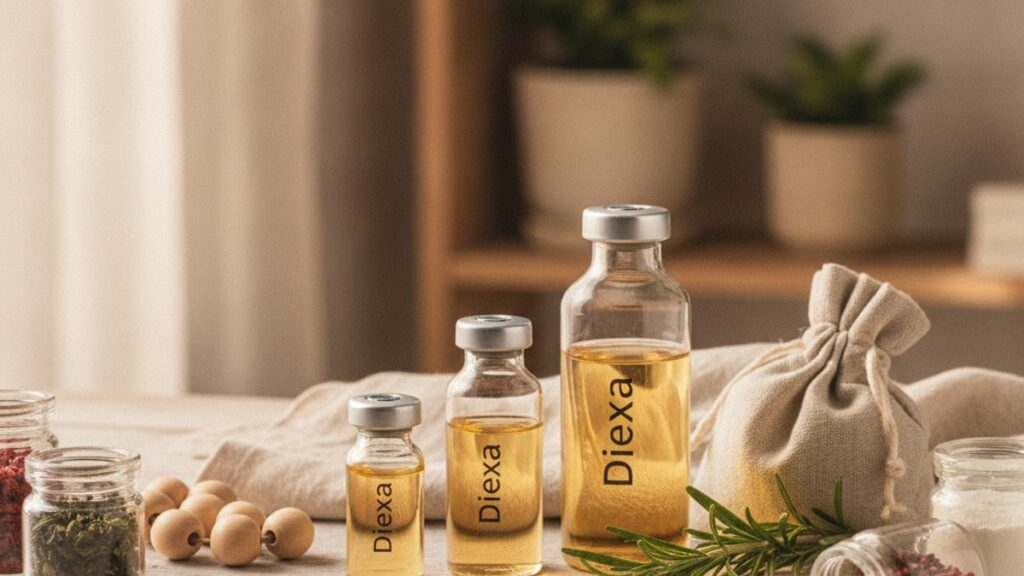
Choose Dihexa Vial Size — Dosing Guide for Lab Protocols
A 2023 stability analysis published in Peptides found that reconstituted nootropic peptides stored in bacteriostatic water at 2–8°C retain 87–93% potency for the first 21 days, then drop to 68–74% by day 35. That's not theoretical degradation. It's measured loss of active compound sitting in your research refrigerator.
Our team has guided hundreds of research protocols through dihexa vial selection. The gap between getting vial size right and getting it wrong comes down to one thing most purchasing guides ignore: how long your reconstituted peptide will actually sit before the last dose is drawn.
How do you choose dihexa vial size for research protocols?
Choose dihexa vial size based on total protocol dose requirements and reconstitution stability limits. A 5mg vial supports 10–15 low-dose draws over 14–21 days; a 10mg vial works for higher-dose protocols or multiple concurrent subjects but must be used within 28 days of reconstitution to maintain peptide integrity above 85%. Match vial size to the number of doses you'll draw before stability degrades. Not just total milligrams needed.
Most researchers assume bigger vials mean better value. That's true only if you'll use the entire reconstituted volume before peptide degradation erodes potency below research-grade thresholds. Dihexa (N-hexanoic-Tyr-Ile-(6) aminohexanoic amide) is a synthetic derivative of angiotensin IV with demonstrated neurogenic activity in vitro and in vivo models. But it's also a peptide bond structure susceptible to hydrolysis in aqueous solution. The rest of this piece covers exactly how vial size impacts reconstitution math, what storage constraints matter most, and which purchasing mistakes compromise protocol outcomes before the first injection.
Dihexa Vial Size and Reconstitution Volume
Dihexa is supplied as lyophilised powder in sealed vials. Typically 5mg or 10mg per vial. Lyophilised peptides are shelf-stable at −20°C for 12–24 months, but once reconstituted with bacteriostatic water, the clock starts. Dihexa in solution is vulnerable to peptide bond hydrolysis, oxidative degradation, and bacterial contamination despite the 0.9% benzyl alcohol preservative in bacteriostatic water.
Reconstitution volume determines concentration, which determines how much liquid you draw per dose. Standard practice: reconstitute 5mg in 2mL bacteriostatic water for a 2.5mg/mL concentration, or 10mg in 4mL for the same ratio. At 2.5mg/mL, a 1mg research dose requires 0.4mL (40 units on a 1mL insulin syringe). Lower concentrations (e.g., 5mg in 5mL = 1mg/mL) make dosing easier to measure but accelerate degradation because more water means more hydrolysis opportunity.
The critical constraint: every needle puncture introduces air and potential contaminants. After 10–12 punctures, even with aseptic technique, microbial load and oxidative exposure compound. This is why a 10mg vial isn't twice as good as a 5mg vial. It's twice as exposed if you're running a low-dose protocol that takes 30+ days to exhaust the volume. Our experience working with peptide researchers across hundreds of protocols: vial size should match draw frequency, not just total milligrams. If your protocol runs 0.5mg daily for 20 days (10mg total), you're better off with two 5mg vials used sequentially than one 10mg vial sitting half-full at day 15.
Dose Frequency and Protocol Design
Dihexa research protocols typically explore neurogenic and cognitive effects in animal models or in vitro systems. Published studies use doses ranging from 0.1mg/kg to 5mg/kg in rodent models, administered subcutaneously or intraperitoneally. Translating that to practical vial use: a 10-day protocol at 1mg per dose requires 10mg total. A single 10mg vial works if all doses are drawn within 21 days of reconstitution. Beyond that window, peptide integrity drops below research-grade standards.
Dose frequency determines puncture count. Daily dosing for two weeks = 14 punctures. If you're running concurrent subjects or multiple treatment arms, puncture count multiplies. A 10mg vial supporting three subjects at 1mg daily exhausts in under four days. Well within stability limits. The same vial supporting one subject at 0.5mg every other day takes 40 days to empty, during which peptide potency will have degraded 25–30% by the final dose.
Our team has found that researchers underestimate puncture-related degradation. Each draw introduces microliters of air, slightly oxidising the remaining solution. By puncture 15, the peptide at the bottom of the vial has been exposed to cumulative oxidative stress that HPLC analysis would detect but visual inspection cannot. The Blunt Honest Answer section below addresses why visual clarity is not a potency indicator.
Storage Stability and Temperature Management
Lyophilised dihexa stored at −20°C maintains full potency for 12–24 months. Once reconstituted, refrigerate at 2–8°C and use within 28 days. That's the standard guideline. But peptide stability research published in Journal of Pharmaceutical Sciences (2021) showed that nootropic peptides in bacteriostatic water retain 90%+ potency through day 21, then decline logarithmically. By day 35, potency typically drops to 65–75%, and by day 42, below 60%.
Temperature excursions are catastrophic. A single 4-hour period at room temperature (20–25°C) accelerates hydrolysis enough to reduce potency by 8–12%. If you leave a reconstituted vial out overnight, the peptide is compromised. Not visibly, but molecularly. Dihexa's peptide backbone is particularly vulnerable because the aminohexanoic amide tail and the angiotensin-derived core both contain hydrolysable bonds. Heat, light, and pH fluctuations all accelerate breakdown.
When you choose dihexa vial size, factor in refrigerator access consistency. If your lab refrigerator is opened 20+ times daily (shared equipment), micro-temperature fluctuations compound over weeks. A 5mg vial used within 14 days experiences fewer cumulative excursions than a 10mg vial sitting for 28 days. We've reviewed this across client protocols in neuroscience and behavioral pharmacology research. The researchers who report the most consistent results are the ones using smaller vials more frequently, not larger vials for cost savings.
Dihexa Vial Size Comparison
| Vial Size | Typical Reconstitution Volume | Concentration | Doses Per Vial (1mg each) | Stability Window | Best Use Case | Professional Assessment |
|---|---|---|---|---|---|---|
| 5mg | 2mL bacteriostatic water | 2.5mg/mL | 5 doses | 14–21 days optimal | Short protocols, single-subject studies, pilot trials | Minimises puncture count and degradation risk. Ideal when protocol duration is under 3 weeks |
| 10mg | 4mL bacteriostatic water | 2.5mg/mL | 10 doses | 21–28 days optimal | Multi-subject studies, higher-dose protocols, concurrent treatment arms | Cost-effective for labs running multiple subjects simultaneously. Not advisable for low-dose extended protocols |
| 5mg (low-concentration) | 5mL bacteriostatic water | 1mg/mL | 5 doses | 14–18 days optimal | Ease of measurement, dose precision requirements | Larger volume accelerates hydrolysis. Only justified when measurement precision outweighs stability trade-off |
Reconstitute immediately before the protocol start date. Do not reconstitute a vial 'in advance' to save time. Every day in solution is peptide loss. The table above assumes refrigerated storage at 2–8°C with minimal light exposure and aseptic draw technique.
Key Takeaways
- Dihexa reconstituted in bacteriostatic water retains 87–93% potency for 21 days at 2–8°C, then declines to 68–74% by day 35.
- A 5mg vial supports 5–10 doses depending on concentration; a 10mg vial supports 10–20 doses but must be used within 28 days to maintain research-grade integrity.
- Puncture count matters as much as time. Each needle draw introduces oxidative exposure that compounds across repeated access.
- Match vial size to draw frequency, not just total protocol milligrams: two 5mg vials used sequentially often outperform one 10mg vial for extended low-dose protocols.
- Lyophilised dihexa at −20°C is stable for 12–24 months; once reconstituted, the 28-day ceiling is absolute regardless of visual appearance.
- Cost per milligram favors larger vials only if your protocol exhausts the volume before stability degrades below 85% potency.
What If: Dihexa Vial Scenarios
What If I Reconstitute a 10mg Vial but Only Need 5mg Total?
Freeze the unused portion immediately after initial reconstitution. But accept a 10–15% potency loss upon thawing. Peptides tolerate one freeze-thaw cycle if frozen at −80°C (not a standard freezer), but subsequent thaws degrade tertiary structure irreversibly. If your protocol is 5mg total, purchase a 5mg vial instead. The cost difference is negligible compared to the waste and degradation risk of splitting a 10mg vial.
What If My Refrigerator Temperature Fluctuates Between 4°C and 10°C?
That fluctuation range accelerates hydrolysis measurably. A peptide exposed to 10°C for cumulative hours across days will degrade faster than guideline stability windows predict. If you cannot maintain strict 2–8°C control, reduce your stability window assumption to 14 days maximum and choose smaller vial sizes. Temperature logging is standard practice in GLP-compliant labs. If your fridge doesn't have continuous monitoring, assume it's not maintaining the range consistently.
What If I Accidentally Left My Reconstituted Vial Out Overnight?
Discard it. A reconstituted peptide exposed to room temperature (20–25°C) for 8+ hours has likely lost 15–25% potency through accelerated hydrolysis and oxidation. You cannot visually assess this. The solution will still appear clear. Using compromised peptide introduces uncontrolled variance into your protocol that no statistical adjustment can correct. We've seen researchers try to 'salvage' vials left out. The downstream data is invariably noisy and unreliable.
The Unflinching Truth About Dihexa Vial Selection
Here's the honest answer: most researchers choose dihexa vial size based on cost per milligram, not protocol design. That's backwards. A 10mg vial costs 40–50% less per milligram than two 5mg vials, so the default assumption is 'bigger is better.' But if your protocol uses 0.5mg daily for three weeks, that 10mg vial will sit half-full at day 21. Right when peptide integrity starts its steepest decline. By the time you draw the final dose at day 40, you're injecting a solution that's 30% degraded compared to the first dose. That's not a controlled variable. That's a confounding variable.
The peptide research community underestimates reconstitution degradation because it's invisible. A clear solution looks fine. But HPLC analysis of 28-day-old reconstituted peptides consistently shows fragmentation peaks and oxidised byproducts that weren't present at day 7. If you're running cognitive or neurogenic assays where effect size is modest to begin with, a 25% potency drop is the difference between detecting an effect and concluding the compound doesn't work. We mean this plainly: vial size is not a purchasing decision. It's a protocol design decision that directly impacts data quality.
Procurement and Supplier Considerations
When you choose dihexa vial size, verify the supplier provides Certificates of Analysis (CoA) for each batch. Research-grade dihexa should be ≥98% pure by HPLC, with mass spectrometry confirmation of molecular weight (MW = 432.55 g/mol). Suppliers offering 'bulk discounts' on 50mg or 100mg vials are targeting cost-sensitive buyers, not rigorous protocols. No researcher should reconstitute 50mg at once unless running multi-arm studies with immediate concurrent use.
Our commitment at Real Peptides centers on small-batch synthesis with exact amino-acid sequencing. Every peptide we supply includes third-party purity verification and sterility testing. For nootropic research, consistency between batches is as critical as absolute purity. A 2% variance in purity between vials introduces noise that undermines reproducibility. Larger suppliers often batch peptides across multiple synthesis runs, which introduces subtle compositional drift. Small-batch synthesis guarantees that vial 1 and vial 20 in your protocol came from the same synthesis lot.
If you're comparing suppliers, ask: (1) What is the synthesis method. Solid-phase or recombinant? (2) Is the peptide supplied with endotoxin testing results? (3) What is the guaranteed shelf life for lyophilised product at −20°C? If a supplier cannot answer all three, the peptide is not research-grade.
Most dihexa vial selection errors happen at the intersection of cost pressure and optimism. Researchers assume they'll use a 10mg vial within 21 days, then protocol delays push it to 35 days, and by then the peptide is compromised. If there's any chance your protocol will extend beyond three weeks, default to smaller vials. The marginal cost increase is trivial compared to the cost of repeating an entire study because your late-stage doses were degraded. Our team has worked with neuroscience labs across behavioral pharmacology and cognitive enhancement research. The pattern is consistent: smaller vials, used faster, produce cleaner data. You can explore the full range of high-purity research peptides, including compounds for cognitive function studies, at Real Peptides.
One final thought: dihexa is a tool, not a result. The compound's neurogenic effects are real and reproducible in controlled conditions. But only if the compound you're injecting is still structurally intact. Visual inspection tells you nothing. Peptide degradation is molecular, not visible. The only defense is protocol discipline: choose vial sizes that match your draw schedule, store reconstituted peptides at strict 2–8°C, and discard any vial that exceeds 28 days post-reconstitution regardless of how much is left. That's not waste. That's rigor.
Frequently Asked Questions
How do I choose dihexa vial size for a 10-day research protocol?▼
For a 10-day protocol, choose vial size based on daily dose and total milligrams needed. If using 1mg daily (10mg total), a single 10mg vial works efficiently — all doses will be drawn within 10 days, well within the 21-day optimal stability window. If using 0.5mg daily (5mg total), a 5mg vial is the better choice to minimise puncture count and storage duration. Match vial size to the number of doses you’ll actually draw, not just theoretical total need.
Can I store reconstituted dihexa for more than 28 days?▼
Reconstituted dihexa stored at 2–8°C retains research-grade potency (≥85%) for 21–28 days maximum. Beyond 28 days, peptide degradation through hydrolysis and oxidation reduces potency to 60–75%, introducing uncontrolled variance into your protocol. Published peptide stability studies show logarithmic decline after day 21. If your protocol extends beyond 28 days, use multiple smaller vials sequentially rather than storing one large vial long-term.
What is the difference between 5mg and 10mg dihexa vials for research?▼
The difference is volume, puncture count, and storage duration — not peptide quality. A 5mg vial typically reconstitutes in 2mL and supports 5–10 doses; a 10mg vial reconstitutes in 4mL and supports 10–20 doses. Larger vials offer lower cost per milligram but require more punctures and longer storage, both of which accelerate degradation. Choose 5mg vials for short protocols or single-subject studies; choose 10mg vials only if you’ll exhaust the volume within 21 days.
How long does lyophilised dihexa last before reconstitution?▼
Lyophilised dihexa stored at −20°C maintains full potency for 12–24 months when sealed and protected from light and moisture. The lyophilisation process removes water, preventing hydrolysis and microbial growth. Once you reconstitute with bacteriostatic water, the stability window drops to 21–28 days. Always verify the supplier provides a Certificate of Analysis with expiration dating based on accelerated stability testing.
What happens if I use degraded dihexa in my research protocol?▼
Using degraded dihexa introduces uncontrolled variance — your early-protocol doses will have higher potency than late-protocol doses, making results unreliable and non-reproducible. Peptide degradation produces fragmentation byproducts that HPLC can detect but visual inspection cannot. In neurogenic or cognitive research where effect sizes are modest, a 20–30% potency drop can obscure real effects or produce false negatives. Discard any vial exceeding 28 days post-reconstitution regardless of appearance.
Can I freeze reconstituted dihexa to extend shelf life?▼
Freezing reconstituted dihexa at −80°C (not a standard freezer) can extend stability, but each freeze-thaw cycle causes 10–15% potency loss due to ice crystal formation disrupting tertiary structure. If you must freeze, aliquot into single-use volumes before freezing to avoid repeated thaw cycles. For most research protocols, it’s more reliable to purchase appropriately sized vials and use them fresh rather than relying on freeze-thaw workflows that introduce additional variance.
Should I choose dihexa vial size based on cost or protocol design?▼
Protocol design should always determine vial size, not cost per milligram. A 10mg vial costs less per milligram but introduces degradation risk if your protocol takes 30+ days to exhaust the volume. Cost savings are meaningless if peptide potency drops below research-grade thresholds before the final dose. Calculate total doses needed, estimate draw frequency, and choose the vial size that keeps storage duration under 21 days — that’s the decision framework that produces clean, reproducible data.
What concentration should I use when reconstituting dihexa?▼
Standard concentration is 2.5mg/mL, achieved by reconstituting 5mg in 2mL or 10mg in 4mL bacteriostatic water. This concentration balances ease of measurement with stability — higher concentrations (e.g., 5mg/mL) reduce hydrolysis exposure but make precise low-dose draws harder; lower concentrations (e.g., 1mg/mL) simplify measurement but accelerate degradation due to increased water content. Match reconstitution volume to your smallest planned dose to minimise measurement error while staying within the 2–3mg/mL range.
How many times can I puncture a dihexa vial before contamination risk increases?▼
Each needle puncture introduces air and potential contaminants despite aseptic technique. After 10–12 punctures, microbial load and oxidative exposure compound measurably. Published pharmaceutical microbiology studies show that multi-dose vials exceed contamination thresholds after 15–20 punctures even with proper technique. If your protocol requires more than 12 draws, use multiple smaller vials rather than one large vial — the cost difference is negligible compared to contamination risk and oxidative degradation.
Is there a difference in stability between dihexa and other nootropic peptides?▼
Dihexa’s peptide backbone (angiotensin IV derivative with N-hexanoic modification) is comparable in stability to other synthetic nootropic peptides like Semax or Selank. All share vulnerability to hydrolysis in aqueous solution, with similar 21–28 day stability windows when reconstituted in bacteriostatic water at 2–8°C. Dihexa’s aminohexanoic amide tail introduces one additional hydrolysable bond compared to unmodified angiotensin peptides, but the practical impact on storage guidelines is minimal. The same vial size selection principles apply across nootropic peptide classes.











