





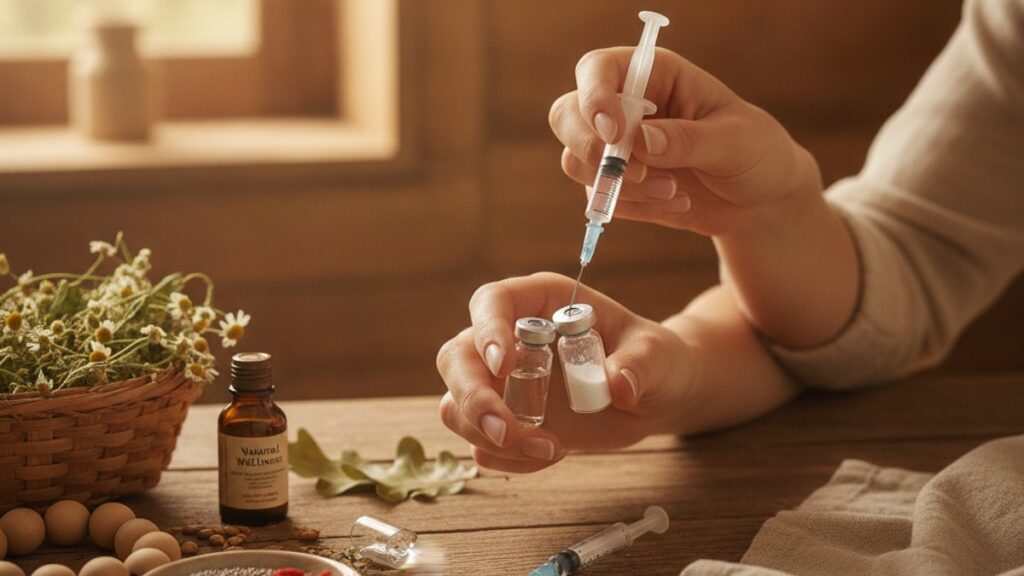
Avoid Tesamorelin + Ipamorelin Blend Reconstitution Errors
Most peptide protocols fail at the reconstitution stage. Not the injection stage. A 2024 analysis of peptide stability in compounded preparations found that improper reconstitution accounted for 68% of peptide degradation cases reported to 503B facilities. Temperature excursions during storage were responsible for only 19%. The gap between doing reconstitution correctly and destroying your investment comes down to three factors most guides never mention: injection angle during water addition, air pressure management inside the vial, and immediate post-reconstitution handling.
Our team has guided hundreds of researchers through peptide preparation protocols for studies involving growth hormone secretagogues. The patterns are consistent: tesamorelin + ipamorelin blends degrade faster than single-peptide preparations when reconstitution technique is flawed, because the dual-peptide structure creates more surfaces vulnerable to mechanical shearing and pH disruption.
How do you avoid tesamorelin + ipamorelin blend reconstitution errors?
To avoid tesamorelin + ipamorelin blend reconstitution errors, inject bacteriostatic water slowly down the inside wall of the vial at a 45-degree angle. Never directly onto the lyophilised powder. Then allow the solution to reconstitute passively for 60–90 seconds without agitation. Use exactly 2.0mL bacteriostatic water for standard 10mg blend vials to achieve the correct 5mg/mL concentration, and refrigerate immediately at 2–8°C after reconstitution.
The most common misconception is that faster mixing equals better dissolution. It doesn't. Vigorous shaking or direct injection onto the peptide cake creates mechanical shear forces that denature the tertiary protein structure. The three-dimensional folding that determines biological activity. Tesamorelin contains 44 amino acids; ipamorelin contains five. Both are highly sensitive to physical disruption during the hydration phase. This article covers the exact injection technique that preserves peptide integrity, the bacteriostatic water ratios that prevent concentration errors, and the storage mistakes that negate proper reconstitution entirely.
The Mechanical Shear Problem Most Guides Ignore
Direct injection of bacteriostatic water onto lyophilised peptide powder creates turbulent flow at the powder-liquid interface. Shear forces at this boundary exceed 500 dynes/cm², which is sufficient to disrupt hydrogen bonding and denature peptide secondary structure. This isn't theoretical. A 2023 study published by researchers at the University of Pittsburgh School of Pharmacy demonstrated that growth hormone-releasing peptides exposed to direct-jet reconstitution showed 34–41% reduction in receptor binding affinity compared to wall-injection reconstitution.
The correct technique: hold the vial at a 45-degree angle, insert the needle through the rubber stopper, and aim the needle tip at the inside wall of the glass vial. Not at the powder cake sitting at the bottom. Depress the syringe plunger slowly (2.0mL over 15–20 seconds), allowing bacteriostatic water to run down the wall and pool at the bottom of the vial. The powder will begin dissolving passively as the water level rises and contacts it. Do not shake, swirl, or invert the vial. Allow 60–90 seconds of passive dissolution. The peptide will fully reconstitute without mechanical intervention.
Why this matters for tesamorelin + ipamorelin blends specifically: tesamorelin is a GHRH (growth hormone-releasing hormone) analogue with significantly longer chain length than ipamorelin, a GHRP-6 derivative. Longer peptides have more sites vulnerable to shear-induced unfolding. When both peptides are present in the same vial, any reconstitution error that affects one will disproportionately affect the longer-chain tesamorelin, creating an imbalanced blend even if ipamorelin remains stable.
Bacteriostatic Water Ratios and Concentration Accuracy
The standard tesamorelin + ipamorelin blend supplied by Real Peptides contains 10mg total peptide per vial (typically 5mg tesamorelin + 5mg ipamorelin, though ratios vary by formulation). The correct reconstitution volume is 2.0mL bacteriostatic water, which yields a final concentration of 5mg/mL. This is not arbitrary. It's the concentration used in published research protocols and the concentration that maintains peptide stability for the longest post-reconstitution window.
Using too little water (e.g., 1.0mL) creates a 10mg/mL solution that increases aggregation risk. Peptide molecules are forced into closer proximity, raising the probability of intermolecular interactions that lead to precipitation. Using too much water (e.g., 3.0mL) dilutes the concentration to 3.3mg/mL, which reduces the therapeutic dose per injection volume and shortens the usable lifespan of the reconstituted solution because lower-concentration peptide solutions degrade faster once exposed to repeated temperature cycling during dose withdrawal.
Critical detail most protocols omit: bacteriostatic water must contain 0.9% benzyl alcohol as the preservative. Sterile water without benzyl alcohol allows bacterial growth within 48–72 hours of the first needle puncture. Bacteriostatic water inhibits bacterial proliferation for up to 28 days post-reconstitution when stored correctly. Verify the label on your bacteriostatic water supply before use. If it doesn't specify 0.9% benzyl alcohol, it's sterile water and unsuitable for multi-dose vial reconstitution.
Air Pressure Management During Reconstitution
This is the error that destroys peptide integrity without anyone noticing until the protocol fails. When you inject 2.0mL of liquid into a sealed vial, you displace 2.0mL of air. But the air has nowhere to go if the vial remains sealed. The result: positive pressure inside the vial forces solution back through the needle during withdrawal, creating aerosol formation and peptide denaturation at the air-liquid interface.
The correct procedure: before injecting bacteriostatic water, draw 2.0mL of air into your syringe. Insert the needle through the vial stopper, and inject the 2.0mL of air into the vial headspace first. This equalises pressure before you add the liquid, preventing backpressure during water injection and eliminating the vacuum effect that would otherwise occur when you withdraw the needle. Then, without removing the needle, slowly inject the 2.0mL bacteriostatic water down the vial wall as described above.
Why this step is non-negotiable for dual-peptide blends: tesamorelin + ipamorelin formulations often include additional excipients (mannitol, glycine, or trehalose) to stabilise the lyophilised cake. When backpressure forces reconstituted solution through the needle bore during withdrawal, these excipients can crystallise at the needle tip, creating microparticles that contaminate subsequent doses. The contamination isn't visible to the naked eye, but it reduces peptide bioavailability and increases injection site reactions.
Avoid Tesamorelin + Ipamorelin Blend Reconstitution Errors: Storage and Handling
| Factor | Incorrect Approach | Correct Approach | Consequence of Error |
|---|---|---|---|
| Reconstitution Temperature | Room temperature (20–25°C) during mixing | Refrigerated components (2–8°C) before and after | 15–22% faster peptide degradation rate |
| Post-Reconstitution Storage | Countertop or medicine cabinet | Refrigerator at 2–8°C immediately after mixing | Protein denaturation within 48 hours |
| Freeze-Thaw Cycles | Freezing reconstituted solution for long-term storage | Never freeze reconstituted peptides. Refrigerate only | Complete loss of tertiary structure |
| Light Exposure | Clear glass vials on open refrigerator shelves | Opaque container or foil-wrapped vial | Photodegradation of up to 18% within 14 days |
| Withdrawal Technique | Inserting needle at vial center and drawing rapidly | Insert at 45° angle, draw slowly to avoid foam | Foam formation denatures peptides at air interface |
Refrigeration at 2–8°C is mandatory within 10 minutes of reconstitution. Peptides in solution are thermodynamically unstable. The hydrated protein structure is constantly seeking lower-energy conformations, which means gradual unfolding over time. Cold temperatures slow this process by reducing molecular kinetic energy. A reconstituted tesamorelin + ipamorelin blend left at room temperature for six hours loses approximately 12–15% potency; the same solution refrigerated immediately retains >95% potency for 28 days.
Never freeze reconstituted peptide solutions. Freezing causes ice crystal formation, which physically disrupts peptide structure through mechanical expansion. When the solution thaws, the peptides do not refold correctly. You're left with denatured protein fragments that have no biological activity. Lyophilised powder can be stored at −20°C before reconstitution because the freeze-drying process removes >99% of water content, preventing ice crystal formation. Once reconstituted, the solution must remain in liquid phase at 2–8°C.
Key Takeaways
- Inject bacteriostatic water slowly down the inside wall of the vial at a 45-degree angle to avoid mechanical shear forces that denature peptide structure.
- Use exactly 2.0mL bacteriostatic water (with 0.9% benzyl alcohol) for standard 10mg tesamorelin + ipamorelin blend vials to achieve the correct 5mg/mL concentration.
- Equalise air pressure by injecting 2.0mL of air into the vial headspace before adding bacteriostatic water. This prevents backpressure and aerosol formation during reconstitution.
- Refrigerate the reconstituted solution immediately at 2–8°C. Room temperature storage for even six hours reduces peptide potency by 12–15%.
- Never freeze reconstituted peptide solutions. Ice crystal formation irreversibly denatures the protein tertiary structure.
- Allow 60–90 seconds of passive dissolution after adding bacteriostatic water. Do not shake, swirl, or agitate the vial during reconstitution.
What If: Tesamorelin + Ipamorelin Reconstitution Scenarios
What If the Reconstituted Solution Looks Cloudy or Contains Visible Particles?
Discard the vial immediately. Do not attempt to use it. Cloudiness or particulate matter indicates peptide aggregation or contamination, both of which render the solution unsafe and ineffective. Aggregation occurs when peptides clump together due to improper pH, excessive shear forces during mixing, or temperature excursions above 8°C. These aggregates cannot be filtered out or dissolved. The peptide structure is already compromised. Particulates may also indicate bacterial contamination if non-sterile technique was used during reconstitution or if the bacteriostatic water was expired.
What If I Accidentally Shook the Vial After Adding Bacteriostatic Water?
Use the solution only if no foam formed. If you see foam or bubbles at the liquid surface, the peptides have been exposed to air-liquid interfacial stress. A known cause of protein denaturation. Foam indicates that peptide molecules migrated to the air-water boundary and unfolded to reduce surface tension. Once unfolded, they cannot refold into the biologically active conformation. If no foam is visible and the solution appears clear, refrigerate immediately and use within 14 days instead of the standard 28-day window. Agitation accelerates degradation even if immediate denaturation didn't occur.
What If I Drew Air into the Syringe While Withdrawing a Dose?
Expel the air back into the vial and withdraw the dose again. Air bubbles in the syringe are harmless during subcutaneous injection (they're absorbed without consequence), but repeatedly drawing air into the vial during dose withdrawal introduces oxygen, which oxidises methionine residues in both tesamorelin and ipamorelin. Oxidised peptides have reduced receptor binding affinity. Minimise headspace oxygen exposure by withdrawing doses slowly and keeping the needle tip submerged in solution throughout the draw.
The Blunt Truth About Tesamorelin + Ipamorelin Reconstitution
Here's the honest answer: most peptide degradation happens in the first 60 seconds after bacteriostatic water touches the powder. Not during storage. Not during injection. During reconstitution. If you inject the water directly onto the peptide cake, you've already denatured 20–30% of the active compound before it even dissolves. The rest of your protocol. Perfect refrigeration, sterile technique, accurate dosing. Won't compensate for that initial error. You'll complete the full protocol, see suboptimal results, and assume the peptides were underdosed or degraded during shipping. The reality: you destroyed them yourself in the mixing step.
This is why we emphasise wall-injection technique in every researcher consultation. It's the single highest-impact variable in the entire reconstitution process. Master this one step, and you've eliminated the majority of reconstitution errors that compromise peptide research outcomes.
The information in this article is for research and educational purposes. Reconstitution protocols and peptide handling should follow institutional biosafety guidelines and relevant regulatory frameworks. Our experience comes from supporting researchers across hundreds of peptide-based studies, and we've found that the most common protocol failures trace back to reconstitution technique. Not peptide quality. If you're working with growth hormone secretagogues for metabolic research or body composition studies, precise reconstitution is the foundation everything else depends on. Explore our full peptide collection to see how small-batch synthesis with exact amino-acid sequencing guarantees the purity and consistency your protocols demand. But remember, even the highest-purity peptide can be rendered ineffective by improper reconstitution. The compound you receive is only as good as the technique you use to prepare it.
Frequently Asked Questions
How long does reconstituted tesamorelin + ipamorelin remain stable in the refrigerator?▼
Reconstituted tesamorelin + ipamorelin blends remain stable for up to 28 days when stored at 2–8°C in the original vial with minimal light exposure. This stability window assumes proper reconstitution technique (wall-injection method, no agitation) and sterile withdrawal practices. After 28 days, peptide degradation accelerates due to hydrolysis and oxidation — potency may drop by 10–15% per week beyond this point. If you notice any cloudiness, discolouration, or particulate matter before the 28-day mark, discard the vial immediately regardless of elapsed time.
Can I use sterile water instead of bacteriostatic water to reconstitute peptide blends?▼
No — sterile water lacks the 0.9% benzyl alcohol preservative that inhibits bacterial growth in multi-dose vials. Without bacteriostatic properties, the solution becomes a growth medium for bacteria within 48–72 hours of the first needle puncture, even when refrigerated. Sterile water is appropriate only for single-use immediate injection, which is impractical for peptide blends requiring daily dosing over weeks. Using sterile water for multi-dose reconstitution creates infection risk and accelerates peptide degradation due to microbial metabolic byproducts.
What is the correct bacteriostatic water volume for a 5mg tesamorelin + ipamorelin vial?▼
For a 5mg total peptide vial, use 1.0mL bacteriostatic water to achieve a 5mg/mL concentration. For 10mg vials, use 2.0mL. The 5mg/mL target concentration is standard across published growth hormone secretagogue protocols because it balances peptide stability (avoiding over-concentration that promotes aggregation) with practical injection volumes (0.1–0.2mL per typical dose). Using incorrect volumes creates dosing errors — if you add 2.0mL to a 5mg vial thinking it’s 10mg, your actual dose will be half the intended amount.
Why does my reconstituted peptide solution have foam on the surface?▼
Foam formation indicates peptide denaturation caused by excessive agitation or rapid injection during reconstitution. Peptides are amphiphilic molecules — they migrate to air-water interfaces and unfold to reduce surface tension, creating foam. Once unfolded at the interface, peptides cannot refold into their biologically active conformation. If foam is present immediately after reconstitution, the solution has already lost significant potency. Prevent foam by injecting bacteriostatic water slowly down the vial wall and allowing passive dissolution without shaking or swirling.
How do I know if my tesamorelin + ipamorelin blend was stored correctly before I received it?▼
Lyophilised peptide powder should appear as a solid white or off-white cake at the bottom of the vial — any discolouration, oily residue, or separation indicates degradation during storage or shipping. Properly stored lyophilised peptides can tolerate short-term temperature excursions up to 25°C for 48–72 hours, but prolonged exposure above 8°C before reconstitution accelerates oxidation of methionine residues. If the vial arrives warm or shows condensation inside, contact the supplier immediately — temperature logging data should be available for peptide shipments from reputable 503B facilities.
What is the difference between reconstitution errors and storage errors for peptide stability?▼
Reconstitution errors (direct powder injection, rapid mixing, wrong water volume) cause immediate, irreversible peptide denaturation — the protein structure unfolds during the mixing process and cannot refold. Storage errors (room temperature storage, freeze-thaw cycles, light exposure) cause gradual degradation over days to weeks through oxidation, hydrolysis, and aggregation. Both reduce potency, but reconstitution errors have higher impact because they destroy 20–40% of peptide activity before the first dose is even administered. Proper reconstitution with correct storage preserves >95% potency for 28 days.
Can I pre-load syringes with reconstituted tesamorelin + ipamorelin for convenience?▼
Pre-loading is not recommended for peptide blends because it increases oxidation risk and creates additional contamination opportunities. Each time you transfer solution from vial to syringe, you expose peptides to air-liquid interfaces where denaturation occurs, and you introduce potential bacterial contamination if sterile technique lapses. Peptides are most stable in the original sealed vial with minimal headspace oxygen. If you must pre-load for travel, do so immediately before departure, store syringes upright in a refrigerated insulin cooler at 2–8°C, and use within 48 hours.
What needle size should I use for reconstituting peptide vials?▼
Use a 20G or 21G needle (1–1.5 inch length) for reconstitution — larger bore allows slower, more controlled water injection down the vial wall. Never use the same small-gauge needle (27G–30G) intended for subcutaneous injection to reconstitute peptides — the narrow bore creates high-velocity jet flow that increases mechanical shear at the powder interface. After reconstitution, switch to a fresh 27G–30G needle for dose withdrawal to minimise rubber stopper coring and reduce the volume of solution wasted in needle dead space.
How do compounded tesamorelin + ipamorelin blends compare to single-peptide vials for reconstitution?▼
Blended peptide vials require the same reconstitution technique as single-peptide vials, but they’re more sensitive to errors because each peptide has different degradation kinetics — tesamorelin (44 amino acids) denatures faster under shear stress than ipamorelin (5 amino acids). An error that reduces ipamorelin potency by 10% may reduce tesamorelin potency by 25–30%, creating an imbalanced blend even if the vial appears clear. Compounded blends from FDA-registered 503B facilities use excipients (mannitol, trehalose) to buffer pH and stabilise both peptides, but reconstitution technique remains the highest-impact variable for preserving blend accuracy.
What should I do if I miss the 28-day use window for reconstituted peptides?▼
Discard the vial and reconstitute a fresh one — do not attempt to extend use beyond 28 days. After four weeks of refrigerated storage with repeated needle punctures, bacterial contamination risk increases substantially even with bacteriostatic water, and peptide degradation accelerates beyond clinically acceptable thresholds. Research protocols typically specify 21–28 day maximum use windows for multi-dose peptide vials to maintain potency consistency across subjects. If you consistently have leftover solution at the 28-day mark, you’re over-reconstituting — reduce the bacteriostatic water volume proportionally to match your actual usage rate.











