
Research library · 2,523 articles
The peptide research blog
Mechanisms, reconstitution, storage and study summaries — every article cited to the literature, every compound linked to its lab results. Written for laboratory research use.
Can You Take CJC-1295 No DAC Orally? (Absorption Facts)
CJC-1295 no DAC requires injection — oral administration destroys the peptide before absorption. Here’s why subcutaneous delivery is the only viable route.

Is Survodutide FDA Approved? (Current 2026 Status)
Survodutide isn't FDA-approved yet — but that doesn't mean the research stops. The compound completed Phase III trials in late 2025, showing 15.7% mean weight reduction over 68 weeks. What's holding up approval isn't efficacy — it's the regulatory review timeline.

Cagrilintide vs Survodutide — Key Differences Explained
Most researchers compare these peptides by weight loss percentages — but the real difference lies in receptor targets. Cagrilintide acts as an amylin analogue, slowing gastric emptying through a mechanism fundamentally distinct from GLP-1 agonism. Survodutide operates as a dual GLP-1/glucagon receptor agonist, leveraging two pathways simultaneously.

Travel with Mazdutide Airplane TSA — What You Need to Know
Travel with Mazdutide airplane TSA requires proper storage, documentation, and peptide handling. Learn TSA rules, temperature control, and how to protect

Mazdutide vs Survodutide — Dual Agonist Peptide Breakdown
Both Mazdutide and Survodutide are dual-receptor agonists targeting weight loss and metabolic dysfunction — but they're not interchangeable. Mazdutide demonstrates stronger glucagon receptor activation, which translates to elevated energy expenditure and faster hepatic fat mobilization. Survodutide, by contrast, shows higher GLP-1 receptor selectivity with superior glycemic control in Phase 2 trials.

Is Tesofensine FDA Approved Status? (Regulatory Update)
Tesofensine is not FDA approved for any indication in 2026. Research continues at independent labs, but no commercial drug product exists under this

Travel with Tesofensine Airplane TSA — Air Travel Rules
Tesofensine can travel through airport security in carry-on bags when properly stored. Here’s exactly what TSA requires and how to protect your medication.

Signs Tirzepatide Gone Bad Degraded — Storage & Stability
Discover the clear signs tirzepatide gone bad degraded: cloudiness, color shift, particle clumps, and temperature excursion. Know when peptides lose

Can You Stack Retatrutide With Other Peptides? (Safety
Most peptide stacking protocols fail at the pharmacokinetic stage — not the dosing stage. Combining retatrutide with other peptides isn't just about synergy; it's about receptor competition, clearance pathway overlap, and metabolic load that generic protocols never address.

Travel with Retatrutide Airplane TSA — Storage & Rules
The biggest mistake people make when they travel with retatrutide isn't forgetting the medication — it's destroying it before they board. Temperature excursions above 8°C cause irreversible protein denaturation, turning an effective research compound into expensive saline.

How to Know If Retatrutide Has Gone Bad: Degradation Signs and Storage Stability
Temperature excursions don't just reduce potency—they can destroy it entirely. A single overnight thaw above 8°C irreversibly denatures retatrutide's protein structure, turning a functional peptide into an expensive saline solution that looks identical to the active compound.

How Long Cagrilintide Stays in System: Half-Life Explained
Cagrilintide remains detectable for 13 to 16 days with a 7-day half-life. Learn clearance timelines, washout protocols, and what affects peptide elimination.
Does Cagrilintide Need Refrigeration Storage? — Real
Cagrilintide requires refrigeration at 2–8°C after reconstitution and must be stored frozen at −20°C before mixing. Temperature excursions degrade peptide
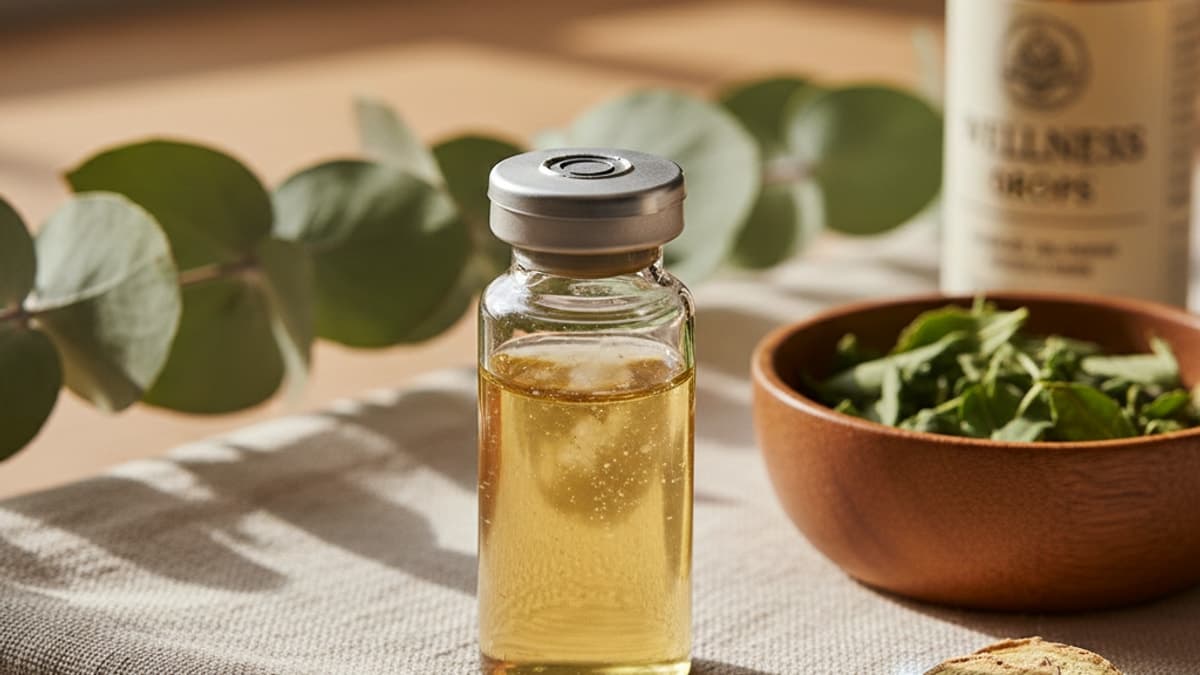
Signs Cagrilintide Gone Bad: Degradation Warning Guide
Cagrilintide degradation shows as cloudiness, color shifts, or particle formation. Learn the exact visual and chemical signs your peptide has gone bad.

Buy 5-Amino-1MQ Safely Online — Verified Suppliers Guide
5-Amino-1MQ requires exact sourcing criteria: third-party purity testing, sterile compounding, and transparent COAs. Here’s how to verify suppliers before
How Long 5-Amino-1MQ Stays in System — Clearance Timeline
5-Amino-1MQ clears within 48–72 hours based on its short half-life, but metabolic effects persist for 7–14 days after discontinuation due to enzyme
Travel with 5-Amino-1MQ Airplane TSA — Air Travel Guide
Traveling with 5-Amino-1MQ through TSA? Here’s what actually matters: peptide storage, documentation requirements, and what triggers secondary screening.

Signs 5-Amino-1MQ Gone Bad Degraded — Storage & Quality
5-Amino-1MQ degradation shows as color changes, clumping, or reduced effects. Storage errors cause 60–80% potency loss. Here’s what to watch for.

How Long Does MOTS-c Last? Half-Life and Detection in Published Research (2026)
How long MOTS-c lasts in published research: half-life, circulating levels and detection data from PubMed studies, with what remains unknown.
Signs MOTS-c Gone Bad Degraded — Real Peptides
Degraded MOTS-c loses potency through heat, light, and time. Learn to spot contamination, color shifts, and clumping before injection.
Does NAD+ Help Anti-Aging Research? Mechanisms & Evidence |
NAD+ extends cellular lifespan through sirtuin activation and DNA repair pathways — clinical trials show measurable biomarker improvements in aging

Travel with Epithalon Airplane TSA — Research Peptide
TSA permits research peptides in carry-on luggage when properly labeled and stored — here’s exactly how to travel with Epithalon legally.

Is FOXO4-DRI Safe? Side Effects Explained | Real Peptides
FOXO4-DRI shows promise in senolytic research, but safety data remains limited. Here’s what current studies reveal about side effects and risks.

Is FOXO4-DRI Legal 2026 Status — Research Peptide
FOXO4-DRI remains legal for research use in 2026 under FDA guidelines, but human clinical use is not approved.
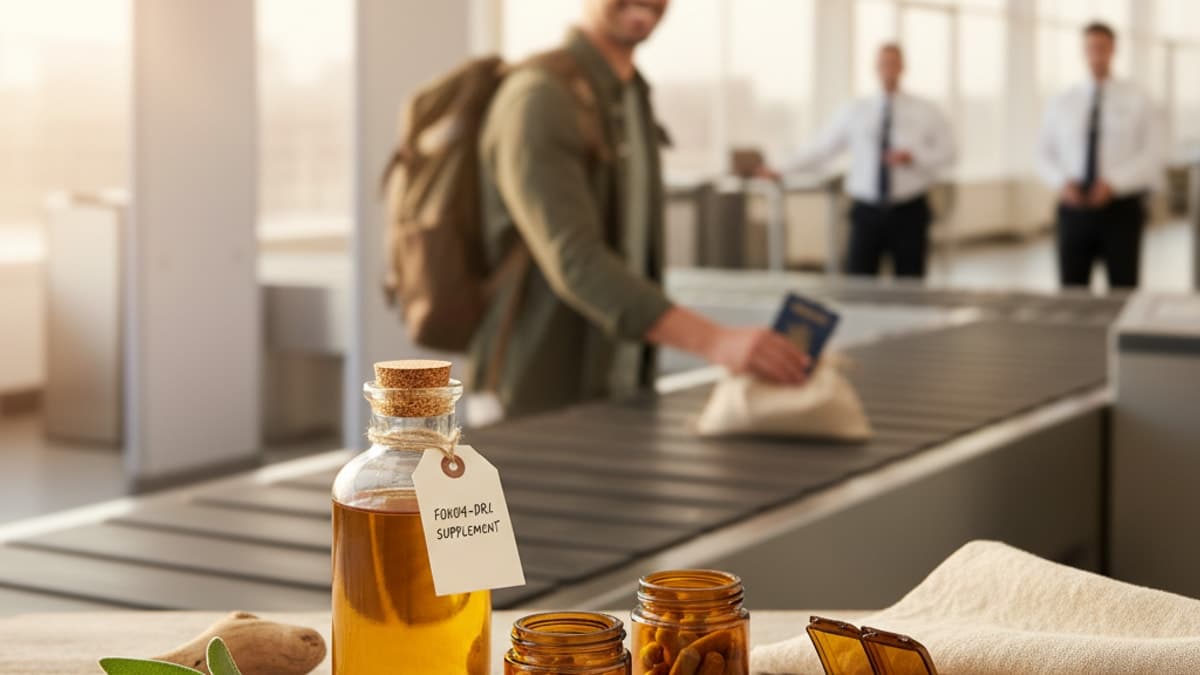
Travel with FOXO4-DRI Airplane TSA — Research Peptide Guide
FOXO4-DRI requires frozen storage and cannot pass TSA screening. Here’s how researchers transport temperature-sensitive peptides legally and safely during
Does Glutathione Need Refrigeration Storage? — Real Peptides
Glutathione need refrigeration storage depends on formulation. Lyophilized powder stays stable at room temperature; reconstituted solutions require 2–8°C
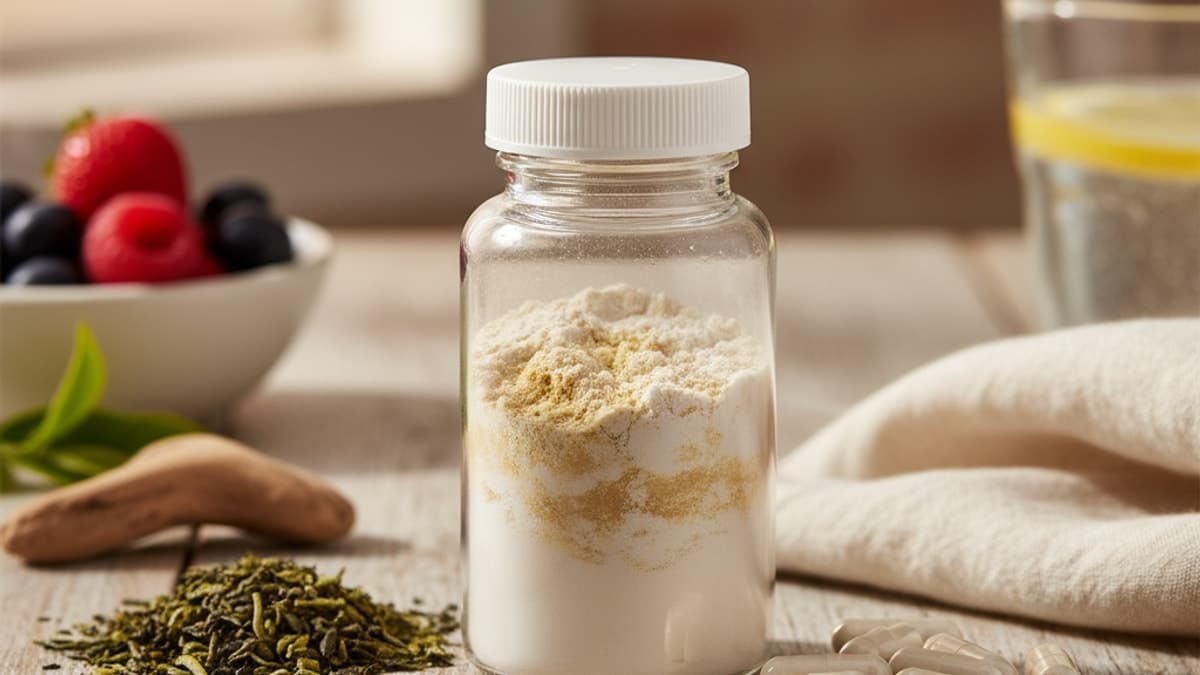
Signs Glutathione Gone Bad Degraded: Storage & Quality
Glutathione degradation shows in color shifts, odor changes, and reduced solubility. Learn to identify compromised peptides before they become ineffective

Travel with Glutathione Airplane TSA — Storage Rules
TSA allows glutathione in carry-on or checked bags with proper labeling. Critical: maintain cold chain 2–8°C during transit to preserve peptide stability

Travel with Snap-8 Airplane TSA — Security, Storage &
Can you travel with Snap-8 through TSA? Yes, with proper documentation and packaging. Learn temperature control, carry-on rules, and airport security

What Is AHK-Copper Peptide Same as AHK-Cu? (Explained)
Most researchers don't realize AHK-Cu and AHK-Copper Peptide are identical nomenclature variants—not separate compounds. The naming difference stems from chemical notation conventions, not molecular structure. Understanding this prevents protocol confusion and duplicate ordering in lab workflows.

Where to Buy Snap-8 Safely Online: Real Peptides
Most peptide purchases fail before they reach your lab: not from poor storage, but from sourcing compounds with undisclosed impurities or degraded amino-acid sequences. When you buy Snap-8 safely online, verification happens before shipping, not after disappointment.

Can You Stack KPV Other Peptides? — Real Peptides
Stacking KPV with peptides like BPC-157, TB-500, and thymosin alpha-1 is supported in research protocols when mechanisms align without redundancy.
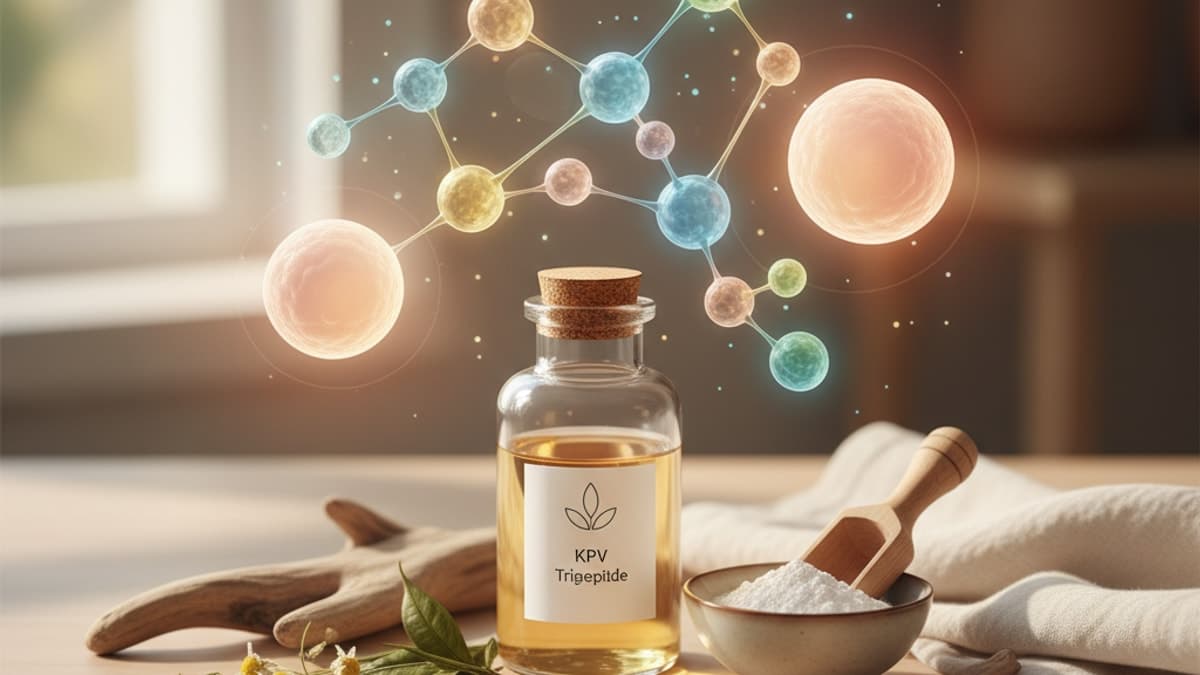
What Is KPV Tripeptide Same as KPV? (Peptide Identity
KPV tripeptide and KPV are identical: both refer to the three-amino-acid sequence Lys-Pro-Val derived from alpha-MSH with anti-inflammatory properties.

How Long LL-37 Takes to Work — Real Peptides
LL-37 typically shows immune response within 24–72 hours, but tissue repair and antimicrobial effects require 7–14 days of consistent dosing protocols.

Does LL-37 Help Lyme Support Research? (Mechanisms)
LL-37 demonstrates antimicrobial effects against Borrelia in vitro, modulates inflammation, and supports immune function in research models—though

GHK-Cu Mechanism of Action Detailed — Real Peptides
GHK-Cu binds copper ions to activate TGF-β, collagen synthesis, and angiogenesis through multiple signaling pathways — understand the complete molecular

How Long GHK-Cu Stays in System: What Clearance Research Shows (2026)
Research overview of GHK-Cu elimination kinetics, plasma clearance and copper binding, and what studies report about how long the tripeptide persists.
Is GHK-Cu Cosmetic FDA Approved? (Regulatory Status)
GHK-Cu Cosmetic is FDA-approved as a cosmetic ingredient under INCI, not as a drug. Learn the regulatory distinction, peptide classifications, and what
Does GHK-Cu Cosmetic Need Refrigeration Storage?
GHK-Cu cosmetic peptides degrade rapidly at room temperature—refrigeration at 2–8°C preserves potency, extends shelf life, and prevents oxidation that
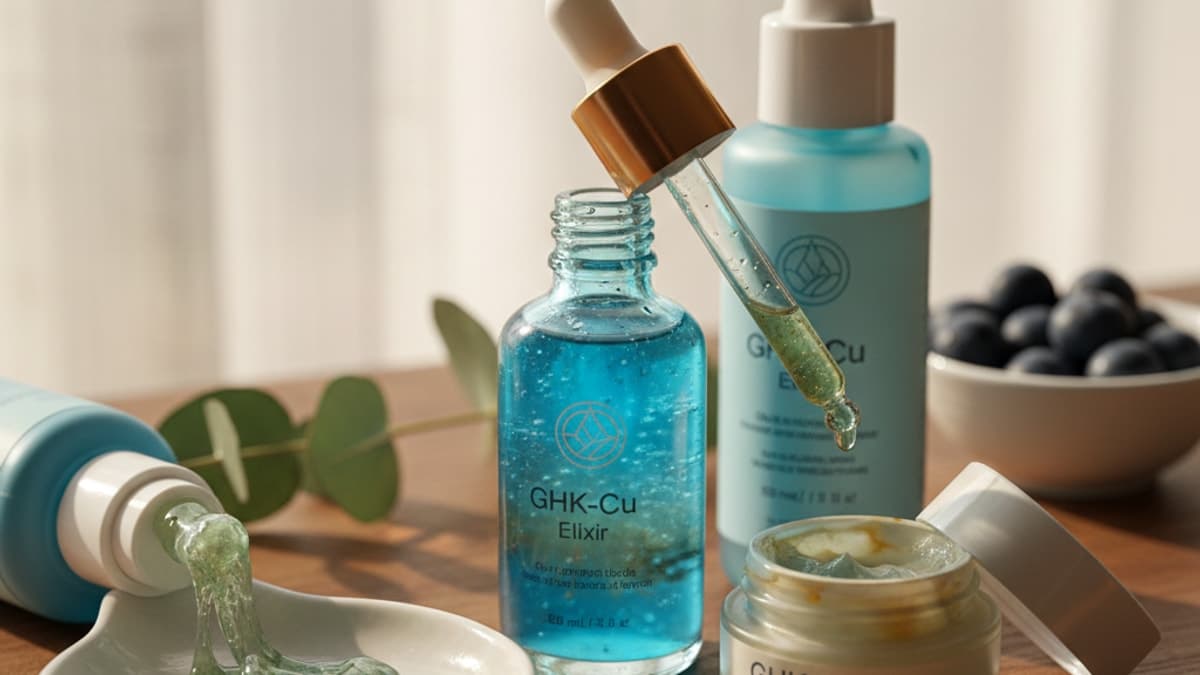
Signs GHK-Cu Cosmetic Gone Bad Degraded — Real Peptides
GHK-Cu cosmetic degradation shows through color shifts, precipitation, reduced viscosity, and pH changes — visual indicators reveal peptide bond breakdown.

Travel with GHK-Cu Cosmetic Airplane TSA — Real Peptides
Most GHK-Cu cosmetic peptides survive the security checkpoint but fail in the cargo hold — not from confiscation, but from temperature excursions that denature the protein structure before you ever reach your destination. The TSA doesn't care about your serum; physics does.

Does GHK-Cu Cosmetic Help Complexion Research? — Real
Most complexion peptides promise results without delivering the mechanism. GHK-Cu does the opposite—it triggers measurable Type I collagen production, inhibits melanocyte activity that causes uneven pigmentation, and neutralizes reactive oxygen species before they degrade dermal matrix.

AHK-Cu Mechanism of Action Detailed: Real Peptides
AHK-Cu stimulates collagen synthesis through copper-dependent enzymatic pathways and direct fibroblast activation, targeting extracellular matrix

How Does Follistatin-344 Work? (Myostatin Inhibition)
Follistatin-344 work involves binding and neutralizing myostatin, the protein that limits muscle growth — making it a focal point in muscle biology
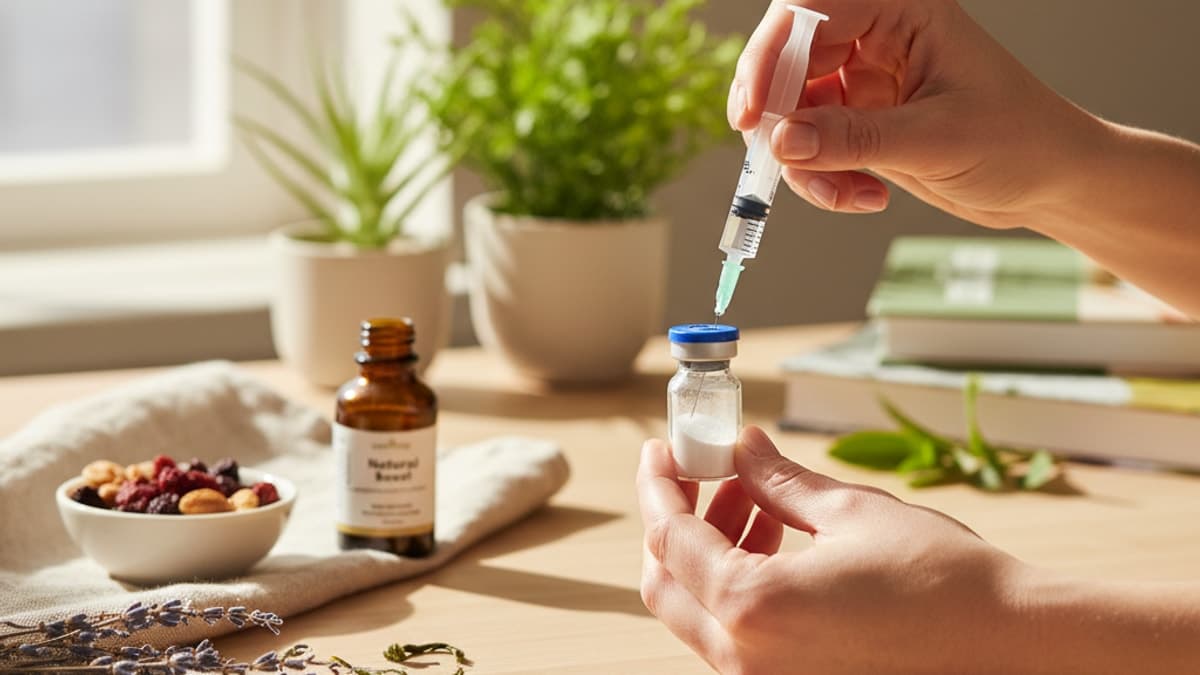
How to Reconstitute VIP — Safe Peptide Mixing Guide
Reconstitute VIP peptide correctly with bacteriostatic water using sterile technique. Temperature, volume, and mixing speed determine peptide stability

VIP Benefits: What the Research Literature Reports
Vasoactive intestinal peptide clears from circulation in about a minute, which is why VIP experiments fail on handling far more often than on purity. Here is what the published literature actually reports, and how to verify a vial before it ever reaches the bench.

VIP Cycle Length — Dosing Protocols & Half-Life | Real
Most researchers approach VIP cycle length backward — focusing on calendar duration instead of the biological half-life that determines actual efficacy.

VIP Quality Real vs Fake — Peptide Verification
VIP quality real vs fake peptides differ in amino-acid sequencing precision, purity verification, and storage stability — counterfeit vials degrade faster

KPV vs VIP Peptide Mechanisms and Research Uses: What Studies Show (2026)
Published research on KPV and VIP compares receptor targets, anti inflammatory signaling, and preclinical findings reported across laboratory studies.
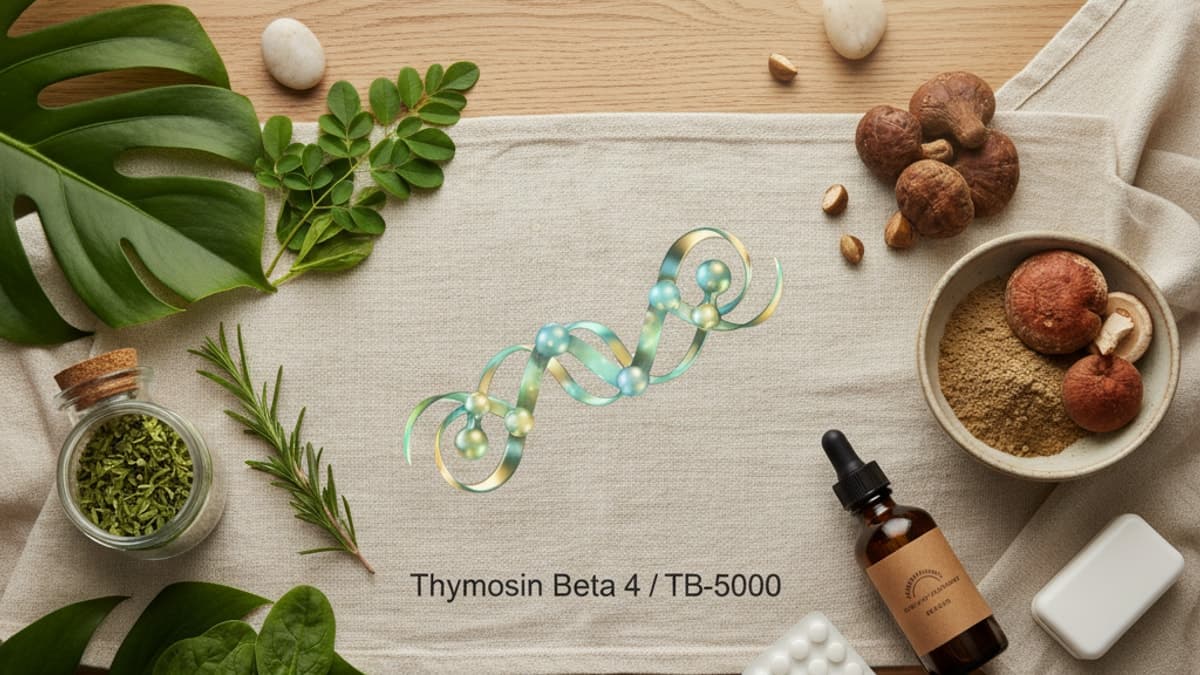
What is Thymosin Beta 4 Same as TB-500? (Key Differences)
Thymosin Beta 4 is the naturally occurring protein, while TB-500 is a synthetic fragment. Learn how they differ in structure, use, and research

Where to Buy TB-4 Safely Online: Real Peptides
Buy TB-4 safely online from FDA-registered 503B facilities with third-party purity testing, proper storage protocols, and transparent sourcing

Is TB-4 FDA Approved Status: Regulatory Reality
Most peptide buyers assume TB-4 is just another supplement awaiting approval, but the regulatory reality is far more complex. The peptide has never been FDA-approved for human therapeutic use, remains classified as investigational, and exists in a legal gray zone that makes its sale for anything beyond research purposes a federal violation.

Travel with TB-4 Airplane TSA — Research Peptide Rules
TB-4 peptide travel through TSA requires proper documentation, refrigeration, and compliance with federal regulations for research compounds.
Does Wolverine Stack Need Refrigeration Storage?
Wolverine Stack requires refrigeration at 2 to 8°C after reconstitution and freezing at −20°C before mixing: temperature control prevents irreversible

Where to Buy KLOW Safely Online: Real Peptides
Buy KLOW safely online from FDA-registered 503B facilities with verified purity, third-party testing, and proper cold chain handling: delivered to your lab

KLOW Half-Life and Clearance: What Research Shows on Time in System (2026)
Published research on KLOW peptide clearance, elimination rates, and detection windows in laboratory studies, with notes on current data limits.

Is KLOW Legal 2026 Status? (Research Peptide Explained)
KLOW peptide operates in a regulatory gray zone in 2026: legal for research use, not approved for human consumption. Current FDA status and compliance
Signs KLOW Gone Bad Degraded — Storage & Potency | Real
KLOW peptide degradation shows as cloudiness, color shift, or clumping. Temperature excursions above 8°C denature protein structure—here’s what to check

Difference Between GHK-Cu and KLOW — Real Peptides
Most researchers assume all copper peptides work the same way — they don't. GHK-Cu and KLOW share a copper ion but diverge completely in their amino acid sequences, receptor targets, and primary research applications.