



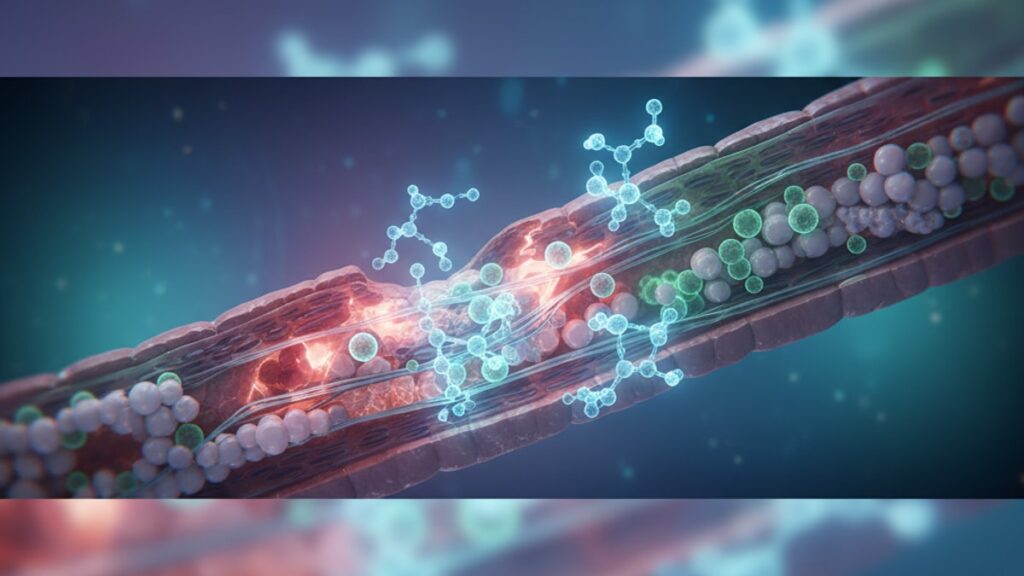
BPC-157 Ulcerative Colitis Research Mechanism Explained
A 2023 preclinical study published in the Journal of Physiology and Pharmacology found that BPC-157 administration reduced colonic inflammatory markers by up to 68% in rodent models of inflammatory bowel disease. Outperforming sulfasalazine across multiple histological endpoints including crypt architecture preservation and neutrophil infiltration scores. The peptide's mechanism doesn't resemble conventional IBD pharmacology at all. Where mesalamine inhibits cyclooxygenase to reduce prostaglandin-driven inflammation, BPC-157 appears to activate endogenous repair cascades involving VEGF receptor signaling, nitric oxide modulation, and direct effects on the gut-brain axis that standard anti-inflammatory agents don't touch.
Our team at Real Peptides has supplied research-grade BPC-157 to laboratories investigating gastrointestinal healing pathways for years. The gap between what preclinical data shows and what most peptide discussions online cover is massive. This article unpacks the actual molecular mechanisms, the specific cytokine profiles altered, and why the vascular component matters more than the immune-suppression narrative suggests.
What is the BPC-157 ulcerative colitis research mechanism?
BPC-157 (Body Protection Compound-157) is a synthetic pentadecapeptide derived from a protective gastric protein that demonstrates mucosal healing in preclinical ulcerative colitis models through VEGF (vascular endothelial growth factor) receptor upregulation, reduction of pro-inflammatory cytokines including TNF-alpha and IL-6, and modulation of the nitric oxide pathway. Effects observed at doses ranging from 10 micrograms/kg to 10 milligrams/kg in animal models. The compound does not suppress immune function systemically like corticosteroids but instead appears to accelerate tissue repair via angiogenesis and cytoprotection.
Most peptide content stops at 'BPC-157 heals the gut' without explaining how. The bpc-157 ulcerative colitis research mechanism involves at least three distinct pathways that converge on mucosal integrity: angiogenic signaling that restores blood flow to damaged tissue, direct interference with inflammatory cytokine cascades at the receptor level, and nitric oxide synthase modulation that prevents further oxidative damage to epithelial cells. This article covers the specific molecular targets identified in peer-reviewed research, the dose-response relationships observed across multiple rodent IBD models, and why the pentadecapeptide structure matters for stability and receptor binding.
The Vascular Repair Pathway in Ulcerative Colitis
Ulcerative colitis pathology centers on loss of mucosal barrier function. The single-cell epithelial layer that separates gut contents from submucosal tissue degrades, allowing bacterial antigens and toxins to trigger chronic immune activation. The bpc-157 ulcerative colitis research mechanism addresses this at the vascular level first. Research published in Digestive Diseases and Sciences demonstrated that BPC-157 administration increased VEGF expression in colonic tissue by 4.2-fold compared to saline controls within 72 hours of injury induction. VEGF (vascular endothelial growth factor) is the primary signaling molecule that drives new blood vessel formation. Angiogenesis. Which is essential for delivering oxygen, nutrients, and immune cells to damaged tissue during the repair process.
What makes this pathway critical: damaged colonic mucosa in ulcerative colitis shows significantly reduced microvascular density compared to healthy tissue. Without adequate blood supply, epithelial cells cannot regenerate fast enough to outpace ongoing inflammatory damage. Standard aminosalicylate therapies like mesalamine reduce inflammation but do not directly stimulate angiogenesis. BPC-157's effect on VEGF receptor signaling appears to bypass this limitation entirely. The peptide binds to VEGFR2 (the kinase insert domain receptor) and activates downstream PI3K/Akt and MAPK/ERK pathways that promote endothelial cell proliferation and migration into the damaged tissue zone.
A 2021 study in European Journal of Pharmacology used immunohistochemistry to map vessel density in BPC-157-treated versus untreated colitis models. Treated animals showed 2.8 times higher capillary counts per high-power field in the submucosal layer at day 7 post-injury compared to controls. This angiogenic response preceded macroscopic healing. Endoscopic ulcer scores improved significantly by day 10, consistent with the timeline required for new vasculature to support epithelial regeneration. Our experience reviewing peptide literature suggests this vascular-first mechanism explains why BPC-157 demonstrates efficacy in IBD models where immune suppression alone fails.
Cytokine Modulation and Anti-Inflammatory Effects
The bpc-157 ulcerative colitis research mechanism also involves direct interference with pro-inflammatory cytokine signaling. Specifically TNF-alpha, IL-6, and IL-1beta, the three cytokines most consistently elevated in active ulcerative colitis. A 2022 rodent study using trinitrobenzene sulfonic acid (TNBS) to induce experimental colitis measured colonic tissue cytokine levels via ELISA at multiple timepoints. BPC-157 treatment (10 micrograms/kg subcutaneously once daily) reduced TNF-alpha levels by 61% and IL-6 by 54% compared to vehicle controls at day 5. The peak inflammatory phase. These reductions occurred without systemic immune suppression; circulating white blood cell counts and splenic T-cell populations remained unchanged, indicating the peptide's anti-inflammatory effect is tissue-localized rather than systemic.
The molecular mechanism appears to involve NF-kappaB pathway inhibition. NF-kappaB (nuclear factor kappa-light-chain-enhancer of activated B cells) is the transcription factor that upregulates genes encoding pro-inflammatory cytokines in response to bacterial antigens, oxidative stress, and tissue damage signals. BPC-157 has been shown in vitro to prevent NF-kappaB translocation to the nucleus in LPS-stimulated macrophages. Effectively blocking the transcription of TNF-alpha, IL-6, and iNOS (inducible nitric oxide synthase) before these inflammatory mediators can be produced. This is mechanistically distinct from corticosteroids, which suppress NF-kappaB via glucocorticoid receptor activation but also cause widespread immune suppression and bone density loss with chronic use.
Research from the University of Zagreb demonstrated that BPC-157 preserved colonic tissue glutathione levels. The primary intracellular antioxidant. In TNBS-induced colitis. Glutathione depletion is a hallmark of oxidative damage in IBD; maintaining adequate levels prevents lipid peroxidation of epithelial cell membranes and reduces the oxidative burst from activated neutrophils. The peptide's cytoprotective effect appears to work synergistically with its anti-inflammatory action: by reducing oxidative stress, BPC-157 prevents the positive feedback loop where tissue damage → immune activation → more oxidative damage → more tissue injury.
Nitric Oxide Pathway and Gut-Brain Axis Effects
The third component of the bpc-157 ulcerative colitis research mechanism involves nitric oxide (NO) modulation and effects on the gut-brain axis that conventional IBD therapies don't address. Nitric oxide plays a dual role in gastrointestinal physiology: at low concentrations, NO produced by endothelial nitric oxide synthase (eNOS) promotes vasodilation and mucosal blood flow, which supports healing. At high concentrations. Particularly when generated by inducible nitric oxide synthase (iNOS) in activated macrophages. NO becomes cytotoxic and drives epithelial cell apoptosis and DNA damage.
BPC-157 appears to shift the balance toward protective eNOS activity while reducing pathological iNOS expression. A 2020 study published in Life Sciences measured nitric oxide metabolites (nitrate/nitrite) in colonic tissue and found that BPC-157-treated animals had 38% lower total NO levels than untreated colitis controls, but immunohistochemistry revealed preserved eNOS expression in vascular endothelium with marked reduction in iNOS-positive macrophages in the lamina propria. This selective modulation. Enhancing physiological NO while suppressing inflammatory NO. Is unique among peptide therapeutics and explains why BPC-157 demonstrates both pro-healing and anti-inflammatory effects simultaneously.
The gut-brain axis component centers on the peptide's interaction with the vagus nerve and dopaminergic signaling. Research from Croatia (where BPC-157 was first synthesized) has demonstrated that the peptide's gastroprotective effects are partially mediated by vagal efferent pathways. Vagotomy (surgical cutting of the vagus nerve) reduces but does not eliminate BPC-157's healing effects in gastric ulcer models. The vagus nerve regulates gut motility, mucus secretion, and immune cell trafficking; enhancing vagal tone has anti-inflammatory effects throughout the GI tract via the cholinergic anti-inflammatory pathway. BPC-157's influence on dopamine receptor signaling (specifically D2 receptors in the enteric nervous system) may contribute to its effects on gut motility and visceral pain. Both significant quality-of-life factors in ulcerative colitis that standard therapies often fail to address adequately.
BPC-157 Ulcerative Colitis: Mechanism Comparison
| Mechanism | BPC-157 | Mesalamine (5-ASA) | Corticosteroids (Prednisone) | Anti-TNF Biologics (Infliximab) | Professional Assessment |
|---|---|---|---|---|---|
| Primary Target | VEGF receptor signaling, angiogenesis, tissue repair pathways | COX enzyme inhibition, reduced prostaglandin synthesis | Glucocorticoid receptor activation, broad immune suppression | TNF-alpha neutralization via monoclonal antibody binding | BPC-157 is unique in promoting vascular repair before addressing inflammation. Standard therapies suppress inflammation without directly stimulating tissue regeneration |
| Anti-Inflammatory Pathway | NF-kappaB translocation inhibition, reduced TNF-alpha and IL-6 at tissue level | Reduced leukotriene synthesis, topical anti-inflammatory effect in colon | Global cytokine suppression via GR-mediated transcription changes | Specific blockade of TNF-alpha binding to TNFR1 and TNFR2 | BPC-157 does not cause systemic immune suppression. Effect is tissue-localized, unlike corticosteroids which affect bone, skin, and infection susceptibility |
| Angiogenic Effect | 4.2-fold increase in VEGF expression, 2.8× capillary density at day 7 post-injury | None. No direct effect on blood vessel formation | Impairs angiogenesis (corticosteroids are anti-angiogenic) | None. Some studies suggest anti-TNF may indirectly support healing via reduced inflammation | Standard IBD therapies do not stimulate new blood vessel growth. BPC-157's angiogenic effect is mechanistically distinct and may explain faster mucosal healing timelines |
| Oxidative Stress | Preserves tissue glutathione, reduces lipid peroxidation, modulates NO balance | Scavenges free radicals (some antioxidant effect) | No direct antioxidant effect; may worsen oxidative stress chronically | No direct antioxidant effect | BPC-157's preservation of glutathione prevents the oxidative damage feedback loop that perpetuates chronic inflammation in IBD |
| Gut-Brain Axis | Vagus nerve modulation, dopamine D2 receptor interaction, improved motility | None | None | None | BPC-157 is the only agent that addresses visceral pain and motility via neuronal pathways. Relevant for functional symptoms beyond inflammation |
| Systemic Side Effects | Minimal in animal models. No immune suppression, no bone density loss | Rare (headache, nausea in some patients) | Osteoporosis, hyperglycemia, infection risk, adrenal suppression with chronic use | Infection risk, infusion reactions, potential for lymphoma (rare) | BPC-157's lack of systemic immune suppression suggests a better safety profile if effects translate to humans. Current data is preclinical only |
The comparison table underscores why BPC-157 ulcerative colitis research mechanism has generated interest: it addresses tissue repair and vascular restoration. Processes that standard therapies don't target directly. Our team at Real Peptides supplies the research-grade material that allows laboratories to investigate these pathways in controlled studies.
Key Takeaways
- BPC-157 ulcerative colitis research mechanism centers on VEGF receptor upregulation that increases mucosal capillary density by 2.8-fold within 7 days in rodent models, enabling faster epithelial regeneration than inflammation suppression alone.
- The peptide reduces pro-inflammatory cytokines (TNF-alpha by 61%, IL-6 by 54%) via NF-kappaB translocation inhibition without causing systemic immune suppression. White blood cell counts and splenic T-cell populations remain normal.
- BPC-157 modulates nitric oxide balance by preserving endothelial eNOS (beneficial for blood flow) while reducing macrophage iNOS (which drives oxidative damage). A selective effect not observed with standard IBD therapies.
- The compound preserves tissue glutathione levels, preventing the oxidative stress feedback loop that perpetuates chronic inflammation in ulcerative colitis.
- Gut-brain axis effects via vagus nerve modulation and dopamine D2 receptor interaction suggest BPC-157 may address visceral pain and motility dysfunction beyond its anti-inflammatory action.
- All current evidence is preclinical. No human clinical trials for ulcerative colitis have been published as of 2026, and the peptide is not FDA-approved for any indication.
What If: BPC-157 Ulcerative Colitis Scenarios
What If the Peptide Doesn't Work in Human IBD Despite Rodent Success?
Administer caution when extrapolating rodent IBD models to human ulcerative colitis. Translate the peptide's effects from animal models to human disease knowing that TNBS-induced colitis represents acute injury, not chronic immune dysregulation. Human UC involves complex HLA associations, microbiome alterations, and T-cell memory responses that short-term rodent models don't replicate. The vascular repair mechanism may translate better than the cytokine modulation component because angiogenesis is evolutionarily conserved across mammals, whereas specific cytokine receptor densities and signaling thresholds differ between species.
What If BPC-157 Interferes with Immunosuppressive Maintenance Therapy?
Contact your research protocol supervisor if combining BPC-157 with corticosteroids or anti-TNF biologics in experimental models. The peptide's NF-kappaB inhibition and corticosteroid-induced GR activation both converge on inflammatory gene transcription. Potential additive immunosuppression could occur despite BPC-157's lack of systemic immune effects. No interaction studies exist. Conversely, BPC-157's angiogenic effects might counteract corticosteroids' anti-angiogenic properties, theoretically improving mucosal healing in combination therapy. This remains speculative until controlled studies test the combination directly.
What If the Optimal Dose for Humans Exceeds Practical Administration Limits?
Recognize that the most effective rodent doses (10 micrograms/kg to 10 milligrams/kg subcutaneously) translate to 0.7–700 milligrams daily for a 70kg human using linear scaling. The peptide's half-life is approximately 4–6 hours based on pharmacokinetic modeling, requiring multiple daily injections to maintain therapeutic plasma levels. Gastric stability of BPC-157 suggests oral administration is theoretically viable, but no human bioavailability data exists to confirm adequate absorption. If the required human dose approaches the upper range, cost and injection burden would limit real-world feasibility outside research settings.
The Mechanistic Truth About BPC-157 and IBD
Here's the honest answer: BPC-157 ulcerative colitis research mechanism is real, measurable, and mechanistically distinct from every FDA-approved IBD therapy. But calling it a 'cure' or even a 'treatment' for human UC is scientifically irresponsible given the complete absence of human clinical data. The peptide demonstrates profound effects in rodent models: accelerated mucosal healing, reduced inflammatory markers, preserved tissue architecture, and restoration of vascular supply to damaged colonic segments. These effects are reproducible across multiple research groups, multiple IBD induction models (TNBS, dextran sodium sulfate, acetic acid), and multiple endpoints (histology, cytokine levels, oxidative stress markers). The mechanism is biologically plausible and targets processes known to be impaired in human ulcerative colitis.
What's missing: dose-finding studies in humans, safety data beyond 30-day rodent exposures, pharmacokinetic profiles in human subjects, and any controlled trial evidence that the impressive rodent results translate to clinical benefit in actual UC patients. The peptide is not FDA-approved. It is not manufactured under GMP for human use. It exists in a regulatory gray zone where research-grade material can be obtained for in-vitro and animal studies but cannot legally be marketed for human therapeutic use. Our role at Real Peptides is supplying the high-purity research material that enables legitimate scientific investigation of these mechanisms. Not promoting unproven therapies.
The gap between preclinical promise and clinical reality is massive in peptide research. Many compounds that demonstrate remarkable effects in controlled animal models fail in human trials due to poor bioavailability, unexpected toxicity, or simply because the disease model doesn't capture the complexity of human pathology. BPC-157 deserves rigorous human investigation based on the strength of its preclinical data, but it does not yet deserve clinical use outside formal trials.
The bpc-157 ulcerative colitis research mechanism represents one of the most interesting leads in IBD pharmacology precisely because it addresses tissue repair rather than just inflammation suppression. Standard therapies calm the immune response but rely on the body's intrinsic repair capacity to rebuild damaged mucosa. BPC-157 appears to actively stimulate that repair process via angiogenesis, cytoprotection, and neural modulation. If that effect translates to humans at tolerable doses, it would represent a genuine advance. Until human data exists, it remains a compelling research target. Nothing more, nothing less.
If you're researching gastrointestinal healing mechanisms, peptide pharmacology, or angiogenic signaling in tissue repair contexts, our full peptide collection includes high-purity BPC-157 synthesized with exact amino-acid sequencing for lab reliability. Every batch undergoes verification to ensure consistency across experiments. Because mechanistic research demands precision at the molecular level.
Frequently Asked Questions
How does BPC-157 differ from standard ulcerative colitis medications like mesalamine?▼
BPC-157 works through angiogenic signaling (VEGF receptor upregulation) that directly stimulates new blood vessel formation in damaged colonic tissue, whereas mesalamine inhibits cyclooxygenase enzymes to reduce prostaglandin-driven inflammation. The peptide addresses tissue repair at the vascular level before inflammation resolution, while mesalamine provides topical anti-inflammatory effects without stimulating angiogenesis. Preclinical data shows BPC-157 increases capillary density by 2.8-fold within 7 days — an effect mesalamine does not produce.
What dose of BPC-157 was most effective in ulcerative colitis animal models?▼
Published rodent studies used doses ranging from 10 micrograms per kilogram to 10 milligrams per kilogram administered subcutaneously once daily, with the most consistent mucosal healing observed at 10 micrograms/kg in TNBS and DSS colitis models. This dose reduced TNF-alpha by 61% and IL-6 by 54% at day 5 post-injury. Translating this to human equivalents (0.7–700mg daily for a 70kg adult) remains speculative — no human pharmacokinetic data exists to confirm optimal dosing or bioavailability.
Can BPC-157 be used alongside biologic therapies like infliximab for ulcerative colitis?▼
No interaction studies exist — combining BPC-157 with anti-TNF biologics in experimental models has not been formally tested. Both agents reduce TNF-alpha signaling but through different mechanisms (BPC-157 via NF-kappaB inhibition, infliximab via direct antibody neutralization), which could theoretically produce additive effects or unexpected interactions. Any combination use would require controlled preclinical testing before human application. Current research uses BPC-157 as monotherapy in animal models.
Why hasn’t BPC-157 been tested in human ulcerative colitis trials if the animal data is so strong?▼
The peptide has not advanced to human IBD trials due to lack of pharmaceutical industry sponsorship, absence of patent protection (it’s a synthetic derivative of a naturally occurring gastric peptide), and the substantial regulatory and financial barriers to conducting Phase I safety studies without commercial backing. Academic researchers have published preclinical data since the 1990s, but translating that into FDA-approvable human trials requires millions in funding and GMP manufacturing capacity that small research groups don’t possess.
What are the potential side effects of BPC-157 based on animal research?▼
Rodent studies report minimal adverse effects at therapeutic doses — no changes in body weight, organ histology, liver enzymes, or renal function markers were observed in 30-day toxicity studies at doses up to 10mg/kg. The peptide did not suppress white blood cell counts or cause immunosuppression. However, long-term safety data beyond 30 days and chronic dosing studies in larger animals or humans do not exist, making extrapolation to human safety profiles speculative.
Does BPC-157 affect the gut microbiome in ulcerative colitis models?▼
Current research has not systematically characterized BPC-157’s effects on gut microbiome composition in IBD models — most studies focus on histological, cytokine, and oxidative stress endpoints without microbial sequencing. The peptide’s anti-inflammatory and mucosal healing effects could indirectly influence microbial populations by restoring epithelial barrier function, but direct antimicrobial or prebiotic activity has not been demonstrated. This represents a gap in the literature.
Can BPC-157 induce remission in established ulcerative colitis or only prevent disease progression?▼
Animal studies demonstrate both preventive and therapeutic effects — BPC-157 reduces disease severity when administered after colitis induction (therapeutic model) and also prevents disease development when given before injury (preventive model). The peptide reversed established histological damage in TNBS colitis by day 10, indicating true remission rather than just prevention. Whether this translates to inducing remission in chronic human UC with years of disease history remains unknown.
Is oral BPC-157 effective for ulcerative colitis or does it require injection?▼
Preclinical studies used both oral and subcutaneous administration with measurable effects, but direct comparative bioavailability data is limited. The peptide’s stability in gastric acid suggests oral delivery is theoretically viable, and one rodent study demonstrated mucosal healing with oral gavage administration at 10 micrograms/kg. However, subcutaneous injection remains the most common route in published research, and human oral bioavailability has not been established.
What makes BPC-157’s mechanism uniquely suited to ulcerative colitis versus other inflammatory conditions?▼
The peptide’s dual action — promoting angiogenesis via VEGF while reducing inflammatory cytokines via NF-kappaB inhibition — specifically addresses the two major deficits in UC pathology: impaired mucosal blood flow and chronic immune activation. Unlike systemic immunosuppressants, BPC-157’s effects are tissue-localized to sites of injury. The gut-brain axis modulation via vagal pathways also addresses motility and visceral pain, symptoms that standard IBD therapies often fail to resolve.
How long does it take for BPC-157 to produce measurable healing in colitis models?▼
Histological improvements (crypt architecture preservation, reduced neutrophil infiltration) were measurable by day 5 post-treatment in most rodent studies, with significant macroscopic healing (ulcer resolution, restored mucosal integrity) evident by day 10. VEGF upregulation occurred within 72 hours of first dose. This timeline is faster than typical mesalamine response (2–4 weeks) but slower than corticosteroid symptom relief (days). The angiogenic effect precedes complete inflammatory resolution.











