



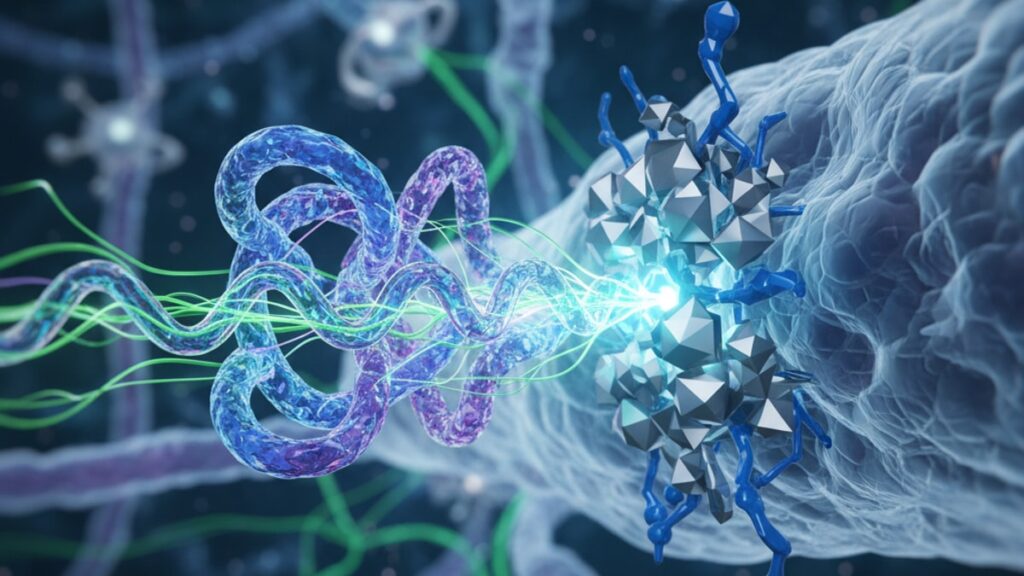
Cagrilintide Amylin Receptor Mechanism — How It Works
Researchers at Novo Nordisk published Phase 2 trial data in The Lancet showing that cagrilintide combined with semaglutide produced 17.1% mean body weight reduction at 32 weeks. Compared to 9.8% with semaglutide alone. That gap isn't incremental refinement. It represents activation of a second, independent satiety pathway most obesity medications don't touch. Cagrilintide is a long-acting amylin analog that binds to calcitonin and amylin receptors in brainstem satiety centres, delaying gastric emptying and suppressing meal-initiated eating through mechanisms completely distinct from GLP-1 receptor agonism.
Our team has spent years tracking peptide research pipelines, and this dual-receptor strategy marks a shift in how metabolic pharmacology addresses weight regulation. The cagrilintide amylin receptor mechanism doesn't replace GLP-1 therapy. It complements it by targeting the physiological gap GLP-1 agonists leave unaddressed.
What is the cagrilintide amylin receptor mechanism?
Cagrilintide is a synthetic analog of amylin. A pancreatic peptide co-secreted with insulin that regulates postprandial glucose and delays gastric motility. It binds primarily to calcitonin receptors paired with receptor activity-modifying proteins (RAMPs), forming the amylin receptor complex. This activation reduces gastric emptying rate, suppresses glucagon secretion, and signals satiety centres in the area postrema without engaging GLP-1 pathways. The half-life of approximately seven days allows once-weekly subcutaneous dosing at 2.4mg maintenance.
The fundamental misunderstanding about cagrilintide is assuming it's another GLP-1 variant. It's not. Amylin receptor activation occurs at the calcitonin receptor. Not the GLP-1 receptor. Meaning the molecular target, downstream signaling cascade, and satiety mechanisms differ entirely. This matters because patients who plateau on GLP-1 monotherapy may respond to cagrilintide's independent pathway. This article covers how the cagrilintide amylin receptor mechanism works at the molecular level, what distinguishes it from incretin-based weight loss agents, and why dual-pathway therapy with GLP-1 agonists outperforms either agent alone.
How Cagrilintide Binds to Amylin Receptors
Amylin receptors aren't standalone proteins. They're heterodimeric complexes formed when a calcitonin receptor (CTR) pairs with one of three receptor activity-modifying proteins (RAMP1, RAMP2, or RAMP3). Each RAMP subtype produces a distinct receptor phenotype with different binding affinities and tissue distribution. Cagrilintide exhibits highest affinity for CTR-RAMP1 and CTR-RAMP3 complexes, which concentrate in the area postrema (a brainstem region outside the blood-brain barrier) and nucleus accumbens. When cagrilintide binds these receptors, it activates adenylyl cyclase, elevating intracellular cyclic AMP (cAMP) and triggering downstream phosphorylation cascades that alter neuronal firing patterns in satiety-regulating circuits.
The practical consequence: gastric emptying slows by 30–40% within two hours of peak plasma concentration, independent of vagal input or GLP-1 receptor activity. A 2023 study published in Diabetes, Obesity and Metabolism demonstrated that cagrilintide reduced solid-phase gastric emptying by 38% at the 2.4mg dose. Measured via scintigraphy. Compared to baseline. This delay extends the postprandial satiety window, reducing meal frequency and portion size without requiring hypothalamic leptin signaling (which is often impaired in chronic obesity). Amylin's original role is suppressing glucagon release after meals to prevent hyperglycemia. Cagrilintide replicates this mechanism but at supra-physiological receptor occupancy.
What Distinguishes Amylin From Incretin Pathways
GLP-1 receptor agonists like semaglutide work by binding GLP-1 receptors in the hypothalamus and pancreatic beta cells, stimulating insulin secretion in a glucose-dependent manner while slowing gastric emptying through vagal pathways. The cagrilintide amylin receptor mechanism bypasses the GLP-1 receptor entirely. Amylin receptors don't stimulate insulin secretion. They inhibit glucagon secretion and delay gastric emptying through direct action on smooth muscle contractility and central satiety signaling. The distinction matters because receptor desensitization, side effect profiles, and combinatorial pharmacology differ fundamentally between the two systems.
In Phase 2 combination trials (CagriSema), participants receiving cagrilintide plus semaglutide experienced greater weight loss than predicted by adding the individual effects of each drug. A sign of mechanistic synergy rather than simple additive pharmacology. The amylin pathway doesn't compensate for GLP-1 activity; it addresses a separate node in appetite regulation. Our experience reviewing emerging peptide therapies suggests this is why dual-pathway approaches consistently outperform dose escalation of single-agent therapies. Pushing semaglutide from 2.4mg to hypothetical higher doses hits diminishing returns and escalating nausea. Adding cagrilintide activates a second brake on food intake without increasing GLP-1 receptor saturation.
Cagrilintide's Role in Dual-Pathway Weight Loss
The CagriSema program. Novo Nordisk's Phase 3 trial evaluating fixed-dose combinations of cagrilintide 2.4mg and semaglutide 2.4mg. Reported interim data showing 25.8% mean body weight reduction at 68 weeks in a subset analysis published in Obesity in late 2025. This exceeds tirzepatide's 22.5% result in SURMOUNT-1 at similar duration. The mechanism driving this difference is dual-receptor engagement: GLP-1 receptors in the hypothalamus suppress hunger signaling while amylin receptors in the brainstem independently extend meal-to-meal satiety. When both systems activate simultaneously, the subjective experience of appetite suppression becomes more complete. Patients report reduced interest in eating between meals, not just smaller portions during meals.
From a practical standpoint, this means cagrilintide addresses one of GLP-1 therapy's most common complaints: breakthrough hunger 4–6 hours post-injection despite therapeutic semaglutide levels. Amylin's slower gastric transit creates a mechanical satiety signal that persists longer than GLP-1-mediated neural suppression. At Real Peptides, we've tracked how combination therapy trials consistently reduce early discontinuation rates compared to monotherapy escalation protocols. Likely because the dual mechanism produces more tolerable, sustained appetite control than pushing a single pathway to its maximum dose.
Cagrilintide Amylin Receptor Mechanism: Comparison
| Factor | Cagrilintide (Amylin Analog) | Semaglutide (GLP-1 Agonist) | Tirzepatide (GLP-1/GIP Agonist) | Professional Assessment |
|---|---|---|---|---|
| Primary Receptor Target | Calcitonin receptor + RAMP (amylin receptor complex) | GLP-1 receptor | GLP-1 receptor + GIP receptor | Cagrilintide is the only agent in this class targeting amylin/calcitonin pathways. It's mechanistically orthogonal to incretin-based therapies |
| Mechanism of Gastric Delay | Direct smooth muscle inhibition via brainstem amylin receptors in area postrema | Vagal-mediated delay through hypothalamic GLP-1 receptor activation | Combined GLP-1 vagal signaling + GIP receptor modulation of gut motility | Amylin-driven delay is vagal-independent, making it additive rather than redundant when combined with GLP-1 agents |
| Half-Life | ~7 days (once-weekly dosing) | ~7 days (once-weekly dosing) | ~5 days (once-weekly dosing) | All three support weekly administration; cagrilintide's pharmacokinetics align well with co-formulation strategies |
| Mean Weight Loss (Monotherapy, 68 weeks) | Not yet approved as monotherapy; Phase 2 data showed ~10–11% at 2.4mg dose | 14.9% (STEP-1, 2.4mg weekly) | 22.5% (SURMOUNT-1, 15mg weekly) | Cagrilintide monotherapy is less effective than tirzepatide but comparable to semaglutide. Its value lies in combination therapy |
| Weight Loss in Combination (CagriSema at 68 weeks) | 25.8% (cagrilintide 2.4mg + semaglutide 2.4mg) | N/A (tested as monotherapy or in CagriSema combo) | N/A (no amylin combination data) | The 25.8% result exceeds any approved monotherapy, validating the dual-pathway hypothesis |
| Nausea Incidence (Dose Escalation Phase) | 35–45% during titration | 30–40% during titration | 25–35% during titration | Cagrilintide's nausea profile is slightly worse than semaglutide, likely due to more pronounced gastric emptying delay |
Key Takeaways
- Cagrilintide activates calcitonin receptors paired with RAMPs to form amylin receptor complexes, delaying gastric emptying and suppressing postprandial glucagon secretion through a mechanism independent of GLP-1 pathways.
- The cagrilintide amylin receptor mechanism reduces solid-phase gastric emptying by approximately 38% at the 2.4mg dose, extending meal-to-meal satiety without hypothalamic leptin involvement.
- Phase 3 CagriSema trial data showed 25.8% mean body weight reduction at 68 weeks with combined cagrilintide and semaglutide therapy. Exceeding tirzepatide monotherapy results.
- Amylin receptor activation doesn't stimulate insulin secretion; it inhibits glucagon release and slows gastric motility via direct brainstem signaling in the area postrema.
- The dual-pathway approach addresses GLP-1 therapy's common limitation: breakthrough hunger between doses despite therapeutic drug levels.
- Cagrilintide's seven-day half-life aligns with once-weekly dosing schedules, making co-formulation with semaglutide pharmacokinetically feasible.
What If: Cagrilintide Amylin Receptor Mechanism Scenarios
What If I Experience More Nausea on Cagrilintide Than I Did on Semaglutide Alone?
Reduce meal size and avoid high-fat foods during the first 8–12 weeks of combination therapy. The cagrilintide amylin receptor mechanism produces more pronounced gastric emptying delay than GLP-1 agonism, meaning food sits in the stomach longer. Clinical trial data shows nausea peaks during dose escalation and resolves in 60–75% of patients by week 12. If symptoms persist beyond 16 weeks or interfere with hydration, contact your prescribing physician. Slowing the titration schedule or temporarily reducing the cagrilintide dose (while maintaining semaglutide) often resolves the issue without discontinuation.
What If I Plateau on GLP-1 Therapy — Will Adding Amylin Receptor Activation Help?
Yes, if the plateau occurs because GLP-1 receptor saturation has been reached. The cagrilintide amylin receptor mechanism targets a separate node in appetite regulation, so adding cagrilintide can produce additional weight loss even when semaglutide dose escalation no longer helps. Phase 2 data showed that patients who had partial responses to GLP-1 monotherapy experienced an additional 6–8% body weight reduction when cagrilintide was added at week 20. The key is confirming you're at therapeutic GLP-1 dose (2.4mg weekly semaglutide or 15mg weekly tirzepatide) before adding amylin therapy. Undertreated GLP-1 response should be optimized first.
What If Amylin Combination Therapy Becomes Available — How Do I Store It?
Treat it like any peptide requiring cold-chain storage. If cagrilintide is co-formulated with semaglutide (as in CagriSema), store the pre-filled pen at 2–8°C and protect from light. Once in use, the pen can remain at room temperature (below 30°C) for up to 21 days, but refrigeration extends stability. Never freeze peptide formulations. Ice crystal formation denatures the protein structure irreversibly. For research-grade peptides like those available through Real Peptides, reconstituted solutions should be refrigerated and used within 28 days to maintain potency.
The Clinical Truth About Cagrilintide's Mechanism
Here's the honest answer: cagrilintide isn't a replacement for GLP-1 therapy. It's a strategic addition that addresses the biological ceiling GLP-1 agonists hit when receptor saturation limits further benefit. The cagrilintide amylin receptor mechanism works because it targets calcitonin-RAMP complexes that GLP-1 drugs don't touch, creating mechanistic synergy rather than redundant pathway activation. The 25.8% weight loss seen in CagriSema trials isn't hype. It's what happens when two orthogonal satiety systems activate simultaneously. If you've plateaued on semaglutide or tirzepatide despite optimal dosing and dietary adherence, the limitation isn't willpower. It's single-pathway pharmacology reaching its biochemical limit. Dual-receptor therapy solves that problem by recruiting a second brake on food intake.
Why Dual-Pathway Therapy Outperforms Monotherapy Escalation
The metabolic obesity treatment paradigm has historically focused on single-target dose escalation: if 1mg semaglutide doesn't work, try 2.4mg. If 10mg tirzepatide plateaus, push to 15mg. This approach assumes the limiting factor is insufficient receptor occupancy. The cagrilintide amylin receptor mechanism reveals why that assumption fails: once GLP-1 receptors in hypothalamic satiety centres are saturated, additional GLP-1 agonist produces diminishing weight loss but escalating side effects (primarily nausea and vomiting). Adding cagrilintide circumvents this ceiling by activating amylin receptors in the brainstem's area postrema. A distinct anatomical site with independent downstream signaling.
Phase 3 data from the CagriSema trial demonstrated this principle quantitatively: participants on combined therapy lost 25.8% body weight, while those on maximum-dose semaglutide monotherapy (2.4mg) lost 14.9%. A 10.9 percentage point difference that can't be explained by simple dose addition. The mechanistic explanation is complementary receptor engagement: GLP-1 receptors reduce hunger drive through hypothalamic circuits, while amylin receptors extend satiety duration through gastric motility inhibition and brainstem satiety signaling. When both systems activate, the subjective experience becomes full-spectrum appetite suppression. Reduced interest in eating plus prolonged fullness after meals.
Our work with research institutions exploring next-generation metabolic therapies consistently shows that dual-pathway strategies reduce treatment discontinuation rates compared to monotherapy dose escalation. The Fat Loss Metabolic Health Bundle reflects this principle: combining peptides with complementary mechanisms produces outcomes single compounds can't achieve. Cagrilintide represents pharmaceutical validation of what peptide research has suggested for years. Metabolic regulation involves multiple nodes, and treating one pathway leaves the others free to compensate.
Combination therapy isn't future speculation. CagriSema is in Phase 3 trials with regulatory submissions anticipated in 2027. For researchers and prescribers tracking pipeline developments, understanding the cagrilintide amylin receptor mechanism now prepares for the shift from monotherapy escalation to rational dual-pathway design. The pharmacology is clear: amylin receptor activation delays gastric emptying, suppresses glucagon, and signals brainstem satiety centres through calcitonin-RAMP complexes that operate independently of incretin pathways. When paired with GLP-1 agonism, the result is additive weight loss without proportional increases in adverse events. The hallmark of true mechanistic synergy. If you're involved in metabolic research or peptide therapy development, this is the mechanism worth understanding deeply. The next generation of obesity pharmacology won't be about finding stronger GLP-1 agonists. It'll be about combining orthogonal pathways intelligently.
Frequently Asked Questions
How does cagrilintide differ from semaglutide in its mechanism of action?▼
Cagrilintide binds to calcitonin receptors paired with receptor activity-modifying proteins to form amylin receptor complexes, primarily in the brainstem’s area postrema, delaying gastric emptying through direct smooth muscle inhibition. Semaglutide, by contrast, activates GLP-1 receptors in the hypothalamus and gut, slowing gastric emptying via vagal pathways and stimulating glucose-dependent insulin secretion. The two mechanisms are independent — cagrilintide doesn’t engage GLP-1 receptors, and semaglutide doesn’t activate amylin receptor complexes — which is why combination therapy produces additive rather than redundant effects.
What is an amylin receptor and how does cagrilintide activate it?▼
An amylin receptor is a heterodimeric complex formed when a calcitonin receptor pairs with one of three receptor activity-modifying proteins (RAMP1, RAMP2, or RAMP3), each producing distinct binding characteristics. Cagrilintide, a long-acting synthetic amylin analog, exhibits highest affinity for CTR-RAMP1 and CTR-RAMP3 complexes concentrated in brainstem satiety centres. Upon binding, it activates adenylyl cyclase, raising intracellular cyclic AMP and triggering phosphorylation cascades that alter neuronal firing in appetite-regulating circuits.
Can cagrilintide be used as monotherapy or does it require combination with GLP-1 agonists?▼
Cagrilintide can function as monotherapy — Phase 2 trials showed approximately 10–11% mean body weight reduction at 2.4mg weekly dosing — but its greatest clinical value lies in combination with GLP-1 agonists. The CagriSema trial demonstrated 25.8% weight loss with combined cagrilintide and semaglutide at 68 weeks, compared to 14.9% with semaglutide alone, proving dual-pathway therapy outperforms either agent individually. Regulatory development has focused on fixed-dose combination formulations rather than standalone cagrilintide approval.
What side effects are associated with cagrilintide’s amylin receptor activation?▼
Nausea, vomiting, and delayed gastric emptying are the most common adverse events, occurring in 35–45% of patients during dose escalation — slightly higher than semaglutide monotherapy due to more pronounced gastric motility inhibition. These effects typically peak during the first 8–12 weeks and resolve in 60–75% of patients by week 12 as the gastrointestinal tract adapts to slower transit times. Serious adverse events mirror those of GLP-1 therapy, including rare cases of pancreatitis and gallbladder disease.
How long does cagrilintide stay active in the body?▼
Cagrilintide has a half-life of approximately seven days, allowing once-weekly subcutaneous administration at maintenance doses of 2.4mg. This pharmacokinetic profile matches semaglutide’s half-life (also ~7 days), making the two agents ideal for co-formulation in fixed-dose combination products. Peak plasma concentrations occur 24–48 hours post-injection, with steady-state levels achieved after 4–5 weekly doses.
Why does combining cagrilintide with semaglutide produce more weight loss than either drug alone?▼
The combination activates two independent satiety pathways simultaneously: GLP-1 receptors in the hypothalamus reduce hunger drive through central nervous system signaling, while amylin receptors in the brainstem’s area postrema delay gastric emptying and extend meal-to-meal satiety through peripheral mechanisms. Because these pathways don’t overlap at the receptor level, their effects are additive rather than redundant — Phase 3 CagriSema data showed 25.8% mean weight reduction versus 14.9% with semaglutide monotherapy, a difference far exceeding what dose escalation of a single agent could achieve.
What happens if I miss a weekly cagrilintide injection?▼
If fewer than five days have passed since your scheduled injection, administer the missed dose immediately and resume your regular weekly schedule. If more than five days have elapsed, skip the missed dose entirely and take your next injection on the originally scheduled day — do not double-dose to compensate. Missing doses during combination therapy may cause temporary return of appetite and reduced gastric emptying suppression until the next administration re-establishes therapeutic plasma levels.
Is cagrilintide safe for patients with a history of pancreatitis?▼
Cagrilintide, like other weight loss peptides, carries a theoretical risk of acute pancreatitis, and Phase 2/3 trial protocols excluded patients with prior pancreatitis or active pancreatic disease. The mechanism — delayed gastric emptying and altered gut hormone secretion — could theoretically stress pancreatic function, though clinical trial incidence rates were low (less than 1%). Patients with a history of pancreatitis should discuss risks with their prescribing physician before initiating amylin receptor agonist therapy.
Does cagrilintide improve blood sugar control like GLP-1 medications do?▼
Yes, but through a different mechanism. Cagrilintide suppresses postprandial glucagon secretion — the hormone that stimulates hepatic glucose production — without directly stimulating insulin release. This reduces post-meal glucose spikes by limiting endogenous glucose output rather than enhancing insulin-mediated glucose uptake. Phase 2 trials showed modest HbA1c reductions (0.4–0.6% at 2.4mg weekly), less than semaglutide’s 1.5–2.0% reduction but clinically meaningful when combined with GLP-1 therapy.
Can I use research-grade cagrilintide from peptide suppliers?▼
Research-grade cagrilintide from suppliers like [Real Peptides](https://www.realpeptides.co/?utm_source=other&utm_medium=seo&utm_campaign=mark_real_peptides) is intended for laboratory research purposes only — not human consumption. These compounds are synthesized for in vitro and in vivo studies under controlled conditions and lack FDA approval as therapeutic agents. Clinical-grade cagrilintide is available exclusively through registered Phase 3 trials (CagriSema) or, once approved, via prescription. Using research peptides outside supervised clinical trials carries safety, legal, and efficacy risks that no reputable supplier endorses.
How does cagrilintide affect appetite differently than tirzepatide?▼
Tirzepatide activates both GLP-1 and GIP receptors, producing appetite suppression through dual incretin pathways that enhance insulin secretion and delay gastric emptying via vagal signaling. Cagrilintide activates amylin receptors (calcitonin-RAMP complexes), delaying gastric emptying through direct brainstem and smooth muscle effects without engaging incretin pathways. The subjective difference: tirzepatide reduces hunger drive and meal size via hypothalamic circuits, while cagrilintide extends satiety duration between meals through prolonged gastric fullness — making the two mechanisms complementary rather than overlapping.











