
Can BAC Water Be Cycled? (Research Compound Storage Guide)
BAC water doesn’t cycle like peptides—it’s the solvent, not the compound. Learn proper storage, shelf life, and reconstitution protocols for research use.



Your blog category
BAC water doesn’t cycle like peptides—it’s the solvent, not the compound. Learn proper storage, shelf life, and reconstitution protocols for research use.
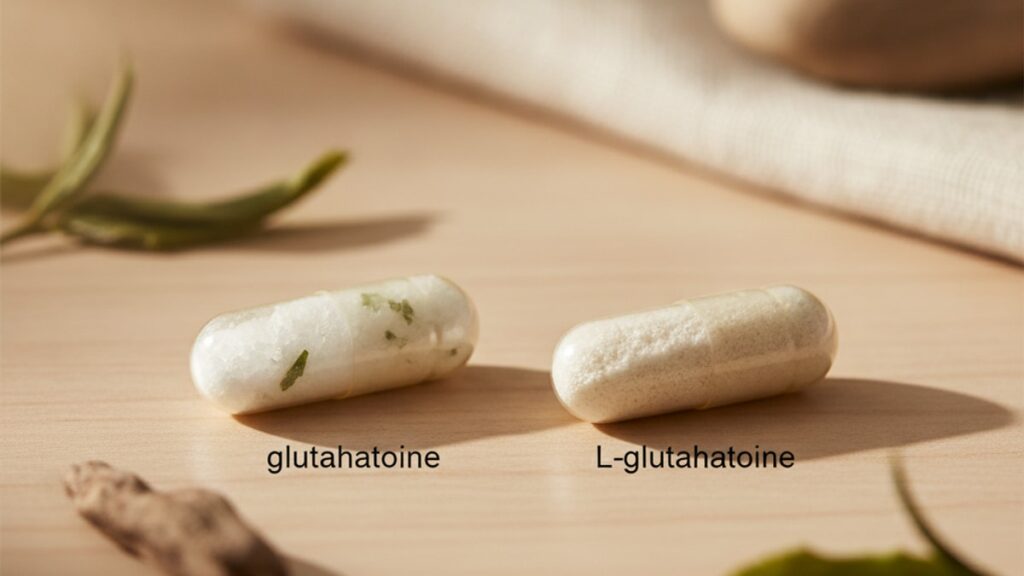
Glutathione and L-glutathione are identical — ‘L-glutathione’ is precise nomenclature for the biologically active isomer. Learn why form, purity, and

Glutathione is popular in wellness because it supports cellular detoxification, immune function, and oxidative stress management — roles validated by
Glutathione doesn’t require traditional cycling like stimulatory peptides—continuous supplementation maintains optimal antioxidant status without receptor
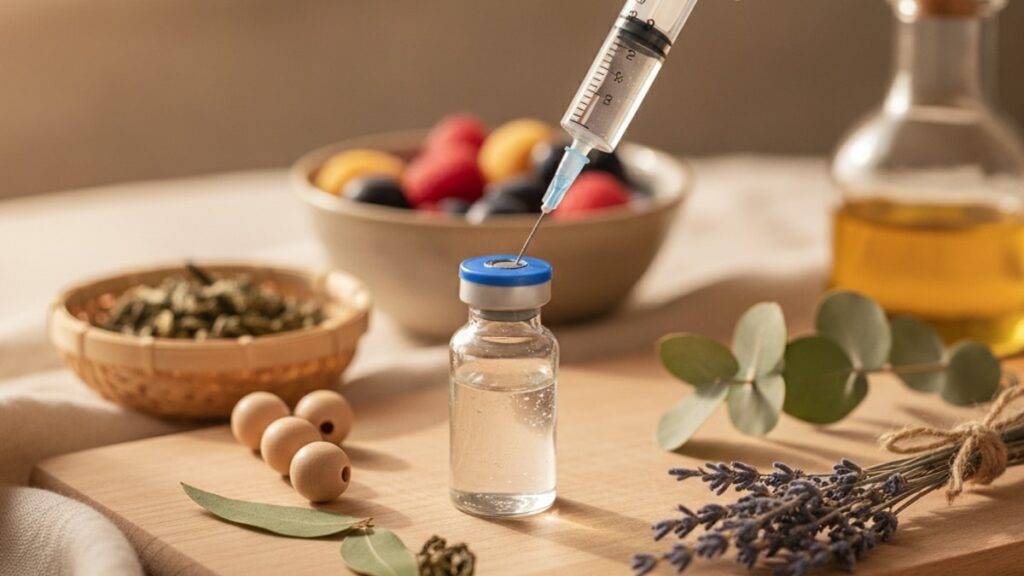
BAC water stabilizes peptides during reconstitution, prevents bacterial growth for 28 days, and maintains molecular integrity at 2–8°C refrigeration.

Bacteriostatic water doesn’t ‘work’ — it preserves reconstituted peptides for 28 days by inhibiting bacterial growth. Here’s what researchers need to know.

Bacteriostatic water is safe when USP-grade and stored correctly. Studies confirm it suppresses bacterial growth for 28 days when refrigerated at 2–8°C.
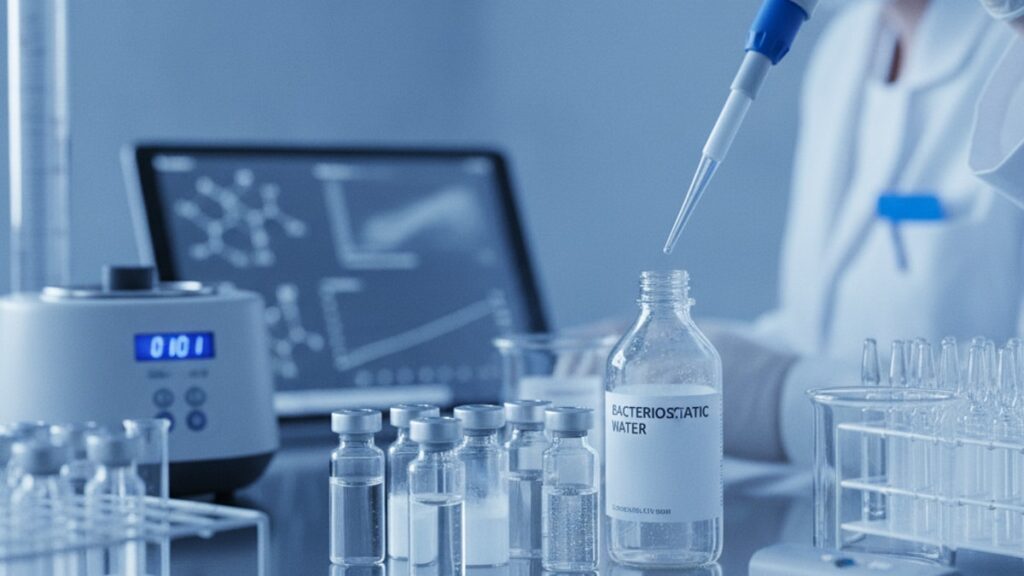
BAC water prevents bacterial growth in reconstituted peptides for 28 days—but only if stored correctly at 2–8°C. Here’s what labs need to know.
Bacteriostatic water slows microbial growth through 0.9% benzyl alcohol — but preservation chemistry requires specific protocols beyond basic sterility.
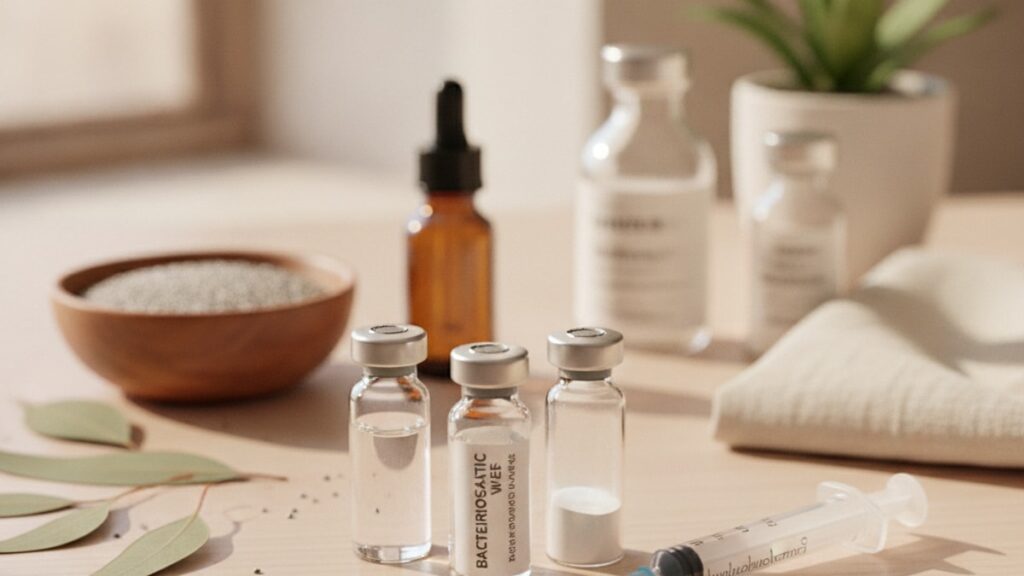
Bacteriostatic water safely reconstitutes multiple peptides simultaneously when sterile protocols are followed and peptides share compatible pH ranges and
