



At Real Peptides, we understand the immense value of every research compound, especially something as promising as Epithalon. Researchers invest significant time, effort, and resources into their studies, and the last thing anyone wants is compromised efficacy due to improper handling or storage. It's a common, yet critical, question we hear often: exactly how long Epithalon vial lasts? This isn't just a simple query about an expiration date; it's a deep dive into the nuanced science of peptide stability, environmental factors, and meticulous handling protocols. In 2026, with research moving faster than ever, getting this right is non-negotiable.
Our team, with years of collective experience in small-batch synthesis and quality assurance, has seen firsthand the impact of proper (and improper) peptide care. We're here to provide clarity, drawing on our specialized expertise to ensure your Epithalon, and indeed all your valuable peptides, maintain their high-purity and intended potency for the duration of your research. Let's unpack the true lifespan of an Epithalon vial, from manufacturing to its final use, and arm you with the knowledge to protect your investment.
Unpacking Epithalon's Intrinsic Stability
Epithalon, a synthetic tetrapeptide, is renowned in Longevity Research for its potential role in telomerase activation and cellular rejuvenation. But like any complex biological molecule, its stability isn't absolute. In its lyophilized (freeze-dried) state, Epithalon is remarkably robust. That's its native, most stable form, designed for transport and extended storage. However, the moment it's exposed to certain conditions – especially moisture and temperature fluctuations – its delicate structure begins a slow, often imperceptible, degradation process. Understanding this baseline stability is the first step in comprehending how long Epithalon vial lasts in various scenarios.
We've found that the initial quality of the peptide itself plays an overwhelmingly critical role. Our commitment to exact amino-acid sequencing through small-batch synthesis at Real Peptides directly influences this foundational stability. A high-purity peptide, free from contaminants, will inherently be more stable and thus, more reliable when considering how long Epithalon vial lasts. Impurities can act as catalysts for degradation, significantly shortening the effective lifespan.
Key Factors Dictating Epithalon Vial Lifespan
There's no single, universal answer to how long Epithalon vial lasts, because several formidable factors influence its shelf life. We're talking about a multi-layered equation here, not a simple 'use-by' date. It's crucial for researchers to grasp each variable to truly maximize the utility of their Epithalon supply. Let's break down the primary determinants:
1. The Lyophilized State: Unreconstituted Potency
Before reconstitution, when your Epithalon arrives as a freeze-dried powder, it's in its most stable form. Our experience shows that, under ideal conditions, an unreconstituted Epithalon vial can last for an astonishingly long time. We're talking years, typically 2-5 years, when stored correctly. This is because the absence of water drastically slows down chemical reactions that lead to degradation. We recommend keeping it in a cool, dark place – a freezer (-20°C or colder) is optimal – away from light and humidity. This is the gold standard for preserving how long Epithalon vial lasts before any active use.
Honestly, though, even in this state, tiny environmental shifts can play a part. That's why we emphasize a sealed, airtight container, ideally with a desiccant, if you're planning on truly long-term storage beyond a year. Preventing any moisture ingress is paramount.
2. The Reconstituted State: A Shorter, More Volatile Window
This is where the real challenge often lies. Once you reconstitute your Epithalon with a solvent, you introduce water, which is the primary catalyst for peptide degradation. Now, how long Epithalon vial lasts becomes a much more pressing and significantly shorter concern. Typically, a reconstituted Epithalon solution, even when stored optimally, will maintain its full potency for about 2-4 weeks. Some researchers might push it to 6-8 weeks, but we'd caution against relying on that for studies requiring absolute precision.
Why such a dramatic shift? Hydrolysis. The peptide bonds start to break down in the presence of water. The specific solvent used, the concentration of the peptide, and the storage temperature all come into play here. It's a delicate balance, and getting it wrong can mean wasted research and inaccurate data. Our team continually advises careful planning for reconstitution volumes to match immediate research needs.
3. Storage Temperature: The Cold Hard Truth
Temperature is arguably the single most impactful factor determining how long Epithalon vial lasts. For lyophilized Epithalon, colder is always better. As mentioned, a freezer (-20°C) offers maximum longevity. For reconstituted Epithalon, refrigeration (2-8°C) is essential. Never, and we mean never, leave reconstituted peptides at room temperature for extended periods. Even a few hours can initiate noticeable degradation, dramatically shortening the effective period for your research.
We've seen it happen: a vial left out overnight, and suddenly, weeks of potential research are compromised. It's a simple mistake, but a catastrophic one for peptide integrity. Fluctuations in temperature are also incredibly detrimental. Constant freezing and thawing cycles can physically damage the peptide structure, so avoid them whenever possible.
4. Solvent Choice: Bacteriostatic Water Reigns Supreme
The choice of reconstitution solvent is a critical, non-negotiable element. For Epithalon, and most research peptides, we unequivocally recommend Bacteriostatic Reconstitution Water (bac). This isn't just a suggestion; it's a foundational protocol for extending how long Epithalon vial lasts post-reconstitution. Bacteriostatic water contains a small percentage of benzyl alcohol (0.9%), which inhibits the growth of bacteria. Bacterial contamination can rapidly degrade peptides, turning a perfectly good solution into an ineffective one in days.
While sterile water is initially free of bacteria, it lacks the preservative. Once opened or used, it's susceptible to contamination. Saline solution is another option, but again, without a bacteriostatic agent, its utility is limited. Our team advises always using bacteriostatic water to ensure the longest possible, reliable lifespan for your reconstituted peptides, maintaining the integrity of compounds like our Thymalin and TB-500 (thymosin Beta-4).
5. Exposure to Light and Air: Silent Degradation Accelerators
Light, particularly UV light, can break down peptide bonds and alter their chemical structure. This is why our Epithalon vials, and indeed all our peptide products, come in amber or dark-colored glass. Always store your vials in their original packaging or a dark, opaque container, away from direct sunlight or harsh artificial light. Oxygen exposure, too, can lead to oxidation, another form of degradation. Minimizing air exposure during reconstitution and storage (e.g., by ensuring tight caps and avoiding excessive agitation) further contributes to how long Epithalon vial lasts.
The Critical Role of Reconstitution: Precision is Paramount
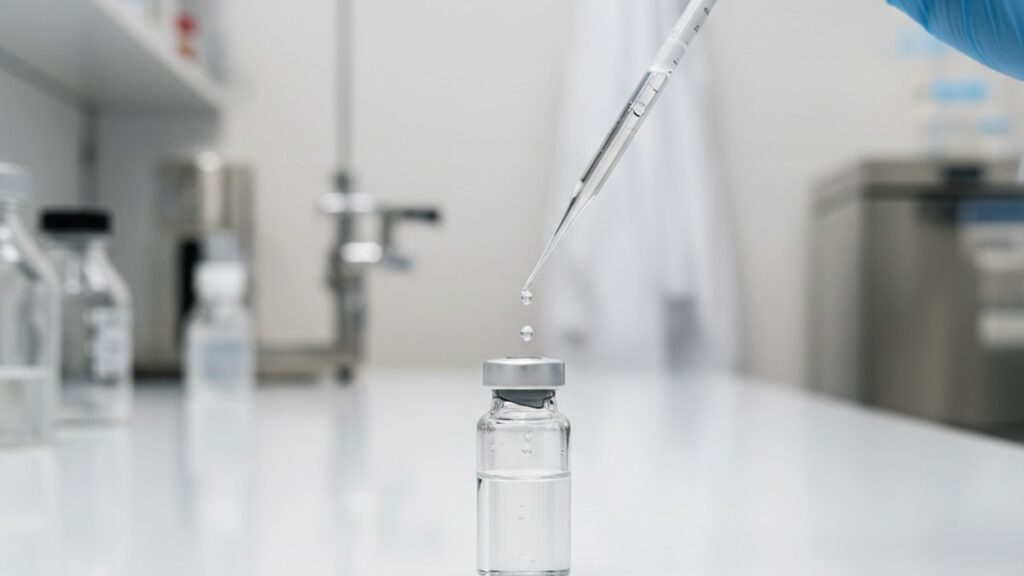
Reconstitution isn't just adding liquid; it's a precise laboratory procedure that, if done incorrectly, can immediately compromise how long Epithalon vial lasts. Our team often fields questions about this stage, and we can't stress enough the importance of meticulous technique.
First, ensure all your equipment is sterile. This includes the syringe, needle, and work surface. Second, gently inject the bacteriostatic water into the vial, aiming for the side of the glass rather than directly onto the peptide powder. This prevents frothing, which can damage the delicate peptide structure. Third, do not shake the vial vigorously. Instead, gently swirl or roll it between your palms to encourage dissolution. This might take a few minutes, and patience is key. Overly aggressive mixing introduces air and can shear the peptide molecules, drastically reducing how long Epithalon vial lasts.
Always reconstitute only the amount you need for your immediate research cycle, if possible. If you must reconstitute an entire vial, then adhere strictly to the refrigeration protocols we've discussed. We’ve found that careful, deliberate reconstitution is a hallmark of successful, long-term peptide research.
Storage Protocols: Before and After Reconstitution
Let's be honest, this is crucial. Proper storage is the bedrock of peptide integrity. Here's what we've learned through countless hours in the lab and feedback from our research partners:
Lyophilized (Unreconstituted) Epithalon:
- Freezer Storage (-20°C or lower): This is the optimal environment. An unopened Epithalon vial stored consistently at -20°C can retain its full potency for 2 to 5 years. We've even seen viable peptides beyond this timeframe, though we recommend adhering to the 2-5 year guideline for guaranteed efficacy in 2026 research protocols.
- Refrigerator Storage (2-8°C): While not ideal for multi-year storage, an unreconstituted vial can still last for 6-12 months in the refrigerator without significant degradation. This is a good option for shorter-term storage or if a freezer isn't available.
- Room Temperature (20-25°C): Avoid this for any extended period. Exposure to room temperature, even for an unreconstituted vial, will begin to degrade the peptide, especially with humidity and light exposure. This will severely impact how long Epithalon vial lasts.
Reconstituted Epithalon:
- Refrigerator Storage (2-8°C): This is the only acceptable storage for reconstituted Epithalon. Stored correctly in the fridge, an Epithalon solution will typically remain potent for 2-4 weeks. Again, some may extend this to 6 weeks, but we advise caution for critical studies. Always keep it sealed tightly and away from light within the refrigerator.
- Freezing Reconstituted Epithalon: While technically possible, we generally advise against freezing reconstituted peptides unless absolutely necessary and done carefully. Freezing and thawing can cause ice crystal formation, which can damage peptide structure. If you must freeze, consider aliquoting into single-use portions to avoid repeated freeze-thaw cycles, which are particularly damaging and will dramatically shorten how long Epithalon vial lasts.
Decoding Expiration: How to Tell if Your Epithalon is Still Potent
So, how do you know if your Epithalon is still good? Beyond the recommended storage timelines, there are some visual cues, though they're not always definitive. For lyophilized powder, any change in color (it should be a pure white, fluffy powder) or texture could indicate degradation. If it appears clumpy, discolored, or wet, it's likely compromised.
For reconstituted solutions, look for turbidity, cloudiness, or particulate matter. A healthy solution should be clear and colorless. Any visible changes suggest contamination or degradation. However, a lack of visible change doesn't guarantee full potency. Peptide degradation can occur without obvious visual cues. That's the reality. It all comes down to rigorous adherence to the guidelines on how long Epithalon vial lasts, based on its storage conditions. When in doubt, it's always safer to err on the side of caution and acquire a fresh vial, especially for sensitive research.
Beyond the Basics: Advanced Tips for Peptide Preservation
We've covered the fundamentals, but for researchers aiming for impeccable results, there are additional considerations to optimize how long Epithalon vial lasts. Our team at Real Peptides constantly refines our own processes, and we share these insights with our community:
- Aliquoting: This is a powerful technique. For reconstituted solutions, divide the full vial into smaller, single-use portions immediately after reconstitution. Store these aliquots in individual, sterile, tightly sealed vials in the refrigerator. This minimizes the number of times you expose the entire stock solution to air and temperature fluctuations during drawing, significantly extending the overall usable life of the batch. This approach (which we've refined over years) delivers real results in preventing degradation.
- Minimize Exposure: Every time you open a vial or draw from it, you introduce a small amount of air and potential contaminants. Work quickly and efficiently. Don't leave caps off longer than necessary. We mean this sincerely: it runs on genuine connections to proper lab practices.
- Record Keeping: Maintain meticulous records. Note the date of arrival, reconstitution date, and any specific storage conditions. This creates an invaluable audit trail, helping you track exactly how long Epithalon vial lasts under your specific lab environment. It's comprehensive.
- Sterile Technique: We can't stress this enough. Every step – from handling the vial to reconstituting and drawing – must be performed with strict aseptic technique. Contamination is a leading cause of premature peptide degradation, turning a viable research compound into waste far sooner than expected. This includes washing hands, using sterile gloves, and disinfecting surfaces.
Comparative Table: Storage Methods & Expected Lifespan
To simplify how long Epithalon vial lasts under various conditions, we've put together this quick reference. This comparison focuses on expected optimal lifespans, assuming high-purity Epithalon from a trusted supplier like Real Peptides.
| State of Epithalon | Storage Temperature | Expected Lifespan (Optimal) | Key Considerations |
|---|---|---|---|
| Lyophilized Powder | Freezer (-20°C) | 2-5 Years | Airtight, dark, minimal humidity |
| Lyophilized Powder | Refrigerator (2-8°C) | 6-12 Months | Airtight, dark, minimal humidity |
| Lyophilized Powder | Room Temp (20-25°C) | 1-2 Months (Not Recommended) | Rapid degradation, high risk |
| Reconstituted Solution | Refrigerator (2-8°C) | 2-4 Weeks | Bacteriostatic water, airtight, dark, minimal air exposure |
| Reconstituted Solution | Freezer (-20°C) | 1-3 Months (Aliquoted Recommended) | Avoid freeze-thaw cycles, potential structure damage |
| Reconstituted Solution | Room Temp (20-25°C) | Hours to 1-2 Days (Unusable) | Very rapid degradation, bacterial growth |
Our Commitment to Quality: The Real Peptides Difference
At Real Peptides, our foundational philosophy revolves around unparalleled quality and transparency. We know that the reliability of your research hinges on the purity and stability of the peptides you use. That's why we employ small-batch synthesis, a meticulous process that allows for exact amino-acid sequencing, ensuring every gram of Epithalon we produce meets our rigorous purity standards. We don't just sell peptides; we provide the bedrock for groundbreaking scientific discovery.
Unlike many providers in the market, we prioritize consistency and lab reliability above all else. This commitment means that when you receive a vial from us, you're getting a product that starts with maximum intrinsic stability. This inherently extends how long Epithalon vial lasts when handled correctly, offering you peace of mind and more accurate research outcomes. Our dedication extends across our full range of research compounds, from our Adamax Peptide 10mg to our BPC-157 10mg, all crafted with the same exacting standards. We're proud to be a trusted partner in your vital work.
We regularly update our protocols and recommendations based on the latest scientific understanding and practical lab experience. We're not just selling products; we're providing a comprehensive resource for the research community. Your success is, quite frankly, our success. We encourage you to explore our full range of high-purity research peptides and see the Real Peptides difference for yourself. Understanding how long Epithalon vial lasts is just one piece of the puzzle, but it's a critical one that impacts every aspect of your study.
We know the demanding schedules and high expectations that come with cutting-edge research in 2026. By providing clarity on crucial aspects like peptide longevity, we aim to eliminate variables and allow you to focus on the science that truly matters. Trust in our expertise, and let's advance discovery together. Our entire team is here to support your journey, ensuring your research compounds, including Epithalon, remain at peak performance for as long as you need them.
FAQs
How long does an unreconstituted Epithalon vial last in a freezer?
An unreconstituted, lyophilized Epithalon vial, when stored consistently at -20°C or colder in a sealed, dark environment, can last for 2 to 5 years. Our experience shows this optimal storage method significantly preserves the peptide's integrity and potency for long-term research needs.
How long does Epithalon stay good after mixing with bacteriostatic water?
Once reconstituted with Bacteriostatic Reconstitution Water (bac), an Epithalon solution should be stored in the refrigerator (2-8°C) and will typically maintain its full potency for 2-4 weeks. Some researchers extend this to 6 weeks, but for critical studies, we recommend adhering to the shorter timeframe.
Can I store reconstituted Epithalon at room temperature?
No, absolutely not. Storing reconstituted Epithalon at room temperature (20-25°C) will lead to rapid degradation and potential bacterial growth, rendering it unusable within hours to a day. This significantly shortens how long Epithalon vial lasts, making it unsuitable for accurate research.
What are the signs that my Epithalon has gone bad?
For lyophilized powder, look for discoloration (it should be pure white) or changes in texture like clumping or moisture. For reconstituted solutions, watch for cloudiness, turbidity, or visible particulates. While visual cues aren't always definitive, they often indicate degradation or contamination.
Does the purity of Epithalon affect how long it lasts?
Yes, absolutely. Higher purity Epithalon, like that supplied by Real Peptides through small-batch synthesis, is inherently more stable and will last longer. Impurities can act as catalysts for degradation, accelerating the breakdown process and reducing the effective lifespan of the peptide.
Is it okay to freeze reconstituted Epithalon for longer storage?
While possible, we generally advise against freezing reconstituted peptides unless unavoidable. Repeated freeze-thaw cycles can damage peptide structures through ice crystal formation. If you must freeze, aliquot the solution into single-use portions to minimize cycles and preserve potency.
Why is bacteriostatic water recommended over sterile water for reconstitution?
Bacteriostatic Reconstitution Water (bac) contains benzyl alcohol, which inhibits bacterial growth, a common cause of peptide degradation. Sterile water lacks this preservative, making reconstituted solutions more susceptible to contamination and significantly reducing how long Epithalon vial lasts.
How does light exposure impact Epithalon's stability?
Light, especially UV light, can break down peptide bonds and accelerate degradation. This is why Epithalon vials are often amber-colored or should be stored in dark containers, protecting the peptide from photo-degradation and preserving how long Epithalon vial lasts.
Can I re-freeze an Epithalon vial after it's been thawed once?
For lyophilized Epithalon, a single thaw and refreeze cycle might not be catastrophic, but it's not ideal. Repeated cycles are strongly discouraged as they can compromise the peptide's structure and reduce its effective shelf life. Plan your thawing carefully to preserve how long Epithalon vial lasts.
How can I maximize the lifespan of my reconstituted Epithalon?
To maximize lifespan, always reconstitute with Bacteriostatic Reconstitution Water (bac), store immediately in a refrigerator (2-8°C) in a dark, airtight container, and consider aliquoting into smaller, single-use portions to avoid repeated access to the main stock.
Does Epithalon concentration affect its stability after reconstitution?
Generally, higher concentrations of peptides tend to be slightly more stable in solution, but this effect is minor compared to temperature and solvent choice. Maintaining proper storage conditions remains the most critical factor in determining how long Epithalon vial lasts, regardless of concentration.
What's the best practice for handling Epithalon during research in 2026?
In 2026, best practices emphasize meticulous sterile technique during reconstitution and drawing, immediate refrigeration of reconstituted solutions, minimal exposure to air and light, and accurate record-keeping of dates and conditions. These steps collectively ensure how long Epithalon vial lasts is maximized for your research.
What if my Epithalon vial arrives warm or damaged?
If your Epithalon vial arrives warm, damaged, or compromised in any way, do not use it for critical research. Contact our customer support team immediately at Real Peptides. We stand by our product quality and will assist you in resolving the issue to ensure your research integrity.
Frequently Asked Questions
How does how long Epithalon vial lasts work?
▼
how long Epithalon vial lasts works by combining proven methods tailored to your needs. Contact us to learn how we can help you achieve the best results.
What are the benefits of how long Epithalon vial lasts?
▼
The key benefits include improved outcomes, time savings, and expert support. We can walk you through how how long Epithalon vial lasts applies to your situation.
Who should consider how long Epithalon vial lasts?
▼
how long Epithalon vial lasts is ideal for anyone looking to improve their results in this area. Our team can help determine if it’s the right fit for you.
How much does how long Epithalon vial lasts cost?
▼
Pricing for how long Epithalon vial lasts varies based on your specific requirements. Get in touch for a personalized quote.
What results can I expect from how long Epithalon vial lasts?
▼
Results from how long Epithalon vial lasts depend on your goals and circumstances, but most clients see measurable improvements. We’re happy to share case examples.











