



It's a question we hear all the time from research teams and independent scientists alike: "So, how much is PT-141?" On the surface, it seems simple. A straightforward query deserving a straightforward answer. But honestly, the moment we hear it, our team knows the conversation is about to get much deeper than a simple price tag. Because in the world of high-stakes biological research, 'cost' and 'price' are two wildly different things.
The real question isn't just about the number on the invoice. It's about the cost of unreliable data. It's about the cost of a stalled project because of an impure compound. And it's about the cost of jeopardizing months, or even years, of work. So, while we're definitely going to break down the numbers you can expect to see, we believe it’s our responsibility to reframe the question. The better question is: What factors determine the price of PT-141, and how can I ensure I'm getting the absolute best value for my research investment?
First, A Quick Refresher: What Exactly is PT-141?
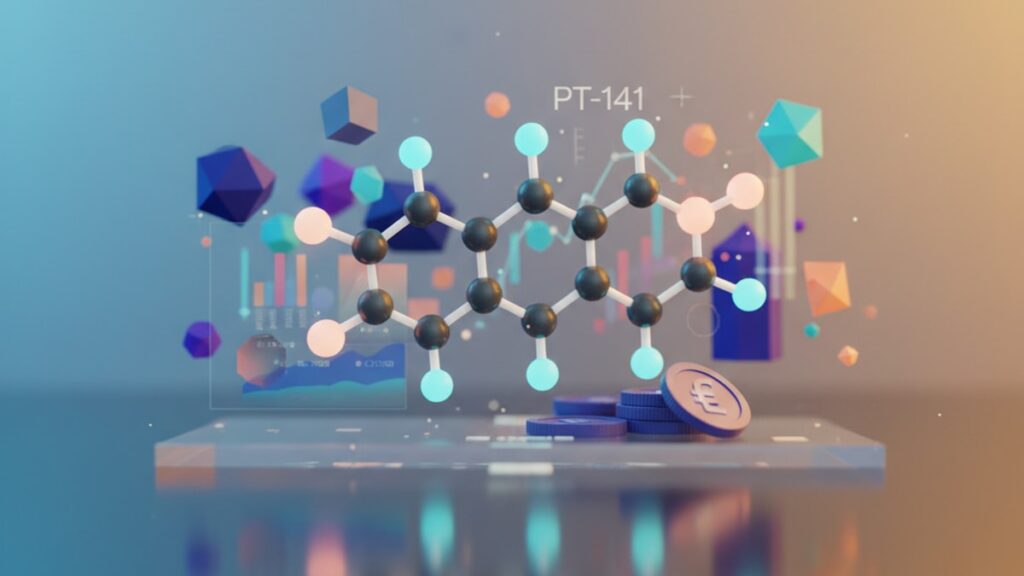
Before we dive into the financials, let's get on the same page. PT-141, also known by its clinical name Bremelanotide, is a synthetic peptide analogue of alpha-melanocyte-stimulating hormone (α-MSH). It's a fascinating compound. Unlike many substances that work on the vascular system, PT-141 acts on the nervous system by activating specific melanocortin receptors in the brain. It's a melanocortin agonist, specifically targeting the MC3-R and MC4-R receptors, which are known to be involved in regulating sexual function, appetite, and other physiological processes.
Its unique mechanism of action has made it a subject of intense scientific interest, particularly in studies exploring solutions for sexual dysfunction, such as hypoactive sexual desire disorder (HSDD) and erectile dysfunction (ED). Researchers are exploring its potential because it appears to work centrally, in the brain, rather than peripherally. This distinction is critical and represents a significant shift in how these conditions are approached from a scientific standpoint. It’s not just another compound; it's a different way of thinking about the problem. And that's why ensuring its quality for research is a non-negotiable element of any serious study.
The Big Question: So How Much Does PT-141 Really Cost?
Let's get to it. If you're a researcher looking to source PT-141 Bremelanotide for your lab, you're going to see a sprawling range of prices online. It can be confusing. Frustrating, even. You might see a 10mg vial listed for as low as $30 from an overseas supplier or as high as $100 or more from a reputable domestic source.
So, what's a typical price? In our experience, for a high-purity, third-party tested 10mg vial of lyophilized (freeze-dried) PT-141 from a trusted supplier, researchers should expect to pay somewhere in the range of $60 to $90. If you see prices significantly below that range, your internal alarm bells should be ringing. Loudly. Conversely, prices far above that might suggest you're overpaying or dealing with a reseller who has marked up the product substantially.
This price range reflects the cost of doing business the right way. It accounts for meticulous synthesis processes, rigorous quality control, third-party lab testing for purity and identity, and reliable customer support. It's the price of certainty. It's the price of reproducible results. And as any seasoned researcher knows, that's a bargain.
Why You're Seeing Such a Dramatic Price Gap
The variance in pricing isn't arbitrary. It's a direct reflection of the choices a supplier makes. Let's be honest, cutting corners is easy. Doing things right is hard. Here's what our team has identified as the primary drivers behind the cost of a peptide like PT-141, and it's what separates a professional-grade product from a risky gamble.
First and foremost is purity. This is everything in research. A peptide's purity is typically determined by High-Performance Liquid Chromatography (HPLC), which separates the components of a mixture and quantifies them. A reputable supplier will always provide a recent, batch-specific Certificate of Analysis (CoA) showing a purity level of 98% or, ideally, higher. Achieving this level of purity is an expensive, multi-step process involving precise chemical synthesis and exhaustive purification. Lower-purity products are cheaper to make because the manufacturer simply stops the purification process early. That means you're not just getting less of the target peptide; you're also getting a cocktail of unknown impurities, including leftover solvents, failed peptide sequences, and other contaminants. These unknowns are catastrophic for data integrity.
Next is the synthesis method. At Real Peptides, we utilize small-batch synthesis. This approach allows for impeccable quality control at every stage. It’s more labor-intensive and costly than mass production, but the result is a product with the exact amino-acid sequencing and structure required for predictable behavior in a lab setting. Large-scale, industrial synthesis methods can introduce variability and increase the likelihood of impurities making it into the final product. It’s a classic case of quality over quantity.
Supplier reputation and accountability also play a massive role. Is the supplier based in a country with strict regulatory oversight? Do they have a professional website and accessible customer support? Are they transparent about their testing procedures? A company that invests in this infrastructure will naturally have higher overhead costs, which are reflected in the product price. A fly-by-night website with an anonymous email address and prices that seem too good to be true is a formidable red flag. We can't stress this enough: your research partner's reliability is as important as the compound itself.
Finally, consider the formulation. Research-grade PT-141 should always be sold as a lyophilized powder. This freeze-drying process ensures maximum stability and shelf-life. Some suppliers sell pre-mixed solutions, often at a lower price point. We strongly advise against these. Once a peptide is reconstituted in a liquid like Bacteriostatic Water, its chemical structure begins to degrade. You have no way of knowing how long that pre-mixed solution has been sitting, under what conditions it was stored, or if it was reconstituted correctly. It introduces far too many variables for credible research.
The Hidden Costs of 'Cheap' PT-141
Choosing a peptide based on the lowest price is one of the most expensive mistakes a research team can make. It's a decision that often backfires, costing far more in the long run than the initial savings.
Think about it. An under-dosed or impure vial of PT-141 can completely invalidate your results. Imagine spending weeks designing a study, carefully preparing your subjects, and meticulously collecting data, only to discover that your compound was bunk. The peptide might produce no effect, or worse, an unexpected effect due to contaminants. Now you have to discard the data, secure new funding, and start all over. The cost of wasted time, resources, and lab materials will dwarf the few dollars you saved on that 'bargain' vial.
There's also the issue of consistency. Let's say you get lucky and your first cheap vial works. What about the next batch? Without stringent quality control, there's no guarantee the next vial will have the same purity or concentration. This lack of batch-to-batch consistency makes it impossible to conduct longitudinal studies or replicate findings. Reproducibility is the cornerstone of the scientific method. Using inconsistent products shatters that foundation.
Our experience shows that successful research labs don't hunt for the cheapest materials. They hunt for the most reliable ones. They build relationships with suppliers they can trust, because they understand that the integrity of their inputs directly dictates the integrity of their outputs. It’s a simple equation, but one that’s too often ignored in the pursuit of a quick bargain.
Price vs. Value: A Comparison for Researchers
To make this clearer, let's break down the tangible differences between a low-price supplier and a value-focused, high-quality supplier. This is the kind of internal checklist our own scientists use when evaluating any new compound.
| Feature | Low-Price Supplier | High-Value Supplier (e.g., Real Peptides) |
|---|---|---|
| Purity Guarantee | Often vague, below 95%, or no CoA provided. | Guaranteed 98%+ purity with batch-specific CoAs. |
| Testing | Internal testing (if any), not verifiable. | Independent, third-party lab testing for purity and identity. |
| Synthesis | Large-scale, industrial synthesis; high variability. | Small-batch synthesis for maximum quality control. |
| Formulation | Lyophilized powder or questionable pre-mixed solutions. | Stable, pure lyophilized powder for research integrity. |
| Transparency | Anonymous contact, obscure origins. | Transparent operations, clear support channels. |
| Consistency | High batch-to-batch variability. | Excellent batch-to-batch consistency for reliable data. |
| True Cost | Low initial price, high risk of wasted time & funds. | Higher initial price, high confidence in results, low risk. |
Looking at this table, the choice becomes obvious for any serious scientist. The slightly higher upfront cost is an insurance policy for your research. It's an investment in certainty.
Don't Forget Reconstitution and Other Supplies
Another part of the cost equation that new researchers sometimes overlook is the ancillary supplies needed to work with lyophilized peptides. The price of the PT-141 vial itself is just one piece of the puzzle. To properly prepare it for a study, you'll need a few essential items.
First is the reconstitution solution. The standard for this is Bacteriostatic Water, which is sterile water containing 0.9% benzyl alcohol as a preservative. This agent prevents bacterial growth, allowing the reconstituted peptide to be stored safely for a period of time under refrigeration. You'll also need sterile syringes for drawing and mixing the water, as well as separate syringes for administering the peptide in your research protocol. Alcohol prep pads are also crucial for maintaining a sterile environment and preventing contamination.
These items are not typically included with the peptide itself and represent a separate, though usually modest, cost. A reliable supplier should either offer these supplies or be able to guide you on where to source them. Factoring these into your budget from the outset ensures you're fully prepared to handle the compound correctly and safely the moment it arrives. It's a small but critical step in professional lab management.
How We Approach Quality and Pricing at Real Peptides
For us, this isn't just a business—it's a partnership with the scientific community. Our entire operational philosophy is built around one central idea: empowering researchers with the highest-quality tools to make groundbreaking discoveries. That philosophy dictates our approach to every single peptide we synthesize, including our PT-141 Bremelanotide.
We start with small-batch synthesis. This deliberate choice allows our chemists to monitor every step of the process with an obsessive level of detail, ensuring the final amino acid sequence is perfect. After synthesis, the product undergoes a rigorous purification process until we achieve a purity level that meets our stringent internal standards—typically exceeding 99%. But we don't stop there. We don't just ask you to take our word for it.
Every single batch is sent to an independent, third-party laboratory for comprehensive analysis. They verify its purity, mass, and identity. Only after we receive that external validation and a corresponding Certificate of Analysis do we make the product available. This two-step verification process is non-negotiable for us. It’s how we guarantee that what you order is exactly what you receive, every single time. This commitment to transparency and quality is what allows researchers to trust our products for their most sensitive and important work. You can explore our full range of peptides and see this dedication reflected in every item we offer. Get Started Today and experience the difference that quality makes.
The Future of Melanocortin Research
PT-141 is just one player in the exciting field of melanocortin research. Its cousin, Melanotan 2 (MT2), for instance, acts on a broader range of melanocortin receptors and is being studied for its effects on skin pigmentation, appetite, and sexual function. The nuances between these compounds highlight the incredible complexity and potential of targeting this system.
As our understanding of the melanocortin pathway grows, so too will the potential for developing highly specific peptides that can modulate it for various research applications. We're at the forefront of this wave, providing scientists with the pure, reliable tools they need to map these intricate biological systems. The work being done in labs today with compounds like PT-141 is laying the groundwork for the breakthroughs of tomorrow.
So, when you consider the question "how much is PT-141," we encourage you to look beyond the price. See it as an investment in the integrity of your work. The cost of the peptide is minuscule compared to the value of the knowledge you're striving to create. By prioritizing quality, you're not just buying a compound; you're ensuring the validity and potential impact of your research from the very first step.
Frequently Asked Questions
What is the typical price range for a 10mg vial of research-grade PT-141?
▼
For a high-purity (98%+) vial of PT-141 from a reputable domestic supplier, researchers should expect to pay between $60 and $90. Prices significantly lower than this may indicate issues with purity or supplier legitimacy.
Why shouldn’t I just buy the cheapest PT-141 I can find?
▼
Cheaper PT-141 often comes with hidden costs, including low purity, contaminants, and inconsistent dosing. This can invalidate your research, waste significant time and resources, and make results impossible to replicate.
What does ‘lyophilized’ mean and why is it important?
▼
Lyophilized means the peptide is freeze-dried into a stable powder. This is the gold standard for research peptides as it ensures maximum shelf-life and potency until it is reconstituted for use in a study.
Is PT-141 the same as Melanotan II?
▼
No, they are different peptides. While both are analogues of alpha-MSH, PT-141 is a metabolite of Melanotan II and has a more specific action on melanocortin receptors related to sexual function, with less effect on skin pigmentation.
What is a Certificate of Analysis (CoA) and why do I need one?
▼
A CoA is a document from a lab that verifies the purity, structure, and quantity of the peptide in a specific batch. Our team insists on providing third-party CoAs to guarantee you are receiving a verified, high-quality compound for your research.
Do I need other supplies to use PT-141 for my research?
▼
Yes. Because PT-141 comes as a lyophilized powder, you will need bacteriostatic water to reconstitute it. You will also need sterile syringes for mixing and for your research administration protocol.
How can I verify a peptide supplier’s quality?
▼
Look for suppliers who provide recent, third-party lab results (CoAs) for every batch. Reputable companies are transparent about their synthesis and testing processes and have a professional presence with accessible customer support.
Is PT-141 sold in pill or capsule form for research?
▼
No, legitimate research-grade PT-141 is not effective in oral form due to poor bioavailability. It is sold as a lyophilized powder for reconstitution and use in laboratory research settings.
How long does reconstituted PT-141 last?
▼
Once reconstituted with bacteriostatic water, PT-141 should be stored in a refrigerator. Its stability can vary, but it is generally considered viable for research use for several weeks when stored properly.
Does the price of PT-141 include shipping costs?
▼
This depends on the supplier. At Real Peptides, we are transparent about all costs. Shipping fees are typically calculated at checkout based on your order and location.
What are the risks of using a low-purity peptide in a study?
▼
Using a low-purity peptide can lead to inaccurate or completely invalid data. Contaminants can cause unexpected side effects in test subjects or interfere with the compound’s mechanism of action, making your findings unreliable.











