





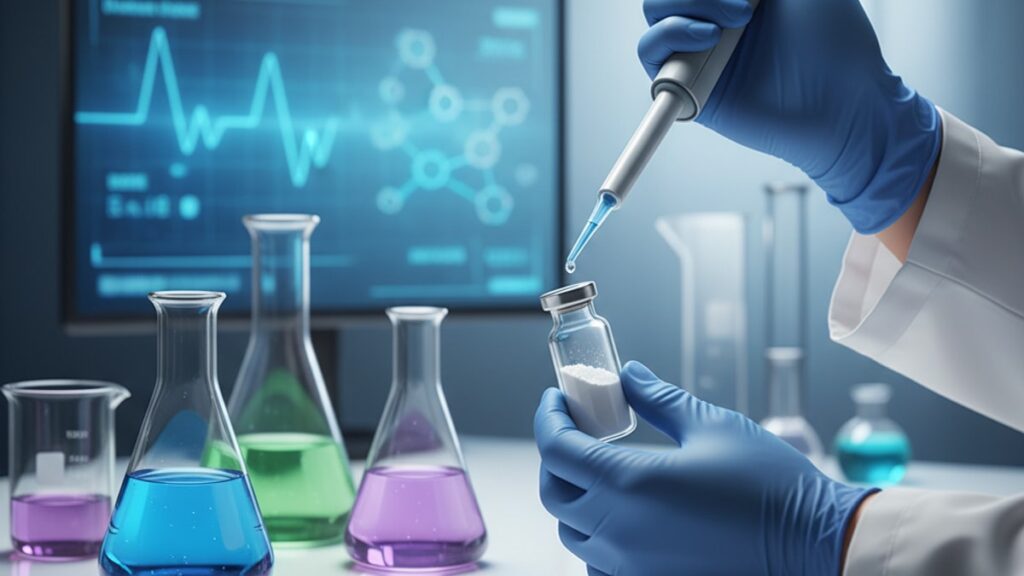
In the world of advanced biological research, precision isn't just a goal; it's the absolute foundation upon which all valid discoveries are built. When you're working with a sophisticated compound like Retatrutide, a multi-receptor agonist with a complex structure, the margin for error is virtually zero. A tiny mistake in preparation can compromise the integrity of the entire peptide chain, rendering your data useless and wasting valuable resources. It's a frustrating scenario our team has heard about far too often from labs that source their materials elsewhere.
That’s why we’re writing this. It’s not enough for us at Real Peptides to simply provide the highest-purity, research-grade peptides, meticulously crafted through small-batch synthesis. Our commitment extends to ensuring you have the knowledge to handle them correctly. We believe that empowering researchers with best-practice protocols is part of our responsibility. So, let’s walk through the definitive, professional process for how to mix retatrutide peptide, ensuring the stability and efficacy of the molecule from the moment you open the box to the final data point.
Why Proper Reconstitution is Non-Negotiable
Let's be perfectly clear: the process of turning lyophilized (freeze-dried) peptide powder into a liquid solution for research is far more than just 'adding water.' It's a delicate scientific procedure called reconstitution, and it's the single most critical handling step you'll perform. Get it right, and you preserve the peptide's intricate three-dimensional structure. Get it wrong, and you might as well be working with a completely different, inactive compound.
Lyophilization is a fantastic process for ensuring long-term stability. It removes water in a controlled way that keeps the fragile amino acid sequences of a peptide like Retatrutide intact. But the moment you reintroduce a liquid, you're also reintroducing risk. The peptide is vulnerable. Vigorous shaking, the wrong temperature, or an improper diluent can cause denaturation—a catastrophic unfolding of the peptide's structure. Think of it like a complex key (the peptide) that gets bent out of shape; it no longer fits the lock (the receptor) it was designed for.
Our experience shows that research failure is often traced back not to the quality of the peptide itself, but to procedural errors during reconstitution. It's a silent variable that can derail months of work. When we ensure every batch of our Retatrutide meets exacting purity standards, we do so with the expectation that its potential will be realized in the lab. That can only happen when the reconstitution protocol is followed with the same level of precision. It’s the handshake between our synthesis lab and your research bench. A critical, non-negotiable element.
Gathering Your Essential Lab Supplies
Before you even think about touching a vial, you need to set up a clean, organized workspace. Aseptic technique is paramount to prevent contamination. You wouldn't conduct surgery on a dirty table, and you shouldn't reconstitute a sensitive research peptide in a cluttered, unsanitized environment. It's that serious.
Here’s what our team recommends having on hand, ready to go:
- Your Vial of Lyophilized Retatrutide: This is the centerpiece. Always start with a high-purity product from a trusted source. The quality of your starting material dictates the ceiling of your research quality. Our Retatrutide arrives as a solid, white, freeze-dried cake at the bottom of a sealed vial.
- Diluent: For almost all multi-use research applications, the gold standard is Bacteriostatic Water. This isn't just sterile water; it's sterile water containing 0.9% benzyl alcohol, which acts as a preservative. This is crucial because it inhibits bacterial growth, allowing you to draw multiple doses from the same vial over several weeks without contamination. We'll dig into the alternatives later, but for now, trust us—BAC water is what you need.
- Syringes: You’ll need at least two types. A larger syringe (e.g., a 3ml or 5ml luer-lock syringe) is ideal for accurately drawing and injecting the bacteriostatic water into the peptide vial. For subsequent dosing and measurement in your research protocol, smaller, more precise syringes (like 0.5ml or 1ml insulin syringes marked in units or small ml increments) are necessary for accuracy.
- Alcohol Prep Pads: You need plenty of these. Use them to vigorously swab the rubber stoppers of both your Retatrutide vial and your bacteriostatic water vial before every single puncture. Don't skip this. Seriously.
- A Clean, Sterile Work Surface: A dedicated lab bench is ideal. If that's not available, ensure your workspace is thoroughly cleaned and disinfected. Some researchers even use a still air box for an extra layer of protection against airborne contaminants.
- A Sharps Container: Proper disposal of used needles is a fundamental aspect of lab safety. Always have an approved sharps container within arm's reach.
Having everything laid out and prepared beforehand transforms the process from a frantic scramble into a smooth, controlled procedure. It minimizes the time the vials are open to the environment and drastically reduces the chance of error.
The Step-by-Step Protocol for Mixing Retatrutide
Alright, your station is prepped, and your supplies are ready. Now we get to the core procedure. Follow these steps meticulously. There are no shortcuts in good science.
Step 1: Preparation is Everything
Wash your hands thoroughly. Put on a pair of nitrile gloves. Take an alcohol prep pad and vigorously scrub the rubber stopper on your Bacteriostatic Water vial and the stopper on your Retatrutide vial. Let them air dry for a moment. This simple act of sanitation is your first line of defense against contamination.
Step 2: Calculating Your Diluent Volume
This is where precision begins. You need to decide on your final concentration. This will depend on your specific research protocol and desired dosage accuracy. Let’s use a common example to make it easy.
- Scenario: You have a 10mg vial of Retatrutide.
- Goal: You want a solution that's easy to measure for your experiments.
If you add 2ml of bacteriostatic water to the 10mg vial:
- Calculation: 10mg of peptide / 2ml of water = 5mg per ml.
This is a straightforward concentration. It means every 1ml of liquid you draw will contain 5mg of Retatrutide. If your protocol called for a 1mg dose, you would draw 0.2ml of the solution. We recommend choosing a volume of diluent that makes the math for your specific experimental doses as simple as possible to minimize the risk of calculation errors down the line.
Step 3: The Reconstitution Technique
Take your larger syringe (the 3ml one) and pull back the plunger to the mark of the volume you calculated (e.g., 2ml). This fills the syringe with air. Puncture the rubber stopper of the bacteriostatic water vial and inject the air in. This equalizes the pressure and makes drawing the liquid out much easier. Now, invert the vial and slowly draw out your desired volume of BAC water (2ml in our example). Remove any large air bubbles by flicking the syringe and gently pushing the plunger until a tiny drop appears at the needle tip.
Now for the most important physical step. Take the syringe filled with BAC water and puncture the stopper of the Retatrutide vial. Do not inject the water directly onto the lyophilized powder. This is a common and destructive mistake. The force of the stream can damage the delicate peptide molecules. Instead, angle the needle so the water runs slowly down the inside wall of the glass vial. Let it gently pool and cover the powder.
Step 4: Gentle Mixing – No Shaking!
We can't stress this enough. Once the diluent is in, you must resist any urge to shake the vial. Shaking creates shearing forces and foam, both of which are enemies of peptide integrity and can lead to denaturation.
Instead, use one of two gentle methods:
- Swirling: Gently swirl the vial in a slow, circular motion. Watch as the powder dissolves into the solution.
- Rolling: Place the vial between your palms and gently roll it back and forth.
The peptide should dissolve completely within a minute or two. Be patient. The goal is a perfectly clear solution with no visible particles or cloudiness.
Step 5: Verifying Dissolution
Once mixed, hold the vial up to a light source. The reconstituted solution should be perfectly clear, like water. If you see any cloudiness, floaters, or sediment, it could indicate a problem. It might be a sign of contamination or that the peptide has not fully dissolved or has degraded. In our experience, starting with a high-purity product like those from our extensive peptide catalog almost always results in a crystal-clear solution when reconstituted correctly.
Your Retatrutide is now successfully reconstituted and ready for your research application.
A Critical Look at Your Diluent: BAC Water vs. The Alternatives
Choosing the right liquid to reconstitute your peptide is a foundational decision. While it might seem like a minor detail, the diluent affects the stability, sterility, and shelf-life of your final solution. We've put together a quick comparison to clarify why we almost universally recommend Bacteriostatic Water.
| Diluent | Key Component | Primary Use Case | Shelf Life (Reconstituted) | Our Recommendation |
|---|---|---|---|---|
| Bacteriostatic Water | Sterile Water + 0.9% Benzyl Alcohol | Multi-use vials for research; preserves sterility | Up to 28 days (refrigerated) | Gold Standard. The benzyl alcohol is a bacteriostatic agent that prevents contamination over multiple uses. |
| Sterile Water | Sterile Water (no preservative) | Single-use applications only | 24 hours (refrigerated) | Acceptable only if you plan to use the entire vial immediately. Risk of contamination is extremely high otherwise. |
| Acetic Acid Solution | Acetic Acid + Sterile Water | For specific peptides that are poorly soluble in water | Varies by peptide | Use only if required. Certain peptides like IGF-1 LR3 need it, but it's not appropriate for Retatrutide. |
For a peptide like Retatrutide, which you'll likely be using for a study that spans several weeks, the choice is obvious. The preservative in bacteriostatic water is not optional; it's a critical component for maintaining a sterile solution and ensuring the consistency of your research from the first dose to the last.
Common Mistakes We See Researchers Make (And How to Avoid Them)
Over the years, our team has consulted with countless labs and researchers. We've seen firsthand the simple, avoidable errors that can compromise excellent research. Here are the most common pitfalls when it comes to mixing Retatrutide peptide.
- The Aggressive Shake: This is number one for a reason. Researchers accustomed to mixing less sensitive chemical compounds sometimes shake peptide vials out of habit. As we’ve covered, this is disastrous. It introduces mechanical stress that can break the very bonds holding the peptide in its active shape. The Fix: Always roll or swirl gently. Patience is a scientific virtue.
- Using the Wrong Diluent: We've heard horror stories of labs running out of BAC water and using sterile water, or worse, saline from an IV bag. Saline can sometimes cause peptides to agglomerate or fall out of solution. And using sterile water for a multi-use vial is practically an invitation for bacterial growth. The Fix: Plan ahead. Always have an ample supply of fresh Bacteriostatic Water on hand. It's an inexpensive supply that protects a very valuable investment.
- Sloppy Sterile Technique: Reusing a syringe, not swabbing the vial stoppers, or working in a messy area. These are all unacceptable breaches of protocol. Contamination can introduce proteases that degrade your peptide or introduce endotoxins that skew experimental results. The Fix: Treat reconstitution with the same seriousness as cell culture work. Use fresh needles for every draw, fresh alcohol pads for every swab, and work in a clean space. Period.
- Direct Injection Onto the Powder: The 'water cannon' approach. Aiming the stream of diluent directly at the delicate lyophilized cake is a form of mechanical stress. It's just not necessary and introduces risk. The Fix: Be gentle. Let the water slide down the inside of the vial. It's a small detail that reflects a professional, careful approach.
- Improper Storage: Leaving the reconstituted vial out on the bench for hours, or putting it in the freezer. Both are critical errors. Room temperature accelerates degradation, and freezing a reconstituted peptide can cause the formation of ice crystals that physically damage the molecules. The Fix: Immediately after reconstitution, the vial goes into the refrigerator (2-8°C or 36-46°F). No exceptions.
Avoiding these common blunders is half the battle. It ensures that the high-quality peptide you started with remains a high-quality peptide in your research solution.
Proper Storage of Lyophilized and Reconstituted Retatrutide
Storage is the final piece of the integrity puzzle. How you store your peptide before and after mixing has a dramatic impact on its stability and shelf life.
Lyophilized (Freeze-Dried) Vials:
Before reconstitution, the peptide powder is remarkably stable. For long-term storage (months to years), the ideal place for it is in a freezer, typically at -20°C. This minimizes any potential for slow degradation over time. For short-term storage (a few weeks before use), a standard refrigerator is perfectly acceptable. The key is to keep it away from light and temperature fluctuations.
Reconstituted (Liquid) Solution:
Once you've mixed it, the rules change completely. The reconstituted vial must be stored in a refrigerator. Never, ever freeze a peptide after it has been reconstituted. The freeze-thaw cycle is exceptionally damaging to the peptide's structure.
Kept in the refrigerator and handled with proper sterile technique, a vial of Retatrutide reconstituted with bacteriostatic water should remain stable and sterile for your research for up to 4 weeks. After this period, we recommend starting with a fresh vial to ensure maximum potency and purity in your experiments. Always label your vial with the date of reconstitution and the final concentration. It’s a simple habit that prevents confusion and ensures data integrity.
Our Commitment to Purity Extends Beyond the Vial
At Real Peptides, our work doesn't end when a product ships. We see ourselves as partners in discovery. The painstaking process we use for small-batch synthesis, ensuring the exact amino-acid sequencing of complex peptides from Retatrutide to Tesamorelin, is the first step in a longer journey. The final, crucial steps happen on your lab bench.
By understanding and mastering the protocol for how to mix retatrutide peptide, you are upholding the second half of that commitment to quality. You are ensuring that the potential locked within that vial is preserved, allowing for clear, accurate, and reproducible results. This principle of meticulous handling applies to every compound in your research, whether it's a metabolic peptide, a growth hormone secretagogue like CJC-1295 Ipamorelin, or a nootropic agent. We encourage you to explore our full range of research peptides and apply these best practices universally.
Success in research is built on a chain of trust—trust in your supplier, trust in your materials, and trust in your own technique. By following these guidelines, you strengthen every link in that chain. If you're ready to work with peptides that meet the highest standards of purity and consistency, we invite you to Get Started Today.
Ultimately, your diligence in the lab is what brings the potential of these remarkable molecules to life. The precision you apply during reconstitution directly translates into the reliability of your data and the impact of your work. It's the unseen effort that makes discovery possible, and it’s a standard we are proud to help you maintain.
Frequently Asked Questions
What happens if I accidentally shake my vial of Retatrutide?
▼
Vigorously shaking a peptide vial can cause denaturation, where the peptide’s complex structure unfolds and becomes inactive. If you’ve shaken it, the solution may still look clear, but its biological activity could be significantly compromised, leading to unreliable research data.
Can I use sterile water instead of bacteriostatic water for Retatrutide?
▼
You should only use sterile water if you plan to use the entire contents of the vial in a single session. For multi-use research protocols, [Bacteriostatic Water](https://www.realpeptides.co/products/bacteriostatic-water/) is essential as its preservative agent prevents bacterial growth after the stopper has been punctured multiple times.
How long does reconstituted Retatrutide last in the refrigerator?
▼
When properly reconstituted with bacteriostatic water and stored in a refrigerator (2-8°C), Retatrutide should remain stable and potent for up to 4 weeks. We recommend discarding any unused solution after 28 days to ensure maximum efficacy.
Why can’t I inject the water directly onto the peptide powder?
▼
Injecting the diluent directly onto the lyophilized powder can physically damage the delicate peptide molecules due to the force of the stream. The correct technique is to aim the needle at the side of the glass vial, allowing the water to gently run down and pool over the powder.
What should the mixed Retatrutide solution look like?
▼
A properly mixed Retatrutide solution should be perfectly clear, with no cloudiness, discoloration, or visible particles. If the solution is not clear, it may indicate a problem with reconstitution, contamination, or degradation of the peptide.
Is it okay to pre-load syringes with Retatrutide for future use?
▼
Our team generally advises against pre-loading syringes for long-term storage. Peptides are most stable in their sealed glass vials. Storing them in plastic syringes for extended periods can increase the risk of degradation and contamination.
My Retatrutide powder looks clumpy, is it still good?
▼
The appearance of lyophilized powder can vary slightly, but it should generally be a solid, uniform cake or powder. If it appears gummy, discolored, or has absorbed moisture, it’s best to contact your supplier. At Real Peptides, our products are sealed to prevent this.
What is the best concentration to mix my Retatrutide at?
▼
The ideal concentration depends entirely on your research protocol and the doses you need to administer. We recommend choosing a concentration that makes the math for your measurements simple. For a 10mg vial, reconstituting with 2ml of BAC water to get 5mg/ml is a common and practical choice.
Can I freeze Retatrutide after I’ve mixed it?
▼
No, you should never freeze a peptide solution after it has been reconstituted. The formation of ice crystals during the freezing process can physically damage the peptide structures, rendering them inactive. Always store the liquid solution in the refrigerator.
How important is using an alcohol pad on the vial stopper?
▼
It is a critical, non-negotiable step. The rubber stopper is a barrier, and every time a needle passes through it, there’s a risk of introducing bacteria from the surface into your sterile solution. Swabbing with alcohol effectively sterilizes that entry point.
What temperature should my refrigerator be for storing reconstituted peptides?
▼
The ideal temperature for storing reconstituted peptides like Retatrutide is standard refrigeration temperature, which is between 2°C and 8°C (36°F and 46°F). Avoid placing the vial in the door, where temperatures can fluctuate.











