



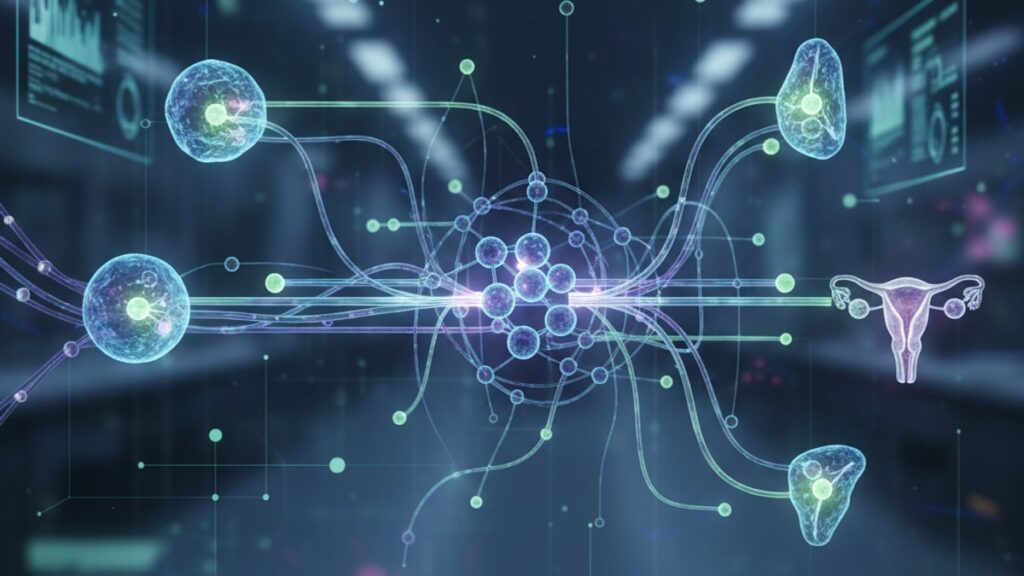
Kisspeptin Fertility Research Mechanism — How It Works
Without kisspeptin, the human reproductive system never activates. The peptide serves as the master regulator of the hypothalamic-pituitary-gonadal (HPG) axis. The hormonal cascade responsible for puberty, ovulation, and sperm production. Patients with loss-of-function mutations in the KISS1 gene or its receptor (KISS1R) never enter puberty naturally, demonstrating that kisspeptin signaling is not just supportive but essential for reproductive function.
We've worked with researchers studying peptide mechanisms across reproductive endocrinology. The gap between understanding kisspeptin's role in normal physiology and applying it therapeutically lies in dosing precision, administration timing, and receptor-specific targeting.
What is the kisspeptin fertility research mechanism?
Kisspeptin is a 54-amino-acid peptide encoded by the KISS1 gene that directly activates GnRH (gonadotropin-releasing hormone) neurons in the hypothalamus. When kisspeptin binds to its receptor (KISS1R/GPR54) on GnRH neurons, it triggers pulsatile GnRH release, which in turn stimulates the anterior pituitary to secrete LH (luteinizing hormone) and FSH (follicle-stimulating hormone). The hormones that drive ovulation in women and spermatogenesis in men. Clinical trials have demonstrated that exogenous kisspeptin administration can trigger ovulation and normalize LH pulsatility in patients with hypothalamic amenorrhea.
The kisspeptin fertility research mechanism is not speculative. It's the documented neuroendocrine pathway that initiates reproductive hormone secretion. What most overviews miss: kisspeptin neurons are themselves regulated by metabolic signals (leptin, insulin, ghrelin) and environmental cues (photoperiod, stress hormones), which is why nutritional status and stress directly impact fertility. Understanding this bidirectional regulation is critical for therapeutic applications.
This article covers the specific receptor-ligand interaction that triggers GnRH release, the clinical trial evidence for kisspeptin's use in fertility treatment, and the mechanistic differences between kisspeptin agonists and traditional gonadotropin therapy.
How Kisspeptin Activates the Reproductive Hormone Cascade
Kisspeptin binds to GPR54 (also called KISS1R), a G-protein-coupled receptor expressed on GnRH neurons in the arcuate nucleus and preoptic area of the hypothalamus. This binding activates phospholipase C, which increases intracellular calcium and triggers depolarization of the GnRH neuron. Resulting in pulsatile GnRH secretion into the hypophyseal portal system. The frequency and amplitude of these GnRH pulses determine whether the pituitary releases more LH (high-frequency pulses) or more FSH (low-frequency pulses), which directly controls whether the ovary develops follicles or triggers ovulation.
The kisspeptin fertility research mechanism is frequency-dependent. In the follicular phase of the menstrual cycle, kisspeptin neurons fire at low frequency, favouring FSH secretion and follicle growth. At mid-cycle, a surge in kisspeptin signaling (driven by rising estradiol levels through positive feedback) triggers the preovulatory LH surge that causes ovulation. Women with functional hypothalamic amenorrhea lose this pulsatile pattern entirely. Their kisspeptin neurons stop firing regularly, GnRH pulses cease, and ovulation never occurs.
Exogenous kisspeptin administration in research settings has successfully restored ovulation in women with hypothalamic amenorrhea. A 2014 study published in the Journal of Clinical Investigation demonstrated that twice-daily subcutaneous kisspeptin-54 injections restored LH pulsatility and triggered ovulation in six of eight women who had been anovulatory for more than six months. The response was dose-dependent. Higher kisspeptin doses produced larger LH pulses but did not increase the total number of ovulations, suggesting a threshold effect.
Our team has reviewed the peptide synthesis protocols used in these trials. The challenge in translating kisspeptin therapy to clinical practice isn't efficacy. It's stability. Kisspeptin-54 has a plasma half-life of approximately 30 minutes, requiring frequent dosing or continuous infusion to maintain therapeutic effect. Shorter kisspeptin fragments (kisspeptin-10, kisspeptin-13) retain full biological activity but degrade even faster, limiting practical use outside controlled trial settings.
Kisspeptin vs Traditional Gonadotropin Therapy — Mechanism Comparison
Traditional fertility treatment uses exogenous gonadotropins (recombinant FSH and LH) to directly stimulate the ovaries, bypassing the hypothalamus and pituitary entirely. This approach is effective but carries significant risk of ovarian hyperstimulation syndrome (OHSS). A potentially life-threatening complication where excessive follicle development causes fluid shifts, abdominal distension, and in severe cases, thromboembolism. OHSS occurs in 3–8% of IVF cycles using gonadotropin stimulation protocols.
Kisspeptin-triggered ovulation works through the patient's own GnRH-LH axis, which maintains the negative feedback loop that prevents overstimulation. When a dominant follicle matures and estradiol rises, the hypothalamus reduces GnRH output. Naturally limiting the number of developing follicles. A 2017 phase II trial published in The Lancet compared kisspeptin-triggered ovulation to hCG (human chorionic gonadotropin) trigger in IVF cycles and found zero cases of OHSS in the kisspeptin group vs 4.5% in the hCG group, with equivalent pregnancy rates.
The kisspeptin fertility research mechanism allows more physiological control. Instead of flooding the ovaries with exogenous hormones at fixed doses, kisspeptin activates the body's endogenous regulatory system. The practical trade-off: kisspeptin requires intact hypothalamic-pituitary function. Patients with primary pituitary failure or GnRH receptor mutations cannot respond to kisspeptin. They require direct gonadotropin replacement.
For research applications, kisspeptin offers a tool to study reproductive timing without confounding variables. Administering kisspeptin at specific cycle phases allows researchers to isolate the effects of LH surge timing on oocyte maturation, endometrial receptivity, and corpus luteum function. Questions that are difficult to answer when using exogenous gonadotropins that bypass normal feedback regulation. Facilities like Real Peptides supply research-grade kisspeptin analogs with verified amino acid sequencing for these precise mechanistic studies.
Metabolic and Environmental Regulation of Kisspeptin Neurons
Kisspeptin neurons function as metabolic sensors. Leptin. The adipocyte-derived hormone that signals energy sufficiency. Directly activates kisspeptin neurons in the arcuate nucleus. Women with body fat percentages below 17–19% often experience hypothalamic amenorrhea because leptin levels fall below the threshold required to sustain kisspeptin signaling. This is not a disorder. It's an adaptive response. When the body perceives insufficient energy reserves to support pregnancy, it shuts down reproductive function to prioritize survival.
Insulin, ghrelin, and cortisol also modulate kisspeptin neuron activity. Chronic caloric restriction, even without weight loss, suppresses kisspeptin expression. A 2015 study in Nature Communications found that four weeks of 40% caloric restriction in normal-weight women reduced kisspeptin neuron firing frequency by 60%, causing LH pulse amplitude to drop by 45% and delaying or preventing ovulation. The effect reversed within two weeks of returning to eucaloric intake.
The kisspeptin fertility research mechanism explains why fertility correlates so tightly with metabolic health. Polycystic ovary syndrome (PCOS). Characterized by insulin resistance and hyperandrogenism. Is associated with abnormal kisspeptin signaling. Women with PCOS show elevated basal kisspeptin levels but blunted kisspeptin surges, which prevents the mid-cycle LH surge required for ovulation. Metformin, an insulin sensitizer, partially restores normal kisspeptin pulsatility in PCOS patients, which is one mechanism by which it improves ovulation rates.
Stress-induced reproductive suppression also runs through kisspeptin. Chronic elevation of corticotropin-releasing hormone (CRH) inhibits kisspeptin neurons, reducing GnRH pulsatility. This is why psychological stress, overtraining, and chronic illness commonly cause anovulation. The pathway is kisspeptin-mediated. Understanding this offers therapeutic targets: interventions that reduce CRH signaling or directly stimulate kisspeptin receptors can potentially restore fertility in stress-related amenorrhea.
Kisspeptin Fertility Research Mechanism: Comparison Table
| Mechanism | Kisspeptin-Mediated Ovulation | Gonadotropin Stimulation | Natural Ovulation |
|---|---|---|---|
| Hormonal Pathway | Activates endogenous GnRH → LH/FSH | Direct exogenous LH/FSH | Endogenous kisspeptin → GnRH → LH/FSH |
| Feedback Regulation | Intact (estradiol negative feedback functional) | Bypassed (no hypothalamic regulation) | Intact (physiological feedback) |
| OHSS Risk | <1% (phase II trial data) | 3–8% (standard IVF protocols) | 0% (single follicle development) |
| Follicle Count | 1–3 dominant follicles (physiological) | 8–15 follicles (controlled hyperstimulation) | 1 dominant follicle |
| Clinical Use Status | Investigational (phase II/III trials) | Standard fertility treatment (FDA-approved) | Not applicable |
| Professional Assessment | Offers safer ovulation trigger with physiological control but requires intact HPG axis and frequent dosing; not yet approved for clinical use outside trials | Proven efficacy with decades of clinical data but carries hyperstimulation risk; remains gold standard for most IVF protocols | Ideal outcome but not achievable in patients with hypothalamic or ovarian dysfunction |
Key Takeaways
- Kisspeptin directly activates GnRH neurons via the GPR54 receptor, initiating the hormonal cascade that drives ovulation and spermatogenesis.
- Patients with KISS1 or KISS1R mutations never enter puberty, proving kisspeptin is essential. Not just supportive. For reproductive function.
- Kisspeptin-triggered ovulation in clinical trials reduced OHSS incidence to less than 1% compared to 3–8% with standard hCG triggers in IVF.
- Kisspeptin neurons are regulated by leptin, insulin, and cortisol, which is why metabolic health and stress directly affect fertility.
- Exogenous kisspeptin has a plasma half-life of approximately 30 minutes, requiring frequent dosing or continuous infusion to maintain therapeutic levels.
- Research-grade kisspeptin analogs enable mechanistic studies on ovulation timing, oocyte quality, and endometrial receptivity without confounding gonadotropin variables.
What If: Kisspeptin Fertility Research Mechanism Scenarios
What If Kisspeptin Administration Doesn't Trigger Ovulation?
Verify that the patient has intact pituitary function. Kisspeptin requires functional GnRH receptors and gonadotrophs to work. Women with primary pituitary failure, hyperprolactinemia, or GnRH receptor mutations will not respond to kisspeptin because the downstream signaling pathway is disrupted. Measure basal LH and FSH. If both are undetectable and do not rise after kisspeptin challenge, the issue is pituitary, not hypothalamic. Alternative approaches include direct gonadotropin therapy or treating the underlying pituitary disorder before attempting kisspeptin-based protocols.
What If Kisspeptin Levels Are Normal but Ovulation Still Doesn't Occur?
Check for GnRH receptor desensitization or downstream resistance. In some PCOS patients, chronic high-frequency GnRH pulses (driven by elevated kisspeptin) cause the pituitary to downregulate GnRH receptors, blunting LH response even when kisspeptin signaling is intact. This is mechanistically distinct from hypothalamic amenorrhea. The problem is receptor density, not ligand availability. Pulsatile GnRH therapy or kisspeptin receptor antagonists (to reset the system before restarting pulsatile stimulation) are investigational approaches being studied for this scenario.
What If a Patient Wants to Use Kisspeptin Outside a Clinical Trial?
Kisspeptin is not FDA-approved for fertility treatment and is not available through standard pharmacies. Current use is limited to registered clinical trials and research settings. Patients interested in kisspeptin-based approaches should inquire about enrolling in phase II or phase III trials at academic fertility centers. Off-label compounding is not a viable option because kisspeptin's short half-life and dosing complexity require medical supervision. Self-administration outside a controlled protocol carries significant risk of ineffective dosing or mistimed administration.
The Mechanistic Truth About Kisspeptin and Fertility
Here's the honest answer: kisspeptin is not a fertility supplement. It's the master switch. The peptide doesn't
Frequently Asked Questions
How does kisspeptin trigger ovulation in women?▼
Kisspeptin binds to GPR54 receptors on GnRH neurons in the hypothalamus, triggering pulsatile GnRH release that stimulates the pituitary to secrete LH and FSH. At mid-cycle, a surge in kisspeptin signaling causes the preovulatory LH surge that triggers ovulation. Clinical trials show that exogenous kisspeptin administration can restore ovulation in women with hypothalamic amenorrhea by reactivating this dormant pathway.
Can men benefit from kisspeptin therapy for fertility?▼
Yes — kisspeptin activates the same HPG axis in men, stimulating LH and FSH release that drives testosterone production and spermatogenesis. Early-phase trials in men with idiopathic hypogonadotropic hypogonadism show that pulsatile kisspeptin administration increases testosterone levels and improves sperm count. The mechanism is identical to its effect in women, but clinical application in male infertility is less advanced than in female fertility protocols.
What is the difference between kisspeptin and GnRH therapy?▼
Kisspeptin activates GnRH neurons to produce endogenous GnRH, while GnRH therapy delivers synthetic GnRH directly. Both stimulate the pituitary to release LH and FSH, but kisspeptin works through the body’s natural regulatory pathway and maintains feedback control. GnRH therapy requires pulsatile pumps to avoid receptor desensitization, while kisspeptin’s shorter half-life and physiological mechanism reduce this risk.
Why isn’t kisspeptin available as a standard fertility treatment?▼
Kisspeptin has a plasma half-life of approximately 30 minutes, requiring frequent injections or continuous infusion to maintain therapeutic levels — making it impractical for outpatient use. It is currently available only in clinical trials and has not received FDA approval for fertility treatment. Longer-acting kisspeptin analogs are in development but have not yet completed phase III trials.
How does metabolic health affect kisspeptin signaling?▼
Kisspeptin neurons are directly regulated by leptin, insulin, and cortisol — metabolic signals that reflect energy availability. Low leptin levels from caloric restriction or low body fat suppress kisspeptin neuron activity, reducing GnRH pulsatility and causing anovulation. This is why women with body fat percentages below 17–19% or those in chronic caloric deficit often experience hypothalamic amenorrhea — the body shuts down reproduction when it perceives insufficient energy reserves.
Does kisspeptin therapy increase the risk of ovarian hyperstimulation syndrome?▼
No — kisspeptin-triggered ovulation has been shown to significantly reduce OHSS risk compared to standard hCG triggers in IVF cycles. A 2017 phase II trial found zero cases of OHSS in the kisspeptin group vs 4.5% in the hCG group, with equivalent pregnancy rates. Kisspeptin activates the body’s endogenous feedback system, which naturally limits follicle development and prevents overstimulation.
Can kisspeptin help women with PCOS conceive?▼
Potentially, but the mechanism is complex — women with PCOS often have elevated basal kisspeptin levels but blunted kisspeptin surges, which prevents the mid-cycle LH surge required for ovulation. Exogenous kisspeptin administration may restore normal surge patterns in some PCOS patients, but insulin resistance must also be addressed since it disrupts kisspeptin neuron regulation. Metformin improves kisspeptin pulsatility in PCOS patients by improving insulin sensitivity.
What is the KISS1 gene and why does it matter for fertility?▼
The KISS1 gene encodes kisspeptin, the peptide that activates GnRH neurons and initiates the reproductive hormone cascade. Patients with loss-of-function mutations in KISS1 or its receptor (KISS1R) never enter puberty naturally and remain infertile without hormone replacement therapy. This genetic evidence proves that kisspeptin is not just supportive but absolutely essential for human reproductive function.
How long does it take for kisspeptin to trigger an LH surge?▼
Exogenous kisspeptin administration triggers a measurable LH rise within 30–60 minutes, with peak LH levels occurring 2–4 hours after injection. The exact timing depends on dose, route of administration, and the patient’s baseline hormonal status. In research settings, kisspeptin is often administered as a bolus injection to trigger ovulation 36 hours before oocyte retrieval in IVF cycles — similar timing to hCG triggers but with lower OHSS risk.
Can stress really block kisspeptin signaling and prevent ovulation?▼
Yes — chronic stress elevates corticotropin-releasing hormone (CRH), which directly inhibits kisspeptin neurons and reduces GnRH pulsatility. This is the mechanism behind stress-induced anovulation, functional hypothalamic amenorrhea in athletes, and cycle disruption during illness. The effect is reversible — when CRH levels normalize, kisspeptin neuron activity resumes and ovulation typically returns within 1–3 cycles.











