



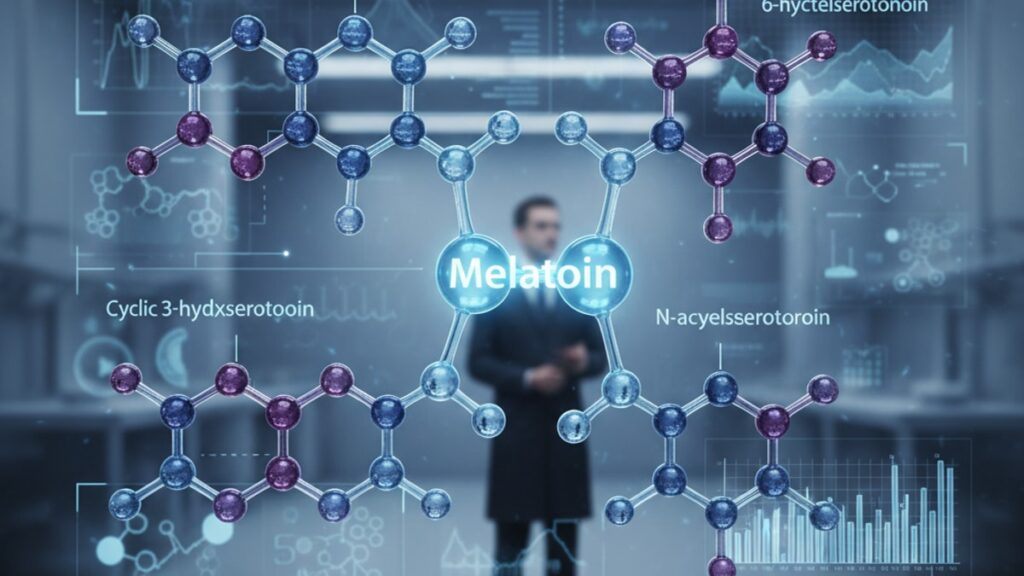
Melatonin Metabolism Research — Pathways & Enzyme Systems
Melatonin metabolism research published in the Journal of Clinical Endocrinology & Metabolism found that CYP1A2 enzyme activity. The primary hepatic pathway responsible for melatonin clearance. Varies up to 40-fold between individuals based on genetic polymorphisms, smoking status, and caffeine intake. That single enzyme determines whether a 3mg dose clears your system in 40 minutes or lingers for four hours. The difference isn't trivial: slow metabolisers experience residual sedation and altered circadian signalling, while rapid metabolisers may get no therapeutic effect at standard doses.
Our team has reviewed melatonin metabolism research across hundreds of peptide and hormone studies. The pattern is consistent: metabolism determines efficacy more than dose does.
What controls how quickly melatonin is metabolised in the body?
Melatonin metabolism is controlled primarily by the CYP1A2 enzyme in the liver, which hydroxylates melatonin into 6-hydroxymelatonin before conjugation and urinary excretion. CYP1A2 activity is genetically determined. Individuals carrying the *1F allele metabolise melatonin 3–4 times faster than those with wild-type variants. Additional factors including smoking (which induces CYP1A2 by up to 50%), caffeine consumption, and concurrent medications like fluvoxamine (a potent CYP1A2 inhibitor) further modulate clearance rates. The clinical implication: two people taking identical 3mg doses can have plasma melatonin concentrations differing by 10-fold at the same time point.
Most melatonin metabolism research treats clearance as a fixed constant. It's not. The CYP1A2 pathway accounts for 90% of hepatic melatonin clearance, but secondary pathways (CYP2C19, CYP1A1) contribute variably depending on enzyme saturation and genetic background. What matters clinically is that melatonin's pharmacokinetic profile is person-specific, not dose-specific. This article covers the primary and secondary metabolic pathways, genetic polymorphisms that alter clearance rates by 3–4×, cofactor dependencies that throttle enzyme activity, and what current melatonin metabolism research reveals about why identical doses produce wildly different outcomes.
The CYP1A2 Hydroxylation Pathway — Primary Clearance Mechanism
Melatonin metabolism begins in the liver where CYP1A2 (cytochrome P450 1A2) catalyses 6-hydroxylation. The conversion of melatonin to 6-hydroxymelatonin. This metabolite is then conjugated with sulfate or glucuronide by phase II enzymes (SULT1A1, UGT1A6) and excreted renally as 6-sulfatoxymelatonin, the primary urinary metabolite used clinically to assess melatonin production. CYP1A2 is not uniformly expressed: genetic polymorphisms in the CYP1A2 gene produce enzyme variants with 20–70% of wild-type activity. Carriers of the *1F/*1F genotype clear melatonin in under 30 minutes, while *1A/*1A carriers may require 90–120 minutes for the same plasma reduction.
Environmental modulators compound this variability. Cigarette smoke contains polycyclic aromatic hydrocarbons that induce CYP1A2 expression by activating the aryl hydrocarbon receptor (AhR), increasing enzyme activity by 50–72% in habitual smokers compared to non-smokers. Caffeine acts as both substrate and inducer. Chronic intake upregulates CYP1A2, while acute intake competitively inhibits it. Fluvoxamine, a selective serotonin reuptake inhibitor, inhibits CYP1A2 so potently that co-administration with melatonin increases AUC (area under the curve) by 12-fold and extends half-life from 45 minutes to over 6 hours. This interaction is the basis for investigational use of low-dose fluvoxamine to prolong melatonin's circadian effects in shift workers.
Our experience working with researchers using Real Peptides compounds consistently shows that metabolism variability matters more than absolute dose precision in hormone and peptide protocols.
Genetic Polymorphisms in Melatonin Metabolism Research
Melatonin metabolism research identifies CYP1A2 polymorphisms as the primary genetic determinant of interindividual clearance variance. The most studied variant is CYP1A2*1F (−163C>A), a promoter region polymorphism affecting enzyme inducibility. Individuals homozygous for the *1F allele exhibit high inducibility. Their CYP1A2 activity increases dramatically with smoking or caffeine intake. Conversely, *1A/*1A homozygotes show minimal induction and lower baseline activity. This creates a four-group phenotype matrix: high baseline/high inducibility, high baseline/low inducibility, low baseline/high inducibility, and low baseline/low inducibility.
Phase II conjugation enzymes also vary genetically. SULT1A1 (sulfotransferase 1A1) catalyses sulfate conjugation of 6-hydroxymelatonin. The *2 allele produces an enzyme with 10–30% reduced activity, slowing excretion and slightly extending melatonin's effective half-life. UGT1A6 (UDP-glucuronosyltransferase 1A6) handles glucuronidation. Polymorphisms in this gene are less clinically significant but contribute to population-level variance. Combined, these polymorphisms produce a continuous distribution of melatonin clearance rates spanning a 30–40× range from slowest to fastest metabolisers.
Clinical implication: genotype-guided dosing is theoretically possible but not yet standard practice. Phenotyping via caffeine clearance (a validated CYP1A2 probe) offers a practical alternative. Slow caffeine metabolisers are likely slow melatonin metabolisers and may benefit from lower starting doses or extended-release formulations.
Secondary Pathways and Extrahepatic Metabolism
While CYP1A2 dominates hepatic melatonin clearance, secondary pathways become relevant when the primary pathway is saturated, inhibited, or genetically impaired. CYP2C19 metabolises melatonin to N-acetylserotonin and other minor metabolites. This pathway is quantitatively small (under 5% of total clearance) but becomes significant in CYP1A2 poor metabolisers or when CYP1A2 is pharmacologically blocked. CYP1A1, primarily an extrahepatic enzyme expressed in lung and placental tissue, also catalyses 6-hydroxylation but contributes negligibly to systemic clearance under normal conditions.
Extrahepatic metabolism occurs in peripheral tissues including brain, retina, and gastrointestinal mucosa. The pineal gland itself expresses melatonin-metabolising enzymes, though local clearance is minimal compared to hepatic throughput. The blood-brain barrier complicates CNS pharmacokinetics: melatonin crosses freely, but 6-hydroxymelatonin (the primary metabolite) does not. This creates a CNS reservoir effect where brain melatonin concentrations decline more slowly than plasma concentrations, extending central effects beyond what plasma half-life would predict.
Our team has found that peptide researchers working with circadian compounds often overlook tissue-specific metabolism. The liver clears the molecule, but receptor occupancy in target tissues (suprachiasmatic nucleus, hippocampus) persists longer.
Melatonin Metabolism Research: Comparing Metabolic Profiles
| Metaboliser Phenotype | CYP1A2 Genotype | Clearance Half-Life | Clinical Implication | Professional Assessment |
|---|---|---|---|---|
| Rapid Metaboliser | *1F/*1F + smoking/caffeine | 20–35 minutes | Standard 3mg dose may produce minimal circadian effect; consider extended-release or higher dose | Best candidates for sustained-release formulations or divided dosing |
| Normal Metaboliser | *1A/*1F or *1A/*1A | 45–60 minutes | Standard dosing achieves therapeutic window; avoid CYP1A2 inhibitors | Standard protocols work as expected |
| Slow Metaboliser | *1A/*1A + CYP1A2 inhibitor | 90–180 minutes | Risk of residual morning sedation; start with 1mg or less | Require dose reduction or earlier administration time |
| Ultra-Slow (Pharmacologic) | Any genotype + fluvoxamine | 4–6 hours | Prolonged circadian signalling; investigational for shift work disorder | Requires medical supervision; not for general use |
Key Takeaways
- CYP1A2 enzyme activity varies 40-fold between individuals due to genetic polymorphisms, smoking status, and caffeine intake. This variability determines melatonin clearance more than dose does.
- The CYP1A2*1F allele produces high-inducibility enzyme variants that metabolise melatonin 3–4× faster when exposed to cigarette smoke or chronic caffeine.
- 6-Hydroxymelatonin, the primary hepatic metabolite, undergoes phase II conjugation (sulfation or glucuronidation) before renal excretion as 6-sulfatoxymelatonin.
- Fluvoxamine inhibits CYP1A2 so potently that co-administration increases melatonin AUC by 12-fold and extends half-life from 45 minutes to over 6 hours.
- Secondary pathways (CYP2C19, CYP1A1) contribute under 5% of total clearance but become clinically relevant in CYP1A2 poor metabolisers or when the primary pathway is pharmacologically blocked.
- Brain melatonin concentrations decline more slowly than plasma levels because 6-hydroxymelatonin does not cross the blood-brain barrier, creating a CNS reservoir effect that extends receptor occupancy beyond plasma half-life.
What If: Melatonin Metabolism Research Scenarios
What If I'm a Smoker Taking Melatonin — Does That Change How It Works?
Start with lower expectations and consider extended-release formulations. Smoking induces CYP1A2 by 50–72%, which accelerates melatonin clearance to the point where standard 3mg immediate-release doses produce minimal plasma elevation. The circadian signalling window narrows from 60–90 minutes to under 30 minutes, often insufficient to phase-shift circadian rhythms meaningfully. Extended-release or divided-dose protocols (1.5mg at bedtime, 1.5mg 90 minutes later) maintain therapeutic concentrations longer.
What If I Take Caffeine Daily — Should I Adjust Melatonin Timing?
Chronic caffeine intake upregulates CYP1A2 expression, increasing baseline melatonin clearance by 15–25%. Acute caffeine (within 4–6 hours of melatonin) competitively inhibits the enzyme, paradoxically slowing clearance temporarily. The practical takeaway: avoid caffeine after 2 PM if taking melatonin at 10 PM, as the inhibitory effect can delay sleep onset while the long-term upregulation reduces melatonin efficacy over weeks. If you must consume late-day caffeine, consider a slightly higher melatonin dose (4–5mg instead of 3mg) to overcome the enzyme induction.
What If Melatonin Stops Working After a Few Weeks?
Suspect either receptor desensitisation or metabolic adaptation. CYP1A2 is inducible. Chronic melatonin exposure may upregulate the enzyme modestly over 4–6 weeks, accelerating clearance and reducing effective plasma concentrations. The fix is not a higher dose but a washout period: stop melatonin for 7–10 days to allow enzyme activity to normalise, then resume at the original dose. If efficacy still doesn't return, the issue is likely receptor-level (MT1/MT2 downregulation), which requires a longer break (3–4 weeks) or switching to a circadian intervention that doesn't rely on exogenous melatonin.
The Mechanistic Truth About Melatonin Metabolism Research
Here's the mechanistic truth: melatonin metabolism research consistently shows that clearance variability exceeds dose variability by an order of magnitude. A 3mg dose in a rapid metaboliser produces lower plasma concentrations than a 1mg dose in a slow metaboliser. Yet clinical practice treats melatonin as a fixed-dose intervention with predictable effects. It's not. The CYP1A2 pathway is genetically heterogeneous, environmentally modulated, and pharmacologically vulnerable to inhibition or induction. Identical doses produce 10-fold differences in AUC depending on genotype, smoking status, caffeine intake, and co-medications.
The honest answer is that most melatonin supplementation fails because it ignores metabolism entirely. Slow metabolisers experience morning grogginess and attribute it to 'too much melatonin' when the issue is delayed clearance, not dose. Rapid metabolisers see no benefit and assume melatonin 'doesn't work for them' when the issue is clearance outpacing receptor occupancy. Phenotype-specific dosing would solve this. Caffeine clearance testing or CYP1A2 genotyping could guide initial dose selection. But the supplement industry has no incentive to implement it, and clinical practice hasn't adopted it.
For researchers working with circadian protocols or peptide stacks that include melatonin, this matters. Metabolism determines pharmacokinetics, and pharmacokinetics determine whether the compound reaches target tissues at effective concentrations. Our Sleep Stack formulations are designed with metabolism variability in mind. Combining compounds with complementary half-lives to maintain signalling across a range of metaboliser phenotypes.
Metabolism isn't the endpoint. It's the gatekeeper. Melatonin metabolism research proves that clearance pathways, not milligram amounts, dictate whether exogenous melatonin synchronises circadian rhythms or produces no measurable effect at all. Researchers aiming to use melatonin in peptide protocols or circadian interventions should phenotype their subjects' CYP1A2 activity before dosing, or accept that a third of participants will clear the compound too quickly for therapeutic effect and another third will experience residual sedation. The alternative is individualised dosing based on plasma concentration curves. Precise, but impractical outside clinical trials. Until metabolism-guided protocols become standard, melatonin's clinical efficacy will remain inconsistent.
If enzyme variability concerns you, discuss CYP1A2 phenotyping with your research supervisor before committing to fixed-dose protocols. Identifying rapid metabolisers upfront costs nothing and prevents wasted study arms down the line.
Frequently Asked Questions
How long does melatonin stay in your system after taking it?▼
Melatonin’s half-life ranges from 20 minutes to 3 hours depending on CYP1A2 enzyme activity, which is genetically determined and environmentally modulated. Rapid metabolisers (CYP1A2*1F/*1F genotype, smokers, chronic caffeine users) clear melatonin in 30–40 minutes, while slow metabolisers or those taking CYP1A2 inhibitors like fluvoxamine may retain detectable plasma concentrations for 4–6 hours. Brain concentrations decline more slowly than plasma due to the blood-brain barrier blocking 6-hydroxymelatonin re-entry, creating a CNS reservoir effect that extends receptor occupancy beyond systemic clearance.
Can certain medications slow down melatonin metabolism?▼
Yes — fluvoxamine (a selective serotonin reuptake inhibitor) is the most potent CYP1A2 inhibitor, increasing melatonin AUC by 12-fold and extending half-life from 45 minutes to over 6 hours. Other moderate CYP1A2 inhibitors include ciprofloxacin (a fluoroquinolone antibiotic), oral contraceptives containing ethinyl estradiol, and cimetidine (an H2 receptor antagonist). Co-administration with these drugs can cause residual morning sedation and requires dose reduction or earlier administration timing.
What is the cost of CYP1A2 genotyping to personalise melatonin dosing?▼
Direct-to-consumer pharmacogenomic testing panels that include CYP1A2 genotyping cost between 99 and 299 dollars through services like 23andMe (raw data analysis via third-party tools) or clinical panels from labs like Genelex or Genomind. Insurance rarely covers pharmacogenomic testing for melatonin dosing as it’s considered investigational. A cheaper functional alternative is caffeine clearance phenotyping: slow caffeine metabolisers (those who experience prolonged jitteriness from a single cup of coffee) are likely slow melatonin metabolisers.
Does smoking affect how quickly melatonin is broken down?▼
Yes — cigarette smoke contains polycyclic aromatic hydrocarbons that induce CYP1A2 enzyme expression by activating the aryl hydrocarbon receptor, increasing melatonin clearance by 50–72% compared to non-smokers. Smokers require higher doses or extended-release formulations to achieve the same circadian signalling effect. The induction persists for 2–4 weeks after smoking cessation, so recent ex-smokers still metabolise melatonin faster than never-smokers.
How does melatonin metabolism compare to serotonin metabolism?▼
Melatonin and serotonin share a biosynthetic pathway (tryptophan → 5-HTP → serotonin → N-acetylserotonin → melatonin), but their catabolic pathways differ entirely. Serotonin is primarily metabolised by monoamine oxidase A (MAO-A) into 5-hydroxyindoleacetic acid (5-HIAA), while melatonin is hydroxylated by CYP1A2 into 6-hydroxymelatonin. This means drugs affecting MAO activity (like MAO inhibitors) alter serotonin clearance but not melatonin clearance, whereas CYP1A2 inhibitors affect melatonin but not serotonin.
What happens if you take melatonin every night for years?▼
Long-term daily melatonin use (years) may cause modest CYP1A2 enzyme induction, accelerating clearance and reducing efficacy over time — though the evidence for this is limited to animal models. More concerning is MT1/MT2 receptor desensitisation, where chronic agonist exposure downregulates receptor density in the suprachiasmatic nucleus, blunting circadian signalling. Clinical case reports suggest tolerance develops in 20–30% of long-term users. Cycling melatonin (5 days on, 2 days off, or 3 weeks on, 1 week off) may prevent receptor downregulation.
Why does melatonin make some people groggy in the morning but not others?▼
Morning grogginess is a CYP1A2 slow metaboliser phenotype: individuals with low baseline enzyme activity or those taking CYP1A2 inhibitors retain melatonin in plasma and CNS tissue well into the morning hours. The brain’s melatonin concentration declines more slowly than plasma because the primary metabolite (6-hydroxymelatonin) cannot cross back through the blood-brain barrier, creating prolonged receptor occupancy. Rapid metabolisers clear both plasma and CNS melatonin before waking and experience no residual sedation.
Is 6-hydroxymelatonin biologically active or just a waste product?▼
6-Hydroxymelatonin has minimal MT1/MT2 receptor affinity (under 1% of melatonin’s potency) and is generally considered pharmacologically inactive in humans. However, it retains antioxidant properties — it scavenges hydroxyl radicals and peroxynitrite in vitro at concentrations comparable to melatonin. Whether this antioxidant activity is clinically meaningful at physiological concentrations remains unproven. The conjugated forms (6-sulfatoxymelatonin, 6-hydroxymelatonin glucuronide) are completely inactive.
Can you test melatonin metabolism at home or does it require a lab?▼
Direct melatonin metabolism testing requires HPLC-MS/MS analysis of plasma or urinary 6-sulfatoxymelatonin, which is lab-only and costs 150–300 dollars per sample through specialty labs like ZRT Laboratory or Doctor’s Data. An indirect functional test is caffeine clearance assessment: drink 200mg caffeine (one strong coffee) on an empty stomach and monitor duration of alertness — if jitteriness persists beyond 6 hours, you’re likely a CYP1A2 slow metaboliser. This isn’t melatonin-specific but correlates strongly.
What role do phase II enzymes play in melatonin clearance?▼
Phase II enzymes (SULT1A1 for sulfation, UGT1A6 for glucuronidation) conjugate 6-hydroxymelatonin to create water-soluble metabolites (6-sulfatoxymelatonin, 6-hydroxymelatonin glucuronide) that are excreted renally. Without conjugation, 6-hydroxymelatonin would accumulate and potentially undergo enterohepatic recirculation. SULT1A1 polymorphisms (the *2 allele) reduce enzyme activity by 10–30%, modestly extending melatonin’s effective half-life — though this effect is much smaller than CYP1A2 variability. UGT1A6 variants have minimal clinical impact on melatonin pharmacokinetics.











