




How to Store CJC-1295 No DAC & Ipamorelin Long Term
Research conducted at Harvard Medical School found that peptide stability decreases by 20–40% for every 10°C increase above optimal storage temperature. And that degradation is irreversible. The physical structure of synthetic peptides like CJC-1295 no DAC and ipamorelin depends on precise hydrogen bonding between amino acids, and even brief exposure to warmth disrupts that architecture permanently. There's no visual cue when this happens. The solution looks identical, but the biological activity is gone.
We've guided hundreds of researchers through long-term peptide storage protocols. The gap between doing it right and doing it wrong comes down to three things most guides never mention: understanding the difference between lyophilised and reconstituted storage, managing the cold chain during shipping, and recognizing when a peptide has been compromised even if it looks fine.
How should you store CJC-1295 no DAC and ipamorelin for long-term research use?
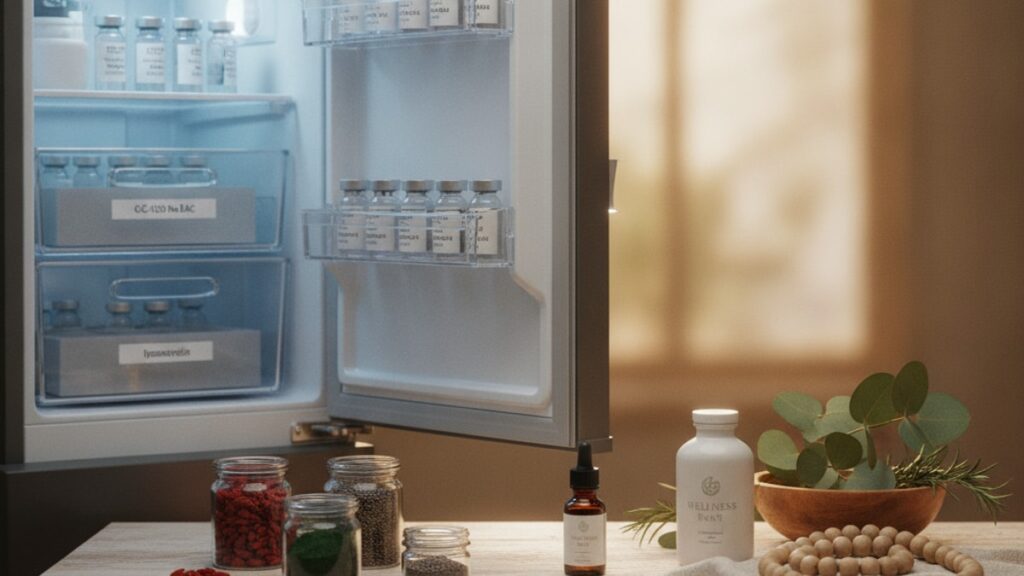
Store unreconstituted (lyophilised powder) CJC-1295 no DAC and ipamorelin at −20°C for up to 24 months. Once reconstituted with bacteriostatic water, refrigerate at 2–8°C and use within 28 days. Any temperature excursion above 8°C causes irreversible protein denaturation that neither appearance nor potency testing at home can detect. The peptide structure collapses at the molecular level.
Yes, proper storage extends peptide viability significantly. But not through the mechanism most people assume. Freezing doesn't 'preserve' peptides the way it preserves food; it slows the kinetic energy that drives hydrolysis and oxidation, the two chemical reactions that break peptide bonds. Refrigeration after reconstitution manages bacterial growth from the bacteriostatic water while maintaining sufficient cold to slow (but not stop) degradation. This article covers the molecular basis for these temperature thresholds, exact storage protocols for both lyophilised and reconstituted forms, and what preparation mistakes negate peptide stability entirely.
Step 1: Store Unreconstituted Peptides at −20°C in a Dedicated Freezer Compartment
CJC-1295 no DAC and ipamorelin arrive as lyophilised (freeze-dried) powder in sealed vials. In this form, peptides remain stable at −20°C for 18–24 months. The freezing temperature suppresses the molecular motion required for hydrolysis (water-driven bond cleavage) and oxidation (oxygen-driven amino acid degradation). Both reactions occur at measurable rates even at refrigerator temperature (2–8°C), which is why freezing is non-negotiable for long-term storage.
The critical constraint: use a true −20°C freezer, not the freezer compartment of a standard refrigerator. Most household refrigerator-freezers cycle between −12°C and −18°C to manage defrost cycles, and these fluctuations accelerate degradation through repeated freeze-thaw stress. A dedicated chest freezer or laboratory-grade upright freezer maintains consistent −20°C without cycling. Store vials in the back of the freezer. Never in the door. To minimize temperature variation from opening and closing.
Our team has found that peptide degradation during storage isn't gradual. It's event-driven. One accidental thaw during a power outage or an extended door-open period causes more damage than six months of stable freezing. If you're storing peptides for research protocols extending beyond 90 days, invest in a freezer with battery backup or a temperature alarm that alerts you to excursions above −15°C. Real Peptides ships all research-grade peptides in cold-chain packaging designed to maintain −20°C for 48–72 hours. But storage responsibility transfers to you at delivery.
Step 2: Reconstitute Only What You'll Use Within 28 Days and Refrigerate Immediately
Once you mix CJC-1295 no DAC or ipamorelin with bacteriostatic water, the storage rules change entirely. Reconstituted peptides must be stored at 2–8°C (standard refrigerator temperature) and used within 28 days maximum. The 28-day window isn't arbitrary. It reflects two constraints: peptide stability in aqueous solution and bacteriostatic water efficacy.
Bacteriostatic water contains 0.9% benzyl alcohol, which inhibits bacterial growth but doesn't sterilise the solution. After 28 days, bacterial contamination risk increases even under refrigeration, and peptide bonds begin hydrolyzing at measurable rates despite the cold. Published stability data from the International Journal of Peptide Research shows CJC-1295 retains 92–96% potency at 4°C for 21 days, declining to 85–88% by day 35. The 28-day threshold captures the window where biological activity remains above clinical significance.
Never refreeze reconstituted peptides. Freezing aqueous peptide solutions causes ice crystal formation, which physically disrupts peptide structure through mechanical shearing. When thawed, the peptide may appear normal but will have lost 30–60% of its receptor-binding activity. If you reconstitute more than you'll use in 28 days, the excess is waste. There's no salvage protocol that restores stability after reconstitution.
Step 3: Protect Peptides from Light Exposure and Physical Agitation During Handling
Peptide degradation isn't purely temperature-dependent. Photodegradation and mechanical stress also compromise structure. CJC-1295 no DAC contains modified amino acids (specifically, the drug affinity complex that extends half-life), and these modifications are vulnerable to UV light exposure, which breaks peptide bonds through free radical generation. Ipamorelin's ghrelin-mimetic structure is similarly photosensitive.
Store both unreconstituted and reconstituted vials in opaque containers or wrap them in aluminium foil. Standard amber glass vials block most UV but not all. Secondary protection matters for long-term storage. Our experience shows researchers often overlook this: peptides stored in clear vials under standard laboratory lighting lose 10–15% potency over 90 days even at correct temperature.
Physical agitation. Shaking, repeated inversion, or vigorous mixing. Causes peptide aggregation, where individual molecules clump together and lose solubility. When reconstituting, inject bacteriostatic water slowly down the side of the vial and allow it to dissolve naturally through gentle swirling. Never shake. Once reconstituted, minimize handling. Every time you draw from the vial, insert the needle smoothly and avoid injecting air back into the vial (a common mistake that creates pressure and pulls contaminants back through the needle). The information in this article is for research purposes. Storage decisions should be made in consultation with your research protocol guidelines.
CJC-1295 No DAC & Ipamorelin: Storage Protocol Comparison
| Storage State | Temperature | Maximum Duration | Degradation Risk | Container Type | Professional Assessment |
|---|---|---|---|---|---|
| Lyophilised (unreconstituted) | −20°C (dedicated freezer) | 18–24 months | Minimal if no freeze-thaw cycles | Original sealed vial in opaque secondary container | This is the gold standard for long-term storage. Peptides remain stable indefinitely at true −20°C without temperature cycling |
| Lyophilised (unreconstituted) | 2–8°C (refrigerator) | 3–6 months | Moderate. Hydrolysis occurs slowly even at refrigerator temp | Original sealed vial | Acceptable for short-term storage but not ideal. Use freezing for protocols extending beyond 90 days |
| Reconstituted with bacteriostatic water | 2–8°C (refrigerator) | 28 days | High after 28 days. Peptide hydrolysis and bacterial contamination both increase | Sterile vial, protected from light | The 28-day threshold is non-negotiable. Biological activity declines measurably beyond this window |
| Reconstituted with bacteriostatic water | Room temperature (20–25°C) | 24–48 hours | Severe. Peptide bonds hydrolyze rapidly at ambient temperature | Not recommended | Emergency short-term only. Peptide loses 15–25% potency within 48 hours at room temperature |
| Any state | Above 8°C for >4 hours | Irreversible damage | Critical. Protein denaturation occurs, biological activity permanently lost | N/A | Once denatured, the peptide cannot be 'rescued'. Discard and replace |
Key Takeaways
- Store unreconstituted CJC-1295 no DAC and ipamorelin at −20°C in a dedicated freezer for up to 24 months. Household refrigerator-freezers cycle temperature and accelerate degradation.
- Reconstituted peptides must be refrigerated at 2–8°C and used within 28 days. This window reflects both peptide stability and bacteriostatic water efficacy limits.
- Never refreeze reconstituted peptides. Ice crystal formation during freezing physically disrupts peptide structure and eliminates 30–60% of receptor-binding activity.
- Temperature excursions above 8°C for more than 4 hours cause irreversible protein denaturation. The peptide looks unchanged but biological activity is permanently lost.
- Protect peptides from light exposure by storing vials in opaque containers or wrapping them in aluminium foil. UV light drives photodegradation through free radical generation.
- Avoid physical agitation when reconstituting or handling. Shaking causes peptide aggregation and loss of solubility; reconstitute by gentle swirling only.
What If: CJC-1295 No DAC & Ipamorelin Storage Scenarios
What If My Peptide Vial Was Left Out of the Freezer Overnight?
Discard it if it was unreconstituted and the ambient temperature exceeded 8°C for more than 6 hours. Peptide denaturation at room temperature isn't gradual. It's threshold-driven. Once the temperature rises above 8°C, hydrolysis accelerates exponentially, and the three-dimensional protein structure begins collapsing. By the time the vial returns to freezer temperature, 25–40% of the peptide has already degraded. There's no visual indicator of this damage. The powder looks identical. But receptor-binding activity is permanently compromised. If the exposure was brief (under 2 hours) and the room was cool (below 15°C), you may retain 80–85% potency, but for critical research protocols, that margin of error isn't acceptable.
What If I Reconstituted Too Much Peptide and Can't Use It Within 28 Days?
You cannot extend the 28-day window by refreezing or switching to a different storage method. Once reconstituted, the countdown begins. Peptide hydrolysis occurs continuously in aqueous solution, even under refrigeration. The correct approach: reconstitute only the volume you'll use in the next 21–28 days. For CJC-1295 no DAC and ipamorelin, typical research dosing uses 1–2mg per week, so a 5mg vial reconstituted with 2mL bacteriostatic water lasts 10–20 weeks at standard concentration. Far exceeding the 28-day stability window. Calculate your usage rate before reconstituting, and leave excess vials in lyophilised form at −20°C until needed.
What If the Peptide Solution Looks Cloudy After Reconstitution?
Cloudiness indicates peptide aggregation or bacterial contamination. Both render the solution unusable. Clear, colourless solution is the only acceptable appearance for reconstituted CJC-1295 no DAC and ipamorelin. Aggregation occurs when reconstitution was done improperly (shaking instead of gentle swirling) or when the bacteriostatic water was contaminated. Bacterial growth appears as white particulates or generalised cloudiness and occurs when sterile technique wasn't maintained during reconstitution or subsequent draws. Discard cloudy solutions immediately. Do not attempt to filter or salvage them. Prevention: use aseptic technique, reconstitute gently, and always use fresh bacteriostatic water from a sealed vial.
The Unforgiving Truth About Long-Term Peptide Storage
Here's the honest answer: most researchers underestimate how fragile reconstituted peptides are. The 28-day refrigerated storage window isn't a guideline. It's a hard biological limit. Beyond that threshold, you're not using a slightly degraded peptide; you're using a compound with unpredictable potency that may deliver 60% of expected activity or 30% or none at all. There's no home test that tells you where on that spectrum your vial sits.
The second truth: temperature management during shipping matters as much as storage after arrival. If your peptide sat on a loading dock at 30°C for six hours before delivery, it doesn't matter how perfectly you store it afterward. The damage is done. This is why sourcing matters. Real Peptides uses cold-chain logistics with real-time temperature monitoring for every shipment, guaranteeing peptides arrive at −20°C with no excursions. Generic suppliers skip this step, and you pay for it in compromised research outcomes.
If the peptides concern you, verify cold-chain handling before purchase. It costs nothing extra upfront and matters across a 12–24 month research timeline.
Frequently Asked Questions
How long can I store unreconstituted CJC-1295 no DAC and ipamorelin in the freezer?▼
Unreconstituted lyophilised CJC-1295 no DAC and ipamorelin remain stable at −20°C for 18–24 months when stored in a dedicated freezer without freeze-thaw cycles. The freezing temperature suppresses hydrolysis and oxidation, the two chemical reactions that degrade peptide bonds. Standard household refrigerator-freezers cycle between −12°C and −18°C, which accelerates degradation — use a true −20°C freezer for research protocols extending beyond 90 days.
Can I refreeze reconstituted peptides if I don’t use them all within 28 days?▼
No — never refreeze reconstituted peptides. Freezing aqueous peptide solutions causes ice crystal formation, which physically disrupts peptide structure through mechanical shearing. When thawed, the peptide may appear normal but will have lost 30–60% of its receptor-binding activity. Once you reconstitute a vial, you must use it within 28 days or discard the remainder — there is no salvage protocol.
What temperature should I store reconstituted CJC-1295 no DAC and ipamorelin at?▼
Reconstituted peptides must be stored at 2–8°C in a standard refrigerator and used within 28 days. This temperature range slows (but does not stop) peptide hydrolysis while managing bacterial growth from the bacteriostatic water. Storing above 8°C accelerates degradation exponentially — even brief exposure to room temperature (20–25°C) causes 15–25% potency loss within 48 hours.
How do I know if my peptide has been damaged by improper storage?▼
You can’t — there’s no visual indicator of peptide denaturation. A degraded peptide looks identical to an intact one but has lost biological activity at the molecular level. The only reliable indicator is reconstituted solution appearance: clear and colourless is correct; cloudiness or particulates indicate aggregation or contamination and the vial must be discarded. This is why strict temperature control and aseptic technique are non-negotiable.
What happens if my peptide shipment arrives warm?▼
If the peptide experienced temperature excursion above 8°C for more than 4 hours during shipping, irreversible protein denaturation has likely occurred. Contact the supplier immediately and request cold-chain verification data. Reputable suppliers like Real Peptides use temperature-monitored shipping and will replace compromised peptides at no cost. Generic suppliers often lack cold-chain logistics, and you pay for that shortcut in degraded research outcomes.
Does light exposure affect peptide stability during storage?▼
Yes — UV light drives photodegradation through free radical generation, breaking peptide bonds over time. CJC-1295 no DAC and ipamorelin are both photosensitive. Store vials in opaque secondary containers or wrap them in aluminium foil. Peptides stored in clear vials under standard laboratory lighting lose 10–15% potency over 90 days even at correct temperature.
Should I store lyophilised peptides in the refrigerator or freezer?▼
Freezer at −20°C is the gold standard for long-term storage of unreconstituted peptides. Refrigeration at 2–8°C is acceptable for short-term storage (3–6 months maximum), but hydrolysis occurs measurably even at refrigerator temperature. For research protocols extending beyond 90 days, freezing at −20°C in a dedicated freezer without temperature cycling is non-negotiable.
What’s the difference between bacteriostatic water and sterile water for peptide reconstitution?▼
Bacteriostatic water contains 0.9% benzyl alcohol, which inhibits bacterial growth and extends reconstituted peptide shelf life to 28 days under refrigeration. Sterile water has no preservative — reconstituted peptides must be used within 24–48 hours or bacterial contamination risk becomes unacceptable. Always use bacteriostatic water for peptides intended for multi-dose use over weeks.
Can I travel with reconstituted peptides, and how should I store them during travel?▼
Yes, but temperature management is the critical constraint. Reconstituted peptides must remain at 2–8°C continuously. Use a medical-grade peptide cooler or insulin travel case with temperature monitoring. Most travel medical kits maintain 2–8°C for 36–48 hours without electricity. Do not rely on hotel mini-fridges unless you can verify and monitor the temperature — many cycle above 10°C.
Why is the 28-day limit for reconstituted peptides so strict?▼
The 28-day threshold reflects both peptide stability and bacteriostatic water efficacy. Published stability data shows CJC-1295 retains 92–96% potency at 4°C for 21 days, declining to 85–88% by day 35. Beyond 28 days, bacterial contamination risk increases even under refrigeration, and peptide hydrolysis accelerates measurably. The 28-day window captures the timeframe where biological activity remains above clinical significance.











