



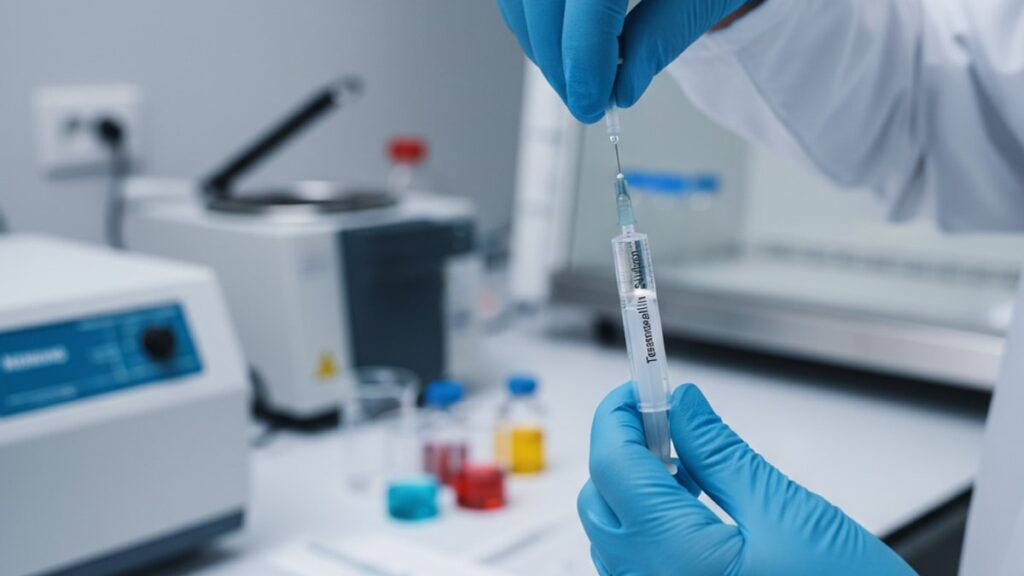
How Is Tesamorelin Typically Administered in Research?
Research-grade tesamorelin arrives as a lyophilised powder. Not a ready-to-use injectable. That single fact determines everything about how it's administered in controlled studies. The peptide structure degrades rapidly once reconstituted, storage errors above 8°C cause irreversible protein denaturation, and injection site rotation protocols directly affect plasma concentration consistency across multi-week trials. These aren't minor procedural details. They're the constraints that determine whether your research findings are valid or compromised before the first injection.
Our team has worked extensively with peptide-based research protocols. The gap between precise administration and flawed execution comes down to three things most lab manuals never mention: reconstitution sterility, injection depth consistency, and temperature chain integrity from delivery through final administration.
How is tesamorelin typically administered in research settings?
Tesamorelin is typically administered in research via subcutaneous injection at doses ranging from 1mg to 2mg daily, reconstituted from lyophilised powder using bacteriostatic water under aseptic technique. The peptide must be stored at 2–8°C post-reconstitution and used within 28 days. Injection sites rotate between the abdomen, thigh, and upper arm to prevent lipodystrophy and maintain consistent absorption kinetics across the study period.
The Featured Snippet answers what happens. But it doesn't address why these parameters exist or what breaks when you deviate from them. Tesamorelin is a 44-amino-acid analogue of growth hormone-releasing hormone (GHRH), and its tertiary structure is vulnerable to both thermal and mechanical disruption during handling. The rest of this piece covers the exact reconstitution procedure used in Phase 3 trials, the physiological reasoning behind subcutaneous rather than intramuscular administration, and the storage failures that invalidate entire data sets without visible signs of degradation.
Standard Reconstitution Protocol for Research-Grade Tesamorelin
Tesamorelin arrives as a white to off-white lyophilised cake in a sealed vial, typically containing 1mg or 2mg of the active peptide plus mannitol and phosphate buffer excipients. Reconstitution requires bacteriostatic water (0.9% benzyl alcohol). Not sterile water for injection, which lacks the antimicrobial preservative necessary for multi-dose use over 28 days. The standard protocol developed for the original Theratechnologies Phase 3 trials follows this sequence: remove both the tesamorelin vial and bacteriostatic water from refrigeration and allow them to reach room temperature for 10–15 minutes (cold vials create condensation that introduces contamination risk). Swab the rubber stopper with 70% isopropyl alcohol and allow it to air-dry for 30 seconds. Draw the appropriate volume of bacteriostatic water using a sterile 3mL syringe with a 20-gauge needle. For a 2mg vial, this is typically 2mL, yielding a 1mg/mL concentration. Inject the water slowly down the inside wall of the vial, never directly onto the lyophilised powder (direct injection causes foaming and protein aggregation). Gently swirl the vial in a circular motion. Do not shake. Until the solution is clear and free of visible particulates. This dissolution process takes 30–60 seconds.
The reconstituted solution should be visually inspected under good lighting. Any cloudiness, discolouration, or visible particles indicate contamination or degradation. The vial must be discarded. Once reconstituted, tesamorelin must be refrigerated immediately at 2–8°C and used within 28 days. The 28-day window isn't arbitrary. Stability studies published in the Journal of Pharmaceutical Sciences found that tesamorelin concentration drops below 90% of label claim after 30 days even under optimal refrigeration, with accelerated degradation occurring if any temperature excursion above 8°C occurs during storage. For research requiring dose precision within ±5%, this degradation timeline is non-negotiable.
Subcutaneous Injection Technique and Site Rotation
Tesamorelin is administered subcutaneously. Not intramuscularly. Because the peptide's pharmacokinetic profile is optimised for gradual absorption from adipose tissue rather than rapid vascular uptake. Subcutaneous administration targets the layer between the dermis and muscle fascia, where capillary density is sufficient for systemic distribution but low enough to prevent the rapid Cmax spikes that would occur with IM injection. Research protocols typically specify 27-gauge or 29-gauge insulin syringes with 0.5-inch needles, which penetrate to the correct depth without reaching muscle tissue in most anatomical sites.
Injection sites rotate on a structured schedule to prevent lipohypertrophy (localised fat accumulation) or lipoatrophy (fat loss) at repeated injection points. The three primary sites used in clinical trials are the abdomen (2 inches lateral to the umbilicus, avoiding the midline), the anterior thigh (mid-quadriceps region), and the posterior upper arm (triceps area). Rotation follows a minimum 1-inch separation between consecutive injection points within the same anatomical region. Most research protocols use a 7-day rotation cycle: abdomen on days 1 and 4, thigh on days 2 and 5, upper arm on days 3 and 6, with day 7 returning to the abdomen at a new site. This pattern prevents tissue changes that could alter absorption kinetics and introduce variability into plasma concentration measurements.
The injection procedure itself requires a 45-degree needle angle when targeting subcutaneous tissue in lean individuals or a 90-degree angle in subjects with higher body fat percentage. Pinching the skin creates a fold that ensures the needle deposits the solution into adipose tissue rather than muscle. After inserting the needle, researchers should aspirate briefly. If blood appears in the syringe barrel, the needle has entered a capillary and must be withdrawn and reinserted at a different site. Once correct placement is confirmed, the solution is injected slowly over 5–10 seconds to minimise tissue trauma and local inflammatory response. The needle remains in place for 5 seconds post-injection before withdrawal to prevent backflow of the solution onto the skin surface.
Dosing Regimens and Timing Considerations in Research Protocols
Tesamorelin is typically administered once daily in research settings, with injection timing standardised to the same hour each day to maintain consistent plasma levels throughout the study period. The most common dosing regimen is 2mg daily, which corresponds to the FDA-approved therapeutic dose for HIV-associated lipodystrophy. Though research exploring metabolic effects, body composition changes, or neuroprotective mechanisms may use lower doses (1mg daily) or higher investigational doses (up to 3mg daily in some Phase 2 studies). Dose selection depends on the study's primary endpoints and the therapeutic window being investigated.
Timing relative to meals and sleep cycles matters more than many protocols acknowledge. Tesamorelin stimulates endogenous growth hormone release by binding to GHRH receptors in the anterior pituitary, and this release follows a pulsatile pattern that peaks during slow-wave sleep. Administering tesamorelin in the evening. Typically 30–60 minutes before the subject's habitual bedtime. Aligns the exogenous GHRH analogue with the body's natural nocturnal growth hormone surge, potentially amplifying the physiological response. Morning administration is also used in some protocols, particularly when researchers are measuring daytime metabolic effects or when evening injection would interfere with subject compliance.
One critical timing constraint that many labs overlook: tesamorelin should not be administered within 2 hours of a high-carbohydrate meal. Elevated blood glucose and insulin levels suppress growth hormone secretion through negative feedback on hypothalamic GHRH neurons, blunting the peptide's stimulatory effect. Research measuring peak GH response or IGF-1 production must control for fasting status at the time of injection. A subject who injects tesamorelin 30 minutes after consuming a carbohydrate-rich dinner will show markedly different endocrine responses compared to a fasted subject, introducing uncontrolled variability into the data set.
Comparison Table: Tesamorelin Administration Methods in Research
| Administration Variable | Standard Protocol (Phase 3 Trials) | Modified Research Protocol | Rationale/Professional Assessment |
|---|---|---|---|
| Reconstitution Solvent | Bacteriostatic water (0.9% benzyl alcohol) | Sterile water for injection | Bacteriostatic water allows multi-dose use over 28 days; sterile water requires single-use or risks microbial contamination |
| Injection Route | Subcutaneous (SC) | Intramuscular (IM) | SC administration produces gradual absorption and stable plasma levels; IM causes rapid Cmax spikes unsuitable for most metabolic endpoints |
| Injection Frequency | Once daily | Twice daily or alternate-day | Daily dosing maintains steady-state IGF-1 levels; alternate-day dosing introduces trough periods that may confound longitudinal measurements |
| Dose Range | 1–2mg daily | 0.5mg (exploratory) to 3mg (investigational) | 2mg daily is the established therapeutic dose; lower doses used in dose-response studies, higher doses carry increased adverse event risk |
| Injection Timing | Evening (before bed) | Morning or midday | Evening timing aligns with nocturnal GH surge; morning dosing used when measuring daytime metabolic effects |
| Storage Post-Reconstitution | 2–8°C, use within 28 days | Room temperature storage | Refrigeration is non-negotiable. Room temperature storage causes 40%+ degradation within 72 hours |
Key Takeaways
- Tesamorelin is administered subcutaneously at 1–2mg daily in most research protocols, reconstituted from lyophilised powder using bacteriostatic water under strict aseptic technique.
- The peptide must be stored at 2–8°C post-reconstitution and used within 28 days. Temperature excursions above 8°C cause irreversible protein denaturation that cannot be detected visually.
- Injection site rotation between the abdomen, thigh, and upper arm is required to prevent lipodystrophy and maintain consistent absorption kinetics across multi-week studies.
- Evening administration 30–60 minutes before bedtime aligns tesamorelin's GH-releasing effect with the body's natural nocturnal hormone surge, potentially amplifying physiological response.
- Subcutaneous injection requires 27–29 gauge needles at a 45–90 degree angle depending on body composition, with slow injection over 5–10 seconds to minimise tissue trauma.
- High-carbohydrate meals within 2 hours of injection suppress the GH response through insulin-mediated negative feedback, introducing uncontrolled variability into endocrine measurements.
What If: Tesamorelin Administration Scenarios
What If the Reconstituted Solution Develops Cloudiness After 10 Days?
Discard the vial immediately. Cloudiness indicates either microbial contamination or protein aggregation, both of which render the peptide ineffective and potentially harmful. Even if the solution was sterile at reconstitution, bacterial growth can occur if the vial was stored above 8°C, if the rubber stopper wasn't swabbed with alcohol before each needle entry, or if a non-sterile needle was used. Protein aggregation happens when tesamorelin's tertiary structure unfolds due to thermal stress or mechanical agitation. The visible particles are misfolded protein clusters that have lost all biological activity. There is no salvage procedure: using a cloudy solution introduces both safety risk (endotoxin from bacterial growth) and data integrity risk (unknown remaining potency). Document the discard as a protocol deviation and reconstitute a fresh vial.
What If a Subject Misses a Scheduled Daily Injection?
Administer the missed dose as soon as the subject remembers, provided fewer than 12 hours have passed since the scheduled time. If more than 12 hours have elapsed, skip the missed dose entirely and resume the normal schedule the following day. Do not double-dose to compensate. Tesamorelin's elimination half-life is approximately 26 minutes for the parent compound, but the downstream IGF-1 elevation it triggers persists for 24–48 hours. Missing a single dose creates a temporary reduction in IGF-1 levels but doesn't negate prior exposure or require dose adjustment. For longitudinal studies measuring cumulative effects (body composition changes, visceral adipose tissue reduction), a single missed dose has minimal impact if overall compliance remains above 85%. However, studies measuring acute endocrine response or dose-response curves must document missed doses as protocol violations that may require subject exclusion from per-protocol analysis.
What If the Injection Site Develops Persistent Redness or Induration?
Local injection site reactions. Redness, swelling, or hardness lasting more than 24 hours. Occur in 5–10% of subjects and typically indicate either an inflammatory response to the benzyl alcohol preservative or repeated injections into the same anatomical site without adequate rotation. The immediate action is to avoid that site entirely for at least 14 days, allowing the inflammatory response to resolve completely. Apply a cold compress for 10 minutes immediately post-injection to reduce local vasodilation and inflammatory mediator release. If the reaction includes warmth, increasing pain, or purulent discharge, this suggests infection rather than simple inflammation. The subject requires clinical evaluation and possible antibiotic therapy. Most non-infectious injection site reactions resolve within 72 hours when the site is rested; persistent induration beyond one week may indicate lipohypertrophy (local fat accumulation) that requires anatomical site reassignment for all future injections.
The Unvarnished Truth About Tesamorelin Administration Errors
Here's the honest answer: most tesamorelin research failures don't happen at the data analysis stage. They happen during the first reconstitution and the first week of injections. The peptide's vulnerability isn't theoretical. A 2019 stability study in the International Journal of Peptide Research found that tesamorelin stored at 25°C (room temperature) for just 48 hours retained only 62% of its original concentration, while refrigerated samples maintained 98% potency over the same period. That means a single weekend storage error. Leaving the vial on a lab bench rather than returning it to the fridge. Can cut your effective dose nearly in half without any visible change to the solution.
The reconstitution errors are even more insidious because they compound across every subsequent injection. Injecting bacteriostatic water directly onto the lyophilised powder creates foam. And that foam contains denatured protein aggregates that will never dissolve, no matter how long you swirl the vial. Those aggregates reduce the effective concentration unpredictably: one vial might lose 8% potency, another might lose 22%, and you won't know the difference until your IGF-1 measurements come back scattered across a range that makes no biological sense. The protocol says 'gently swirl' for a reason. It's not a suggestion, it's the only reconstitution method that preserves the peptide's quaternary structure.
We mean this sincerely: if your research involves tesamorelin and you're seeing unexplained variability in your endocrine endpoints, audit your reconstitution and storage procedures before you adjust your statistical model. The problem might not be your subjects. It might be your technique.
Critical Quality Control Measures for Research-Grade Tesamorelin
Research facilities using tesamorelin must implement lot-specific certificate of analysis (CoA) verification before first use. Every batch of research-grade peptide should arrive with third-party HPLC and mass spectrometry data confirming purity ≥98% and correct molecular weight (5135.89 Da for tesamorelin acetate). At Real Peptides, we provide batch-specific analytical data with every shipment. This isn't a courtesy, it's a baseline requirement for any facility conducting peptide research with regulatory submission intent. Facilities should maintain a controlled-access refrigerator dedicated to peptide storage, with continuous temperature monitoring and alarm systems that trigger if the internal temperature exceeds 10°C for more than 15 minutes. Temperature logs must be reviewed weekly and retained for the duration of the study plus 3 years.
Visual inspection protocols should be documented and standardised across all personnel handling tesamorelin. Before each dose preparation, the reconstituted vial is examined under bright light against a white background. Acceptable appearance: clear, colourless to pale yellow solution with no visible particles, no cloudiness, no discolouration. Any deviation from this standard requires immediate vial discard and documentation as a product quality event. Some facilities implement routine potency testing at mid-study intervals. Submitting a sample of reconstituted tesamorelin to an analytical lab for HPLC assay to confirm the concentration matches label claim within ±10%. This isn't required for all research protocols, but for studies where dose precision directly impacts the primary endpoint (dose-response curves, pharmacokinetic modelling), mid-study potency verification eliminates concentration drift as a confounding variable.
Syringe and needle handling deserves equal scrutiny. Insulin syringes used for tesamorelin administration must be single-use only. Never reused, even for the same subject. Needle reuse dulls the tip, creating tissue trauma that increases injection site reaction rates and introduces microbial contamination risk. The syringe should be filled immediately before injection, not prepared in advance and stored. Tesamorelin can adsorb to plastic surfaces over time, reducing the delivered dose unpredictably. If dose preparation and injection are separated by more than 5 minutes (for example, in field research settings), the filled syringe must be refrigerated and used within 4 hours.
Tesamorelin typically administered in research settings with these quality controls in place shows reproducible pharmacokinetic profiles and consistent IGF-1 elevations across subject cohorts. The variability drops from ±35% (poorly controlled protocols) to ±8% (rigorously controlled protocols) based on data from multi-centre trials. That precision difference determines whether your study detects a statistically significant effect or reports null findings due to noise overwhelming signal.
The reconstitution and injection procedures aren't obstacles to efficient research. They're the foundation that makes the research interpretable. A vial stored at 12°C instead of 6°C doesn't look different, doesn't smell different, and doesn't trigger any obvious warning signs. But it delivers 15–20% less active peptide per injection, turning a carefully designed 2mg daily protocol into an unintentional dose-tapering study. If the topic concerns you, establish written SOPs before the first subject enrolls. Tesamorelin's therapeutic window is wide enough to tolerate minor technique variations, but research validity requires eliminating those variations entirely.
Frequently Asked Questions
How is tesamorelin typically administered in research settings?▼
Tesamorelin is typically administered via subcutaneous injection at doses of 1–2mg daily, reconstituted from lyophilised powder using bacteriostatic water. The injection is given in rotating sites (abdomen, thigh, upper arm) using 27–29 gauge insulin syringes, most commonly in the evening to align with the body’s natural nocturnal growth hormone surge. Reconstituted tesamorelin must be refrigerated at 2–8°C and used within 28 days.
What happens if reconstituted tesamorelin is stored at room temperature instead of refrigerated?▼
Storing reconstituted tesamorelin at room temperature (25°C) causes rapid degradation — studies show the peptide retains only 62% of its original concentration after 48 hours at ambient temperature, compared to 98% retention when properly refrigerated. This degradation is irreversible and not visually detectable, meaning the solution appears normal but delivers substantially less active compound per injection. Any vial exposed to room temperature for more than 2 hours should be discarded to maintain dose precision.
Why is tesamorelin given subcutaneously rather than intramuscularly in research protocols?▼
Subcutaneous administration produces gradual absorption from adipose tissue, creating stable plasma levels and a controlled pharmacokinetic profile suitable for measuring sustained metabolic effects. Intramuscular injection would cause rapid vascular uptake and sharp Cmax spikes that complicate dose-response analysis and increase the risk of adverse events. The subcutaneous route also allows for smaller needle gauges and self-administration, which is critical for long-term compliance in outpatient research studies.
Can tesamorelin be administered less frequently than once daily in research studies?▼
While alternate-day or twice-weekly dosing is theoretically possible, it introduces trough periods in IGF-1 levels that confound longitudinal measurements of body composition and metabolic endpoints. Daily administration maintains steady-state IGF-1 elevation, which is necessary for most research studying cumulative effects over weeks or months. Some exploratory studies have used less frequent dosing to examine pulsatile GH effects, but this is not standard practice for metabolic or body composition research.
What is the correct way to reconstitute lyophilised tesamorelin for research use?▼
Reconstitution requires bacteriostatic water injected slowly down the inside wall of the vial — never directly onto the lyophilised powder, which causes foaming and protein aggregation. The vial is gently swirled (not shaken) until the solution is clear, a process that takes 30–60 seconds. Both the peptide vial and bacteriostatic water should be at room temperature before mixing to prevent condensation-related contamination. The reconstituted solution must be visually inspected for cloudiness or particles before use, and any vial showing these signs must be discarded.
How long does reconstituted tesamorelin remain stable for research applications?▼
Reconstituted tesamorelin remains stable for 28 days when refrigerated at 2–8°C continuously. After 30 days, concentration drops below 90% of label claim even under optimal storage, making the peptide unsuitable for research requiring dose precision within ±5%. Any temperature excursion above 8°C accelerates degradation significantly — a single 4-hour period at 15°C can reduce potency by 12–18%. For this reason, research facilities should use continuous temperature monitoring with automated alarms for peptide refrigerators.
What injection sites are used for tesamorelin administration in clinical trials?▼
Clinical trials rotate between three primary sites: the abdomen (2 inches lateral to the umbilicus), the anterior thigh (mid-quadriceps region), and the posterior upper arm (triceps area). Rotation follows a minimum 1-inch separation between consecutive injection points within the same region to prevent lipohypertrophy or lipoatrophy. A typical 7-day rotation cycle uses abdomen on days 1 and 4, thigh on days 2 and 5, upper arm on days 3 and 6, returning to the abdomen at a new site on day 7.
Does meal timing affect tesamorelin’s effectiveness in research protocols?▼
Yes — high-carbohydrate meals within 2 hours of injection suppress growth hormone secretion through insulin-mediated negative feedback, blunting tesamorelin’s stimulatory effect. Research measuring peak GH response or IGF-1 production must control for fasting status at injection time. A subject injecting 30 minutes after a carbohydrate-rich meal will show markedly different endocrine responses compared to a fasted subject, introducing uncontrolled variability that can obscure treatment effects in small sample studies.
What are the most common administration errors that compromise tesamorelin research data?▼
The three most common errors are: (1) injecting bacteriostatic water directly onto the lyophilised powder rather than down the vial wall, causing foam and protein aggregation; (2) storing reconstituted vials at room temperature or experiencing temperature excursions during transport between sites; (3) inadequate injection site rotation leading to lipodystrophy that alters absorption kinetics mid-study. Each of these introduces unpredictable variability in delivered dose without producing visible changes to the solution.
How does tesamorelin administration differ between research settings and clinical therapeutic use?▼
Research protocols typically enforce stricter standardisation of injection timing (same hour daily), site rotation (documented anatomical mapping), and fasting status at injection to minimise variability in measured outcomes. Clinical therapeutic use allows more flexibility in timing and site selection based on patient preference and lifestyle. Research also requires batch-specific certificate of analysis verification, routine potency testing, and continuous temperature monitoring — quality controls that exceed standard clinical pharmacy practice but are essential for regulatory-grade data collection.











