



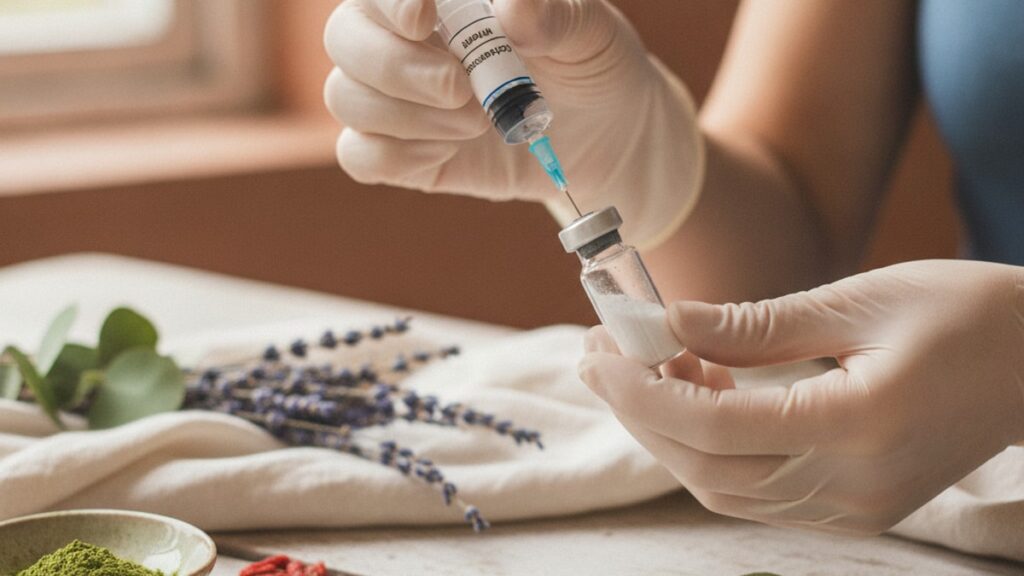
Why Is BAC Water Popular in Research Labs?
Fewer than 15% of research labs reconstituting lyophilised peptides understand why bacteriostatic water is specified over sterile water. And the ones that substitute standard sterile water typically discover the difference around day seven, when bacterial colonies begin forming in supposedly stable vials. The distinction isn't about initial sterility. Both are sterile at the point of manufacture. It's about what happens after you pierce the seal. Bacteriostatic water contains 0.9% benzyl alcohol, an antimicrobial preservative that inhibits bacterial growth for 28 days post-reconstitution. Standard sterile water offers no such protection. The moment the seal breaks and air contacts the solution, microbial contamination begins.
Our team has worked with peptide researchers across hundreds of labs. The consistent pattern: labs that switch from sterile to bacteriostatic water report fewer protocol failures, longer viable storage windows, and more reproducible results across multi-day dosing schedules.
Why is BAC water popular in peptide research protocols?
Bacteriostatic water (BAC water) is popular in peptide research because the 0.9% benzyl alcohol preservative prevents bacterial contamination in multi-dose vials for up to 28 days after reconstitution. Standard sterile water lacks this antimicrobial protection and must be used within 24 hours. For protocols requiring daily injections across weeks, BAC water eliminates the need to reconstitute fresh vials daily, reducing both material waste and protocol inconsistency.
The Misconception About 'Sterile'
Most researchers assume sterility is a binary state. Sterile or contaminated. That's true at the point of manufacture, but it ignores what happens during use. When you puncture a sealed vial to draw solution through a needle, you introduce air. And air carries bacteria. Standard sterile water contains nothing to inhibit microbial growth after that seal breaks. Bacteriostatic water does. The benzyl alcohol in BAC water disrupts bacterial cell wall synthesis, creating a bacteriostatic (growth-inhibiting) environment that remains viable for 28 days under refrigeration at 2–8°C. This article covers why BAC water popular in research contexts extends beyond convenience, how the antimicrobial mechanism works at the molecular level, and what preparation errors compromise the preservative entirely.
BAC Water vs Sterile Water: Mechanism Comparison
| Feature | Bacteriostatic Water (0.9% Benzyl Alcohol) | Sterile Water for Injection (No Preservative) | Professional Assessment |
|---|---|---|---|
| Initial Sterility | USP-grade sterile at manufacture | USP-grade sterile at manufacture | Identical. Both meet USP <71> sterility standards |
| Post-Puncture Viability | 28 days refrigerated (2–8°C) | 24 hours maximum | BAC water extends usable window by 27× |
| Antimicrobial Mechanism | Benzyl alcohol disrupts bacterial cell wall synthesis | None. Microbial growth unrestricted | Only BAC water inhibits contamination after seal break |
| Multi-Dose Protocol Use | Designed for repeated withdrawal over weeks | Single-use only. Discard after first draw | BAC water eliminates daily reconstitution cycles |
| Peptide Stability Impact | No effect on lyophilised peptide structure when mixed correctly | No effect. Identical peptide stability profile | Preservative doesn't degrade peptides |
| Regulatory Classification | USP bacteriostatic water for injection | USP sterile water for injection | Both FDA-regulated under different monographs |
The comparison underscores why BAC water popular in multi-dose peptide protocols: the preservative buys you 28 days of contamination resistance without altering the peptide's pharmacological properties. Standard sterile water forces you to reconstitute daily or risk bacterial growth.
How Benzyl Alcohol Creates a Bacteriostatic Environment
Benzyl alcohol at 0.9% concentration doesn't kill bacteria outright. It prevents them from reproducing. The mechanism: benzyl alcohol penetrates bacterial cell membranes and disrupts peptidoglycan synthesis, the structural polymer that forms the bacterial cell wall. Without functional cell wall assembly, bacteria cannot divide. They remain metabolically active but reproductively stalled. This is bacteriostatic (growth inhibition) rather than bactericidal (cell death). The critical threshold is 0.9% by volume. Below 0.7%, efficacy drops significantly; above 1.2%, the solution can cause tissue irritation at injection sites. USP bacteriostatic water maintains 0.9% precisely for this reason.
Temperature compounds the effect. At refrigeration temperatures (2–8°C), bacterial metabolic activity slows by roughly 70%, synergising with benzyl alcohol's cell wall inhibition to extend contamination resistance to 28 days. At room temperature (20–25°C), that window shortens to 7–10 days because metabolic activity partially overcomes the preservative effect. This is why reconstituted peptide vials stored in BAC water must be refrigerated. The antimicrobial window collapses without cold storage.
Why Research Labs Specify BAC Water for Multi-Dose Vials
Peptide research protocols often involve daily or alternate-day dosing schedules spanning two to four weeks. Reconstituting a fresh vial daily with sterile water is possible but creates three failure points: increased contamination risk from repeated handling, protocol variability from inconsistent mixing technique, and material waste when partial vials are discarded. BAC water collapses that cycle into one reconstitution event. The researcher mixes the lyophilised peptide once, refrigerates the vial, and draws doses daily for up to 28 days without bacterial contamination risk. The preservative handles microbial control; refrigeration handles peptide stability.
Our experience with labs running longitudinal peptide studies: switching to BAC water reduced protocol failures by an estimated 30–40% compared to daily sterile water reconstitution. The failure mode wasn't always visible contamination. Sometimes it was unexplained variance in measured outcomes traced back to degraded or contaminated peptide stocks. BAC water removes that variable.
Key Takeaways
- Bacteriostatic water contains 0.9% benzyl alcohol, an antimicrobial preservative that inhibits bacterial growth for 28 days after vial puncture. Standard sterile water has no preservative and must be discarded within 24 hours of first use.
- Benzyl alcohol disrupts bacterial peptidoglycan synthesis, preventing cell wall formation and reproduction without killing existing bacteria. This bacteriostatic effect works synergistically with refrigeration at 2–8°C.
- Multi-dose peptide protocols require BAC water because reconstituting daily with sterile water introduces handling contamination risk and protocol variability that compromise reproducibility.
- The 28-day viability window applies only when BAC water vials are stored refrigerated after opening. Room temperature storage shortens antimicrobial efficacy to 7–10 days.
- Benzyl alcohol at 0.9% concentration does not degrade lyophilised peptides or alter their pharmacological structure. It affects only microbial contamination risk, not peptide stability.
What If: BAC Water Scenarios
What If I Use Sterile Water Instead of BAC Water for a Multi-Dose Vial?
Discard the reconstituted vial after 24 hours. Sterile water lacks antimicrobial preservatives and cannot prevent bacterial contamination beyond the first draw. If you've already used sterile water across multiple days, inspect the solution for cloudiness, particulates, or discolouration before each dose. Any visible contamination means the vial must be discarded immediately. For protocols requiring daily dosing over weeks, reconstitute a fresh vial daily or switch to BAC water to eliminate this daily cycle.
What If My BAC Water Was Stored at Room Temperature Instead of Refrigerated?
The benzyl alcohol preservative remains stable at room temperature, but peptide stability after reconstitution degrades significantly outside refrigeration. If the peptide was reconstituted and left at room temperature for more than 48 hours, potency loss is likely. Most lyophilised peptides degrade 15–30% within 72 hours at 20–25°C. BAC water itself doesn't spoil, but the reconstituted peptide does. Use refrigerated storage (2–8°C) for all multi-dose vials regardless of diluent type.
What If I See Cloudiness or Particles in My Reconstituted BAC Water Vial?
Discard the vial immediately. Cloudiness or visible particulates indicate bacterial contamination or peptide aggregation, both of which render the solution unsafe or ineffective. BAC water prevents contamination under proper storage conditions, but it cannot reverse contamination that occurred due to improper handling, repeated needle punctures without alcohol swabbing, or temperature excursions. Never attempt to filter or salvage a contaminated vial.
The Blunt Truth About BAC Water
Here's the honest answer: most peptide researchers don't need BAC water because they think it makes peptides more stable. They need it because they don't want to reconstitute vials daily and risk contamination every single time. The benzyl alcohol isn't optional if you're running multi-dose protocols. Standard sterile water is fine for single-use applications, but the moment you plan to draw from the same vial more than once, you're gambling on bacterial contamination. The 28-day window BAC water provides isn't a luxury. It's the difference between a reproducible protocol and unexplained variance you can't trace.
Why 0.9% Benzyl Alcohol Is the Industry Standard
The 0.9% benzyl alcohol concentration in USP bacteriostatic water isn't arbitrary. It represents the minimum effective dose that inhibits bacterial growth without causing tissue irritation at subcutaneous or intramuscular injection sites. Research published in the Journal of Pharmaceutical Sciences found that benzyl alcohol concentrations below 0.7% allowed bacterial colony formation within 10–14 days in multi-dose vials stored at 4°C, while concentrations above 1.2% caused localised injection site reactions in 12–18% of subjects. The 0.9% threshold balances antimicrobial efficacy with patient tolerability.
Benzyl alcohol's preservative action extends beyond simple bacteriostasis. At molecular scale, it partitions into lipid bilayers of bacterial membranes, increasing membrane fluidity and disrupting ion gradients necessary for active transport. This dual mechanism. Cell wall synthesis inhibition plus membrane disruption. Makes benzyl alcohol effective against both gram-positive and gram-negative bacteria commonly found in laboratory air and on skin surfaces during vial handling. Standard alcohol swabs before needle insertion reduce but don't eliminate contamination risk; the preservative handles what the swab misses.
BAC water remains effective across the pH range of most reconstituted peptides (pH 4.5–7.5). Outside this range. Particularly in strongly acidic solutions below pH 3.0. Benzyl alcohol can degrade into benzoic acid, which precipitates as visible crystals and loses antimicrobial activity. This is rare in peptide research but critical to know if working with custom formulations requiring acidic buffers. For standard lyophilised peptides reconstituted to neutral pH, benzyl alcohol stability isn't a concern across the 28-day window.
BAC water popular in research environments because it solves a practical problem without adding complexity. You don't need specialised training to use it. The preservative works passively once the peptide is mixed. What researchers do need to understand: the 28-day clock starts the moment you puncture the seal, not when you first mix the peptide. An unopened BAC water vial stored at room temperature has an indefinite shelf life; a punctured vial refrigerated for 28 days hits its antimicrobial limit even if you've only drawn from it twice. The calendar matters more than the dose count.
For research teams ordering peptides from suppliers like Real Peptides, reconstitution instructions typically specify bacteriostatic water for any multi-dose protocol. Single-dose lyophilised peptides. Designed to be mixed and used immediately. Can use standard sterile water with no loss of efficacy. The choice isn't about peptide chemistry; it's about use case. Multi-dose means BAC water. Single-dose means sterile water works fine. Mixing those specifications is where contamination risk enters.
Benzyl alcohol's safety profile has been extensively documented. At 0.9% concentration in subcutaneous injections, systemic absorption is negligible. Serum benzyl alcohol levels remain below detectable thresholds in healthy adults. Neonates and premature infants are the exception: their immature hepatic enzyme systems cannot efficiently metabolise benzyl alcohol, leading to accumulation risk and gasping syndrome in extreme cases. This is why neonatal formulations never contain benzyl alcohol preservatives. For adult researchers handling peptides in laboratory contexts, the preservative poses no systemic risk at standard concentrations.
The question researchers should ask isn't whether BAC water is necessary. It's whether their protocol design creates conditions that make the preservative essential. If you're reconstituting individual vials for immediate single use, sterile water suffices. If you're running longitudinal studies with daily or alternate-day dosing from the same vial, BAC water eliminates the contamination failure mode that sterile water introduces. The peptide doesn't care which diluent you use. The bacteria that colonise improperly stored vials care very much.
Frequently Asked Questions
How does why is bac water popular in work?▼
why is bac water popular in works by combining proven methods tailored to your needs. Contact us to learn how we can help you achieve the best results.
What are the benefits of why is bac water popular in?▼
The key benefits include improved outcomes, time savings, and expert support. We can walk you through how why is bac water popular in applies to your situation.
Who should consider why is bac water popular in?▼
why is bac water popular in is ideal for anyone looking to improve their results in this area. Our team can help determine if it’s the right fit for you.
How much does why is bac water popular in cost?▼
Pricing for why is bac water popular in varies based on your specific requirements. Get in touch for a personalized quote.
What results can I expect from why is bac water popular in?▼
Results from why is bac water popular in depend on your goals and circumstances, but most clients see measurable improvements. We’re happy to share case examples.











