
How Concentrated Should TB-500 Be for Research? (Protocol)

TB-500 research concentration ranges from 2mg/ml to 5mg/ml depending on protocol. Reconstitution accuracy determines peptide stability and experimental



Your blog category
TB-500 research concentration ranges from 2mg/ml to 5mg/ml depending on protocol. Reconstitution accuracy determines peptide stability and experimental

TB-500 in solution is clear to slightly hazy with no color when properly reconstituted. Learn what normal vs contaminated peptide solutions look like.

TB-500 cycling requires strategic approach — learn precise timing, dosage protocols, and recovery windows to maximize therapeutic effects while minimizing

TB-500 popular in research due to its thymosin beta-4 mimicry, promoting angiogenesis, tissue repair, and anti-inflammatory effects across diverse study

TB-500 and TB500 are the same peptide — Thymosin Beta-4 fragment. The naming difference reflects branding, not chemistry. Here’s what actually matters for

TB-500 research requires precise reconstitution, temperature control, and dosing protocols. Learn the exact handling standards that ensure peptide

TB-4 (Thymosin Beta-4) regulates actin polymerization to accelerate tissue repair, reduce inflammation, and promote angiogenesis through proven cellular

TB-4 cellular effects appear in 24–48 hours, but measurable tissue outcomes take 7–14 days minimum. Research timelines depend on injury model and dosing

TB-4 shows promising safety in animal models and early human trials, though long-term human data remains limited. Research highlights regenerative
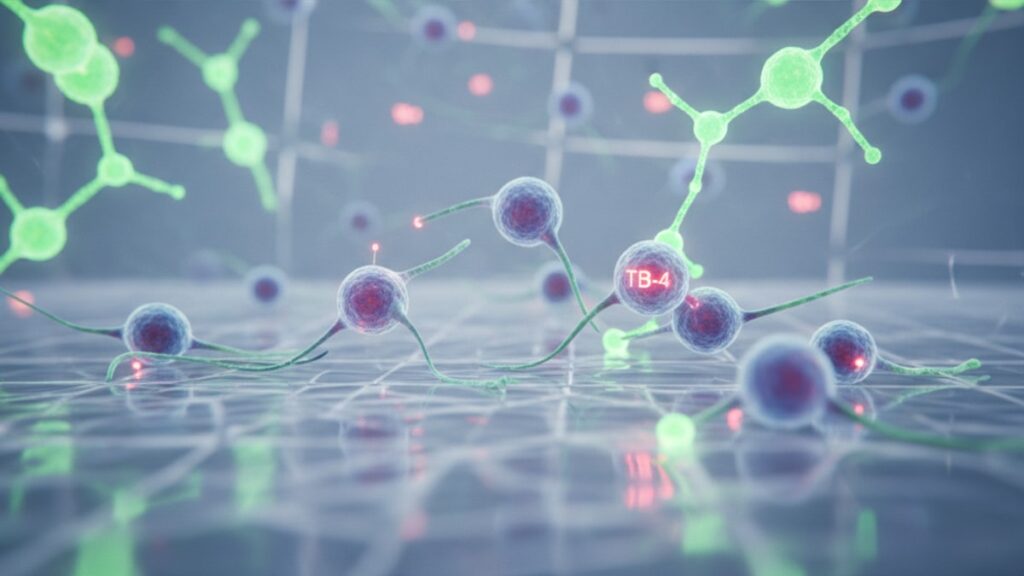
TB-4 (Thymosin Beta-4) enhances cell migration by binding actin, promoting cytoskeletal remodeling during wound healing and tissue repair at molecular
