





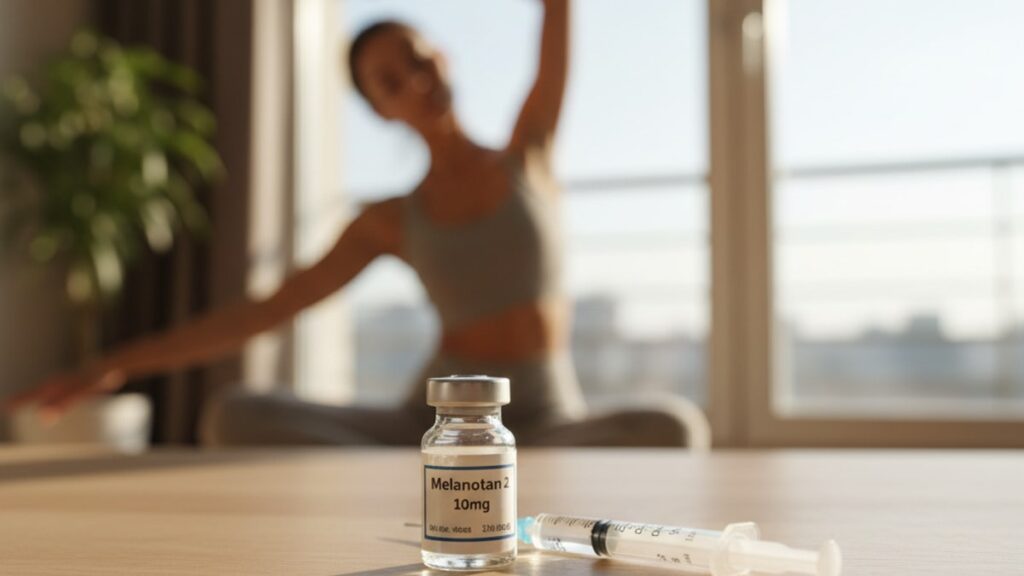
When it comes to peptide research, precision isn't just a goal; it's the entire foundation upon which credible results are built. We've seen countless studies derailed by something as seemingly simple as improper handling or a questionable source compound. That's why our team decided to put together a comprehensive breakdown on one of the most frequently discussed peptides in research circles: Melanotan 2. If you're wondering how to use Melanotan 2 10mg for your laboratory work, you've come to the right place. This isn't just a set of instructions; it's a protocol forged from years of collective experience in the biotech space.
We're going to walk through everything. And we mean everything. From the moment you receive your vial to the final stages of your research protocol, we'll cover the non-negotiable steps required to ensure your work is valid, repeatable, and safe. Let's be honest, the internet is filled with conflicting, often dangerous, advice. Our goal here is to cut through that noise with clear, professional guidance that reflects the standards we uphold here at Real Peptides. Your research deserves nothing less than impeccable starting materials and flawless technique.
What Exactly is Melanotan 2? A Quick Refresher
Before diving into the 'how,' it’s crucial to understand the 'what.' Melanotan 2 (often abbreviated as MT-2) is a synthetic analogue of a naturally occurring peptide hormone called alpha-melanocyte-stimulating hormone (α-MSH). In the body, α-MSH is a key player in stimulating melanogenesis—the process that produces melanin, the pigment responsible for skin and hair color. It does this by interacting with a family of receptors known as melanocortin receptors.
Now, this is where it gets interesting for researchers. Unlike its cousin, Melanotan 1, which is more selective, MT-2 is a non-selective agonist. This means it binds to several different melanocortin receptors, not just the one primarily responsible for tanning (MC1R). It also has a strong affinity for MC3R, MC4R, and MC5R, which are involved in regulating everything from metabolism and appetite to sexual function and inflammation. This broad activity profile is what makes MT-2 such a compelling—and complex—subject for scientific investigation. It's a powerful tool, and like any powerful tool, it demands respect and a deep understanding of its mechanism.
The Critical First Step: Sourcing High-Purity MT-2
We can't stress this enough: your research is only as good as your starting materials. You can have the most sophisticated lab equipment and a perfectly designed protocol, but if your peptide is under-dosed, contaminated, or has an incorrect amino acid sequence, your results will be completely invalid. It's a catastrophic point of failure that is, thankfully, avoidable.
This is where the integrity of your supplier becomes the most critical variable. In a market flooded with low-grade alternatives, finding a source committed to verifiable purity is paramount. While many providers focus on volume, we've built our reputation at Real Peptides on a foundation of small-batch synthesis. Why? Because it gives us meticulous control over the final product. Every vial of Melanotan 2 MT2 10mg we produce undergoes rigorous third-party testing to confirm its purity and exact amino-acid sequencing. This isn't a marketing gimmick; it's a scientific necessity. Without that guarantee, you're essentially working blind, and that's not how groundbreaking research happens.
Think of it this way: sourcing your peptide is the first data point in your entire study. Get it wrong, and every subsequent piece of data is compromised. Our commitment to this principle is unwavering, whether it’s for MT-2, advanced compounds like Tirzepatide, or foundational research peptides like BPC 157.
Reconstitution: The Most Important Procedure You'll Perform
Once you have a high-purity, lyophilized (freeze-dried) peptide, the next step is reconstitution. This is the process of mixing the powder with a sterile liquid to prepare it for use in your research. It sounds simple, but this is where precision is absolutely non-negotiable. One small mistake here can alter the concentration and ruin your entire experiment. Let's get this right.
First, gather your materials:
- Your vial of lyophilized Melanotan 2.
- A vial of Bacteriostatic Water. We recommend this over sterile water for multi-use vials because it contains 0.9% benzyl alcohol, which acts as a preservative and prevents bacterial growth.
- An insulin syringe for accurate measurement (typically 1ml/100 units).
- Alcohol swabs for sterilization.
Here’s our team’s step-by-step lab protocol:
- Preparation: Let the MT-2 and bacteriostatic water vials come to room temperature if they were refrigerated. This prevents condensation from forming inside the vials.
- Sterilization: Vigorously wipe the rubber stoppers of both vials with an alcohol swab. This minimizes the risk of contamination. A simple step, but a vital one.
- Drawing the Water: Determine how much bacteriostatic water you'll add. This will define your final concentration. For a 10mg vial of MT-2, a common practice is to add either 1ml or 2ml of water. Let's break down the math:
- Using 1ml of Water: If you add 1ml (which is 100 units on an insulin syringe) to a 10mg vial, your solution will have a concentration of 10mg per 1ml. Since 1mg = 1000mcg, every 0.01ml (or 1 unit on the syringe) will contain 100mcg of MT-2.
- Using 2ml of Water: If you add 2ml (200 units) to a 10mg vial, your solution will be half as concentrated: 5mg per 1ml. In this case, every 0.02ml (or 2 units on the syringe) will contain 100mcg of MT-2. The 2ml approach can make measuring smaller doses a bit easier.
- The Injection: Draw your desired amount of bacteriostatic water into the syringe. Insert the needle through the rubber stopper of the MT-2 vial. Here’s the key: aim the needle at the side of the glass vial. Depress the plunger slowly, allowing the water to trickle down the side of the vial rather than spraying it directly onto the lyophilized powder. This gentle introduction is crucial for preserving the fragile structure of the peptide.
- Mixing (Gently!): Once all the water is in, remove the syringe. Now, gently swirl the vial in a circular motion or roll it between your palms until all the powder has dissolved. DO NOT SHAKE THE VIAL. Shaking can damage the peptide molecules, rendering them ineffective. The solution should be completely clear once dissolved. If it's cloudy or has particulates, it should not be used.
Done correctly, you now have a precisely concentrated solution ready for your research protocol.
Understanding Dosing Protocols for Research
Before we go any further, it's essential to state this unequivocally: Melanotan 2 is a research chemical. It is not approved by the FDA for human consumption and should only be handled by qualified professionals in a controlled laboratory setting. The information here is for research and educational purposes only.
In a research context, dosing is all about establishing a dose-response curve and observing effects at various concentrations. Our experience in the lab, and a review of the existing scientific literature, shows one consistent principle: start low and titrate up. This is the only responsible way to assess a subject's response and minimize potential adverse effects.
A typical protocol might begin with a very small test dose, perhaps as low as 50-100mcg (0.05ml-0.1ml if you used 1ml of water for reconstitution). This allows the researcher to observe for any immediate sensitivities.
From there, many research protocols described in scientific literature involve two phases:
- Loading Phase: This involves administering a dose more frequently (e.g., daily) to reach a desired saturation level. Doses in this phase often range from 250mcg to 500mcg per administration.
- Maintenance Phase: Once the desired effects are observed, the frequency of administration is often reduced (e.g., 2-3 times per week) to maintain the state. Doses might remain the same or be slightly lowered.
The exact dosage and frequency are variables that your specific research aims will determine. The critical takeaway is the methodology: start low, observe carefully, and adjust methodically. There is no one-size-fits-all number. Every research subject is different, and a cautious, data-driven approach is the hallmark of good science.
Administration Techniques in a Lab Setting
In virtually all published research, Melanotan 2 is administered via subcutaneous (SubQ) injection. This method involves injecting the solution into the fatty layer just beneath the skin, allowing for slow and steady absorption.
Proper sterile technique is, once again, non-negotiable. The chosen injection site (commonly the abdomen, thigh, or gluteal region) should be cleaned thoroughly with an alcohol swab. A new, sterile insulin syringe should be used for every single administration to prevent infection and cross-contamination. This is basic lab safety, but it bears repeating. For those who want a more visual breakdown of peptide science and lab best practices, we often explore these topics in depth on our YouTube channel.
Storage: Protecting Your Research Investment
Peptides are delicate molecules. Improper storage can degrade them quickly, wasting your resources and invalidating your work. Protecting your investment is simple if you follow these rules.
-
Before Reconstitution (Lyophilized Powder): In its freeze-dried state, Melanotan 2 is quite stable. For long-term storage (months to years), it should be kept in a freezer (-20°C or colder). For short-term storage (a few weeks), a refrigerator is acceptable. Critically, it must be protected from light, which can degrade the compound over time. Our vials are designed to help with this, but keeping them in their box is always best practice.
-
After Reconstitution (Liquid Solution): Once you've mixed the peptide with bacteriostatic water, it becomes much less stable. The reconstituted solution must be stored in a refrigerator (around 2-8°C). Do not freeze it. When stored properly in the fridge, a reconstituted vial of MT-2 should maintain its potency for approximately 30 days. After this point, degradation may begin to occur, and for the sake of data integrity, it should be discarded.
Think of it like any other sensitive biological reagent in your lab. You wouldn't leave an enzyme out on the bench, and peptides demand the same level of care.
| Feature | Melanotan 1 (Afamelanotide) | Melanotan 2 |
|---|---|---|
| Mechanism | Selective agonist of the MC1 receptor. | Non-selective agonist of MC1, MC3, MC4, and MC5 receptors. |
| Primary Research | Primarily investigated for its photoprotective effects. | Studied for pigmentation, appetite, metabolism, and sexual function. |
| Half-Life | Shorter half-life, requiring more frequent administration. | Longer half-life, allowing for less frequent dosing schedules. |
| Side Effect Profile | Generally associated with fewer side effects in studies. | Broader side effect profile due to wider receptor activation. |
| Common Observations | Nausea and flushing are possible but less frequent. | Nausea, flushing, appetite suppression, and libido effects are common. |
Potential Side Effects and Observations in Research
Because MT-2 activates multiple melanocortin pathways, it's associated with a range of observable side effects in research subjects. Understanding these is key to interpreting your results. The most commonly reported effects in scientific literature include:
- Nausea: This is perhaps the most common initial side effect. It's often dose-dependent and tends to subside with continued administration as the subject acclimates. This is a primary reason for the 'start low' protocol.
- Facial Flushing: A temporary warming and reddening of the face can occur shortly after administration.
- Appetite Suppression: This is a direct result of MT-2's action on the MC4 receptor, which is a key regulator of hunger and satiety in the brain. This effect has made MT-2 a subject of interest in metabolic research, with some studies exploring compounds like Retatrutide for similar pathways.
- Increased Libido & Spontaneous Erections: This is another well-documented effect, mediated by its influence on pathways in the central nervous system. In fact, a derivative of MT-2, Bremelanotide (PT-141), was developed specifically to isolate and study this effect.
These are not just random occurrences; they are direct, predictable consequences of the peptide's mechanism of action. Observing these effects can, in a way, confirm that the compound is active and binding to its target receptors.
A Note on Purity and Why It's Non-Negotiable
We've touched on this already, but it's worth a dedicated section. The world of peptide research is plagued by an undercurrent of low-quality products. When a peptide is synthesized, there's a chance for impurities to arise—things like leftover solvents, truncated amino acid sequences, or other unintended byproducts. A product advertised as '99% pure' means that 1% is something else. What is that 1%? It could be harmless, or it could be something that dramatically alters your research outcomes.
That's why our process at Real Peptides is so relentlessly focused on quality control. We don't just aim for purity; we verify it with High-Performance Liquid Chromatography (HPLC) and Mass Spectrometry (MS) analysis. This ensures that what's on the label is exactly what's in the vial. This unflinching commitment to quality is the thread that runs through our entire catalog, from foundational peptides to complex stacks like our Tesamorelin Ipamorelin Growth Hormone Stack.
When you're ready to conduct serious research, you need a partner who takes the science as seriously as you do. You need consistency, reliability, and transparency. That's the bedrock of our entire operation.
Navigating the Research Landscape Responsibly
Conducting research with powerful compounds like Melanotan 2 carries a significant responsibility. It requires a proper lab environment, accurate measuring tools, and a deep, abiding respect for safety protocols. It's about more than just getting results; it's about conducting sound, ethical science.
Every step, from reconstitution to administration to data logging, must be performed with methodical precision. The quality of your work reflects not only on you as a researcher but on the scientific community as a whole. We encourage all of our clients to approach their work with the diligence and professionalism it deserves.
This detailed approach is the key to unlocking the true potential of peptide research. It's a complex but incredibly rewarding field, and doing it right is the only way to contribute meaningful knowledge. If you're ready to begin your next project with compounds you can trust, we invite you to explore our full peptide collection. We're here to provide the high-purity tools you need to do your best work. Get Started Today.
Frequently Asked Questions
How much bacteriostatic water should I use for a 10mg vial of MT-2?
▼
We’ve found that using 1ml or 2ml of bacteriostatic water are the most common and practical options. Using 1ml will yield a concentration of 100mcg per 0.01ml, while 2ml yields 100mcg per 0.02ml, which can make measuring smaller doses easier.
Can I use sterile water instead of bacteriostatic water?
▼
You can, but it’s not ideal for multi-use vials. Sterile water has no preservative, so once opened, the risk of bacterial contamination increases significantly. Bacteriostatic water contains benzyl alcohol to keep the solution sterile for up to 28-30 days.
What’s the difference between mcg and mg?
▼
These are units of mass. One milligram (mg) is equal to 1,000 micrograms (mcg). It’s a critical distinction in peptide research, as doses are almost always measured in the much smaller microgram unit.
How long does reconstituted Melanotan 2 last in the fridge?
▼
When reconstituted with bacteriostatic water and stored properly in a refrigerator (not frozen), Melanotan 2 should remain stable and potent for approximately 30 days. After this period, its integrity may begin to degrade.
Why is starting with a low dose so important for research?
▼
Starting with a low dose (e.g., 50-100mcg) is a fundamental safety and efficacy protocol. It allows the researcher to assess the subject’s initial response and sensitivity, minimizing the risk of adverse effects like nausea before titrating up to a full research dose.
Is Melanotan 2 the same as PT-141?
▼
No, they are different compounds, but they are related. PT-141 (Bremelanotide) is an active metabolite of Melanotan 2. It was specifically developed to isolate the libido-enhancing effects of MT-2 without the strong pigmentation effects.
Should the vial be shaken after reconstitution?
▼
Absolutely not. Peptides are complex, fragile protein chains. Shaking the vial can shear these chains apart, destroying the molecule and rendering it useless. Always swirl or gently roll the vial to dissolve the powder.
What are common signs of a low-purity product?
▼
Signs can include a cloudy or milky appearance after reconstitution, particulates that won’t dissolve, or a complete lack of expected effects (or unexpected ones). The only true way to know is through third-party lab testing, which is why we insist on it.
How do I properly measure a small dose like 100mcg?
▼
This requires an insulin syringe, which is marked in units. If you reconstituted a 10mg vial with 1ml of water, then 100mcg would be exactly 1 unit on the syringe. If you used 2ml of water, 100mcg would be 2 units.
Can lyophilized MT-2 be stored at room temperature?
▼
For very short periods (e.g., during shipping), it is generally stable. However, for any storage longer than a few days, it should be kept in a refrigerator or, for long-term storage, a freezer to prevent gradual degradation.
What is the ‘loading phase’ I see mentioned in research literature?
▼
The loading phase refers to an initial period of more frequent administration (often daily) to quickly bring the subject to a desired level of melanocortin receptor saturation. This is typically followed by a less frequent ‘maintenance phase’.
Does light affect the stability of MT-2?
▼
Yes, like many peptides, Melanotan 2 is sensitive to UV light and prolonged exposure to bright light. This can cause degradation over time. It’s best practice to store vials, both lyophilized and reconstituted, in a dark place like their original box.











