





What is Glutathione Used for in the Body?
Inside every single cell of your body, a silent, relentless protector is at work. It's not a flashy hormone or a famous vitamin you hear about every day. It's a humble tripeptide, a small protein composed of just three amino acids. And yet, its presence—or absence—can dictate the health, resilience, and function of virtually every system you possess. We're talking about glutathione.
Our team has spent years focused on the intricate world of peptides and their roles in biological systems. And honestly, few compounds command the same level of foundational respect as glutathione. It’s often dubbed the 'master antioxidant,' but that title, while accurate, barely scratches the surface of its sprawling responsibilities. Understanding what is glutathione used for in the body isn't just an academic exercise; it's about grasping one of the core pillars of cellular wellness and functional biology. It’s a mechanism that underpins everything from how you process toxins to how your immune system mounts a defense. Let's get into what really makes it tick.
The Molecular Guardian: What Exactly Is Glutathione?
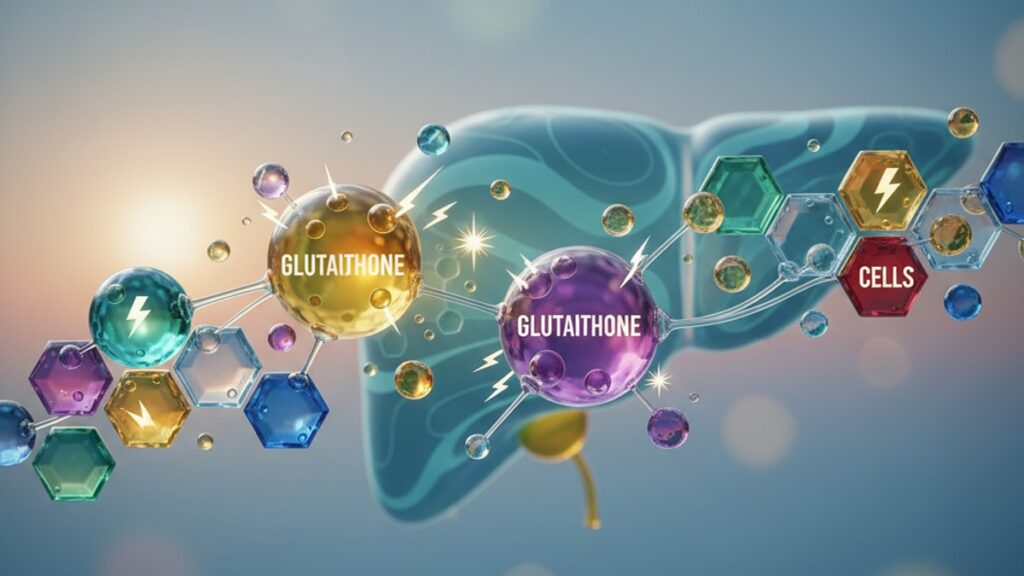
Before we can unpack its functions, we need to know what it is. Glutathione (GSH) is a tripeptide, which is just a technical way of saying it's a molecule made from three amino acids: cysteine, glutamic acid, and glycine. Your body produces it, primarily in the liver, which is a clue to one of its most formidable jobs.
It exists in two primary states within the cell: the reduced form (GSH), which is the active, 'working' state, and the oxidized form (GSSG), which is the 'used' state. Think of GSH as a fully charged battery, ready to donate an electron to neutralize a threat. Once it does its job, it becomes GSSG, the discharged battery. A healthy cell is incredibly efficient at recharging GSSG back into GSH using an enzyme called glutathione reductase. The ratio of GSH to GSSG is actually a critical biomarker our team often sees referenced in cellular health research—it's a direct indicator of oxidative stress and the cell's ability to handle toxic loads. A high ratio of GSH to GSSG means the cell is in good shape. A low ratio? That's a red flag.
This constant cycle of depletion and regeneration is happening trillions of times over, every second of every day. It's a dynamic, unceasing process that keeps your cellular machinery from grinding to a halt under a barrage of metabolic and environmental pressures.
The Unflinching Antioxidant: Neutralizing Chaos
This is glutathione's most famous role. Every day, your body's normal metabolic processes—like turning food into energy—create unstable molecules called free radicals or reactive oxygen species (ROS). It's unavoidable. Add in external factors like pollution, radiation, and processed foods, and the load of these damaging molecules skyrockets. Free radicals are like molecular vandals; they are missing an electron and will steal one from any nearby molecule, including DNA, proteins, and cell membranes. This theft causes a chain reaction of damage known as oxidative stress.
Oxidative stress isn't a vague wellness term; it's a direct, physical assault on your cells. It's linked to accelerated aging and a host of chronic health issues. This is where glutathione steps in as the commander of the antioxidant defense force. It directly quenches these free radicals by donating one of its own electrons, effectively disarming them before they can cause catastrophic damage. It's a sacrificial act that protects the far more important cellular structures around it.
But it doesn't stop there. Glutathione also recycles other antioxidants. Vitamins C and E, for instance, also donate electrons to fight free radicals. In doing so, they become oxidized and inactive. Glutathione is the master recycler, donating electrons back to them and restoring them to their active, fighting state. This is why it’s not just an antioxidant; it’s the one that keeps the entire antioxidant system running. It's comprehensive.
The Body's Master Detoxification System
If your cells had a sanitation department, glutathione would be running the entire operation. Your liver is the body's primary filtration plant, and Phase II detoxification is where it neutralizes and prepares toxins for excretion. Glutathione is the undisputed star of this process.
Here’s how it works: a family of enzymes called glutathione S-transferases (GSTs) uses glutathione to bind directly to toxins. This process, called conjugation, transforms fat-soluble toxins—which are difficult for the body to eliminate and can get stored in fat tissue—into water-soluble compounds. Once they're water-soluble, they can be easily flushed out of the body through urine or bile. We're talking about a massive range of harmful substances: heavy metals like mercury and lead, pollutants, pesticides, carcinogens from smoke, drug metabolites, and countless other xenobiotics (foreign chemical substances). Without sufficient glutathione, these toxins would accumulate, placing a tremendous burden on the body and contributing to cellular dysfunction. We can't stress this enough: a sluggish detoxification system is a gateway to systemic problems, and glutathione levels are a critical, non-negotiable element of that system's efficiency.
Fueling and Protecting the Immune Response
You want your immune cells to be aggressive, fast, and resilient. But the very processes they use to destroy pathogens—like producing bursts of free radicals—can also damage the immune cells themselves. It’s a classic case of friendly fire. Glutathione acts as the essential protective shield for these frontline soldiers.
Our experience shows that a robust immune response is metabolically demanding and generates a huge amount of oxidative stress. Lymphocytes, the white blood cells at the heart of your adaptive immune system, require adequate glutathione to function properly. It’s needed for their proliferation (so you can make more of them when needed), for orchestrating the attack on invaders, and for protecting them from the oxidative fallout of their own weaponry. Low glutathione levels can leave your immune system handicapped, less able to mount a swift and effective response. It’s not just about having enough soldiers; it's about making sure those soldiers are well-equipped and well-protected. Glutathione does both.
Beyond Defense: Building, Repairing, and Regulating
Glutathione's job description is surprisingly vast. It's not just about defense and cleanup; it’s also deeply involved in fundamental cellular processes that are essential for life.
It plays a role in DNA synthesis and repair, helping to ensure your genetic blueprint remains stable and error-free. It’s involved in protein synthesis, the building of new enzymes and structural components. It also helps regulate apoptosis, or programmed cell death. This sounds morbid, but it's a vital housekeeping process that allows the body to safely eliminate old, damaged, or cancerous cells before they can cause problems. Glutathione helps modulate this process, ensuring it happens when it should and doesn't get out of control.
Essentially, from the creation of new cellular components to the orderly removal of old ones, glutathione is there, acting as a critical regulator and facilitator. Its influence is woven into the very fabric of the cell cycle.
When Glutathione Levels Falter
So, if the body makes its own glutathione, what's the problem? The issue is that the demands of modern life can easily outstrip the body's production capacity. Several factors are known to deplete our precious glutathione reserves:
- Age: Natural production begins to decline as we get older, often starting around our 40s.
- Chronic Stress: Both emotional and physical stress generate a massive amount of free radicals, forcing glutathione to work overtime.
- Environmental Toxins: Constant exposure to pollutants, heavy metals, and chemicals in our air, water, and food places a heavy, relentless burden on our detoxification pathways.
- Poor Diet: A diet lacking in the amino acid precursors and cofactors needed to synthesize glutathione can cripple production.
- Chronic Illness & Infections: These states create systemic inflammation and oxidative stress, draining glutathione stores at an accelerated rate.
It’s a perfect storm. Just when we need it most, our ability to produce and maintain adequate levels of this master antioxidant is compromised. This deficit can leave cells vulnerable and systems struggling to keep up. It's becoming increasingly challenging.
Approaches to Supporting Glutathione Levels for Research
Given its importance, a significant area of biological research is focused on how to effectively support and maintain optimal glutathione levels. For scientists and researchers, understanding the different pathways is crucial for designing effective studies. Here's a breakdown of the primary methods being investigated.
| Approach | Mechanism of Action | Considerations for Research |
|---|---|---|
| Dietary Precursors | Provides the raw building blocks (cysteine, glycine, glutamic acid) for the body to synthesize its own glutathione. | N-acetylcysteine (NAC) is a well-studied precursor for cysteine. Sulfur-rich foods (e.g., whey protein, cruciferous vegetables) also support synthesis. This is an indirect, but endogenously controlled, method. |
| Oral Supplementation | Attempts to deliver pre-formed glutathione directly to the system. | Standard oral glutathione has historically shown poor bioavailability, as it can be broken down by stomach acid. Liposomal forms encapsulate the glutathione in lipids to improve absorption, a key variable in study design. |
| Intravenous (IV) Admin | Delivers glutathione directly into the bloodstream, bypassing the digestive system entirely. | Offers 100% bioavailability, making it a powerful tool for achieving rapid and significant increases in circulating glutathione. This is often used in clinical research settings where precise dosing and immediate effect are required. |
| Exogenous Peptides | Involves administering the complete, pre-formed tripeptide for direct study in biological systems. | For laboratory and research purposes, using a pure, stable form of Glutathione is essential for accurate, repeatable results. The purity and exact sequencing, which we guarantee at Real Peptides, become paramount. |
For researchers dedicated to exploring cellular health, having access to impeccably pure compounds is non-negotiable. Our commitment at Real Peptides is to provide these tools. When a study is investigating the direct effects of this tripeptide, the integrity of the sample is everything. That’s why our small-batch synthesis process is so meticulous, ensuring that what you're studying is precisely what it's supposed to be. This rigorous standard applies across our full range of peptides, empowering researchers to produce data they can trust. It's a critical distinction.
The Future of Glutathione Research
The scientific community's interest in what is glutathione used for in the body is only growing. Current research is exploring its potential implications in a wide array of areas, from neurodegenerative conditions and cardiovascular health to athletic performance and the aging process itself. The more we learn about the mechanisms of oxidative stress and toxicity, the more central glutathione's role appears to be.
Our team is constantly monitoring this evolving landscape. We see studies examining how glutathione status impacts mitochondrial function, a key factor in energy and longevity. We see others looking at its role in modulating inflammation and its potential to support cognitive health. The sheer breadth of its influence makes it a formidable subject of investigation. It’s a field ripe for discovery, and we believe the insights gained in the coming years will be transformative.
To move this research forward, scientists need partners they can rely on. They need materials that won't introduce variables or compromise the integrity of their work. That's our entire focus. When you need to Find the Right Peptide Tools for Your Lab, you're not just looking for a substance in a vial; you're looking for reliability, consistency, and purity. You're looking for a foundation upon which to build credible, groundbreaking science. That's the standard we set for ourselves and for every product we offer.
The story of glutathione is a perfect example of the profound impact that a single, elegant molecule can have on a complex biological system. It's a defender, a detoxifier, a regulator, and a regenerator. While it may work silently behind the scenes, its performance is absolutely critical to the health and resilience of every cell. As research continues to peel back the layers of its functionality, its reputation as the 'master antioxidant' will only become more deserved. And we'll be here to support the researchers who are leading the way.
Frequently Asked Questions
What’s the difference between the GSH and GSSG forms of glutathione?
▼
GSH (reduced glutathione) is the active, antioxidant form ready to donate an electron. GSSG (oxidized glutathione) is the ‘used’ form after it has neutralized a free radical. A healthy cell constantly recycles GSSG back into GSH.
Why is glutathione often called the ‘master antioxidant’?
▼
It’s called the master antioxidant not only because it directly neutralizes free radicals, but because it also has the unique ability to regenerate other antioxidants, like vitamins C and E, restoring them to their active forms.
Can you get enough glutathione from food alone?
▼
While some foods contain glutathione, it’s poorly absorbed. It’s more effective to consume foods rich in its precursors—cysteine, glycine, and glutamic acid—like whey protein and sulfurous vegetables, to support your body’s own production.
How does aging affect the body’s glutathione levels?
▼
The body’s natural production of glutathione tends to decline with age, often starting in our 40s. This reduction can leave cells more vulnerable to oxidative stress, which is a key factor in the aging process itself.
What is the liver’s role in glutathione production?
▼
The liver is the primary site of glutathione synthesis in the body. This is fitting, as the liver is also the main organ for detoxification, a process that heavily relies on glutathione to neutralize and excrete toxins.
Why is purity so critical for research-grade glutathione?
▼
In a research setting, any impurity can act as a variable, skewing results and making data unreliable. At Real Peptides, we ensure exacting purity through small-batch synthesis so that researchers are studying the precise effects of the glutathione molecule alone.
Does chronic stress really impact glutathione levels?
▼
Yes, absolutely. Both psychological and physical stress generate a high volume of free radicals, increasing oxidative stress. This forces the body to use up its glutathione stores more quickly to combat the damage, leading to depletion over time.
What are glutathione precursors?
▼
Precursors are the amino acid building blocks the body uses to make its own glutathione. The three precursors are cysteine, glutamic acid, and glycine. N-acetylcysteine (NAC) is a common supplement used to provide cysteine.
How does glutathione help with heavy metal detoxification?
▼
Glutathione contains a sulfur group that acts like a magnet for heavy metals like mercury, lead, and cadmium. It binds directly to these metals, creating a compound that is water-soluble and can be safely excreted by the body.
Are there reliable tests for measuring glutathione levels?
▼
Yes, there are laboratory tests that can measure glutathione levels in red blood cells. The most informative test often looks at the ratio of active GSH to oxidized GSSG, which provides a snapshot of the body’s oxidative stress burden.
Can other peptides or compounds influence glutathione pathways?
▼
Yes, the body’s antioxidant systems are highly interconnected. Certain research compounds and peptides are studied for their ability to upregulate the body’s own production of antioxidants, including glutathione, by stimulating pathways like Nrf2.
Is there a difference between liposomal and regular oral glutathione?
▼
Standard oral glutathione is often broken down in the digestive tract, leading to poor absorption. Liposomal glutathione encapsulates the molecule in a lipid (fat) layer, which protects it from digestion and can significantly improve its bioavailability.











