

How to Read Epithalon COA — Purity & Verification Guide
Reading an epithalon COA means verifying HPLC purity ≥98%, correct



Reading an epithalon COA means verifying HPLC purity ≥98%, correct

Calculate FOXO4-DRI concentration accurately using molecular weight, solvent volume, and

Reconstitute FOXO4-DRI peptide with bacteriostatic water, then inject subcutaneously into

FOXO4-DRI reconstitution requires sterile bacteriostatic water, proper concentration ratios, and

Rotating FOXO4-DRI injection sites prevents lipohypertrophy, maintains consistent peptide absorption,

Learn how to read FOXO4-DRI COA documentation, verify peptide purity

Store FOXO4-DRI long term at −20°C before reconstitution; once mixed,

FOXO4-DRI requires precise reconstitution, dosing at 5-10mg subcutaneously every 3-5

FOXO4-DRI vials range from 5mg to 20mg, requiring precise reconstitution

FOXO4-DRI is typically administered at 5–10mg daily via subcutaneous injection
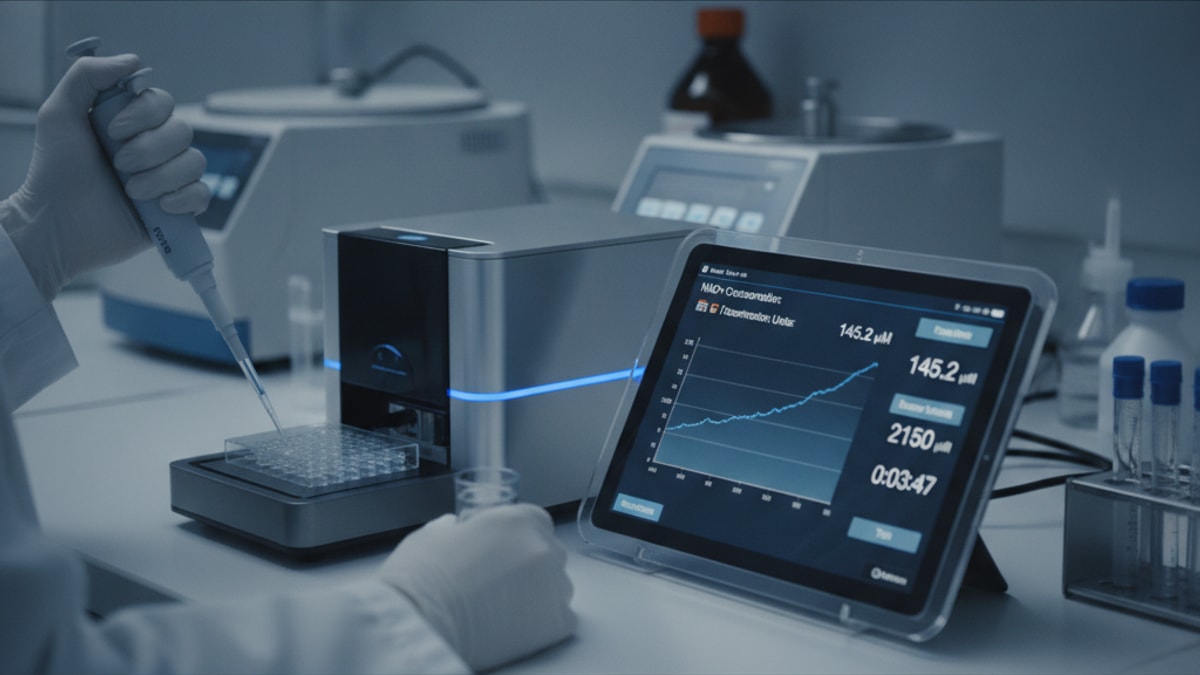
Calculate NAD+ concentration using enzymatic cycling assays or HPLC. Learn

NAD+ reconstitution requires bacteriostatic water added slowly along vial walls

Subcutaneous NAD+ injection requires precise technique — needle angle, site
NAD+ degrades rapidly at room temperature but remains stable for

Rotating NAD+ injection sites prevents tissue damage, lipohypertrophy, and absorption

NAD+ reconstitution errors compromise peptide integrity before injection. Learn temperature

Third-party HPLC testing, sterility assays, and COA verification confirm NAD+

Learn to read NAD+ COA reports with confidence. Understand purity

NAD+ cycles require precise timing and dosing protocols to maximize

NAD+ research documentation spans 11,000+ peer-reviewed studies. Evidence shows age-related

Choose NAD+ vial size based on protocol duration, injection frequency,
