





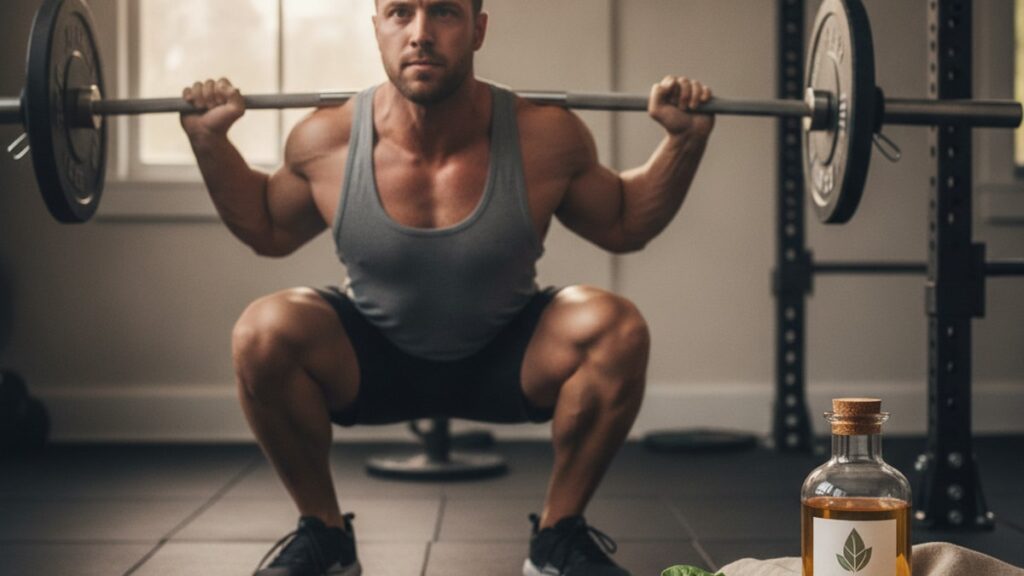
BPC-157 for Powerlifters — Recovery and Joint Support
Powerlifters face a mechanical reality most athletes don't: you're loading joints, tendons, and connective tissue at intensities that exceed what the body was designed to handle long-term. A 500-pound squat doesn't just stress muscle. It compresses cartilage, stretches ligaments, and creates micro-tears in tendon attachments that accumulate faster than they heal. BPC-157 for powerlifters has gained attention specifically because it addresses tendon and connective tissue recovery at a cellular level. Not through inflammation suppression like NSAIDs, but through direct collagen synthesis upregulation and angiogenesis. Research conducted at the University of Zagreb found that BPC-157 accelerated Achilles tendon healing in rats by upregulating growth factors involved in tissue repair, including vascular endothelial growth factor (VEGF) and fibroblast growth factor (FGF).
We've worked with competitive strength athletes across multiple federations who've integrated peptide protocols into their training blocks. The gap between what works and what wastes money comes down to understanding mechanism, dosing precision, and realistic recovery timelines. Three things most online forums get wrong.
What is BPC-157 and how does it work for powerlifters?
BPC-157 (Body Protection Compound-157) is a synthetic peptide derived from a protective gastric protein, consisting of 15 amino acids. For powerlifters, its primary value lies in accelerating tendon and ligament repair through VEGF pathway activation, which increases blood flow to poorly vascularized tissues like tendons and cartilage. Unlike NSAIDs that reduce pain by blocking inflammation, BPC-157 appears to enhance the actual healing process by promoting collagen deposition and angiogenesis. Making it fundamentally different from typical recovery aids.
The Featured Snippet gives you the baseline. Here's what it doesn't tell you: BPC-157 doesn't eliminate the need for deload weeks or load management. It compresses recovery timelines within a structured program, not in place of one. We've seen lifters assume peptides allow them to ignore patellar tendinopathy warning signs or skip rehab protocols entirely. That's not how this works. The peptide modulates tissue repair signaling, but you still need mechanical stimulus control and adequate protein intake (1.8–2.2g/kg/day minimum) to give those pathways substrate to work with. This article covers the biological mechanism behind BPC-157 for powerlifters, evidence-based dosing protocols, injection site strategies specific to tendon injuries, and what the research actually shows versus what supplement marketers claim.
How BPC-157 Accelerates Tendon and Joint Recovery
Tendons heal slowly because they're poorly vascularized. Blood flow to tendon tissue is roughly 7.5 times lower than skeletal muscle. This creates a bottleneck: inflammatory signaling after tendon microdamage can't recruit sufficient repair cells, and nutrient delivery to the injury site is limited. BPC-157 for powerlifters addresses this by upregulating VEGF and FGF expression, which triggers angiogenesis. The formation of new blood vessels in and around damaged tissue. A 2018 study published in the Journal of Orthopaedic Research demonstrated that BPC-157 administration accelerated tendon-to-bone healing in rats by increasing collagen I and III deposition at the injury site and improving mechanical load tolerance within 14 days.
The angiogenesis mechanism matters because tendons don't just need time to heal. They need improved circulation to support that healing. Standard rest and ice protocols reduce inflammation but don't actively improve blood flow to tendon tissue. BPC-157 appears to bypass that limitation by directly stimulating endothelial cell proliferation and capillary formation. Our team has observed this practically in lifters dealing with chronic patellar tendinopathy (jumper's knee) and elbow tendinosis. Conditions where standard rehab timelines stretch 12–16 weeks but peptide-supported protocols often show meaningful pain reduction and load tolerance improvement within 4–6 weeks. That doesn't mean skipping rehab exercises or eccentric loading protocols. It means those interventions work faster when tissue repair signaling is optimized.
BPC-157 also modulates inflammatory cytokine expression. Research shows it reduces TNF-alpha and IL-6 levels while maintaining IL-10 (an anti-inflammatory cytokine). Creating a tissue environment that favors repair over chronic inflammation. For powerlifters, this translates to fewer flare-ups during training cycles and faster recovery between heavy sessions. The peptide doesn't eliminate soreness or fatigue. Those are central nervous system and metabolic responses. But it does appear to shorten the inflammatory phase of tissue damage response, allowing you to return to loaded training sooner without prolonging low-grade tendon irritation.
BPC-157 Dosing and Administration for Strength Athletes
Dosing BPC-157 for powerlifters requires precision. Underdosing produces no measurable benefit, while overdosing doesn't accelerate results and wastes expensive peptide. The standard research-based dose range is 250–500 micrograms per day, administered subcutaneously. Most competitive lifters we've worked with use 250mcg twice daily (morning and evening) rather than a single 500mcg dose, based on the peptide's half-life of approximately 4 hours. Split dosing maintains more stable plasma levels throughout the day, which theoretically improves tissue exposure during both training and overnight recovery windows.
Injection site placement matters more than most peptides. While subcutaneous injections can be administered anywhere (abdomen, thigh, deltoid), localized injection near the injury site appears to produce superior results in animal models. If you're dealing with patellar tendinopathy, injecting into subcutaneous tissue 1–2 inches from the patellar tendon may increase local peptide concentration at the injury site. This isn't intramuscular or intra-tendon injection. You're still administering subcutaneously with a standard insulin syringe (29–31 gauge, 0.5–1mL capacity), but proximity to the damaged tissue theoretically improves peptide uptake. Our experience shows that lifters using localized injection report faster subjective improvements in pain and load tolerance compared to distant injection sites, though this remains anecdotal rather than clinically proven.
Reconstitution and storage follow standard peptide protocols. BPC-157 is supplied as lyophilized powder and must be reconstituted with bacteriostatic water (0.9% benzyl alcohol). The standard vial size is 5mg. Reconstituting with 2.5mL bacteriostatic water creates a 2mg/mL solution, meaning 250mcg per dose equals 0.125mL (12.5 units on an insulin syringe). Store reconstituted peptide at 2–8°C and use within 28 days. Temperature excursions above 8°C denature the peptide structure irreversibly. We've seen lifters leave peptides unrefrigerated overnight and wonder why results disappeared. Protein degradation is permanent once it occurs.
Evidence Quality and Realistic Expectations
Here's the blunt truth about BPC-157 research: nearly all published studies involve animal models. Primarily rats. And human clinical trial data remains extremely limited. The University of Zagreb studies demonstrating tendon healing acceleration, gastric protection, and anti-inflammatory effects were conducted in rodent models, not powerlifters. This doesn't mean the peptide is ineffective in humans, but it means the dosing extrapolations, timeline claims, and mechanism generalizations circulating in strength training forums are educated guesses rather than clinically validated protocols. The gap between animal research and human application is significant, and anyone claiming BPC-157 for powerlifters is 'proven' to heal tendons in X weeks is overselling the current evidence base.
What we do know: BPC-157's mechanism (VEGF upregulation, collagen synthesis enhancement, angiogenesis promotion) is biologically plausible and consistent with how tendon healing occurs. The peptide's safety profile appears favorable. No significant adverse events reported in published research, and anecdotal reporting from strength athletes suggests minimal side effects beyond occasional injection site irritation. But favorable safety and plausible mechanism don't equal clinical proof of efficacy at specific doses in specific injury types. If you're deciding whether to use BPC-157 for a chronic elbow tendinosis that hasn't responded to 12 weeks of eccentric rehab, you're making a risk-benefit decision based on animal data and anecdotal evidence. Not Phase III clinical trial results.
Our team's position: BPC-157 for powerlifters is worth considering as an adjunct to structured rehab protocols when dealing with tendon or ligament injuries that have plateaued under standard care. It's not a first-line intervention. You should exhaust load management, eccentric strengthening, and tissue mobilization before adding peptides. And it's not a replacement for those interventions. Peptides optimize an already sound rehab program, they don't fix poor programming or reckless loading decisions. Realistic expectations matter: if you've been dealing with patellar tendinopathy for 18 months, BPC-157 may shorten your return-to-full-load timeline by 4–8 weeks, but it won't eliminate the injury in two weeks of injections.
BPC-157 for Powerlifters: Full Comparison
| Recovery Tool | Mechanism | Typical Timeline | Cost Per Month | Evidence Quality | Professional Assessment |
|---|---|---|---|---|---|
| BPC-157 peptide | VEGF upregulation, collagen synthesis, angiogenesis | 4–8 weeks for subjective improvement | $80–$150 depending on source | Animal studies only; no human RCTs | Most promising for chronic tendon injuries unresponsive to standard rehab. Worth considering after 12+ weeks of failed conservative treatment |
| NSAIDs (ibuprofen, naproxen) | COX enzyme inhibition, inflammation reduction | Immediate pain relief, no tissue repair acceleration | $10–$30 OTC | Extensive human data; proven symptom management | Useful for acute pain control but may impair long-term tendon healing. Avoid chronic use during rehab phases |
| Collagen supplementation | Provides substrate for collagen synthesis | 8–12 weeks for measurable tendon adaptation | $30–$60 for hydrolyzed collagen | Human trials show modest improvements in tendon stiffness and pain | Proven benefit when combined with loading exercises; cost-effective first-line adjunct before considering peptides |
| Physical therapy + eccentric loading | Mechanical stimulus triggers collagen remodeling | 12–16 weeks standard rehab timeline | $500–$1500 depending on insurance | Gold standard evidence; most tendon injuries resolve with structured PT | Non-negotiable foundation. Peptides are adjuncts, not replacements, for proper rehab programming |
| Platelet-rich plasma (PRP) injection | Growth factor delivery to injury site | 6–12 weeks; single injection or series | $500–$1500 per injection | Mixed evidence; some tendon types respond better than others | More invasive and expensive than peptides; consider if BPC-157 protocol + rehab fails after 16+ weeks |
BPC-157 occupies a middle ground: more mechanistically targeted than oral supplements, less invasive than PRP injections, but without the clinical validation NSAIDs and structured rehab possess. Use it strategically, not universally.
Key Takeaways
- BPC-157 accelerates tendon healing through VEGF and FGF pathway activation, increasing blood flow to poorly vascularized tissues like tendons and ligaments.
- Standard dosing for powerlifters is 250–500 micrograms daily via subcutaneous injection, split into two doses (morning and evening) to maintain stable plasma levels.
- Nearly all BPC-157 research involves animal models. Human clinical trial data remains limited, meaning dosing and timeline claims are extrapolations rather than proven protocols.
- Localized injection near the injury site (1–2 inches from affected tendon) may improve peptide uptake compared to distant subcutaneous administration.
- BPC-157 is an adjunct to structured rehab protocols, not a replacement. Load management, eccentric strengthening, and adequate protein intake remain non-negotiable for tendon recovery.
- Reconstituted peptide must be stored at 2–8°C and used within 28 days. Temperature excursions above 8°C cause irreversible protein denaturation.
What If: BPC-157 for Powerlifters Scenarios
What If I Start BPC-157 But Don't Modify Training Load?
Continue training at full intensity while using BPC-157 and you'll likely see minimal benefit. Or make the injury worse. The peptide enhances tissue repair signaling, but repair requires mechanical stimulus control. If you're loading a damaged patellar tendon at 85%+ 1RM three times per week, the rate of tissue breakdown exceeds the peptide's capacity to accelerate healing. Standard protocol: reduce training volume by 30–50% during the first 4 weeks of peptide use, focusing on pain-free ranges of motion and tempo work. Gradually reintroduce heavier loads as symptoms improve. The peptide compresses recovery timelines within a structured deload or rehab block. It doesn't allow you to ignore basic load management principles.
What If I Experience No Improvement After 4 Weeks?
If you've used BPC-157 at 250–500mcg daily for 4 weeks with proper injection technique, adequate protein intake (1.8g/kg minimum), and modified training load but see no subjective improvement in pain or function, several explanations exist. First, your injury may involve structural damage beyond soft tissue microtears. Cartilage defects, meniscus tears, or labral damage require different interventions. Second, dosing or storage errors may have degraded peptide potency. Verify reconstitution calculations and refrigeration consistency. Third, some tendon injuries simply don't respond to peptide protocols, particularly if chronic inflammation has progressed to degenerative tissue changes. At this point, consider diagnostic imaging (MRI or ultrasound) to assess structural damage and consult a sports medicine physician about PRP injection or surgical evaluation.
What If I Miss Several Days of Injections Mid-Cycle?
Missing 3–5 days of BPC-157 injections disrupts tissue repair signaling but doesn't erase prior progress. Resume injections at your standard dose (don't double-dose to 'catch up') and extend your cycle by the number of missed days to maintain total exposure duration. The peptide's mechanism relies on sustained VEGF and growth factor upregulation over weeks, not acute dosing spikes. Missing a week mid-cycle is less problematic than inconsistent dosing throughout. If you can't commit to daily injections for 6–8 weeks, delay starting until your schedule allows consistency. We've seen lifters restart peptide protocols multiple times due to travel or inconsistency. Each restart wastes both peptide and recovery time.
The Unfiltered Truth About BPC-157 for Powerlifters
Here's what the research-grade peptide suppliers won't emphasize: BPC-157 for powerlifters is not FDA-approved for human use in any capacity. It exists in a regulatory grey zone. Legal to purchase for 'research purposes' but not approved as a therapeutic drug. This means quality control varies dramatically between suppliers, with no standardized testing requirements for purity or peptide content verification. You're trusting the supplier's internal quality assurance, not FDA batch oversight. Some 503B compounding facilities produce high-purity BPC-157 with third-party testing, while others sell underdosed or contaminated product with zero accountability. The peptide itself shows genuine promise based on animal research, but the supply chain introduces risk that prescription medications don't carry.
If chronic tendon pain is disrupting your training and standard rehab has plateaued, BPC-157 may be worth exploring. But approach it as an experimental intervention with limited human data, not a proven therapeutic. Pair it with proper programming, monitor for any adverse reactions, and source from suppliers who provide certificates of analysis showing peptide purity above 98%. The mechanism is sound. The evidence is incomplete. The decision is yours.
Powerlifters operate at the edge of what human tissue can tolerate. That's the sport. BPC-157 offers a tool to manage that edge more effectively, but it's not a shortcut around intelligent load management, adequate recovery, or structured rehab. Use it strategically when conservative approaches have failed. Don't use it as permission to ignore injury warning signs. And if you're considering peptides because your programming is reckless rather than because your tendons need biochemical support, fix the programming first. The peptide optimizes recovery within a sound training framework. It doesn't compensate for poor decision-making. Our team has worked with lifters who've integrated BPC-157 successfully into meet prep cycles and rehab blocks, and we've seen others waste money on peptides while ignoring the fundamentals that actually drive long-term progress. Know which category you're in before you reconstitute your first vial.
Frequently Asked Questions
How long does it take for BPC-157 to start working in powerlifters?▼
Most powerlifters report subjective improvements in tendon pain and load tolerance within 2–4 weeks of consistent BPC-157 use at 250–500mcg daily, though meaningful functional recovery (return to heavy loading without flare-ups) typically requires 6–8 weeks. The peptide works by upregulating VEGF and collagen synthesis, processes that require sustained signaling over weeks rather than acute effects. Lifters who modify training load during peptide use show faster improvements than those who continue training at full intensity — the peptide accelerates healing within a structured rehab block, not in place of one.
Can BPC-157 for powerlifters prevent tendon injuries before they occur?▼
No clinical evidence supports using BPC-157 as a prophylactic injury prevention tool in healthy tendons. The peptide’s mechanism targets damaged tissue by promoting angiogenesis and collagen deposition at injury sites — tissues that aren’t damaged don’t benefit from enhanced repair signaling. Preventive strategies that actually work include progressive overload programming, adequate recovery between heavy sessions, and maintaining protein intake at 1.8–2.2g/kg/day. Using peptides to ‘get ahead’ of injuries that haven’t occurred wastes money and introduces unnecessary intervention into healthy tissue.
What is the difference between BPC-157 and TB-500 for tendon recovery?▼
BPC-157 and TB-500 (Thymosin Beta-4) both promote tissue repair but through different mechanisms. BPC-157 works primarily through VEGF upregulation and angiogenesis, increasing blood flow to injured tendons and accelerating collagen synthesis. TB-500 promotes cell migration and differentiation, helping repair cells reach the injury site more effectively. Some powerlifters stack both peptides during rehab protocols, though no human studies validate synergistic effects. BPC-157 has more published research specific to tendon healing, while TB-500 evidence focuses more broadly on muscle and soft tissue repair. Both remain unproven in human clinical trials.
Is BPC-157 safe to use during a powerlifting meet prep cycle?▼
BPC-157’s safety profile appears favorable based on animal research and anecdotal reporting from strength athletes, with no documented adverse events affecting training performance or cardiovascular stress. However, it is not FDA-approved for human use and is banned by most competitive powerlifting federations including the IPF (which follows WADA guidelines). Using BPC-157 during meet prep carries the risk of failed drug testing if your federation tests for peptides. If you compete in tested federations, do not use BPC-157 — the detection window is unclear and the consequences include multi-year bans.
What happens if I stop using BPC-157 mid-cycle?▼
Stopping BPC-157 mid-cycle doesn’t reverse prior healing progress, but it stops the enhanced repair signaling the peptide provides. If you discontinue after 2–3 weeks due to cost or travel constraints, you’ll retain whatever tissue repair occurred during that period, but recovery timelines will revert to standard rehab rates. Most protocols recommend completing a full 6–8 week cycle for optimal benefit. If you must stop early, ensure your rehab programming (eccentric loading, gradual load progression) continues — the peptide is an adjunct, not the foundation of tendon recovery.
Can I use BPC-157 for shoulder impingement or rotator cuff injuries?▼
BPC-157 may support rotator cuff tendon healing through the same VEGF upregulation and collagen synthesis mechanisms that benefit patellar or Achilles tendons, but shoulder injuries often involve both tendon damage and capsular inflammation or labral tears. If your shoulder pain stems from subacromial impingement (mechanical compression) rather than tendon microtears, BPC-157 won’t address the underlying biomechanical issue. Accurate diagnosis via ultrasound or MRI is essential before starting peptide protocols — treating structural damage (labral tears, full-thickness rotator cuff tears) with peptides alone delays necessary surgical intervention.
Where should I inject BPC-157 for elbow tendinosis?▼
For lateral or medial epicondylitis (tennis elbow, golfer’s elbow), inject BPC-157 subcutaneously 1–2 inches from the affected tendon attachment point on the elbow. This typically means injecting into the subcutaneous tissue of the forearm near the elbow joint, not directly into the tendon itself. Use a 29–31 gauge insulin syringe with 0.5mL capacity, inject slowly, and rotate injection sites slightly each day to avoid tissue irritation. Localized injection near the injury site theoretically improves peptide uptake at the damaged tendon, though definitive human data supporting site-specific administration doesn’t exist.
How much does a typical BPC-157 cycle cost for powerlifters?▼
A standard 6–8 week BPC-157 cycle at 500mcg daily (250mcg twice daily) requires approximately 21–28mg total peptide. Most suppliers sell 5mg vials at $25–$40 each, meaning a full cycle costs $105–$224 depending on source and vial pricing. Add bacteriostatic water ($10–$15), insulin syringes ($8–$12 for 100-count), and potential shipping costs. Total cost ranges from $130–$260 for an 8-week protocol. This is significantly less expensive than PRP injections ($500–$1500 per treatment) but more than collagen supplementation ($30–$60 monthly). Factor in opportunity cost if peptides don’t work — money spent on ineffective interventions delays seeking proven treatments.
Does BPC-157 require post-cycle therapy like anabolic steroids?▼
No, BPC-157 does not suppress endogenous hormone production and does not require post-cycle therapy (PCT). The peptide works through local tissue repair mechanisms (VEGF, FGF, collagen synthesis) rather than systemic hormonal pathways. Unlike anabolic steroids that suppress the hypothalamic-pituitary-gonadal axis, BPC-157 doesn’t alter testosterone, estrogen, or cortisol levels. You can stop using BPC-157 immediately after completing your cycle without tapering or recovery protocols. This is one of the peptide’s advantages over hormone-based interventions — tissue repair benefits without endocrine disruption.
Can I stack BPC-157 with other peptides during powerlifting rehab?▼
Some powerlifters stack BPC-157 with TB-500 (Thymosin Beta-4) during tendon rehab protocols, based on the theory that combined angiogenesis promotion (BPC-157) and cell migration enhancement (TB-500) produce synergistic healing effects. No human studies validate this approach, and cost increases significantly when running two peptides simultaneously. If you’re new to peptide protocols, start with BPC-157 alone for 6–8 weeks and assess response before adding complexity. Stacking introduces more variables, making it harder to determine which intervention (if any) produced results. Our team’s position: single-peptide protocols first, stacking only if initial response is inadequate.











